Fine motor skills (writing) Addition Worksheets for 5-Year-Olds - Page 2
32 filtered results
-
From - To
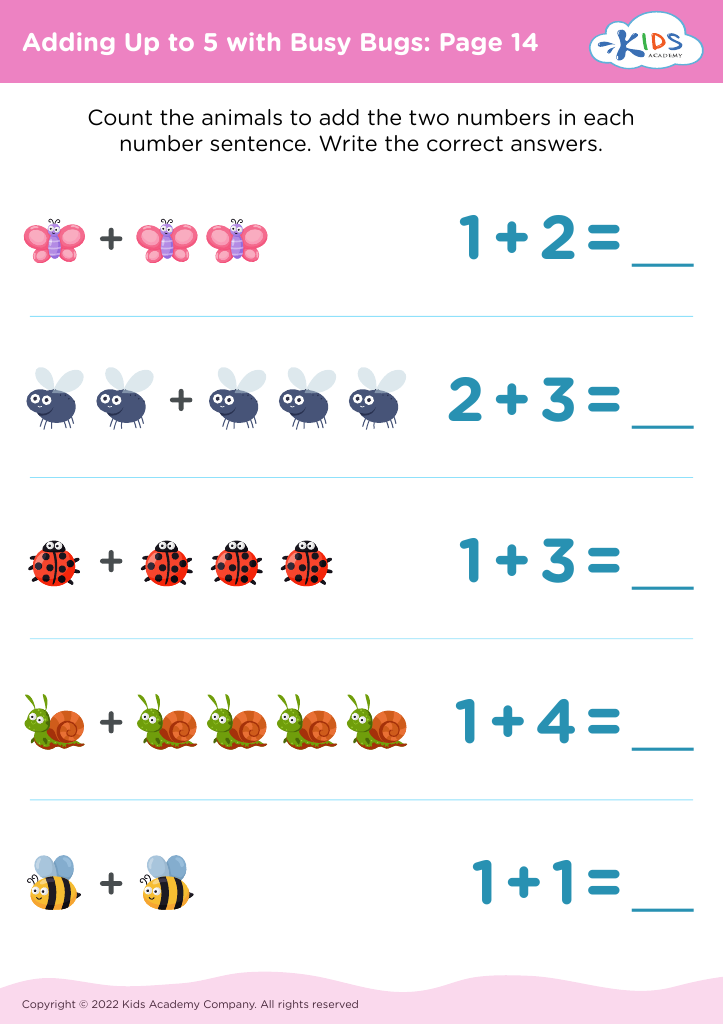
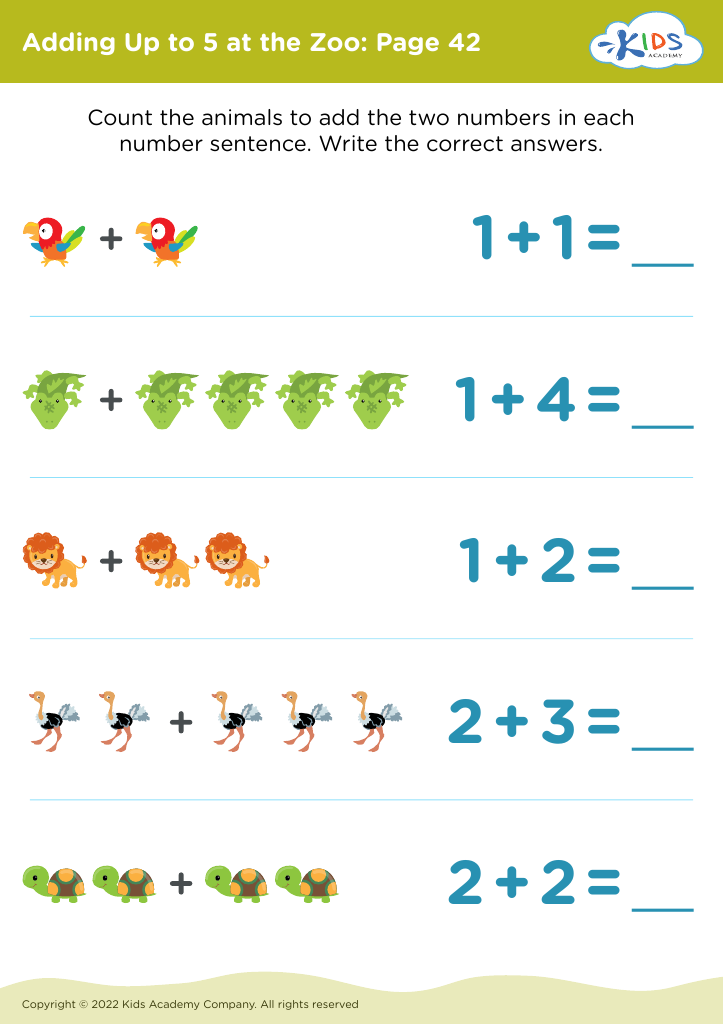
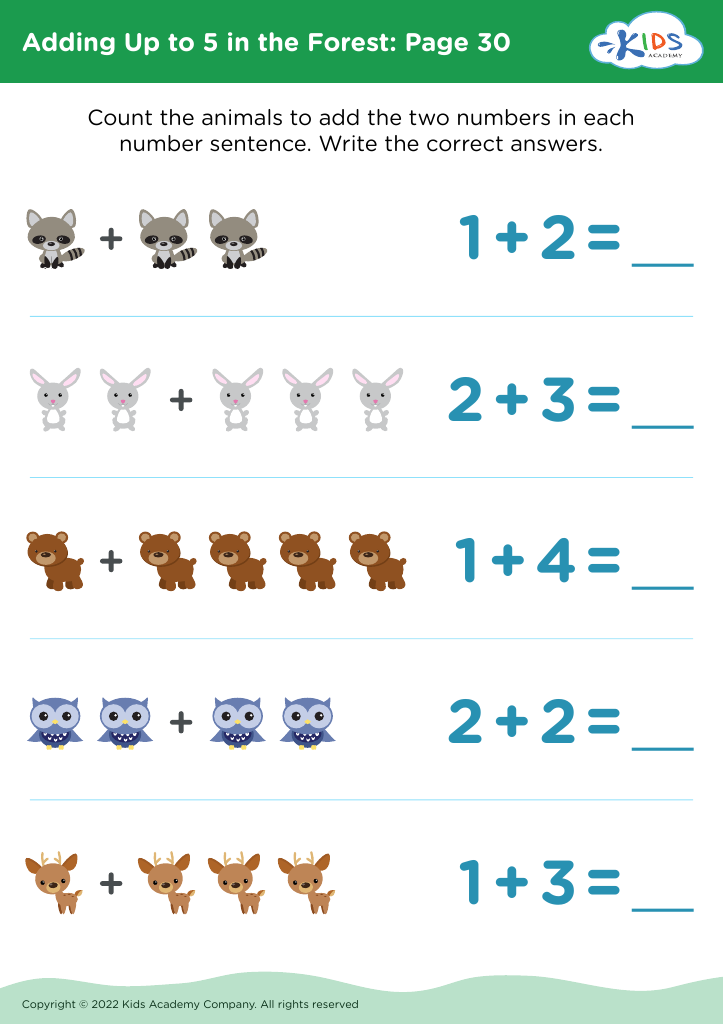
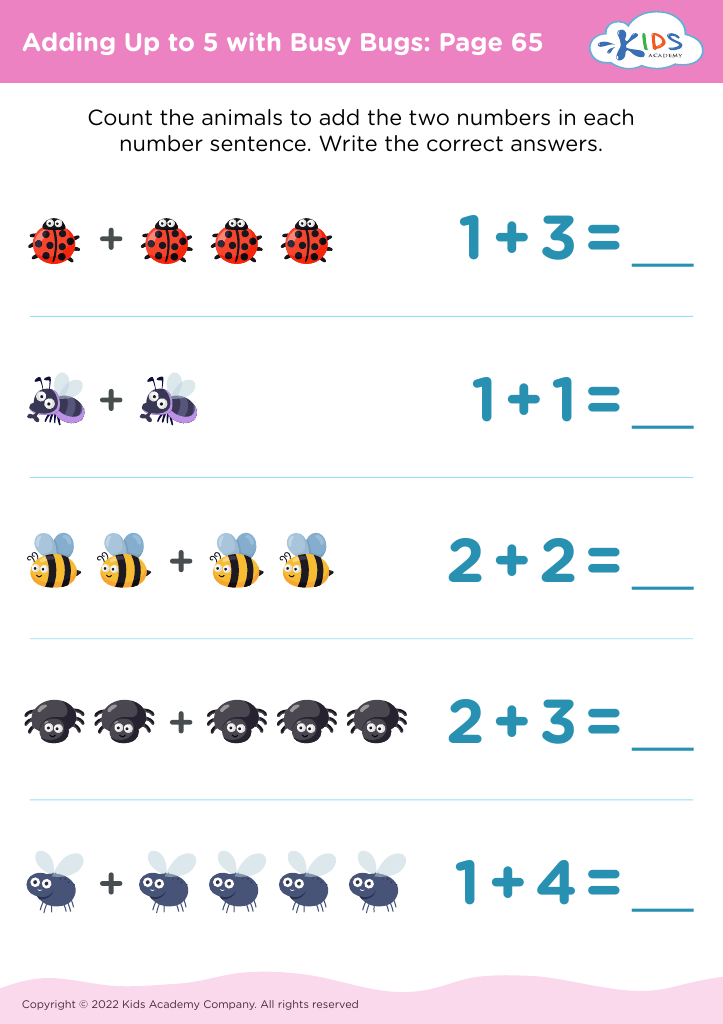







.jpg)
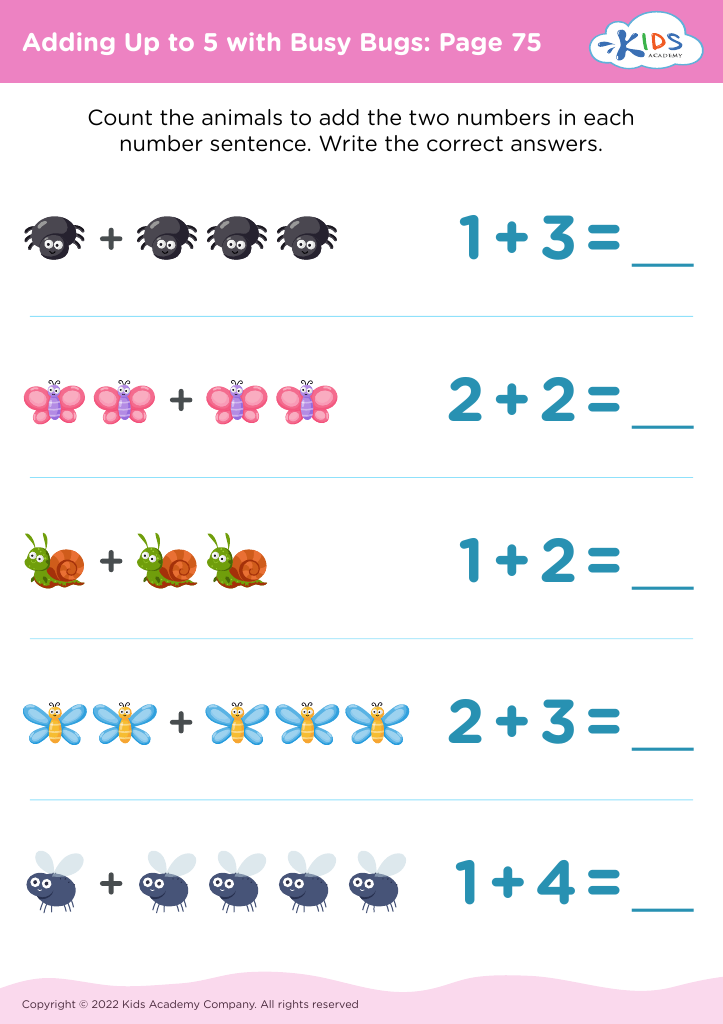
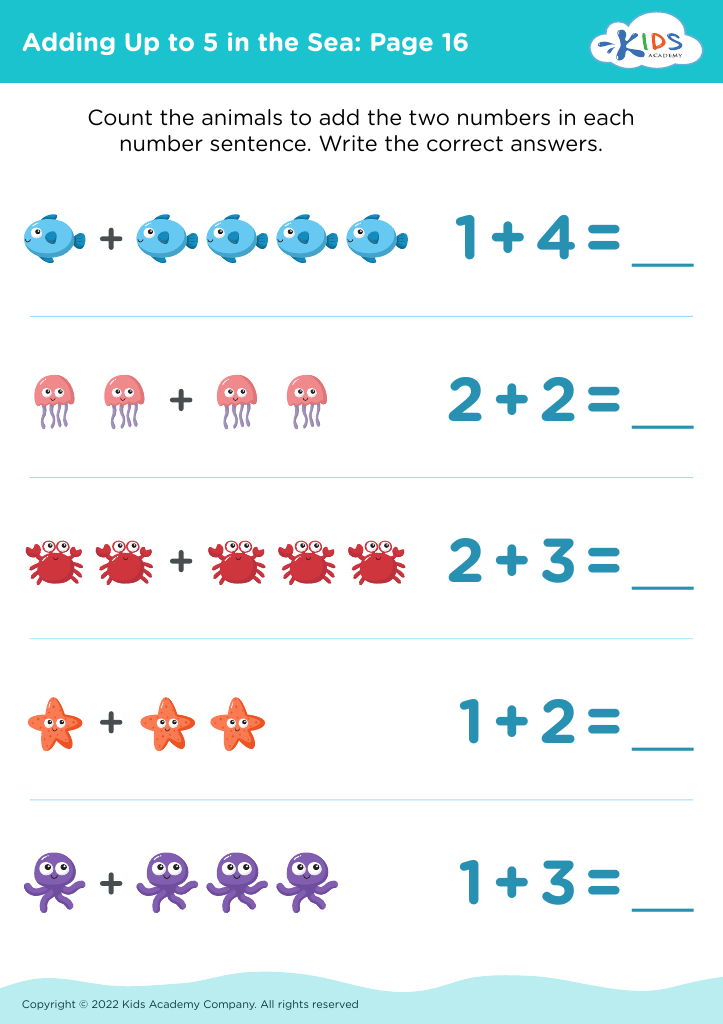
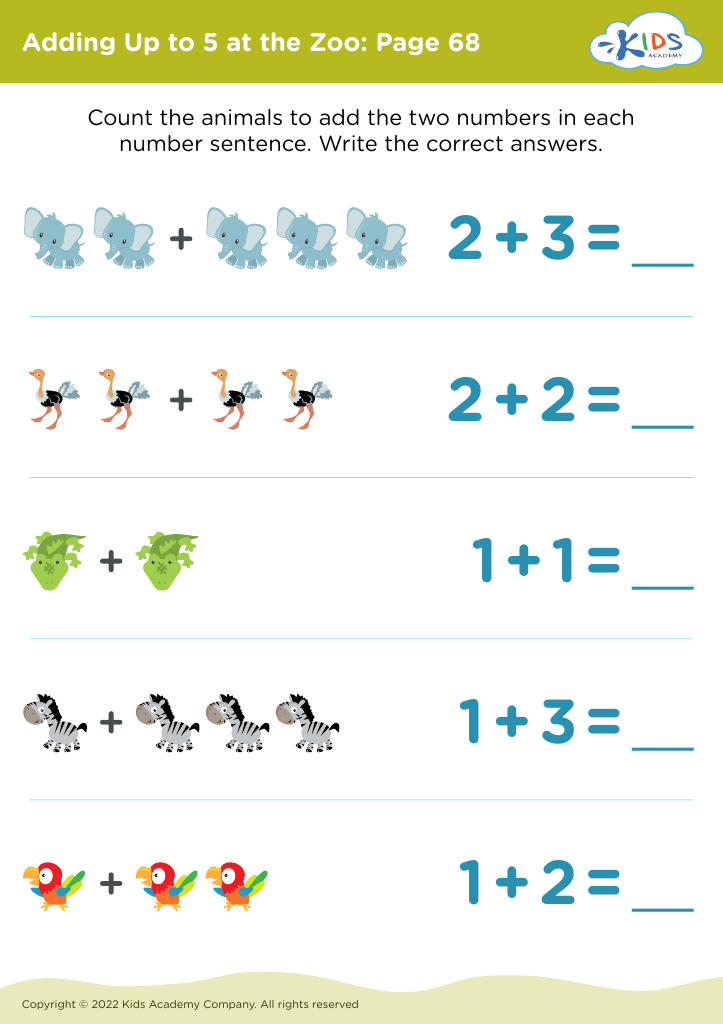
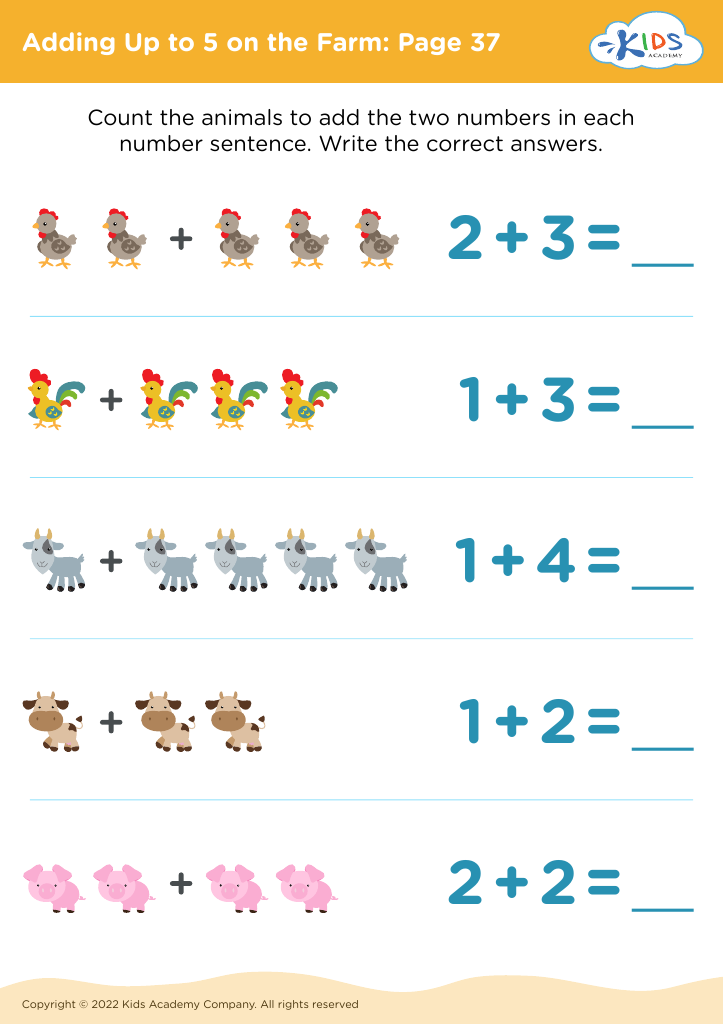
Fine motor skills are crucial for the overall development of 5-year-olds, particularly when focusing on writing and addition. These skills involve the coordination of small muscles in hands and fingers, enabling children to perform tasks that require precision. By developing fine motor skills, children can hold a pencil with the correct grip, create legible letters, and eventually perform mathematical tasks like writing numbers and solving simple additions.
Parents and teachers should care about these skills as they lay the foundation for academic success and independence. Engaging in activities that enhance fine motor skills, such as drawing, crafting, and using playdough, improves hand-eye coordination and concentration. This not only boosts a child's confidence but also supports their cognitive development as they learn to manipulate objects and concepts.
Additionally, strong fine motor skills contribute to a child's ability to complete daily tasks, like fastening buttons or tying shoelaces, fostering self-sufficiency. It further drives enthusiasm for learning as they experience success in writing and math. By nurturing these skills in the early stages, parents and teachers set children on a path to better performance across all areas of academic and personal growth, enhancing their overall readiness for school and life challenges.








