
Comparing Fractions Math Worksheets for 5-Year-Olds
5 filtered results
Difficulty Level
Grade
Age
-
From - To
Subject
Activity
Standards
Introducing our "Comparing Fractions Math Worksheets for 5-Year-Olds"! Perfectly designed to capture young learners' attention, these engaging worksheets simplify the complex concept of fractions. With colorful illustrations and interactive activities, children learn to compare different fractions easily. Our worksheets foster foundational math skills, promoting critical thinking and logic. They also align with educational standards, ensuring your child stays on track. Ideal for both classroom and home use, these worksheets make learning fractions fun and accessible. Unlock your child's potential with educational adventures tailored just for them. Empower your young learner today with practical math experiences!
Favorites
With answer key
Interactive
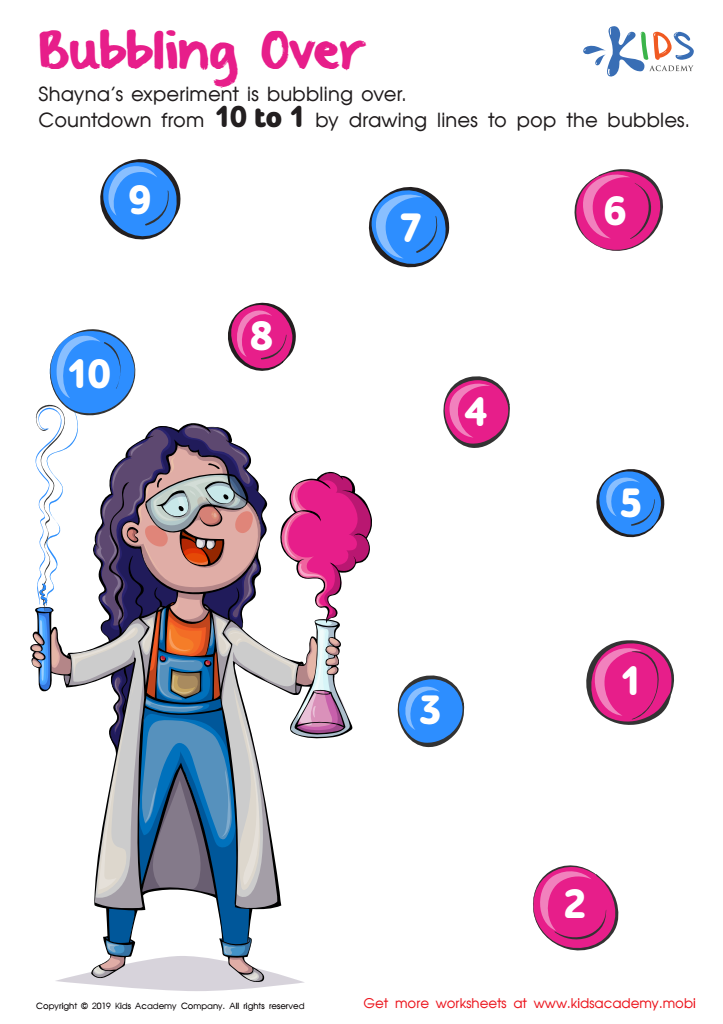
Bubbling Over Worksheet
Students love science experiments at the lab! They get to practice their counting skills while creating a masterpiece or an unexpected catastrophe! Ask them to count down from 10 to 1 by drawing lines to 'pop' the bubbles coming out of Shayna's experiment in the worksheet.
 Assign to My Students
Bubbling Over Worksheet
Worksheet
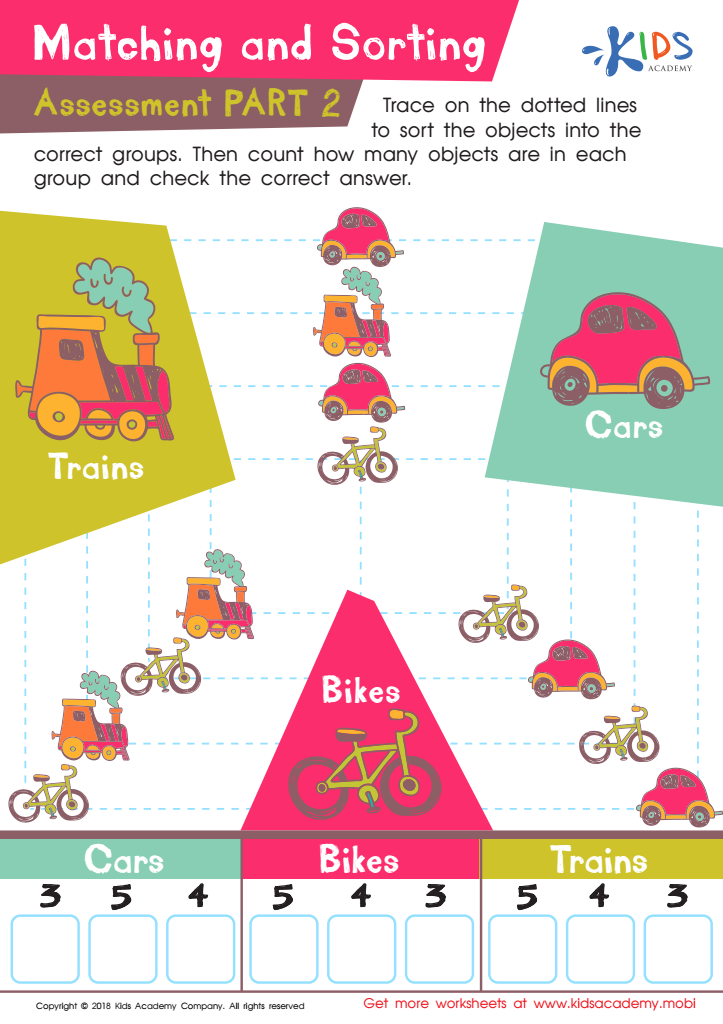
Matching and Sorting for Kindergarten: Assessment 2 Worksheet
This assessment tests matching, sorting and fine motor skills. It challenges kids to identify properties and attributes of pictures, trace guidelines and count the types of vehicles. It's a great way to practice basic number sense and hone in on important foundational skills.
Matching and Sorting for Kindergarten: Assessment 2 Worksheet
Worksheet
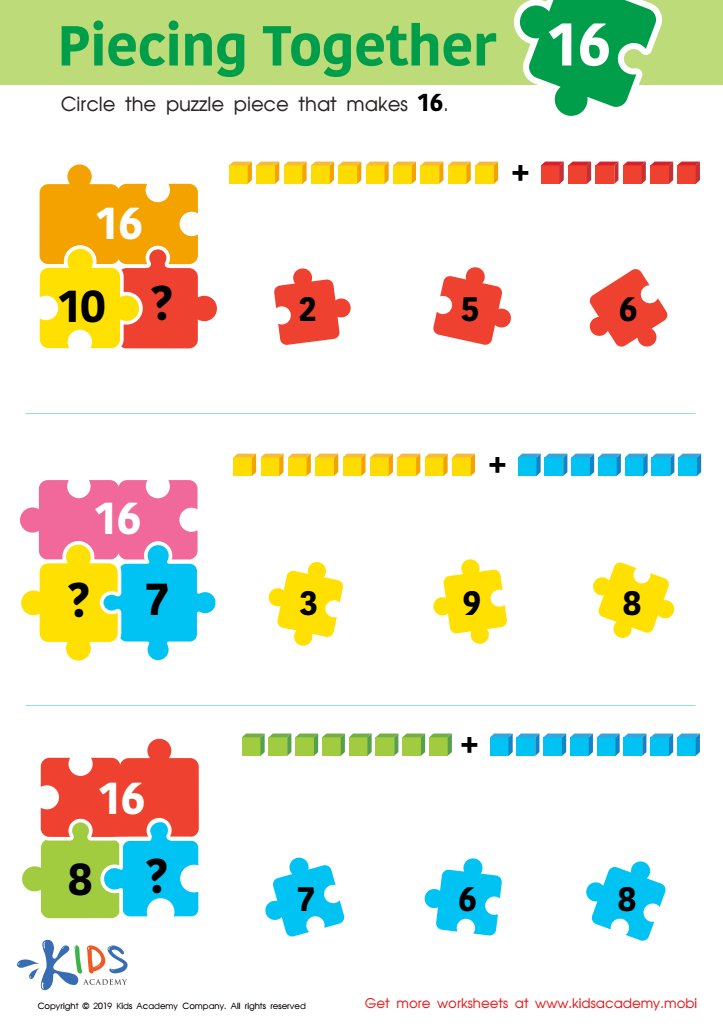
Piecing Together 16 Worksheet
Combine learning with fun using this colorful worksheet! Ask your preschoolers what they see in the picture, then help them solve the mathematical equations on the puzzle pieces. One equation is missing on each; have them circle the piece that will make the bottom puzzle piece numbers equal 16. Use puzzles and bright colors to teach - it's one of the best ways your kids can learn!
Piecing Together 16 Worksheet
Worksheet
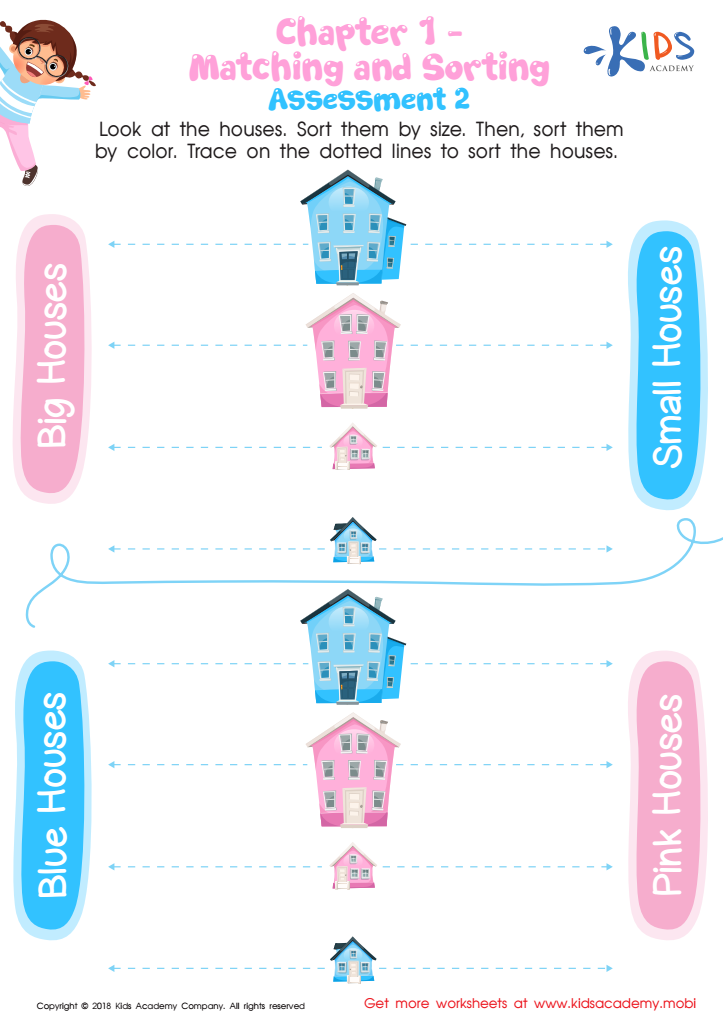
Matching and Sorting for Preschool: Assessment 2 Worksheet
Encourage your kids to take a look at the colorful pictures. Ask them to name the objects. Next, point out any differences between the houses and let them sort them according to color and size. Finally, help them trace the houses on the dotted lines.
Matching and Sorting for Preschool: Assessment 2 Worksheet
Worksheet
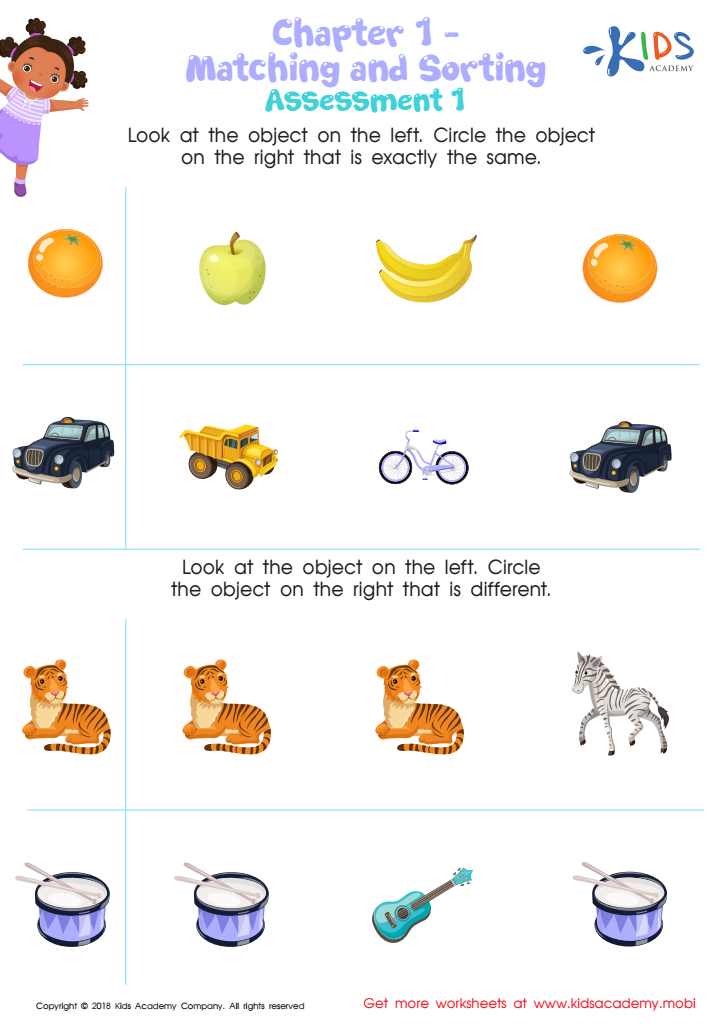
Matching and Sorting for Preschool: Assessment 1 Worksheet
Test your child's matching skills with this worksheet! Ask them to name each of the objects pictured, then circle the ones that are the same. Repeat for the second task. It's a great way to assess their skills and have fun at the same time!
Matching and Sorting for Preschool: Assessment 1 Worksheet
Worksheet
Join Kids Academy for Free
Who is primarily going to use this learning content?







Parents and teachers should prioritize comparing fractions when teaching math to 5-year-olds as it lays a critical foundation for numerical literacy and advanced mathematical understanding. Children at this age are like sponges, eager and able to absorb new concepts. Introducing fractions in a simplified and engaging manner helps them develop a solid grasp of numbers beyond whole integers. This understanding is essential for various future mathematical operations, including addition, subtraction, multiplication, and division of fractions.
Moreover, comparing fractions enhances a child's problem-solving skills. They learn to evaluate quantities, which is a vital part of everyday decision-making. This mathematical skill set also supports logical thinking and boosts cognitive development, promoting better academic performance in other subjects as well.
Visually comparing fractions—like slicing pizzas or sharing candies—not only makes learning fractions relatable but also provides a concrete understanding of abstract numerical concepts. This method helps children see the real-world applications of what they are learning, making education both meaningful and enjoyable.
Investing time in teaching young children how to compare fractions can thus spark an early interest in math, foster confidence, and reduce the likelihood of math-related anxiety in later years. Developing these skills early sets a strong academic foundation, encouraging a lifelong love for learning and exploration.








