Number comparison skills Math Worksheets for 5-Year-Olds
3 filtered results
-
From - To
Enhance your child's numerical understanding with our engaging Number Comparison Skills Math Worksheets designed specifically for 5-year-olds. These worksheets provide fun and interactive activities that help young learners grasp essential math concepts, such as greater than, less than, and equal to. With vibrant graphics and age-appropriate exercises, your child will develop critical thinking and problem-solving skills while boosting their confidence in math. Each worksheet is tailored to encourage exploration and offers a variety of problems to keep young minds stimulated. Perfect for at-home learning or classroom use, these resources will lay a strong foundation in mathematics for your child’s future success.
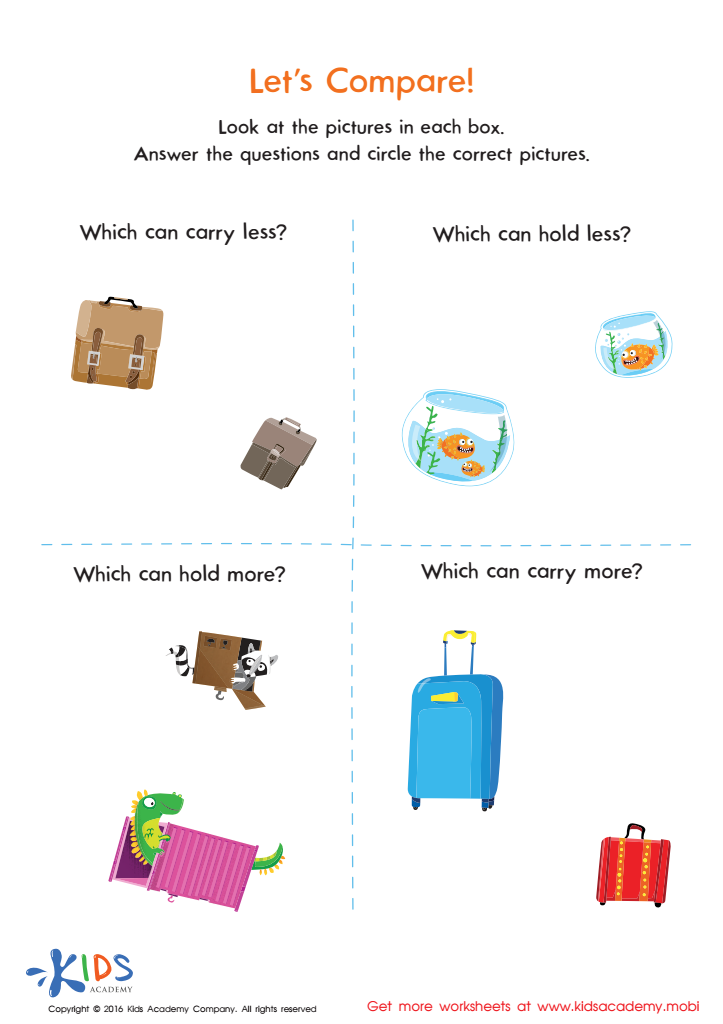
Let's Compare Worksheet: Big or Small
 Assign to My Students
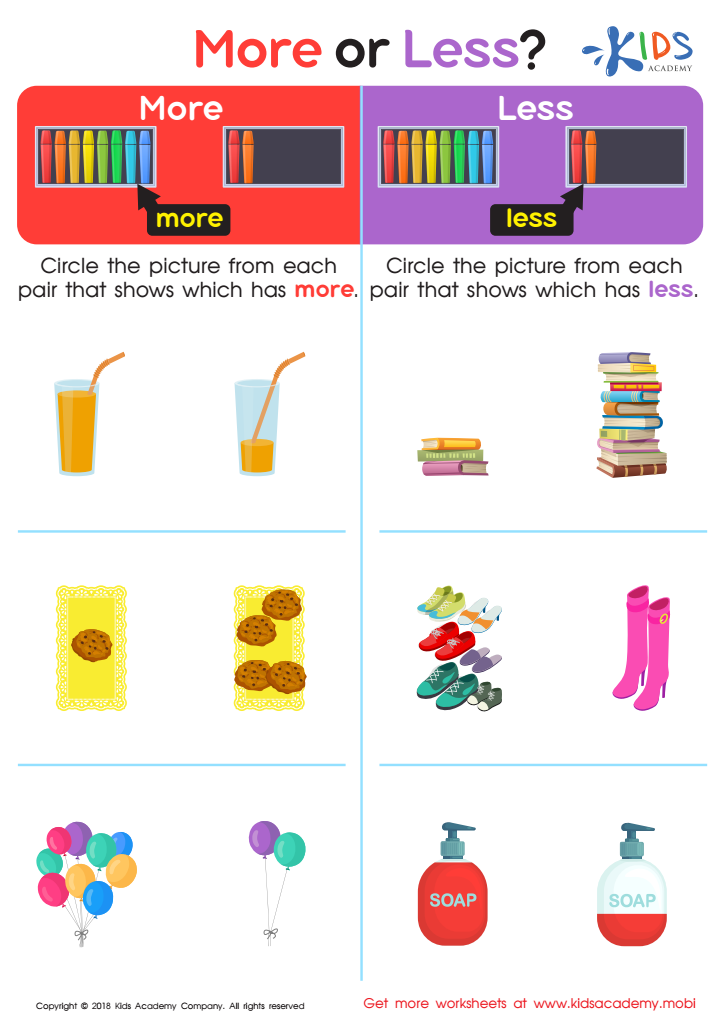
More or Less? Worksheet
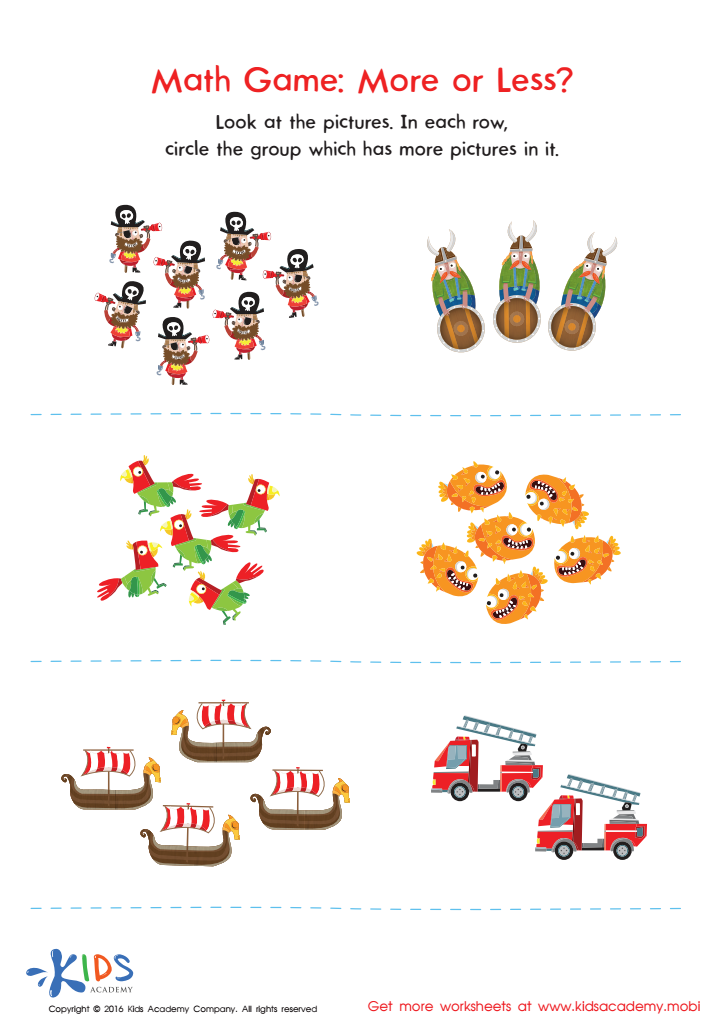
More or Less Worksheet








Number comparison skills are crucial for 5-year-olds as they lay the foundation for future mathematical understanding and cognitive development. At this age, children begin to make sense of quantities and relationships between numbers, skills that enhance their overall number sense. Parents and teachers should care about these skills because they are vital not only for basic arithmetic but also for problem-solving and logical thinking.
When children can effectively compare numbers, they improve their ability to recognize patterns and make estimations, which are essential for more complex math topics they will encounter later in school. Early familiarity with numerical concepts also fosters confidence and a positive attitude towards math, which can influence their performance and interest in the subject throughout their educational journey.
Moreover, developing number comparison skills supports cognitive growth by encouraging critical thinking, as children learn to analyze, synthesize, and evaluate information. Engaging children in fun games and activities centered around number comparisons can facilitate these skills in an enjoyable and stress-free environment. Ultimately, strong foundational skills in number comparison can lead to success in math and other academic areas, making it imperative for parents and teachers to nurture these abilities in young learners.








