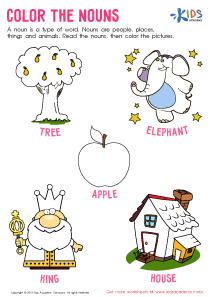
Understanding sequencing Numbers 0–10 Worksheets for 5-Year-Olds
4 filtered results
-
From - To
Boost your child's math skills with our "Understanding Sequencing Numbers 0–10 Worksheets for 5-Year-Olds." Designed to enhance numerical order recognition and logical thinking, these engaging worksheets build a strong foundation for early math learners. Each activity fosters counting proficiency, number sequencing, and problem-solving skills, ensuring a fun and interactive learning experience. Perfect for practice at home or in the classroom, our worksheets offer colorful visuals and simple exercises to keep young minds captivated and eager to learn. Empower your child’s math journey today with our expertly crafted sequencing worksheets!
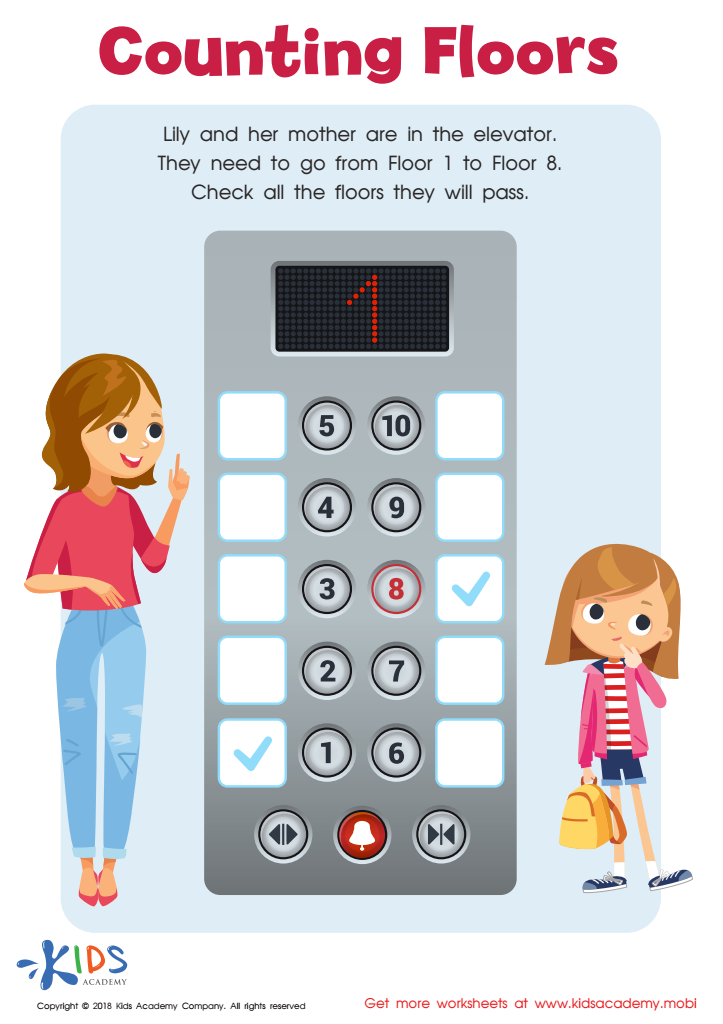
Counting Floors Worksheet
 Assign to My Students
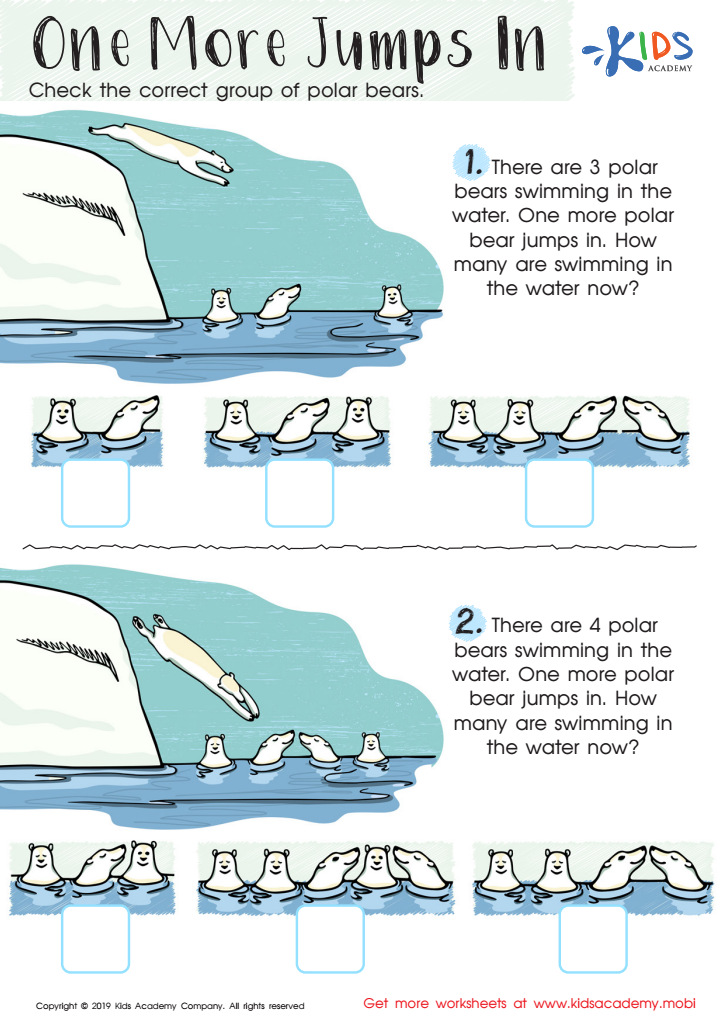
One More Jumps In Worksheet
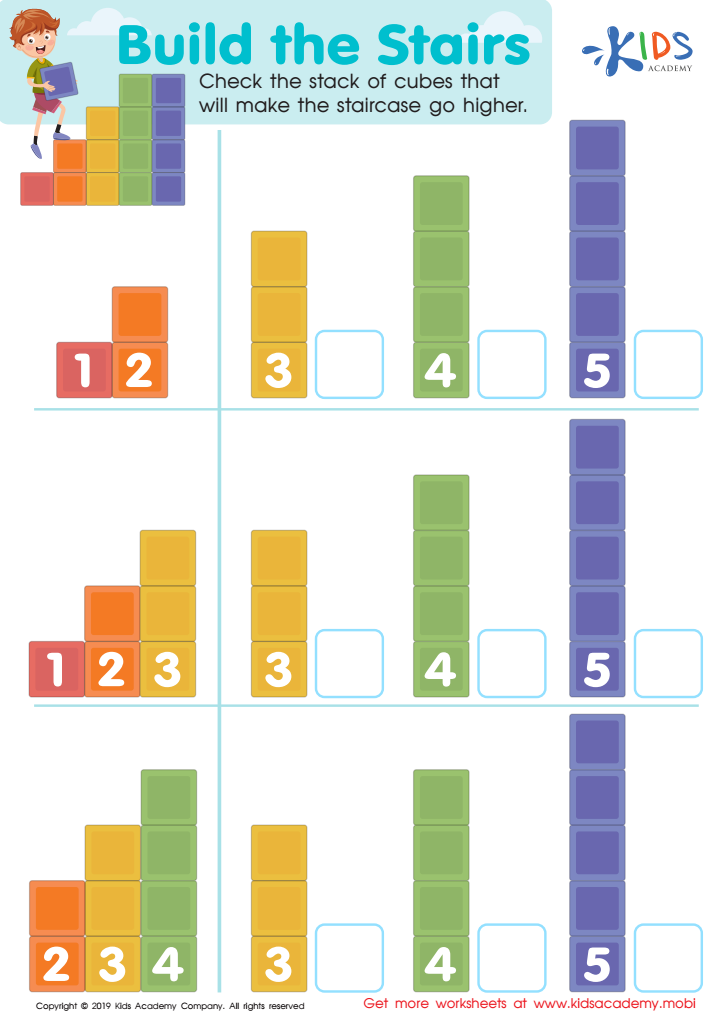
Build the Stairs Worksheet
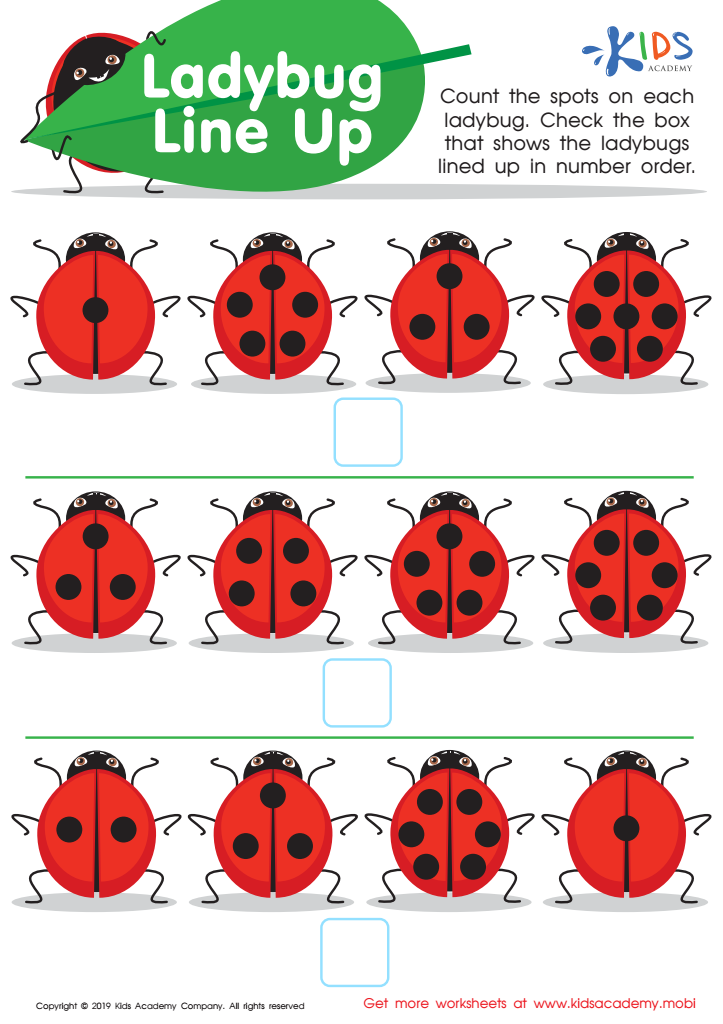
Ladybug Line Up Worksheet








Understanding sequencing numbers 0–10 is essential for the holistic development of 5-year-olds as it lays a crucial groundwork for future mathematical learning and cognitive development. This foundational skill helps children grasp the concept of order, which is significant in daily routine activities and understanding the broader numerical spectrum. For example, knowing that comes after 3 helps kids understand concepts like time (days of the week), instructions (first, second, third), and even following storylines.
Moreover, sequencing numbers is closely tied to developing number sense, a pivotal mathematical skill that encompasses counting, identifying, and comparing numbers. According to educational research, a solid number sense at an early age is predictive of future success in mathematics. Practical activities like simple counting games, number lines, and arranging objects teach them to recognize patterns, enhance their memory, and improve problem-solving abilities.
Furthermore, sequencing supports literacy skills, as it cultivates an understanding of instructions and events in storytelling, which maintain order. The act of memorization and recital also boosts auditory and verbal skills. Therefore, parents and teachers should prioritize facilitating number sequencing to provide children with a strong cognitive foundation, essential for both academic and real-life situations, thereby nurturing their overall intellectual growth and confidence in learning.