Understanding patterns Sight Words Worksheets for 5-Year-Olds
4 filtered results
-
From - To
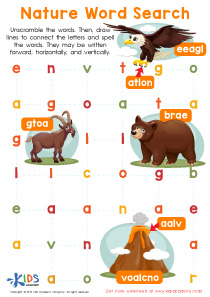
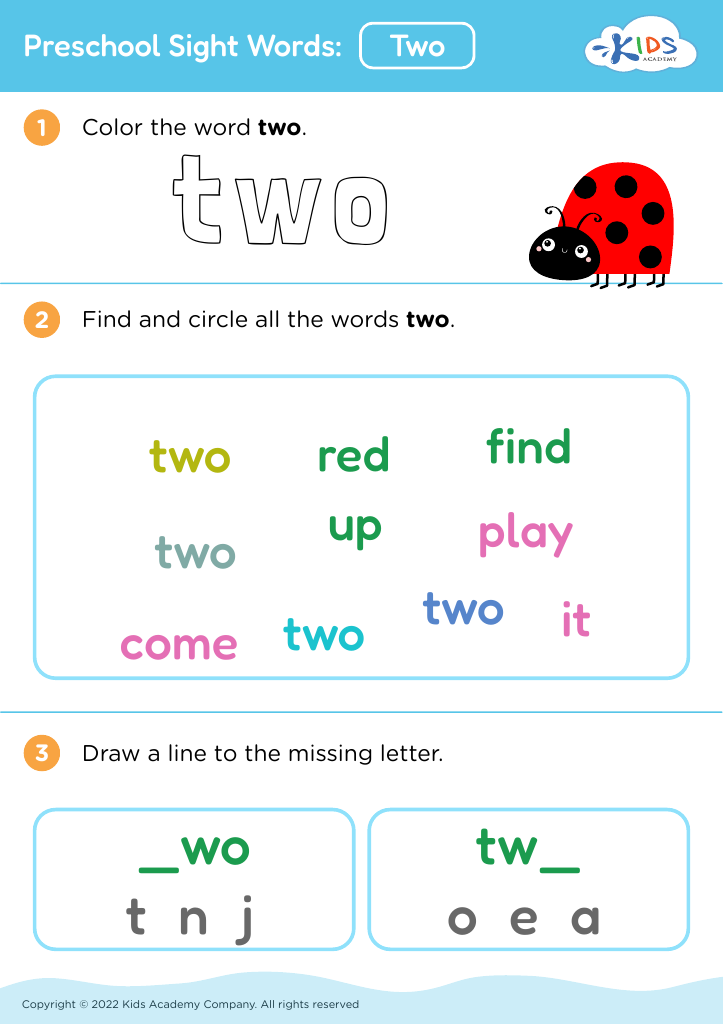
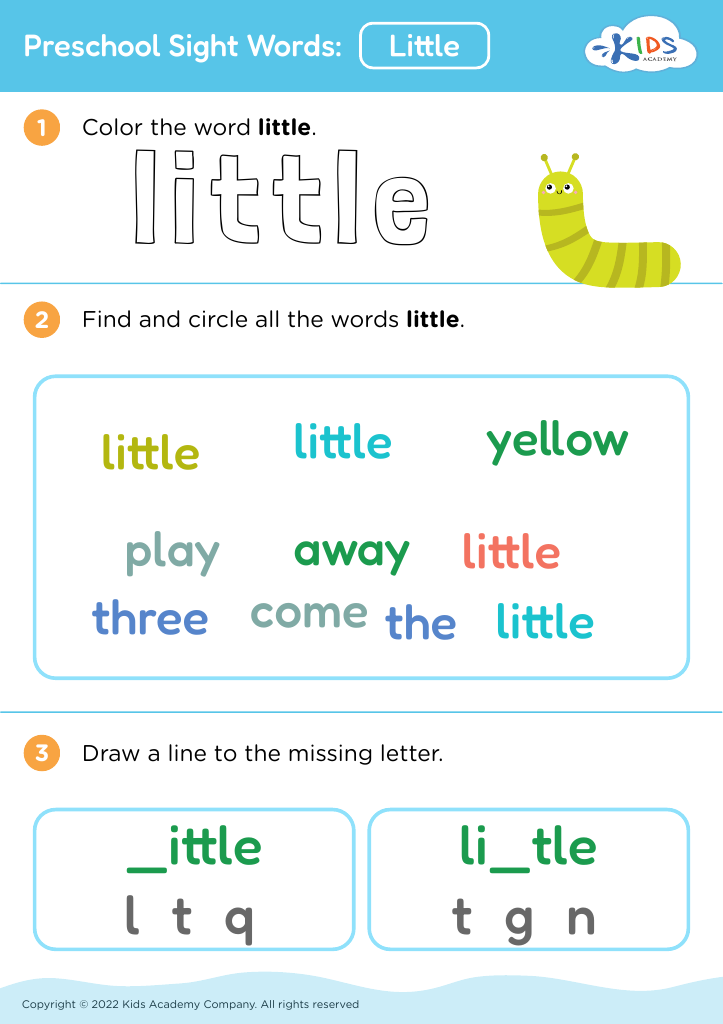
Elevate your child's reading journey with our "Understanding Patterns Sight Words Worksheets for 5-Year-Olds." Specially designed to make learning fun and interactive, these worksheets help young readers recognize common sight words through engaging pattern exercises. By identifying repeating word patterns, kids develop strong reading comprehension and fluency skills. Each worksheet offers colorful and enjoyable activities tailored to pre-kindergarten and kindergarten students, fostering a love for reading from an early age. Perfect for parents and educators, our resources ensure that learning sight words is both effective and entertaining. Start building a strong reading foundation today!




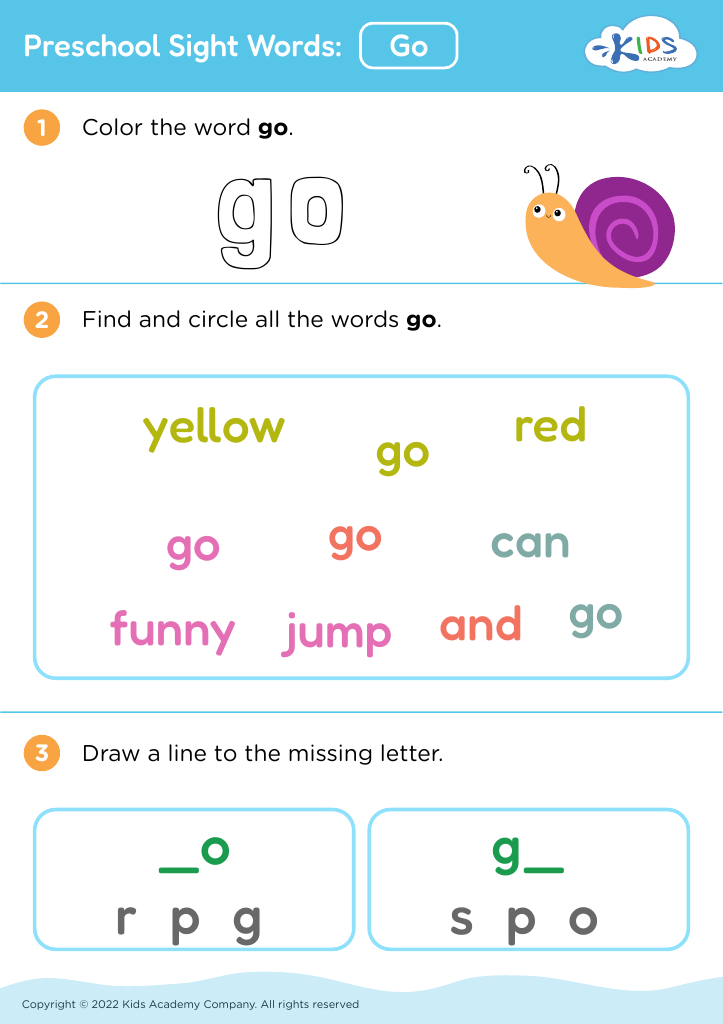
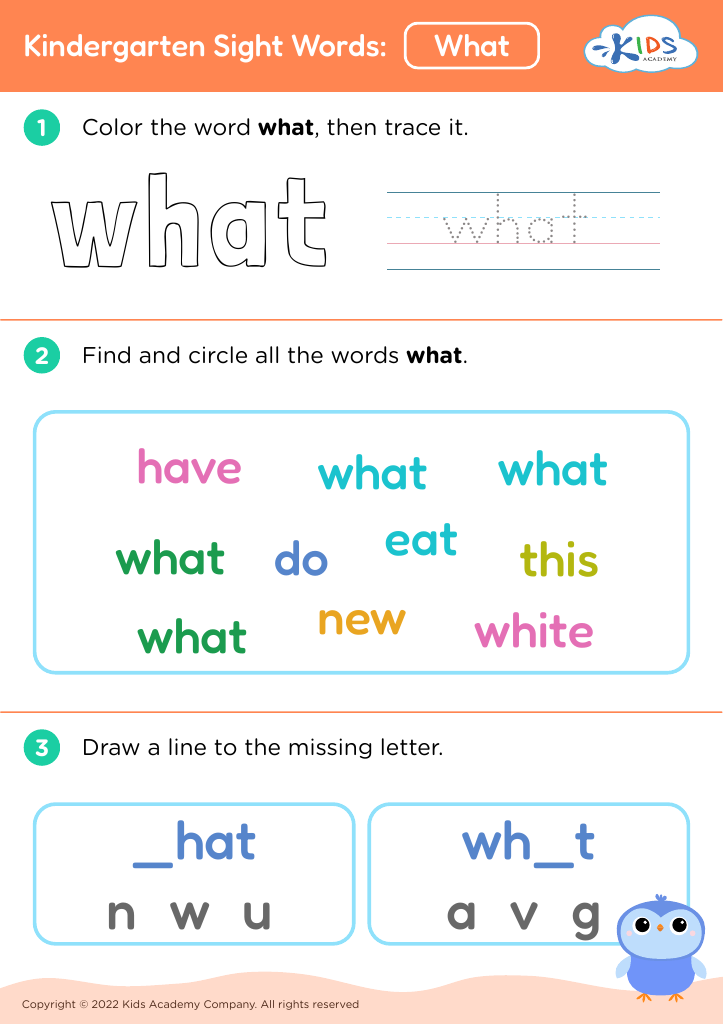








Understanding patterns and sight words is crucial for the development of 5-year-olds, and parents and teachers play a vital role in nurturing these early skills. Patterns help children make predictions, solve problems, and establish reasoning skills, all of which are foundational for mathematical thinking. By recognizing and creating patterns, children develop their ability to sequence and organize information, assisting them in everything from daily routines to more complex learning tasks.
Sight words, on the other hand, are words that appear frequently in text and do not always follow standard phonetic rules. Teaching children to recognize these words by sight rather than sounding them out supports fluid reading. Mastery of sight words improves reading speed, comprehension, and overall literacy skills because children no longer stumble over common words, allowing them to focus on understanding the text and deriving meaning.
Building proficiency in both patterns and sight words equips children with essential cognitive tools. For instance, recognizing word patterns can help children decode new words, while sight word knowledge can provide context clues. As a result, these skills foster a love for learning and a solid foundation in both numeracy and literacy, making early education more effective and enjoyable. Parents and teachers who invest in these areas are setting children on a path to academic success and lifelong curiosity.