Normal Vowels and Consonants Worksheets for Ages 6-9 - Page 2
26 filtered results
-
From - To
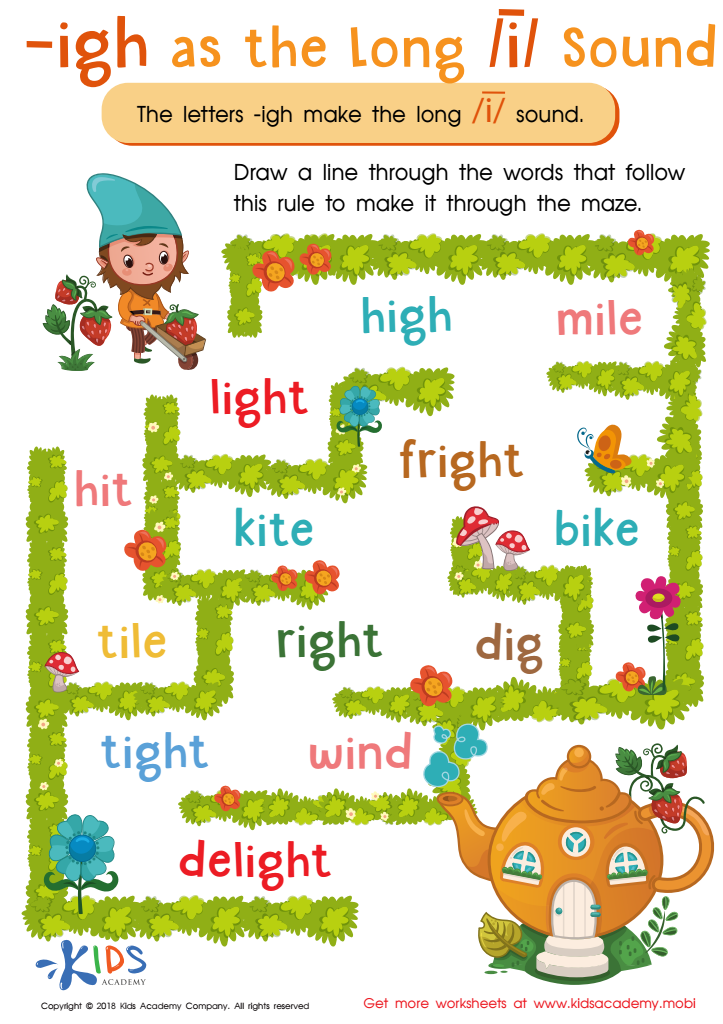
Reading: IGH as Long I Worksheet
 Assign to My Students
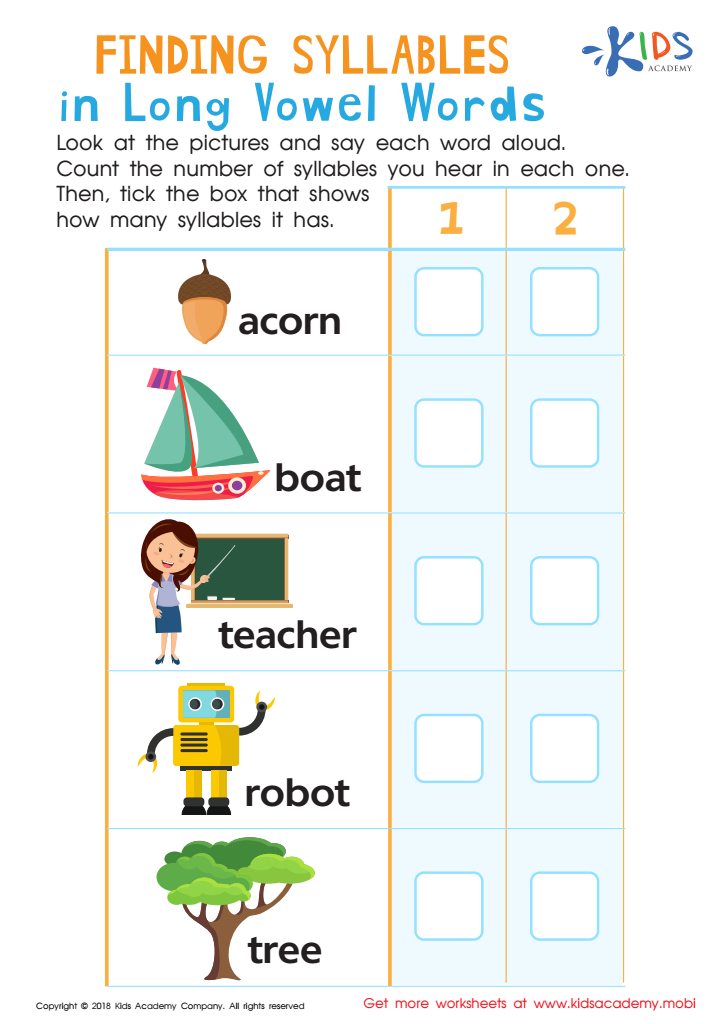
Finding Syllables in Long Vowel Words Worksheet



Understanding normal vowels and consonants is crucial for children aged 6-9, as it forms the foundation of literacy and language skills. During this developmental stage, children are beginning to decode words, spell, and read fluently. Vowels and consonants are the building blocks of language; recognizing them helps children differentiate word sounds and structures.
For parents and teachers, a solid grasp of vowel and consonant sounds aids in effective teaching strategies. It enhances phonemic awareness, which is essential for reading success. Children learn to blend sounds to form words, improving their reading comprehension and vocabulary acquisition. Recognizing the difference between short and long vowel sounds, as well as consonant blends, empowers children to tackle more complex literacy tasks.
Additionally, learning about vowels and consonants fosters critical thinking skills. Children learn to analyze words, predict meanings, and develop spelling rules. This knowledge is not only applicable across subjects but can also enhance communication skills, benefiting social interactions and confident self-expression.
Ultimately, focusing on normal vowels and consonants equips children with essential language skills, serving as a foundation for lifelong literacy and academic success. Parents and teachers play a vital role in providing the encouragement and resources necessary for children to thrive in this area.