Letter recognition Easy Alphabet Worksheets for Ages 3-4
10 filtered results
Difficulty Level
Grade
Age
-
From - To
Subject
Activity
Standards
Introduce early learners to the world of letters with our engaging "Letter Recognition Easy Alphabet Worksheets for Ages 3-4." Designed specifically for preschoolers, these fun and educational worksheets focus on helping young children identify and recognize letters. Each worksheet offers colorful illustrations and simple activities that capture children's interest, making learning enjoyable and effective. Through a variety of exercises, kids practice tracing, matching, and identifying both upper and lowercase letters, setting a strong foundation for future reading and writing skills. Perfect for home or classroom use, these worksheets are an essential resource for any early learning curriculum.
Favorites
With answer key
Interactive
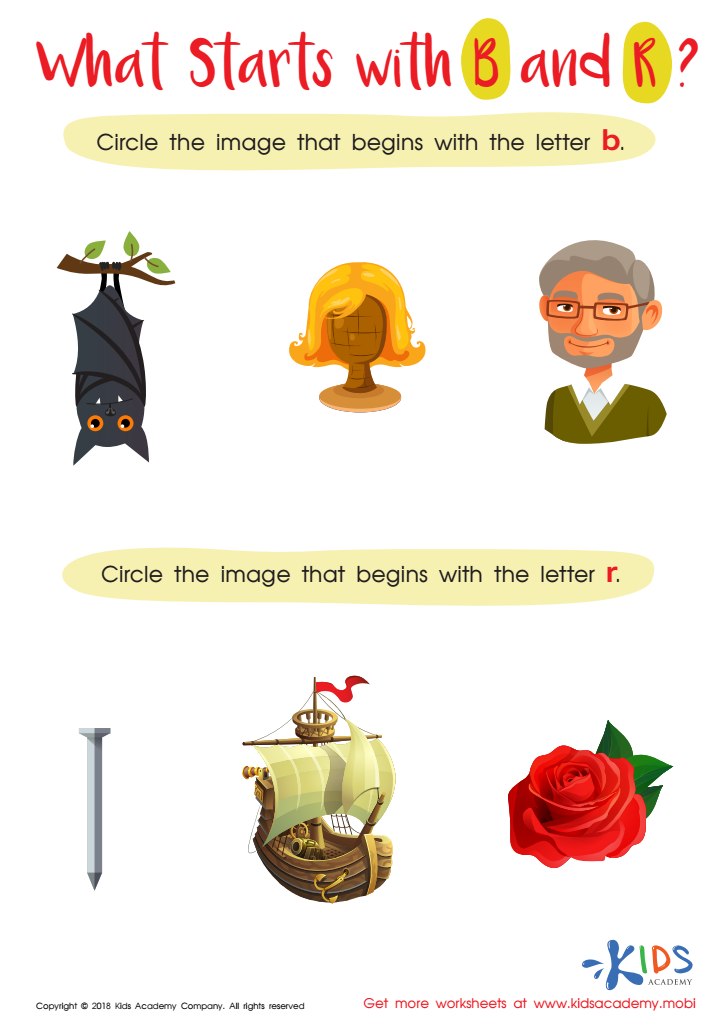
What Starts with B and R? Worksheet
Download this worksheet to help young readers practice visual and motor skills! They'll enjoy matching pictures with "B" and "R" letters while tracing the images. Bright and colorful, this engaging activity will help kids differentiate between words and have fun doing it.
What Starts with B and R? Worksheet
Worksheet
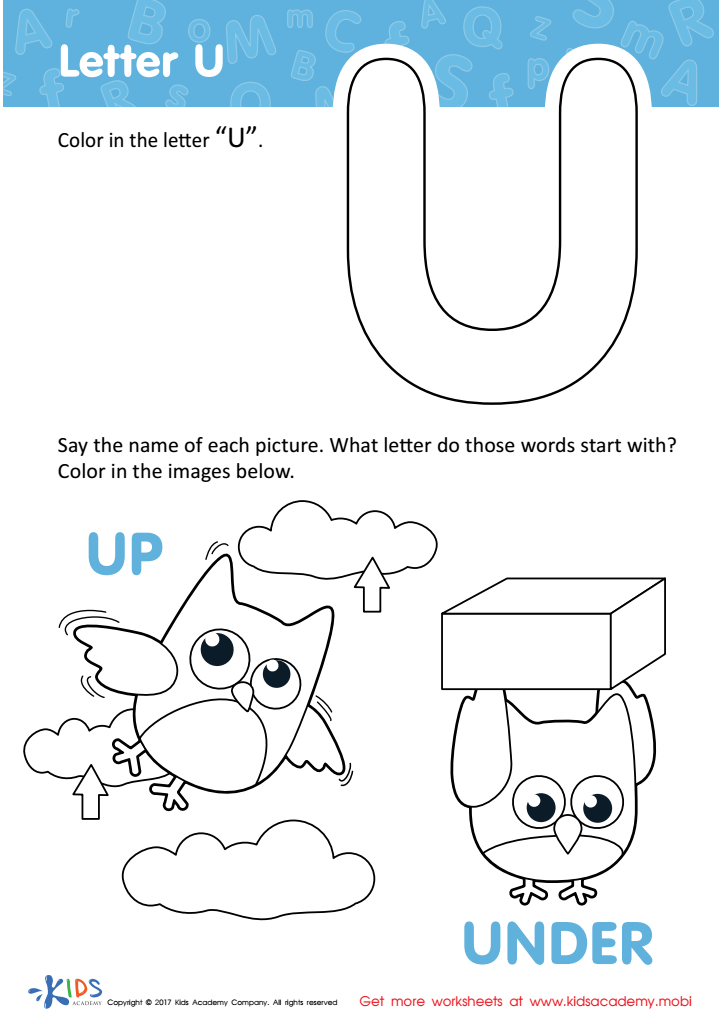
Letter U Coloring Sheet
This letter "U" coloring page helps your child learn two things at once - the letter "U" and positional words! An adorable owl character aids in understanding up and under. In a few strokes of a crayon, your child can master these concepts.
Download (PDF)
 Assign to My Students
Assign to My Students
Letter U Coloring Sheet
Worksheet
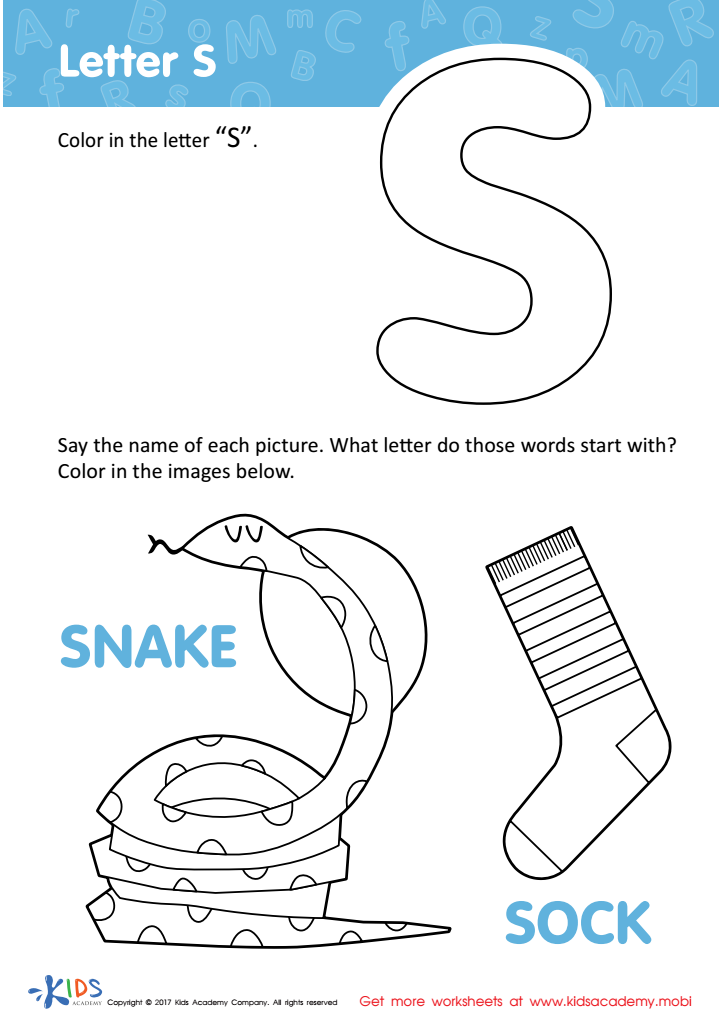
Letter S Coloring Sheet
Help your child practice recognizing the letter "S" and the sound it makes with this fun coloring page. It features a slippery snake, smelly sock and more! Give them extra practice by coming up with more "S" sounds and words.
Download (PDF)
Assign to My Students
Assign to My Students
Letter S Coloring Sheet
Worksheet
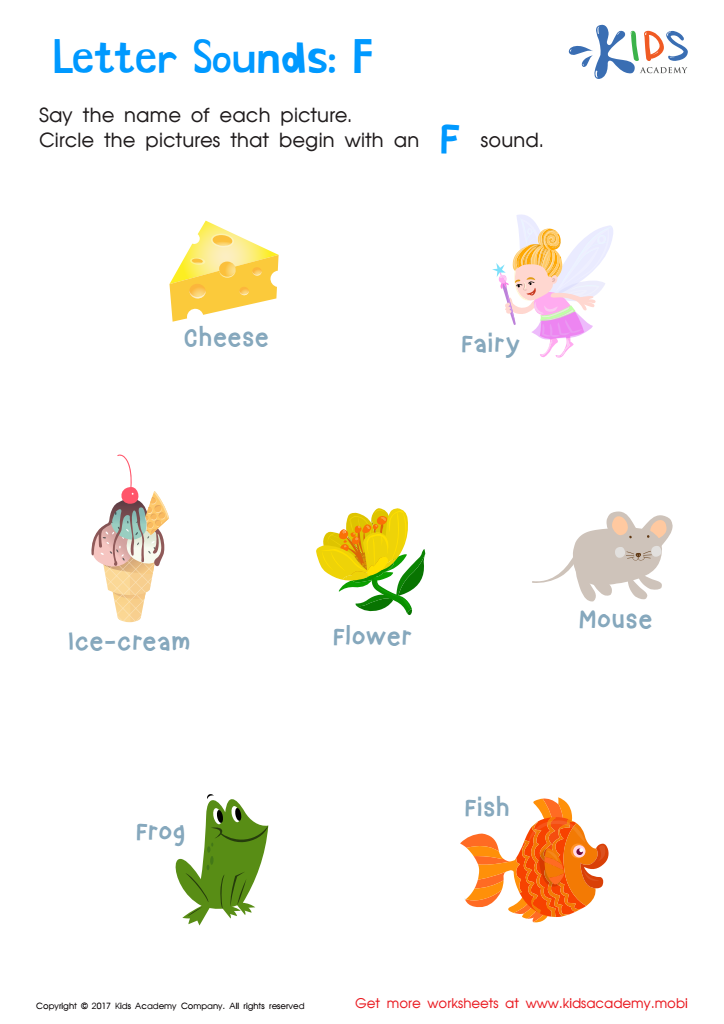
Letter F Sounds Worksheet
Kids will practice identifying 'f' words, tracing, and coloring the letter F for a great way to learn phonics.
Help your child discover the wonders of the letter 'F' with this fun worksheet! Kids will practice identifying 'F' words, tracing and coloring the letter, and building early reading skills. Stimulate their learning and let them connect letter sounds to words they know. An enjoyable way to practice phonics!
Letter F Sounds Worksheet
Worksheet
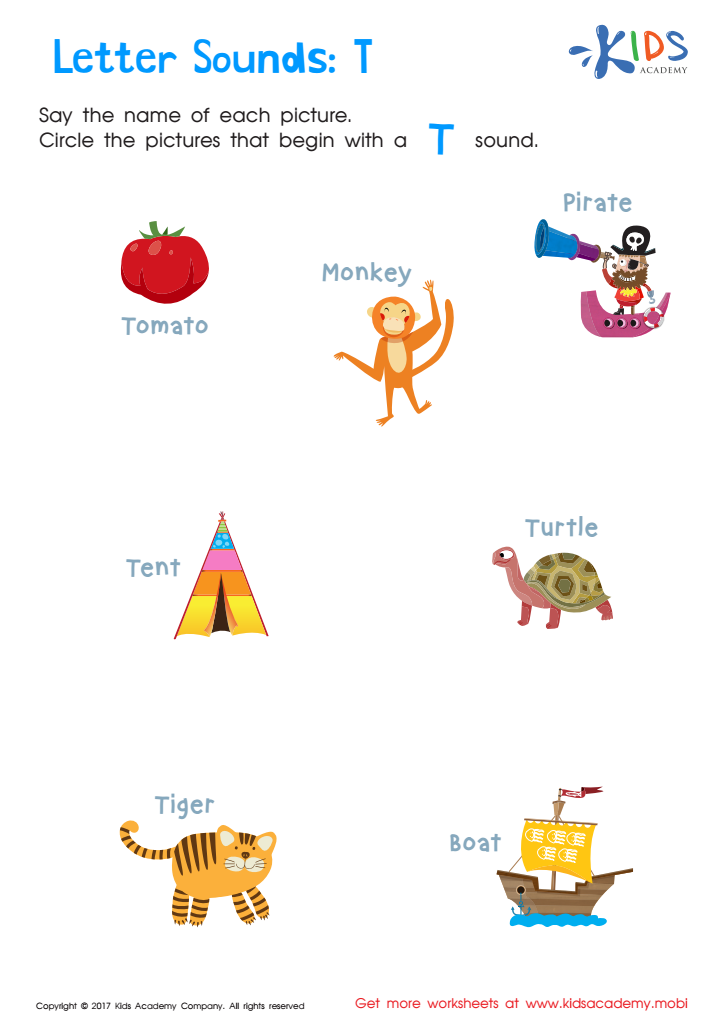
Letter T Sounds Worksheet
This worksheet is a fun way to help kids learn the t sound. It has familiar pictures and an easy-to-follow format, so kids can quickly recognize and learn the letter t.
Letter T Sounds Worksheet
Worksheet
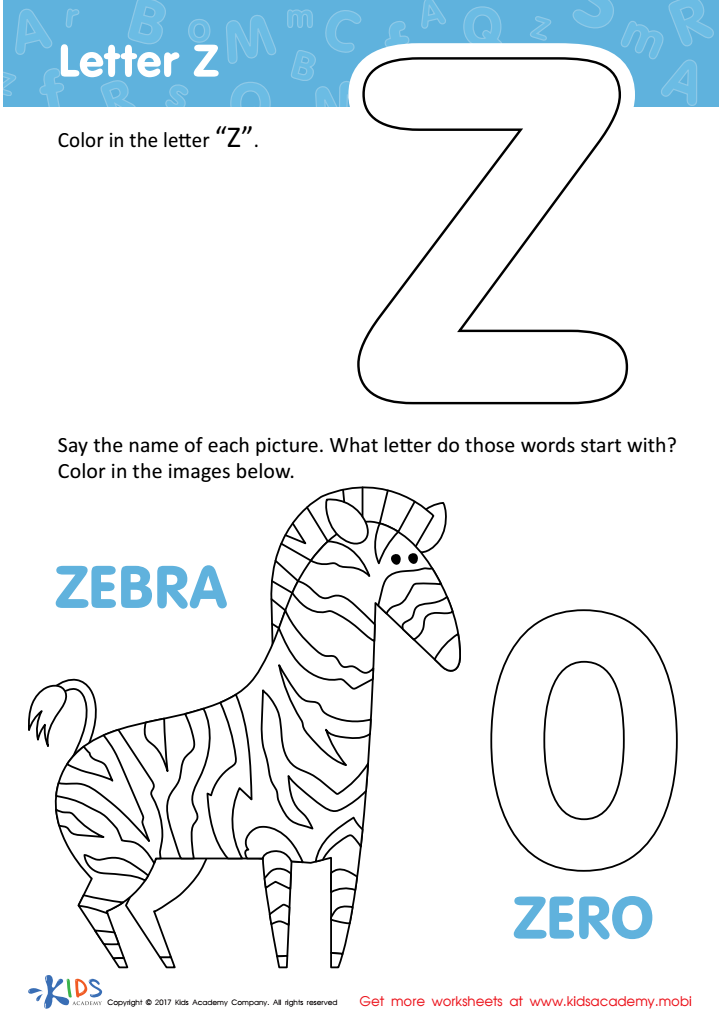
Letter Z Coloring Sheet
This coloring page featuring the letter "Z" is perfect for your child to practice letter recognition! Help them learn the unique sound it makes as they color. It'll be a fun and easy activity they won't have trouble with!
Download (PDF)
Assign to My Students
Assign to My Students
Letter Z Coloring Sheet
Worksheet
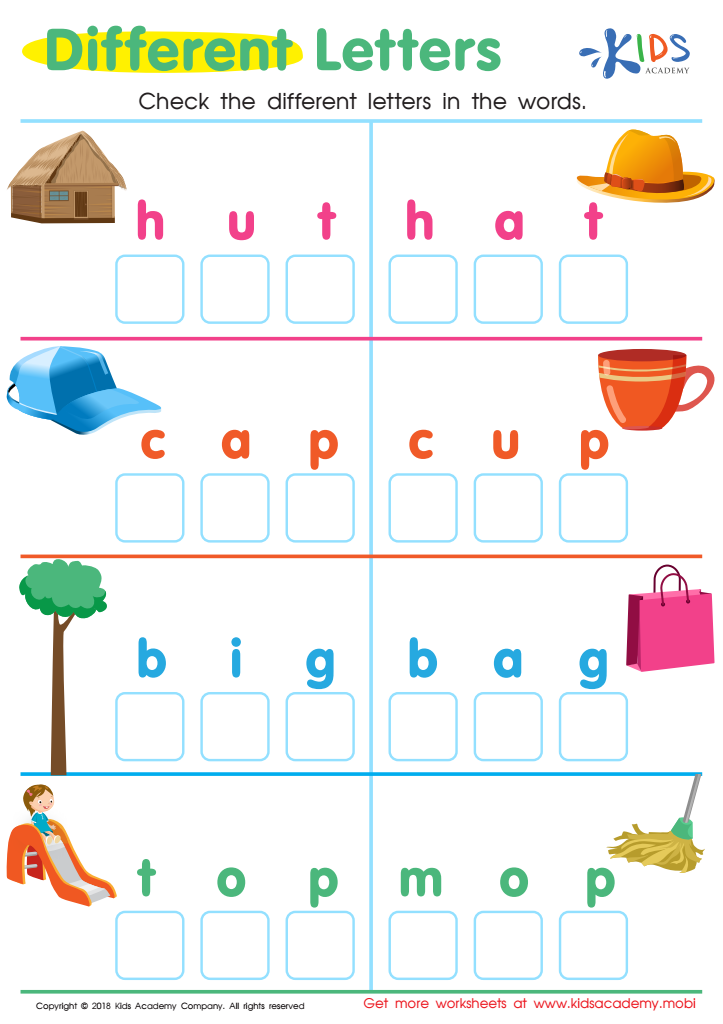
Different Letters Reading Worksheet
Download our phonics worksheet to help kids understand letter sounds. Have them sound out letters and join them to form words. Colorful pictures assist in recognition, making it perfect for kindergarteners. A great intro to phonics!
Different Letters Reading Worksheet
Worksheet
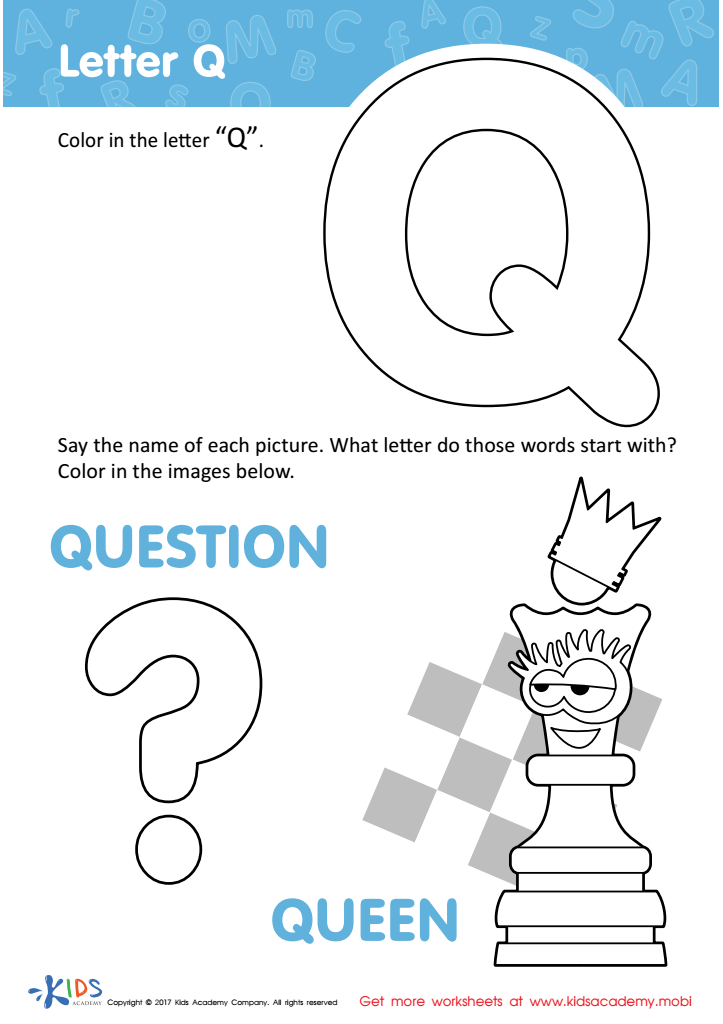
Letter Q Coloring Sheet
Kids need practice with letters not seen often. Give your child a boost with this letter "Q" coloring page! Have them color in the queen and question mark, while learning the sound "Q" makes. Fun and educational!
Download (PDF)
Assign to My Students
Assign to My Students
Letter Q Coloring Sheet
Worksheet
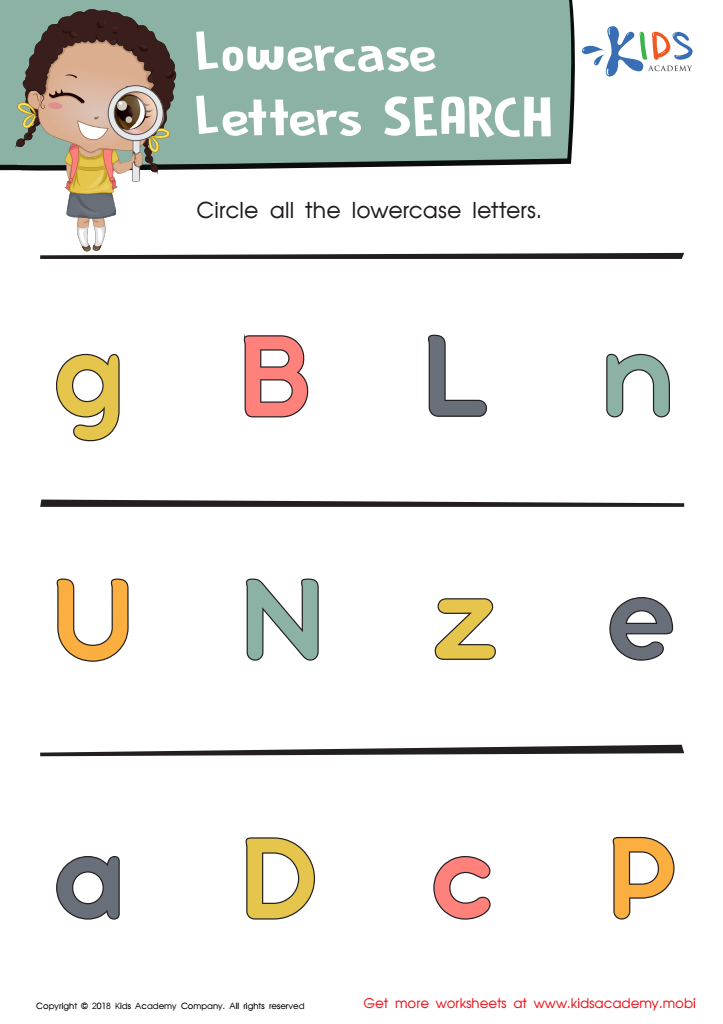
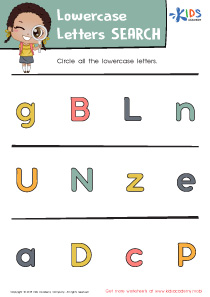
Lowercase Letters Search: Assessment Worksheet
Circle all the lowercase letters in this worksheet. Identify them among a mix of uppercase and lowercase letters. Your child will have fun with this exercise thanks to its bright primary colors. Enjoyment and learning go hand-in-hand!
Lowercase Letters Search: Assessment Worksheet
Worksheet
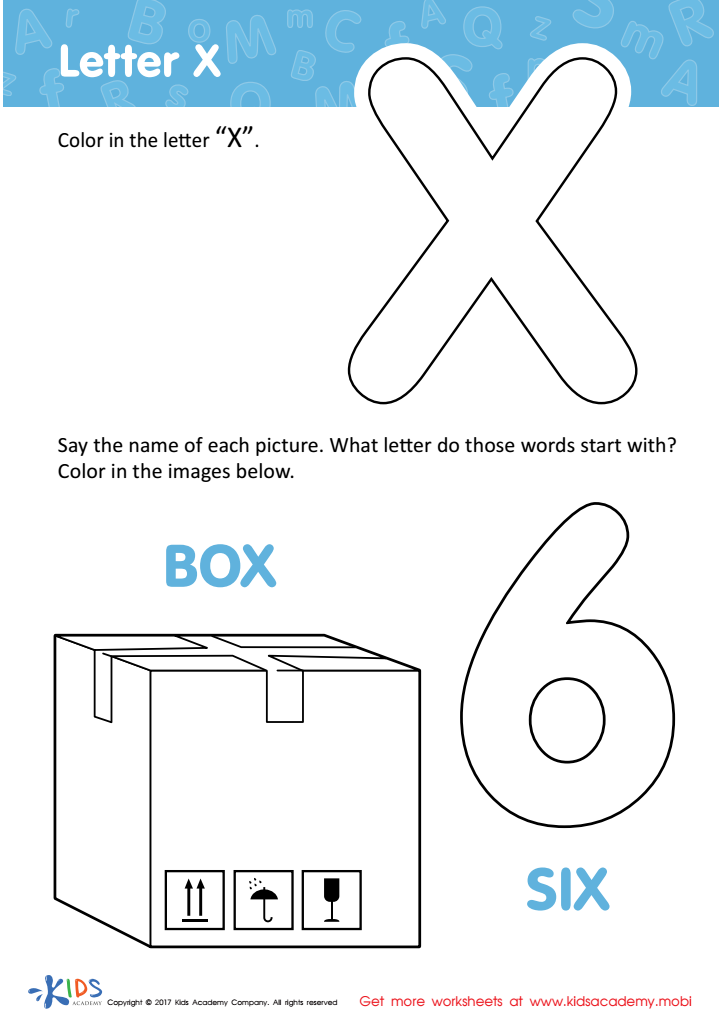
Letter X Coloring Sheet
Help your little learner find the letter "X" with this coloring page. Go over the sounds it makes and how to find it at the end of words. Unlock the mystery of this unique letter - it's one of the most challenging but rewarding letters to learn!
Download (PDF)
Assign to My Students
Assign to My Students
Letter X Coloring Sheet
Worksheet
Join Kids Academy for Free
Who is primarily going to use this learning content?








Letter recognition is a foundational skill that paves the way for future success in reading and writing for children aged 3-4. During these early years, a child's brain is particularly receptive to language acquisition, and introducing letter recognition sets the stage for later literacy skills. For parents and teachers, focusing on letter recognition offers several benefits.
Firstly, it builds familiarity with the alphabet, enabling children to understand that letters create words that convey meaning. This understanding is crucial for developing reading fluency. Early letter recognition also aids in decoding skills, allowing children to sound out words—a fundamental part of reading.
Moreover, familiarity with the alphabet enhances children's vocabulary through more frequent and meaningful interactions. Recognizing letters also boosts children’s confidence and fosters a love for learning, as they feel excited about their growing ability to understand written language.
Learning letters through fun and engaging approaches like games, songs, and tactile activities can significantly enhance retention and encourage a positive attitude toward reading. Early success in these tasks can create a lasting foundation, giving children an early advantage that contributes to sustained academic success.
Therefore, parents and teachers should place a high priority on easy, enjoyable letter recognition activities during these formative years to boost overall language development and cognitive growth.