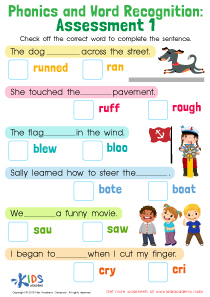
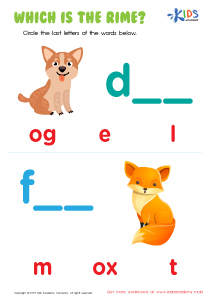
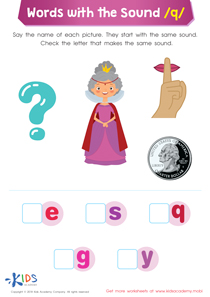
Letter-sound correlation Easy Letter Sounds Worksheets for Ages 3-4
3 filtered results
-
From - To
Introduce your preschooler to the magical world of letters with our engaging Letter-Sound Correlation Easy Letter Sounds Worksheets, designed specifically for children aged 3-4. These user-friendly worksheets help young learners establish the crucial connection between letters and their corresponding sounds. Through fun activities like matching, coloring, and tracing, kids will develop essential pre-reading skills, setting a strong foundation for future literacy success. Each worksheet is crafted to captivate and motivate early learners, making the journey of learning both educational and enjoyable. Perfect for parents and teachers aiming to nurture a love for reading and phonics from an early age.
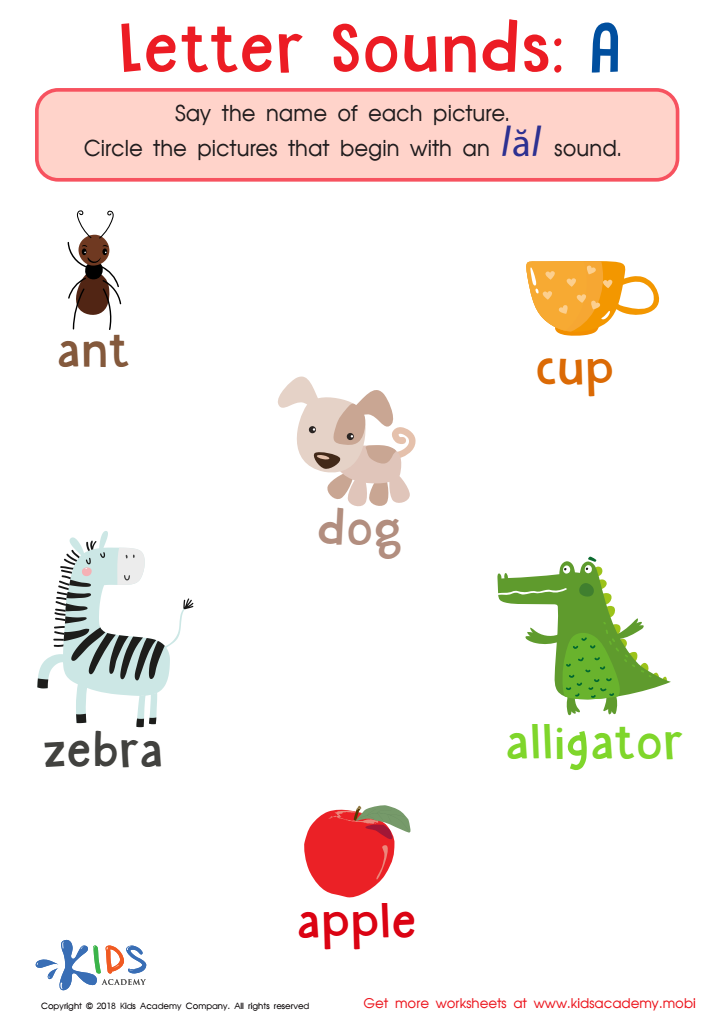
Letter A Sounds Worksheet
 Assign to My Students
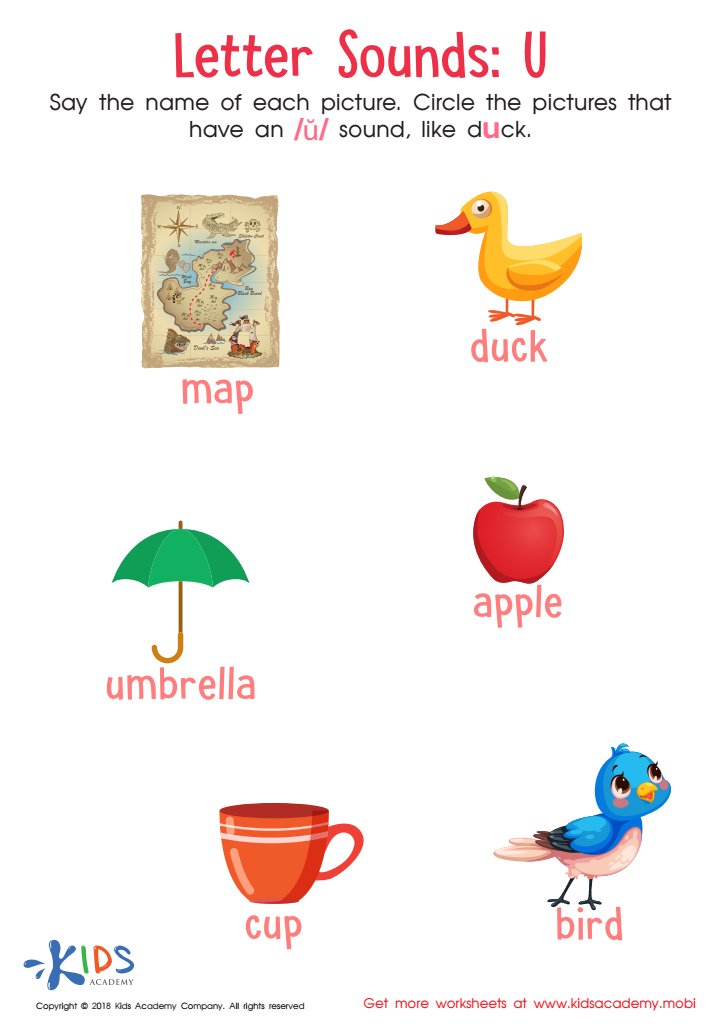
Letter U Sounds Worksheet
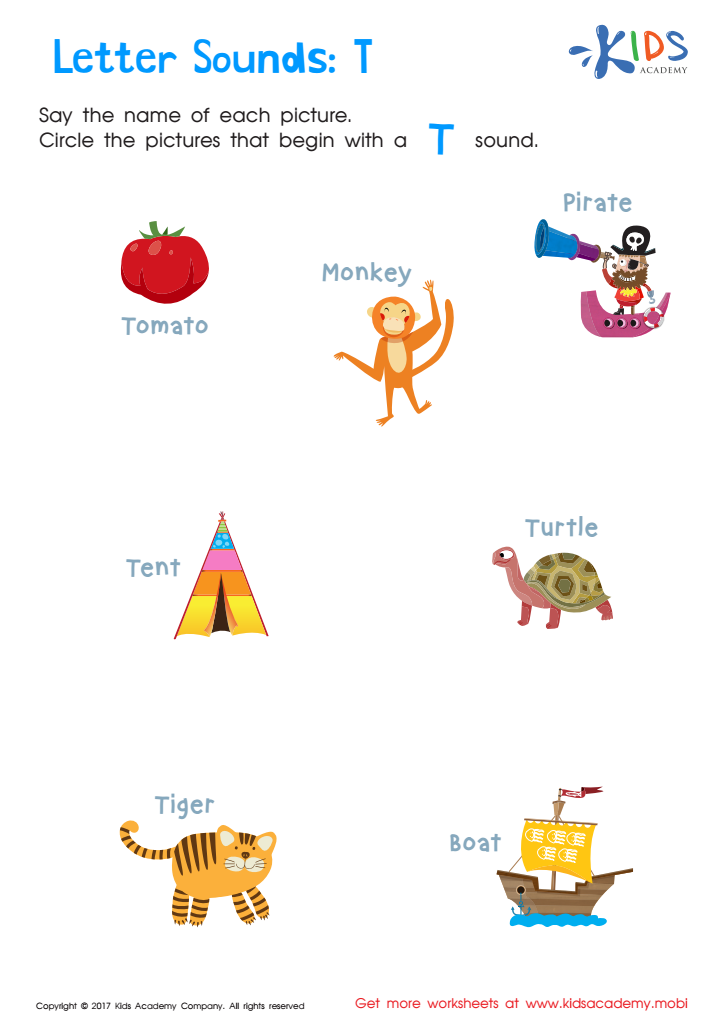
Letter T Sounds Worksheet








Letter-sound correlation is a foundational skill for early literacy, making it crucial for parents and teachers to give it due attention, especially for children aged 3-4. At this early developmental stage, children are highly receptive to learning and lay down the cognitive framework for future reading and writing skills. Understanding the link between letters and the sounds they represent, often referred to as phonemic awareness, is essential for several reasons.
Firstly, strong letter-sound correlation helps children decode words, making the process of reading more intuitive and less laborious. When kids grasp that the letter "B" corresponds to the /b/ sound, they can start sounding out words like "bat" or "ball," which enhances their ability to read independently.
Secondly, it fosters a sense of phonological awareness, allowing children to understand that words are made up of individual sounds. This awareness is pivotal in developing reading fluency and comprehension skills.
Thirdly, early proficiency in letter sounds also facilitates spelling and writing. Children who can match letters to their sounds are better able to transcribe the sounds they hear, aiding in early writing efforts.
Moreover, successfully mastering these skills can boost a child’s confidence, encouraging a positive attitude toward learning. Thus, incorporating easy letter sounds into the early educational experiences of young children equips them with the tools they need for future academic success.