
Shape identification Easy Math Worksheets for Ages 3-4
3 filtered results
Difficulty Level
Grade
Age
-
From - To
Subject
Activity
Standards
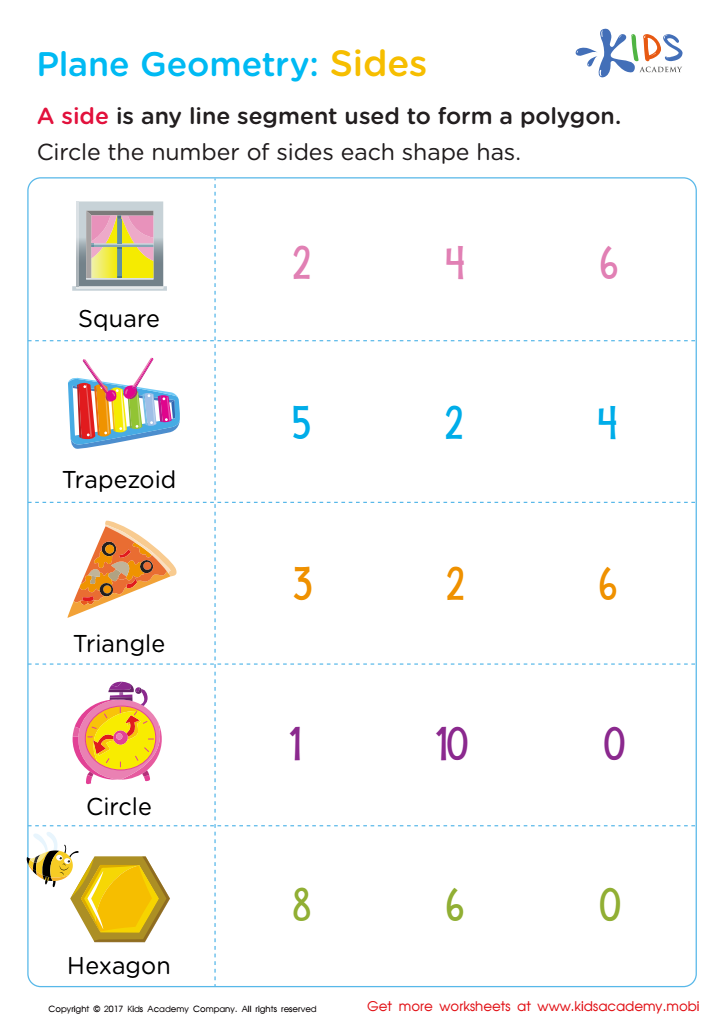
Introducing our Shape Identification Easy Math Worksheets, specially designed for ages 3-4! Foster your child's early math skills with fun and engaging activities that teach them to identify and name basic shapes. With colorful illustrations and simple instructions, these worksheets make learning enjoyable and accessible. Perfect for toddlers and preschoolers, these printable resources help develop critical thinking and fine motor skills. Shape recognition is foundational for future math success, and our worksheets provide the ideal start. Visit the webpage today and set your little one on a path to confident learning! Only at Kids Academy.
Favorites
With answer key
Interactive
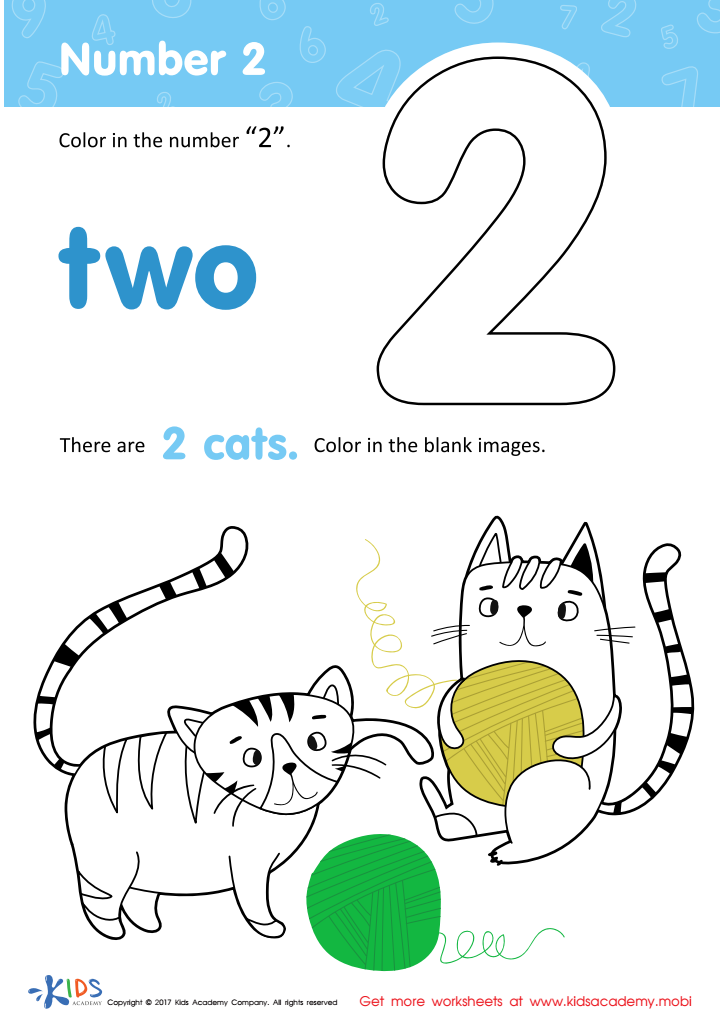
Number 2 Printable
Help your child learn to recognize the number two with these cats and their yarn balls. Print this coloring page – it's great for counting and coloring fun! Your child will develop basic numeracy skills as they visually see numbers in action.
Download (PDF)
 Assign to My Students
Assign to My Students
Number 2 Printable
Worksheet
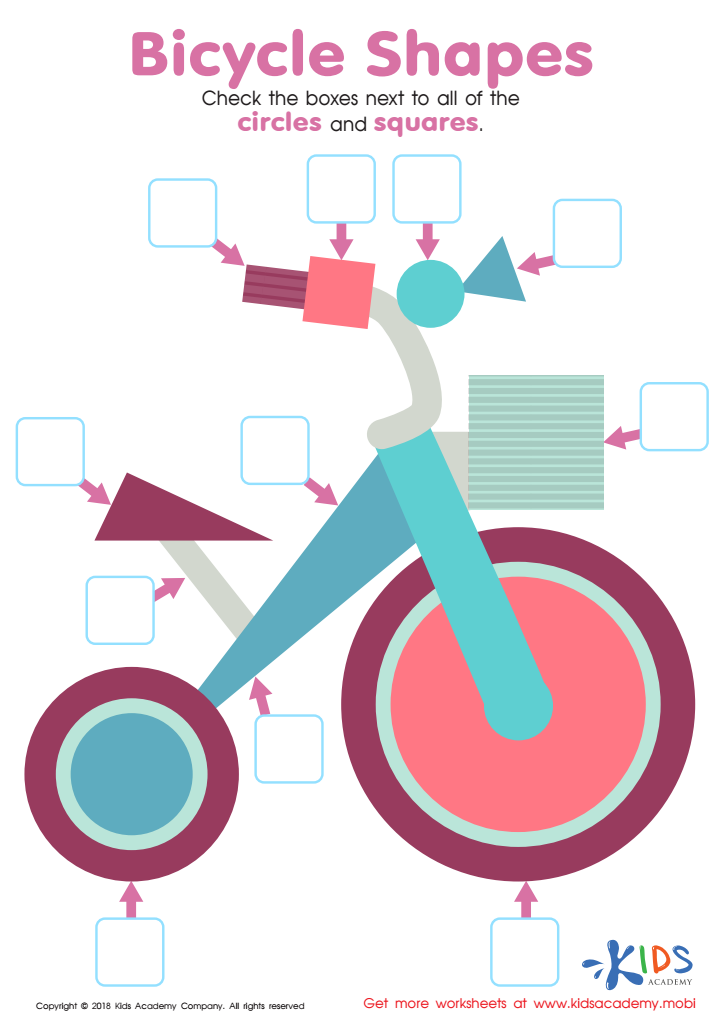
Bicycle Shapes Worksheet
This fun geometry worksheet for preschoolers asks the child to spot hidden shapes (circles, squares) in a colorful bicycle. Each shape varies in size and the child checks the box when it's found. It's a visual way to teach shapes.
Bicycle Shapes Worksheet
Worksheet
Join Kids Academy for Free
Who is primarily going to use this learning content?








Shape identification and basic math for children ages 3-4 lay a critical foundation for later learning. Parents and teachers should care about these early skills for several compelling reasons.
First, recognizing shapes helps young children develop visual-spatial awareness, an ability crucial for understanding more complex mathematical concepts like geometry, fractions, and area in later years. Understanding shapes also aids in the development of cognitive skills such as categorization, comparison, and problem-solving.
Second, shape identification is closely linked to language development. Children learn descriptive vocabulary such as "circle," "square," and "triangle," enhancing their ability to communicate effectively. For instance, being able to describe objects and their attributes enriches a child's conversation and comprehension skills.
Furthermore, learning shapes boosts fine motor skills. Activities like tracing, drawing, or constructing shapes with building blocks or puzzles enhance hand-eye coordination and dexterity.
Another reason is the correlation between early math skills and future academic success. Research consistently shows that children who have strong early math skills are more likely to excel not only in math but also in reading and other academic subjects as they grow older.
In summary, investing time in teaching 3- to 4-year-olds shape identification and basic math is crucial as it promotes cognitive, language, and motor skill development, setting the stage for continuous academic and personal growth.








