Handwriting practice Easy Alphabet Coloring Pages Worksheets for Ages 3-6
4 filtered results
Difficulty Level
Grade
Age
-
From - To
Subject
Activity
Standards
Unlock your child's creativity and boost their handwriting skills with our Easy Alphabet Coloring Pages Worksheets, designed specifically for ages 3-6. These engaging worksheets combine fun coloring activities with essential handwriting practice, helping young learners become familiar with letter shapes and sounds. Each page features bold, simple letters that children can trace and color, making learning enjoyable and effective. Perfect for preschool and kindergarten, our printable resources support phonics development and fine motor skills. Inspire your little ones to express themselves as they explore the world of letters through art and writing. Start your handwriting journey today!
Favorites
With answer key
Interactive
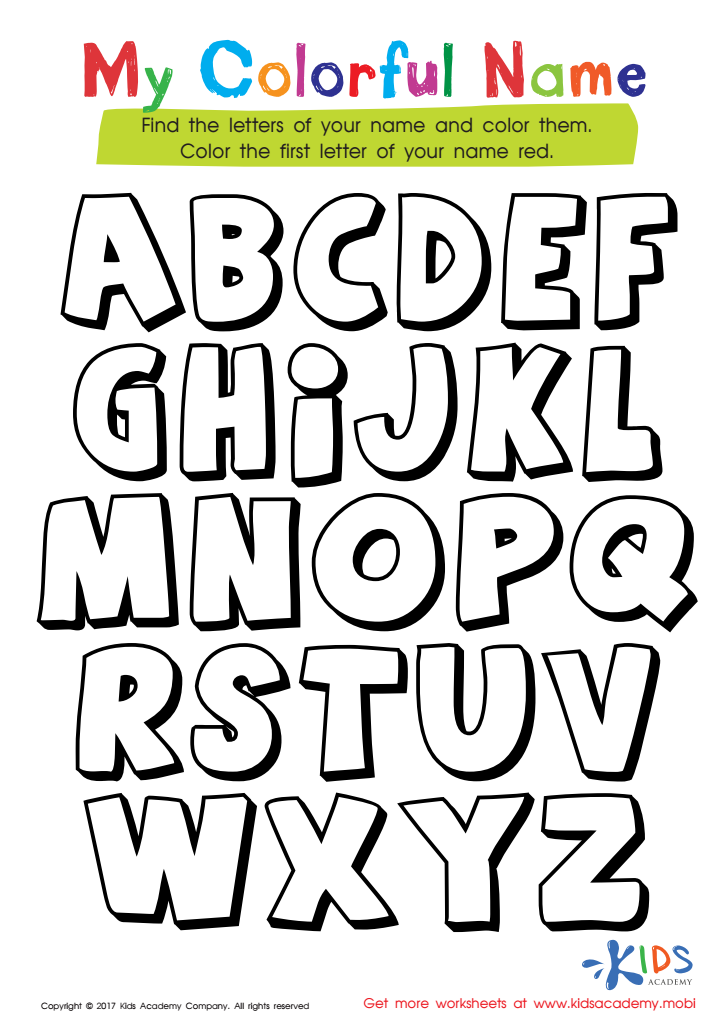
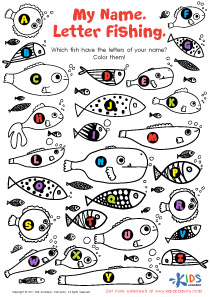
My Colorful Name Worksheet
Writing their names is a milestone for children. With this worksheet, they recall the letters in their name and color the letters one at a time. Spelling and alphabet order are reinforced as they find each letter. Use this fun printable to help kids learn to write their names!
Download (PDF)
 Assign to My Students
Assign to My Students
My Colorful Name Worksheet
Worksheet
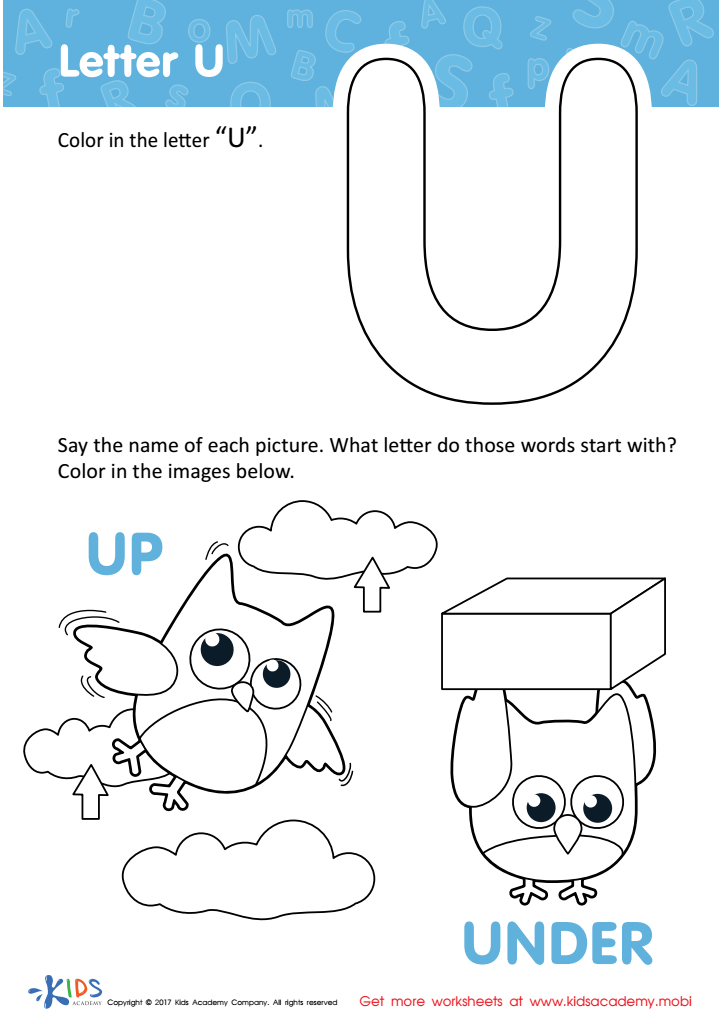
Letter U Coloring Sheet
This letter "U" coloring page helps your child learn two things at once - the letter "U" and positional words! An adorable owl character aids in understanding up and under. In a few strokes of a crayon, your child can master these concepts.
Download (PDF)
Assign to My Students
Assign to My Students
Letter U Coloring Sheet
Worksheet
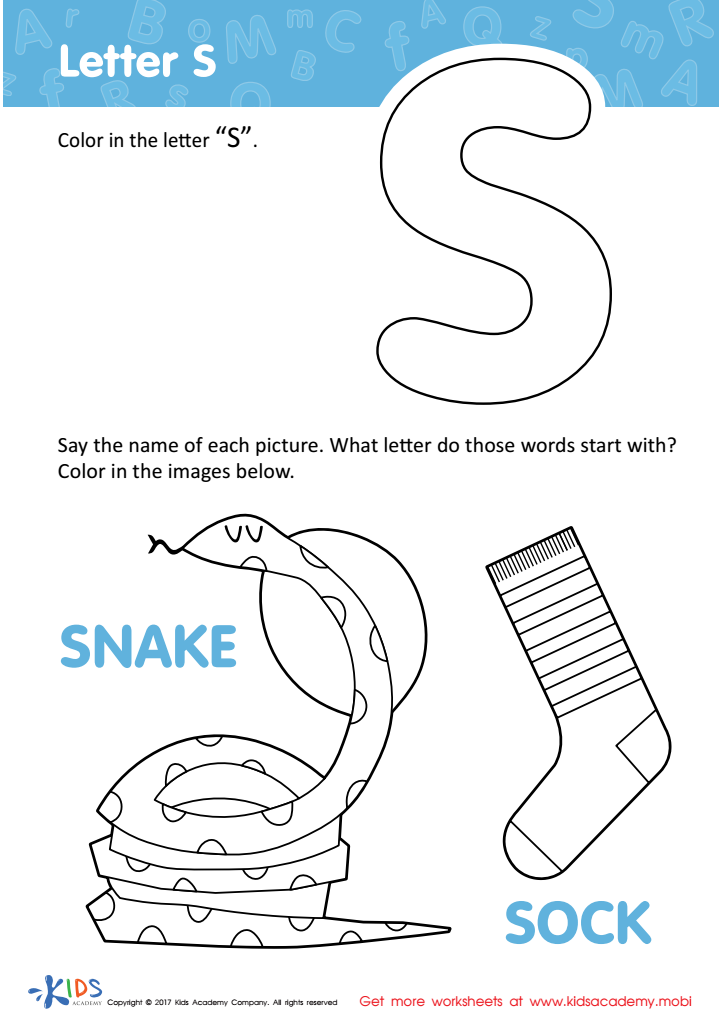
Letter S Coloring Sheet
Help your child practice recognizing the letter "S" and the sound it makes with this fun coloring page. It features a slippery snake, smelly sock and more! Give them extra practice by coming up with more "S" sounds and words.
Download (PDF)
Assign to My Students
Assign to My Students
Letter S Coloring Sheet
Worksheet
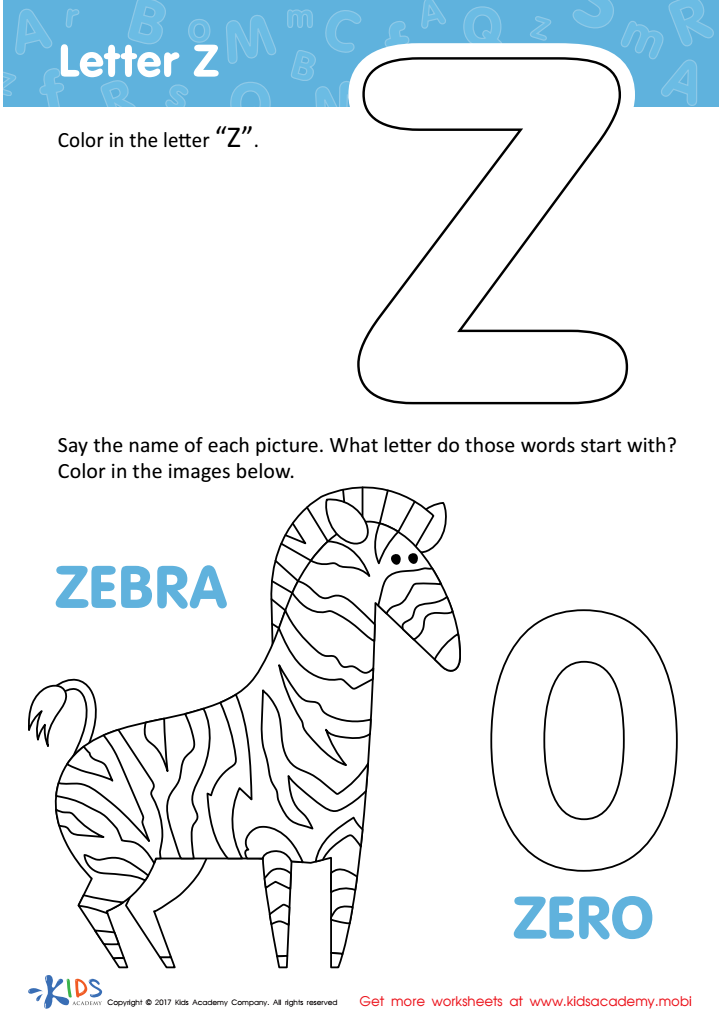
Letter Z Coloring Sheet
This coloring page featuring the letter "Z" is perfect for your child to practice letter recognition! Help them learn the unique sound it makes as they color. It'll be a fun and easy activity they won't have trouble with!
Download (PDF)
Assign to My Students
Assign to My Students
Letter Z Coloring Sheet
Worksheet
Join Kids Academy for Free
Who is primarily going to use this learning content?




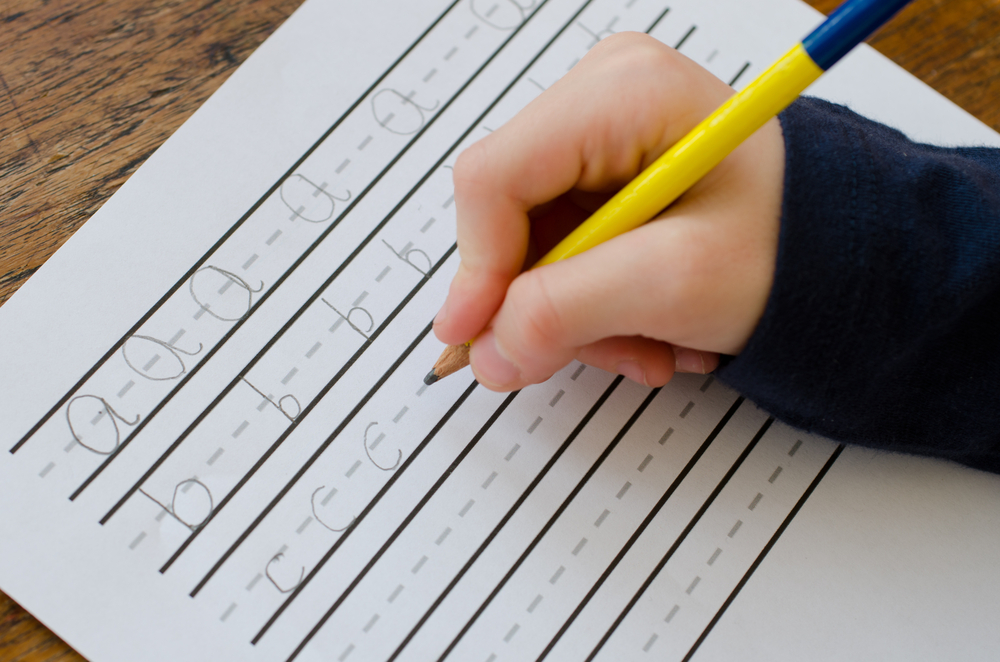
Handwriting practice is crucial for young children, and Easy Alphabet Coloring Pages serve as an engaging tool for this developmental stage, particularly for ages 3-6. At this age, children are developing fine motor skills and hand-eye coordination, which are essential for writing. Coloring activities encourage these skills by enabling children to grasp crayons, control their movements, and develop dexterity.
Moreover, coloring pages that focus on alphabet letters can enhance letter recognition and phonemic awareness. This solidifies foundational literacy skills while making learning fun and interactive. Incorporating playful activities helps sustain children’s interest, making them more likely to practice consistently.
Furthermore, parents and teachers can nurture creativity and self-expression through coloring, as children can choose their colors and designs. This fosters a sense of accomplishment when they complete their artwork, boosting their confidence.
With the rise of digital distractions, maintaining a balanced approach to learning is crucial. Traditional writing skills still hold significant importance in academic success and everyday life. Easy Alphabet Coloring Pages serve as a valuable resource, fostering essential skills while keeping the learning experience dynamic and enjoyable. Thus, parents and teachers should prioritize these practices for holistic child development.