Counting skills Easy Word Problems Worksheets for 3-Year-Olds
6 filtered results
-
From - To
Enhance your 3-year-olds' mathematical journey with our engaging Counting Skills Easy Word Problems Worksheets. Designed for early learners, these printable worksheets offer a fun introduction to simple math concepts through relatable scenarios. Each worksheet encourages children to count objects, recognize numbers, and apply their counting skills in practical examples, fostering problem-solving abilities at an early age. Our user-friendly format makes learning enjoyable, nurturing a love for math while boosting confidence. Ideal for parents and educators alike, these worksheets seamlessly integrate play with learning, setting the foundation for future math success. Explore our collection today and make counting a delightful adventure!
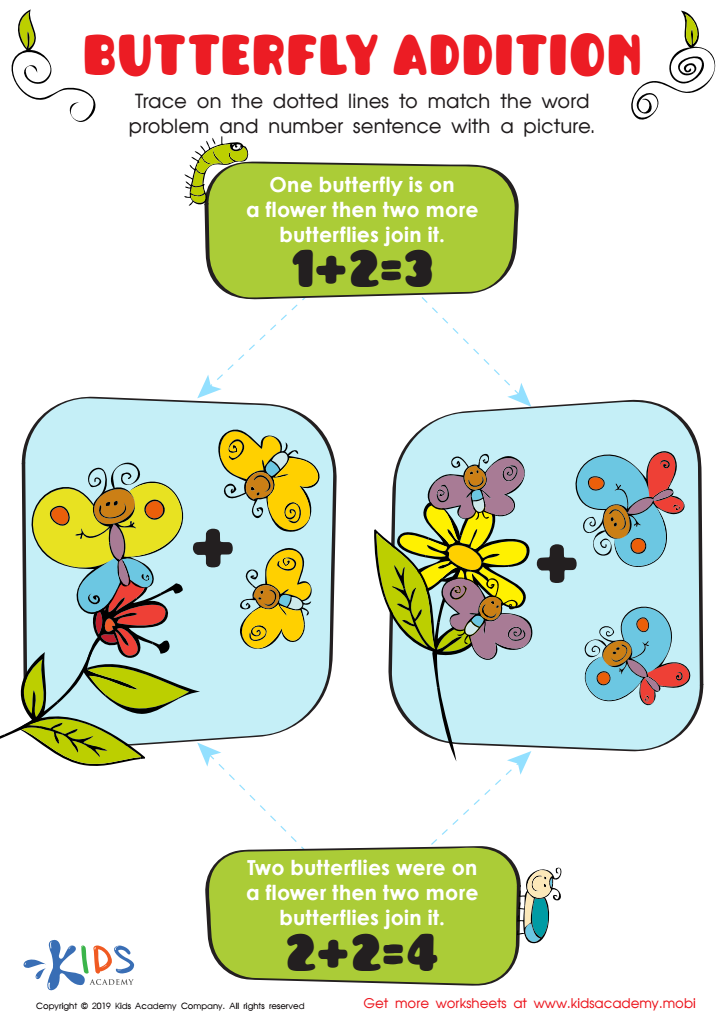
Butterfly Addition Worksheet
 Assign to My Students
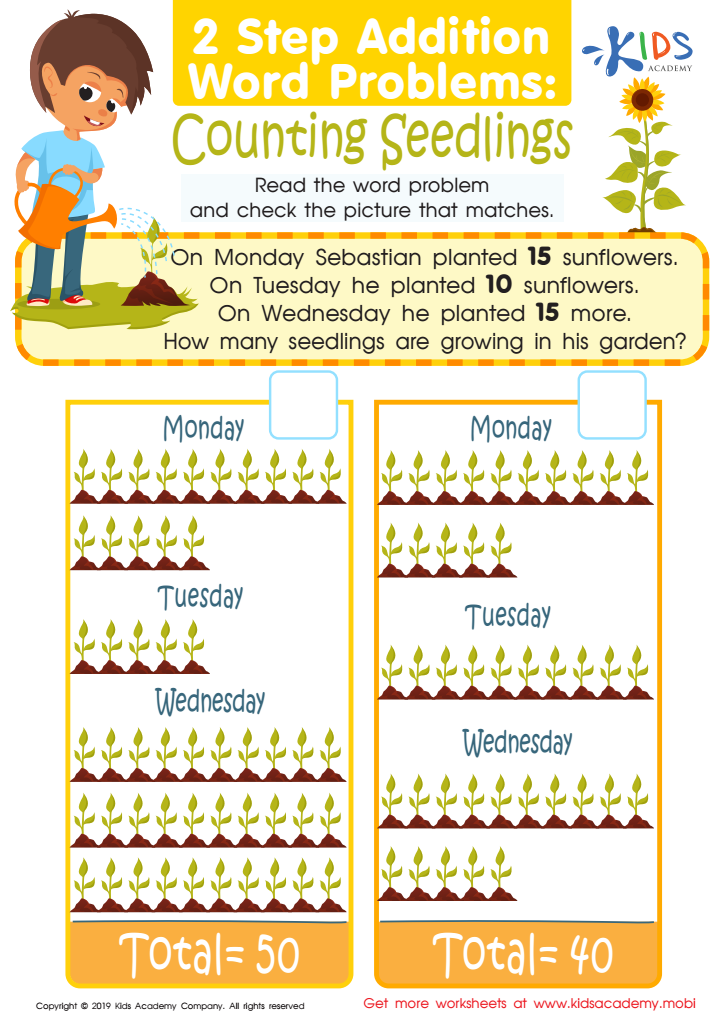
Counting Seedlings Worksheet
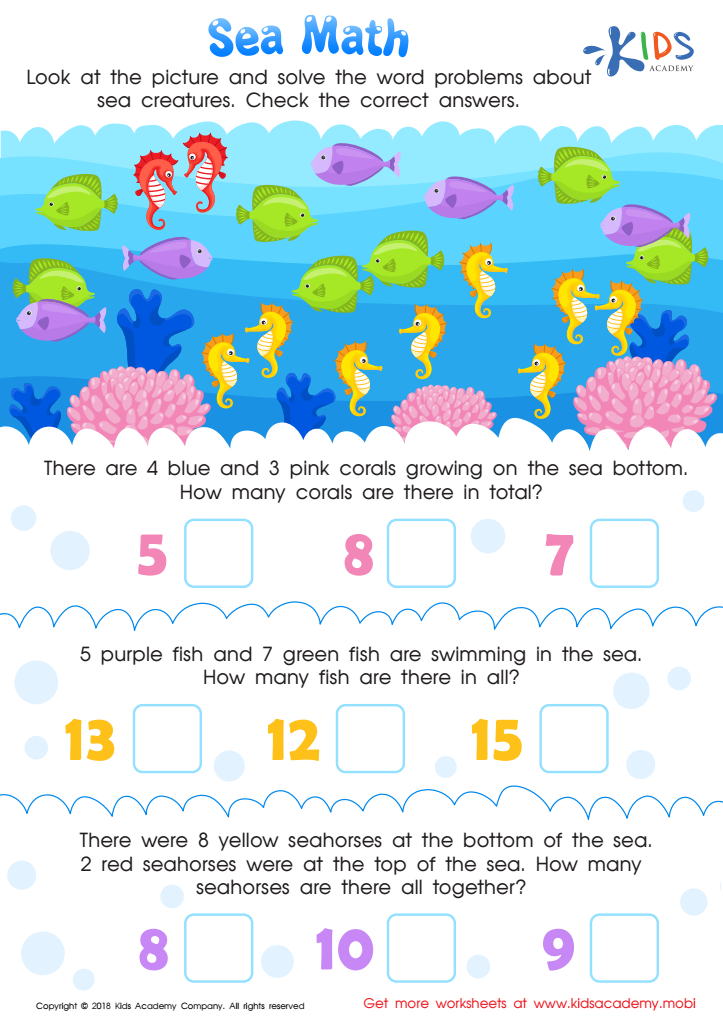
Sea Math Worksheet
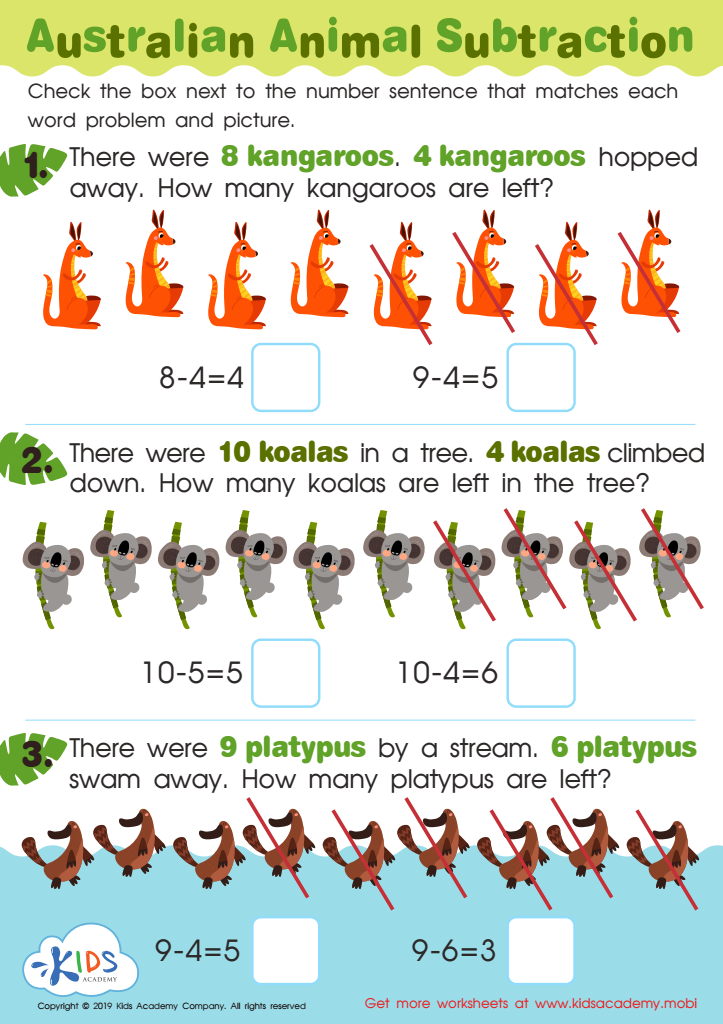
Australian Animal Subtraction Worksheet
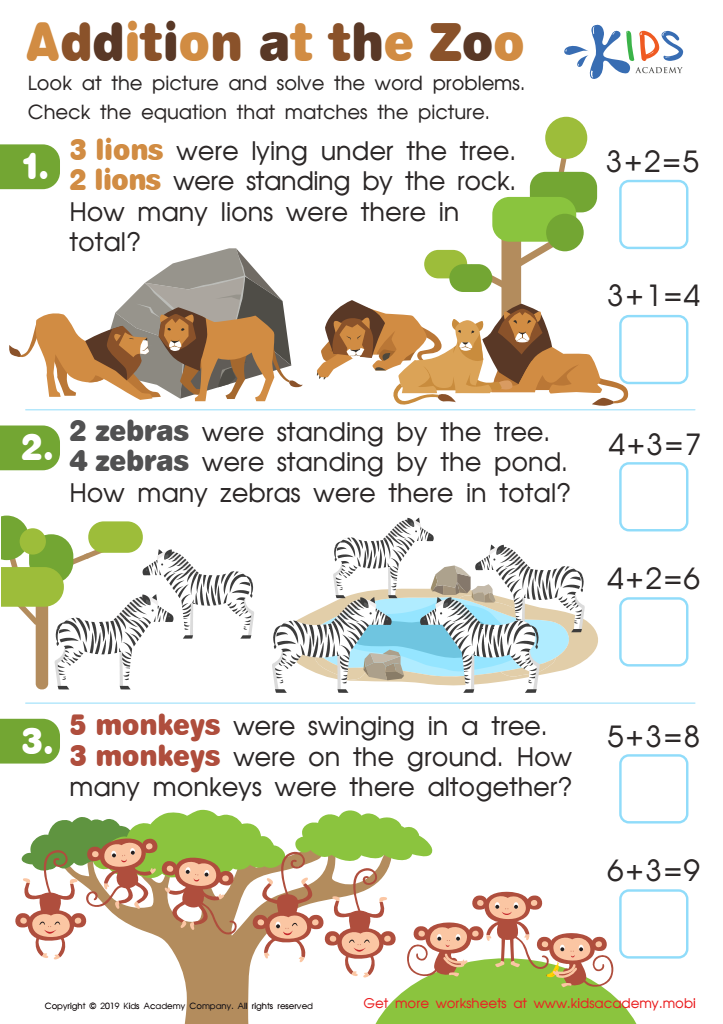
Addition at the Zoo Worksheet
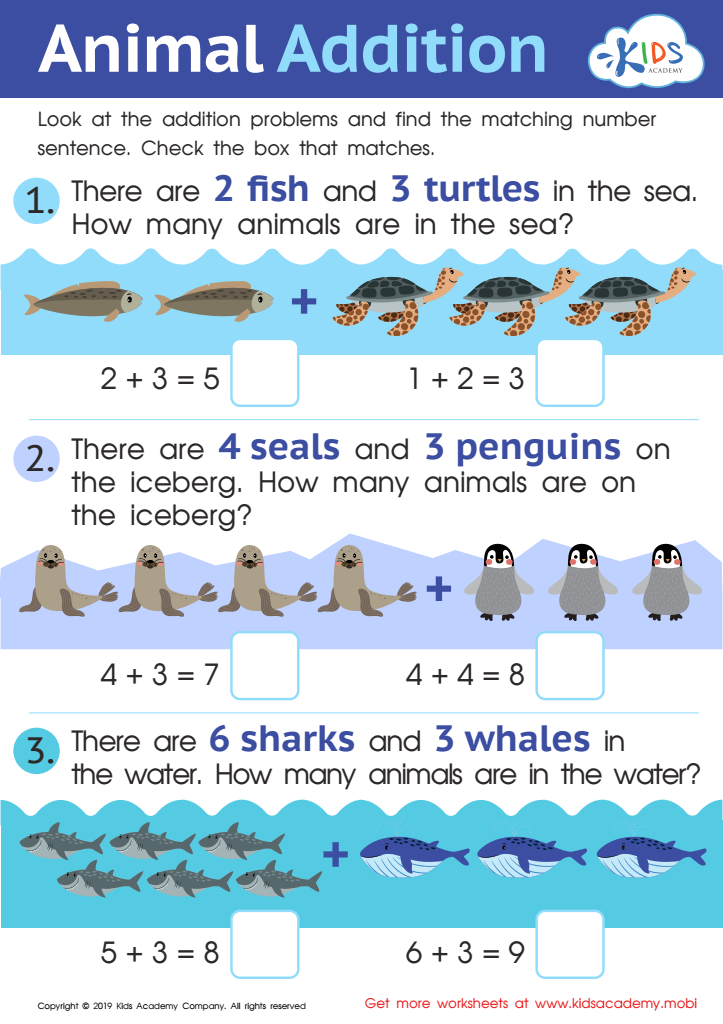
Animal Addition Worksheet








Counting skills and simple word problems are essential for 3-year-olds as they lay the foundation for mathematical understanding and cognitive development. At this age, children are naturally curious and eager to explore their environment, making it an ideal time to introduce counting concepts in engaging ways.
Counting helps children develop number recognition, understand sequences, and grasp basic quantities. Engaging in easy word problems provides a practical context for these skills, allowing children to apply counting in real-life situations. This learning method encourages critical thinking and problem-solving, vital skills not just in math, but in everyday life.
Moreover, developing counting skills fosters a love for learning and enhances communication abilities. Parents and teachers can use everyday scenarios, such as counting toys or snacks, to make learning fun and interactive. Building a strong numerical foundation at this young age promotes confidence and prepares children for more complex mathematical concepts in the future.
By focusing on counting and easy word problems, parents and teachers can create a positive learning environment that nurtures a child's love for math, encourages deeper thought processes, and supports overall cognitive growth, making it a crucial aspect of early childhood education.








