Problem-Solving Skills Easy Addition & Subtraction Worksheets for Ages 4-8 - Page 2
29 filtered results
-
From - To
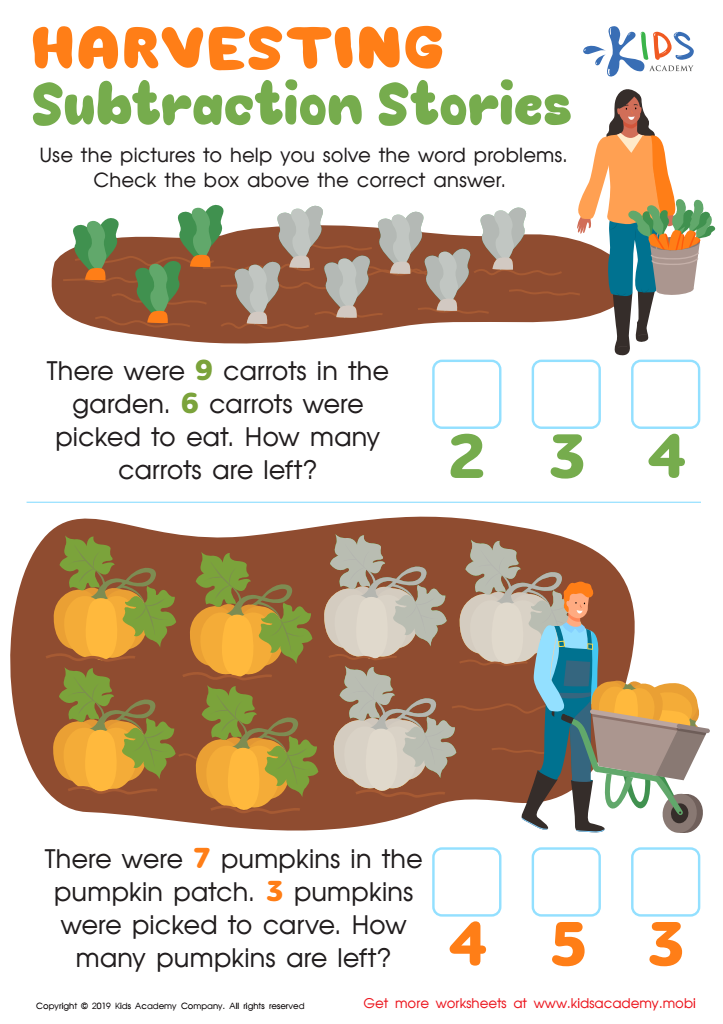
Harvesting Subtraction Stories Worksheet
 Assign to My Students
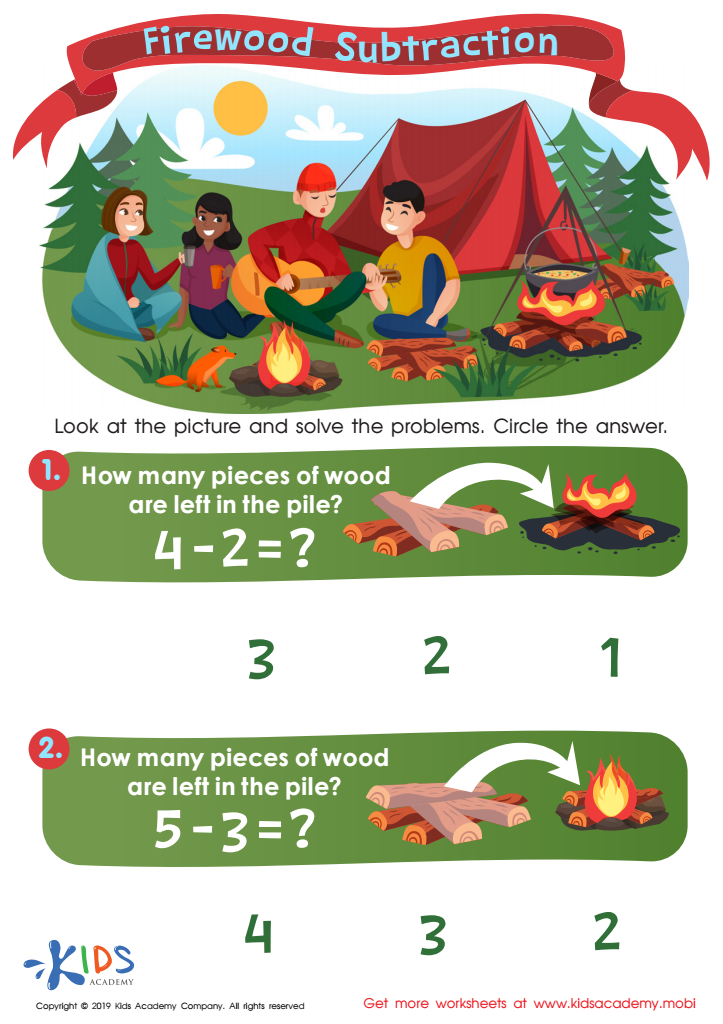
Firewood Subtraction Worksheet
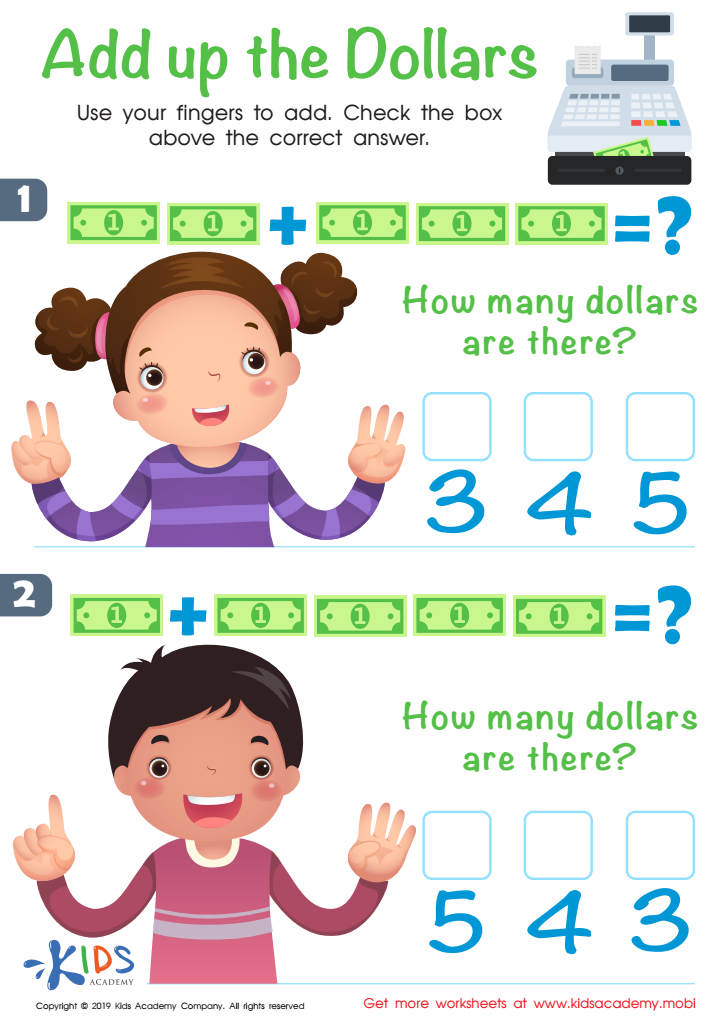
Add up the Dollars Worksheet
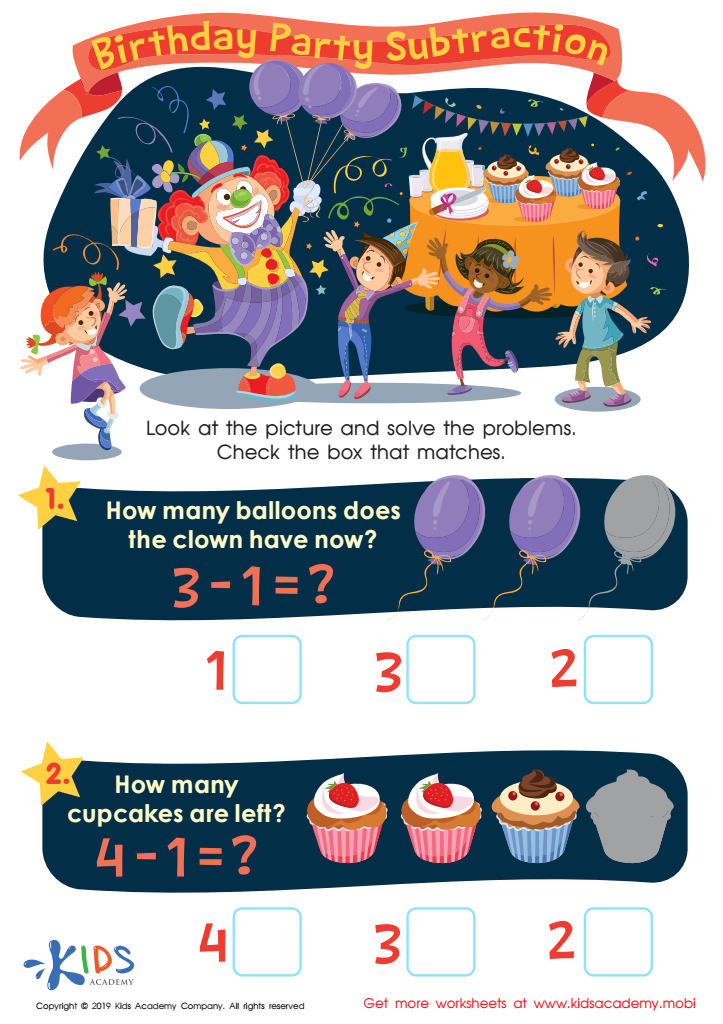
Birthday Party Subtraction Worksheet
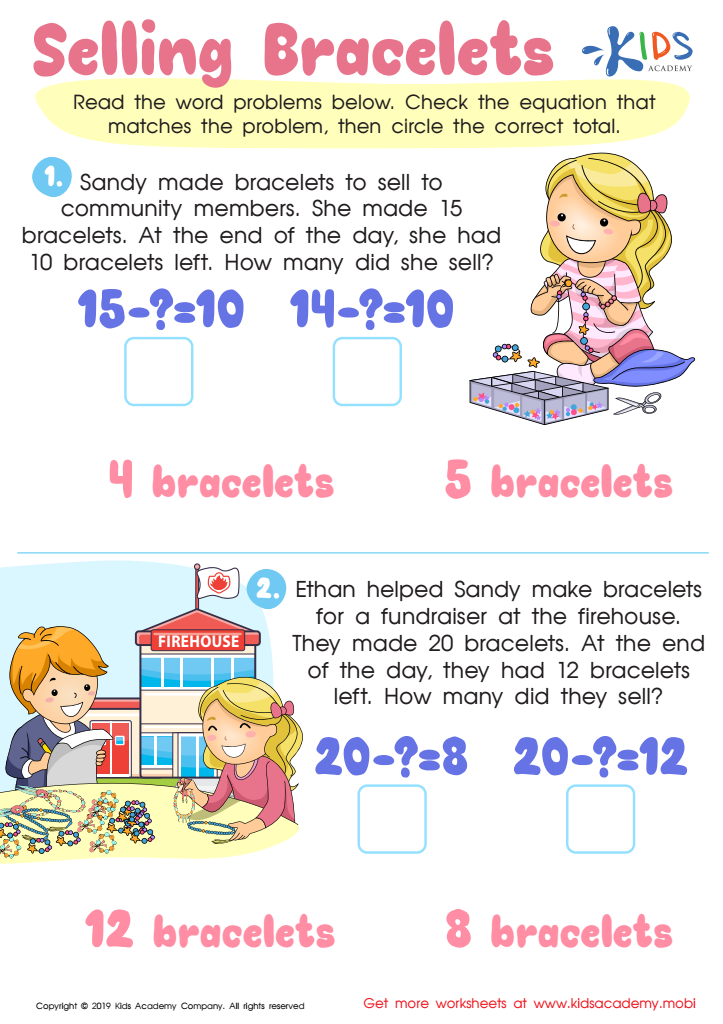
Selling the Bracelets Worksheet








Parents and teachers should prioritize problem-solving skills, particularly in easy addition and subtraction for children ages 4-8, as these skills form the foundation for future mathematical understanding and critical thinking. Mastering basic arithmetic at an early age fosters cognitive development, allowing children to grasp more complex concepts in later years. Additionally, problem-solving nurtures analytical skills, encouraging children to explore different strategies for finding solutions and building resilience when they encounter challenges.
Engaging in simple addition and subtraction activities boosts children's confidence and enjoyment in math. A positive attitude toward mathematics can lead to improved academic performance, as children who embrace learning from a young age are more likely to tackle future topics with enthusiasm. Moreover, integrating math into everyday scenarios helps children see the practical applications of what they learn, making education relevant and meaningful.
Furthermore, by fostering these skills, parents and teachers empower children to become independent thinkers. Children who learn to approach problems methodically are better prepared to navigate complexities in various subjects and aspects of life. Ultimately, nurturing problem-solving skills at an early age lays the groundwork for lifelong learning and empowers future success, both academically and personally.








