Following instructions Easy Numbers Worksheets for Ages 7-8
3 filtered results
-
From - To
Discover our "Following Instructions Easy Numbers Worksheets for Ages 7-8," designed to build essential math skills in a fun, engaging way. These worksheets help children understand numbers, enhance their ability to follow directions, and develop critical thinking. With a variety of activities tailored to their age group, students can effortlessly learn to count, recognize patterns, and follow step-by-step instructions. Perfect for teachers and parents, our worksheets make learning numbers exciting and accessible for young learners. Explore these resources to give your child a solid foundation in math and boost their confidence through interactive, easy-to-follow exercises.
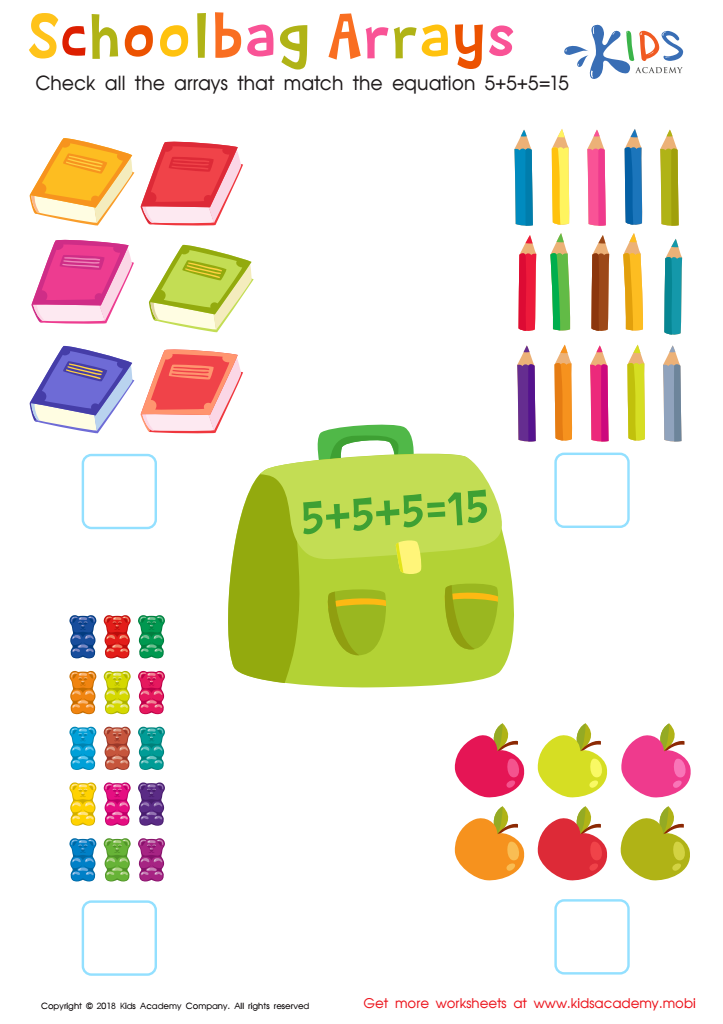
Schoolbag Arrays Worksheet
 Assign to My Students
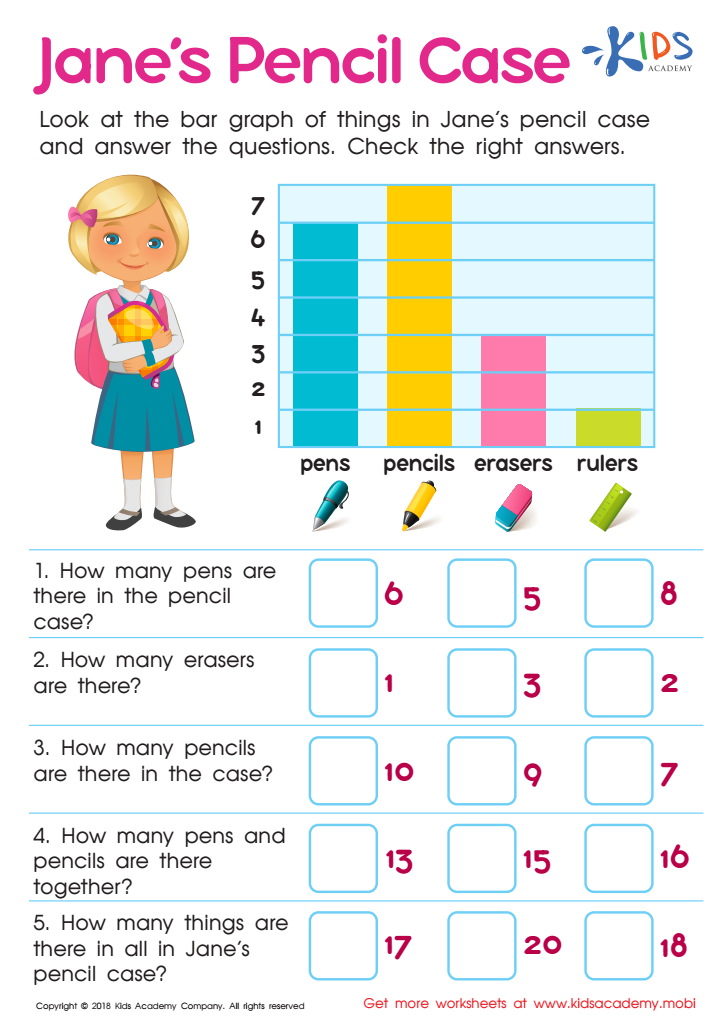
Jane's Pencil Case Worksheet
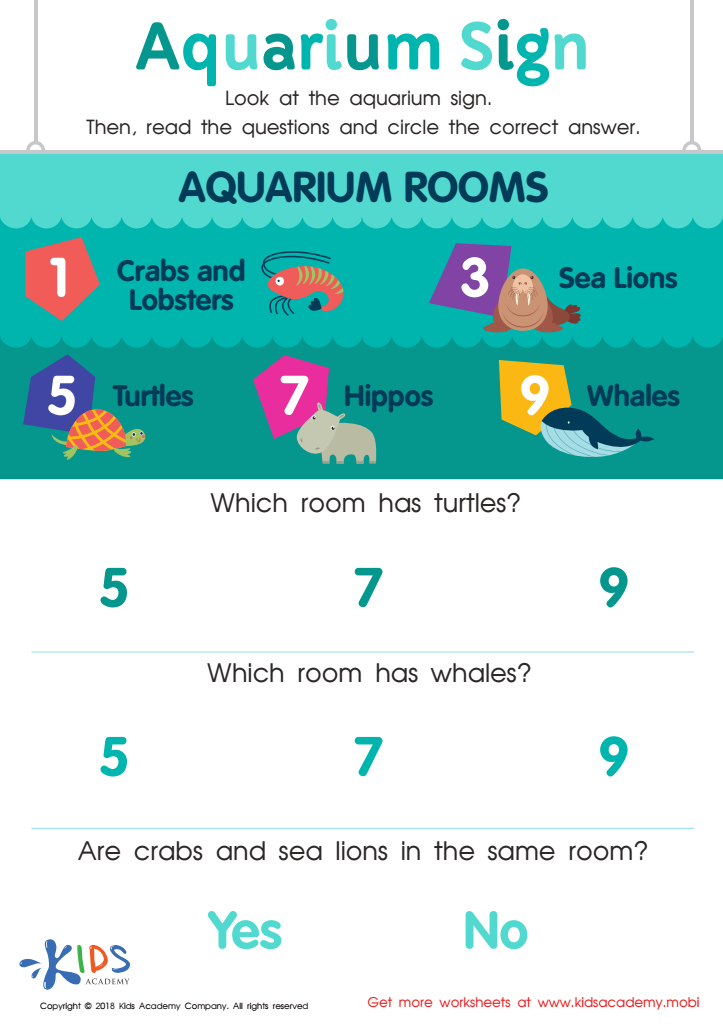
Assessment: Aquarium Sign Worksheet








Following instructions is a crucial skill for children aged 7-8, and incorporating this skill with easy numbers is highly beneficial for their development. At this stage, children are transitioning from basic counting to more complex mathematical concepts and operations. Parents and teachers should prioritize activities that combine following instructions with numbers to strengthen both cognitive abilities and listening skills.
Firstly, following instructions enhances children's ability to concentrate and pay attention to details, which are essential skills for academic success. When children practice following step-by-step numerical instructions, they reinforce their understanding of sequences and logical order. This foundation is pivotal for more advanced math problems they'll encounter later.
Secondly, easy numbers provide a non-intimidating introduction to mathematical operations such as addition, subtraction, multiplication, and division. By working with simple, manageable numbers, children can build confidence and competence in math. This early positive experience is vital for fostering a love for learning and reducing math anxiety in later years.
Lastly, blending instructional following with numbers nurtures problem-solving skills and critical thinking. It transforms abstract concepts into concrete, understandable tasks. Overall, caring about these skills at a young age equips children with the tools they need for future academic pursuits and everyday life, fostering a successful and well-rounded development.








