Handwriting practice Easy Letter Recognition Worksheets for 7-Year-Olds
3 filtered results
Difficulty Level
Grade
Age
-
From - To
Subject
Activity
Standards
Elevate your child's handwriting skills with our easy letter recognition worksheets designed specifically for 7-year-olds! These engaging activities combine fun and learning, allowing children to practice formation and proper letter alignment. Each worksheet focuses on both uppercase and lowercase letters, promoting essential skills in reading and writing. Perfect for at-home learning or classroom use, our resources help kids develop fine motor skills while recognizing and mastering the alphabet. Encourage your child's confidence and creativity with every stroke, ensuring they build a strong foundation for future literacy. Download our handwriting practice worksheets today and make learning an enjoyable adventure!
Favorites
With answer key
Interactive
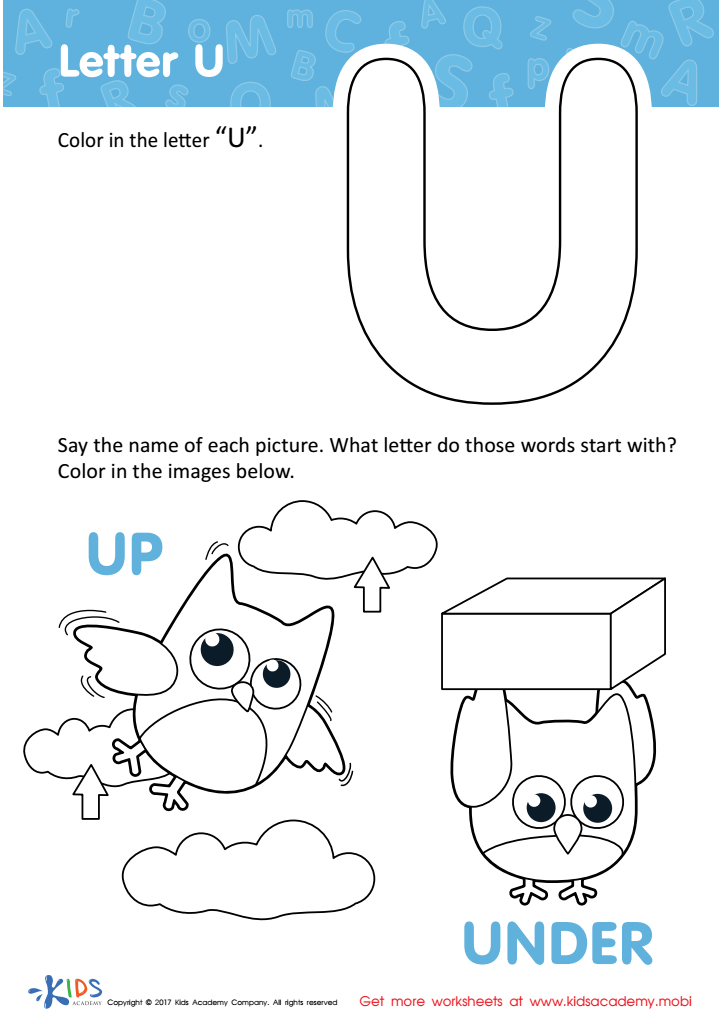
Letter U Coloring Sheet
This letter "U" coloring page helps your child learn two things at once - the letter "U" and positional words! An adorable owl character aids in understanding up and under. In a few strokes of a crayon, your child can master these concepts.
Download (PDF)
 Assign to My Students
Assign to My Students
Letter U Coloring Sheet
Worksheet
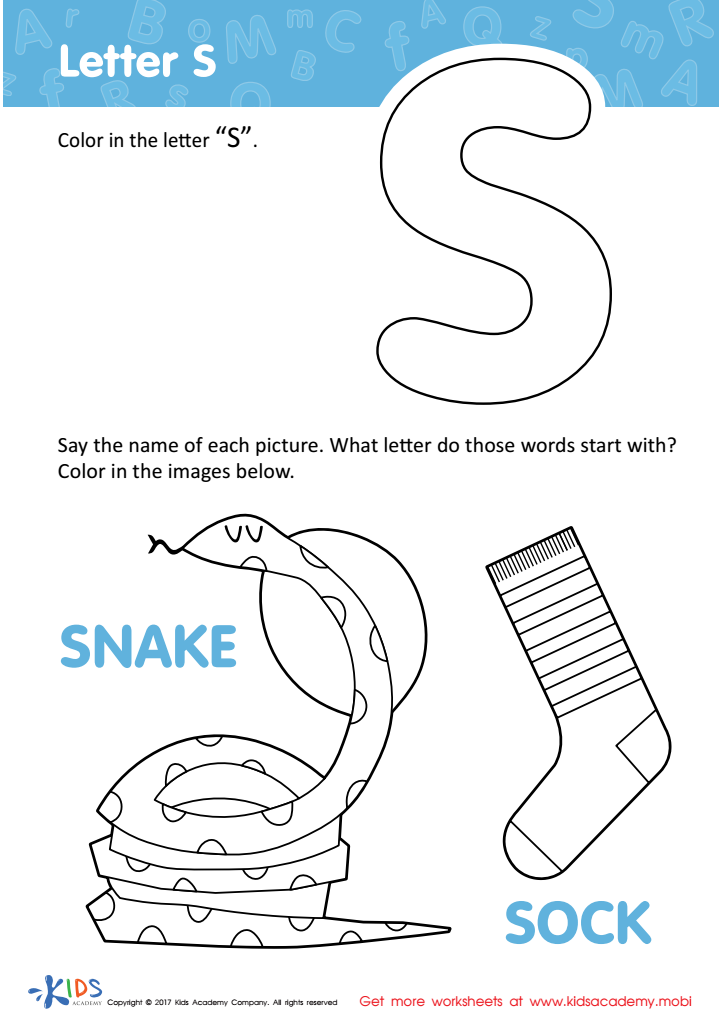
Letter S Coloring Sheet
Help your child practice recognizing the letter "S" and the sound it makes with this fun coloring page. It features a slippery snake, smelly sock and more! Give them extra practice by coming up with more "S" sounds and words.
Download (PDF)
Assign to My Students
Assign to My Students
Letter S Coloring Sheet
Worksheet
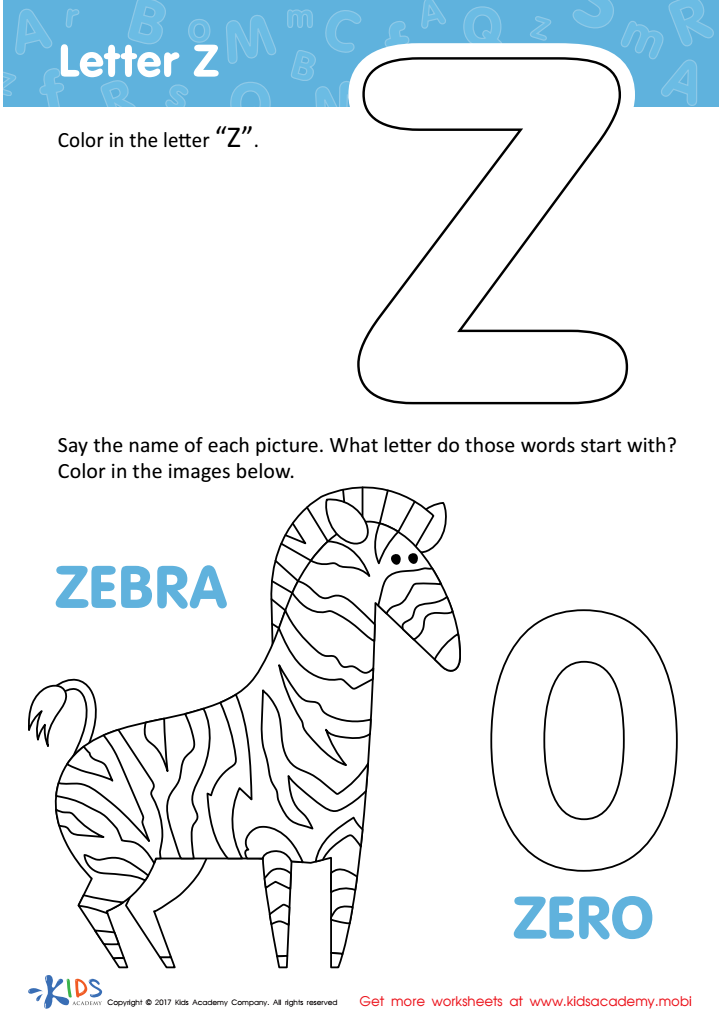
Letter Z Coloring Sheet
This coloring page featuring the letter "Z" is perfect for your child to practice letter recognition! Help them learn the unique sound it makes as they color. It'll be a fun and easy activity they won't have trouble with!
Download (PDF)
Assign to My Students
Assign to My Students
Letter Z Coloring Sheet
Worksheet
Join Kids Academy for Free
Who is primarily going to use this learning content?








Handwriting practice and letter recognition are crucial for 7-year-olds as they serve as foundational skills in early literacy development. At this age, children are beginning to connect letters with sounds, which is imperative for reading and writing proficiency. Effective handwriting skills help children express their thoughts clearly and confidently. It also cultivates fine motor skills, enhancing their overall coordination.
Moreover, when children master letter recognition, they gain the ability to decode words, leading to improved literacy. This becomes increasingly important as they advance in their education, where the ability to read comprehension becomes vital for all subjects.
For parents and teachers, facilitating an engaging approach to handwriting and letter recognition can make learning more enjoyable for children. Interactive activities such as sensory writing, using colorful materials, or incorporating technology can enhance the learning experience. By emphasizing handwriting and letter recognition, adults can help children develop the skills needed to navigate their academic journey successfully.
Ultimately, fostering these essential skills not only supports a child’s current educational needs but also builds their self-esteem and encourages a lifelong love for learning. Prioritizing these practices is investing in a child’s future success.