Handwriting practice Easy Letter Recognition Worksheets for 9-Year-Olds
3 filtered results
Difficulty Level
Grade
Age
-
From - To
Subject
Activity
Standards
Discover our engaging Handwriting Practice Worksheets designed for 9-year-olds focusing on easy letter recognition. These worksheets provide a fun and interactive way for children to enhance their handwriting skills while reinforcing their alphabet knowledge. Each worksheet offers clear instructions and ample space for practice, promoting good penmanship and confidence in letter formation. Perfect for home or classroom use, our resources cater to various learning styles, ensuring every child can succeed. Help your child master their letters with these thoughtfully crafted exercises that make learning a joy! Start your handwriting journey today and watch their skills flourish!
Favorites
With answer key
Interactive
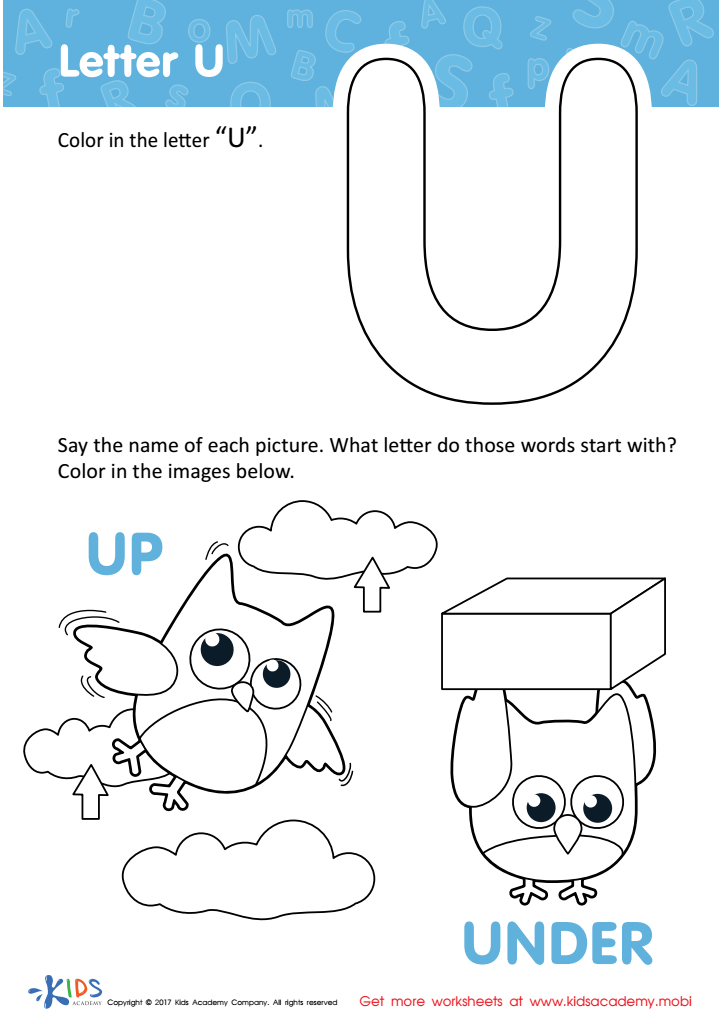
Letter U Coloring Sheet
This letter "U" coloring page helps your child learn two things at once - the letter "U" and positional words! An adorable owl character aids in understanding up and under. In a few strokes of a crayon, your child can master these concepts.
Download (PDF)
 Assign to My Students
Assign to My Students
Letter U Coloring Sheet
Worksheet
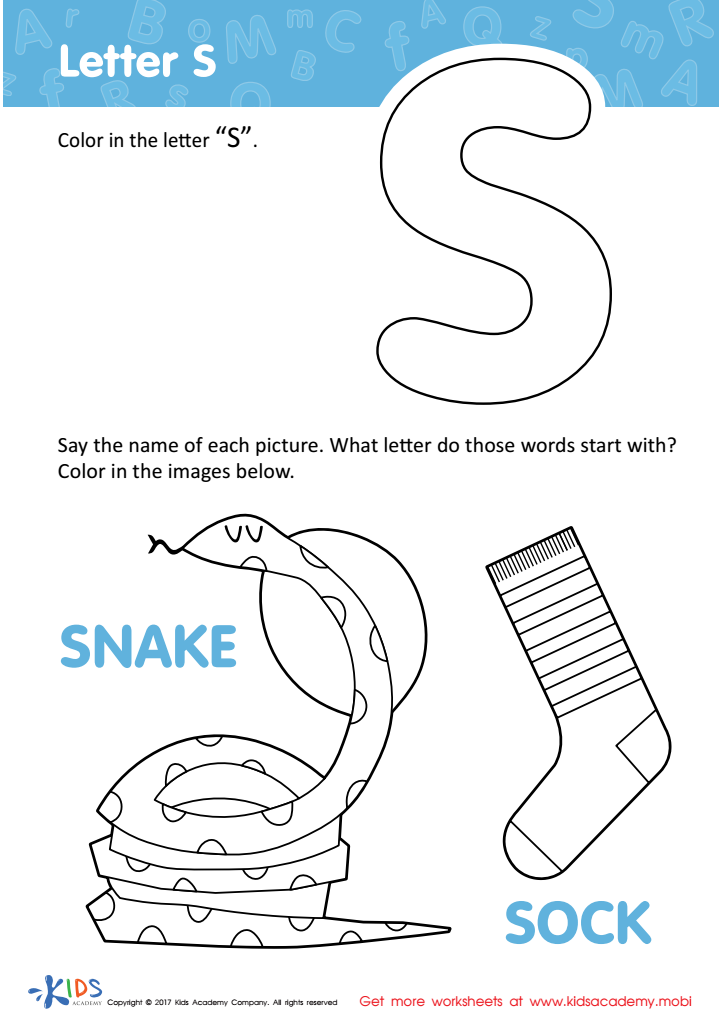
Letter S Coloring Sheet
Help your child practice recognizing the letter "S" and the sound it makes with this fun coloring page. It features a slippery snake, smelly sock and more! Give them extra practice by coming up with more "S" sounds and words.
Download (PDF)
Assign to My Students
Assign to My Students
Letter S Coloring Sheet
Worksheet
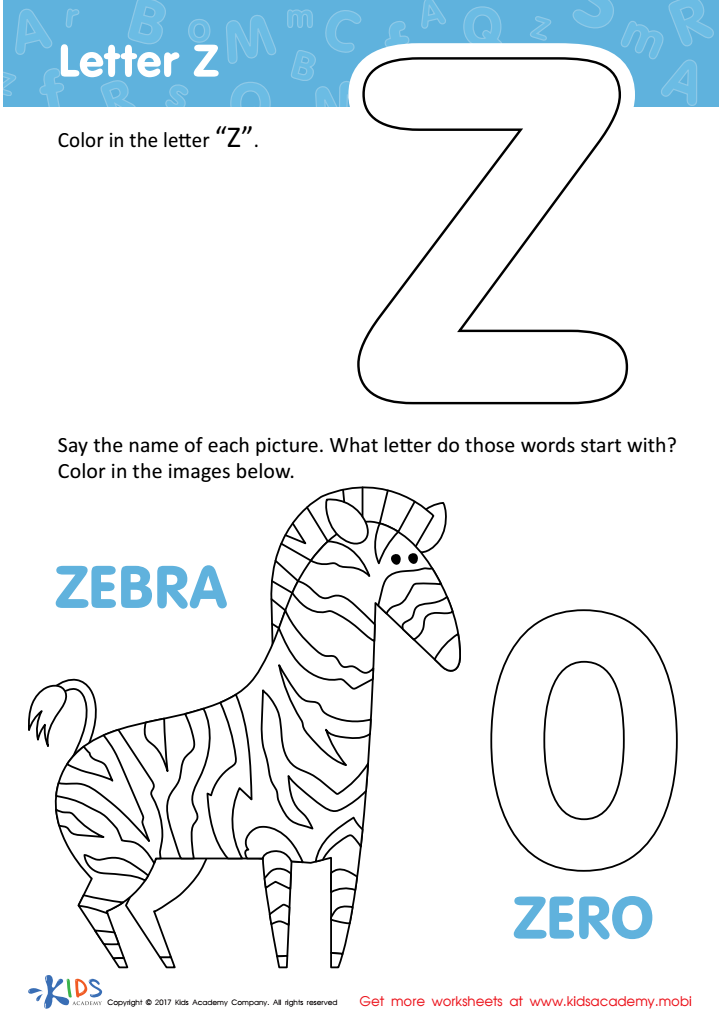
Letter Z Coloring Sheet
This coloring page featuring the letter "Z" is perfect for your child to practice letter recognition! Help them learn the unique sound it makes as they color. It'll be a fun and easy activity they won't have trouble with!
Download (PDF)
Assign to My Students
Assign to My Students
Letter Z Coloring Sheet
Worksheet
Join Kids Academy for Free
Who is primarily going to use this learning content?








Handwriting practice and easy letter recognition are crucial components of literacy development for 9-year-olds, and both parents and teachers should prioritize these skills. At this age, children are transitioning from early writing skills to more complex composition tasks, making neat handwriting and clear letter recognition vital for effective communication.
Good handwriting fosters self-expression and confidence, allowing children to articulate their thoughts coherently. It enhances reading fluency as children must recognize letters and their formation to decode words effectively. Furthermore, as academic demands increase in the later elementary years, children who struggle with handwriting may face challenges in their overall performance and may be reluctant to participate in writing tasks.
Additionally, consistent handwriting practice supports fine motor skills, essential for a child's overall development. Strong fine motor skills enable children to engage not just in writing, but in various daily activities, promoting independence. For parents and teachers, creating engaging handwriting practice opportunities can make a significant difference in a child’s educational journey, leading to improved academic performance and a love for learning. Ultimately, prioritizing handwriting and letter recognition cultivates critical foundational skills essential for long-term success.