Hand-eye Coordination Grade 1 ABC Order Worksheets
5 filtered results
Difficulty Level
Grade
Age
-
From - To
Subject
Activity
Standards
Enhance your first-grader's hand-eye coordination with our engaging ABC Order Worksheets at Kids Academy! Designed specifically for first-grade learners, these worksheets blend fun exercises with educational content to promote fine motor skills development and alphabet mastery. Children will enjoy activities that involve sorting words into alphabetical order, which challenges their cognitive abilities and improves visual tracking. Perfect for classroom use or at-home learning, our worksheets are tailored to support national educational standards while making learning a joyful experience. Encourage your child's handwriting practice and mental agility with these expertly crafted worksheets. Explore and download now for free!
Favorites
With answer key
Interactive
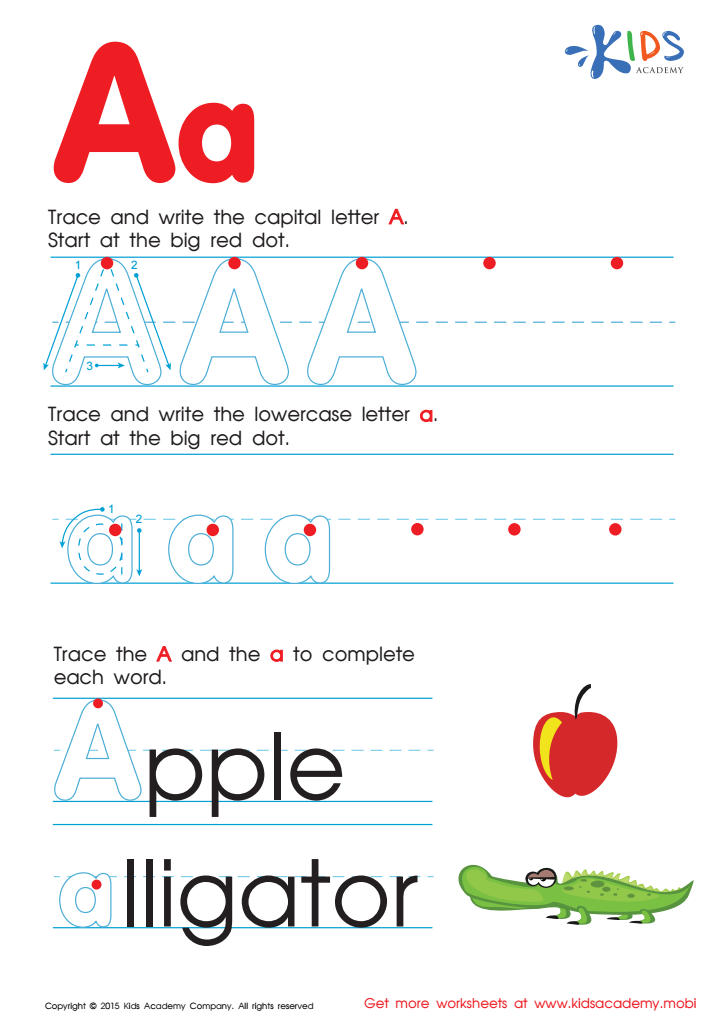
Letter A Tracing Page
Trace and write the letter "A"! Start with the big red dot, then do the capital and lowercase versions. Then write it again with two words - apple and alligator. Download more tracing worksheets at Kids Academy.
 Assign to My Students
Letter A Tracing Page
Worksheet
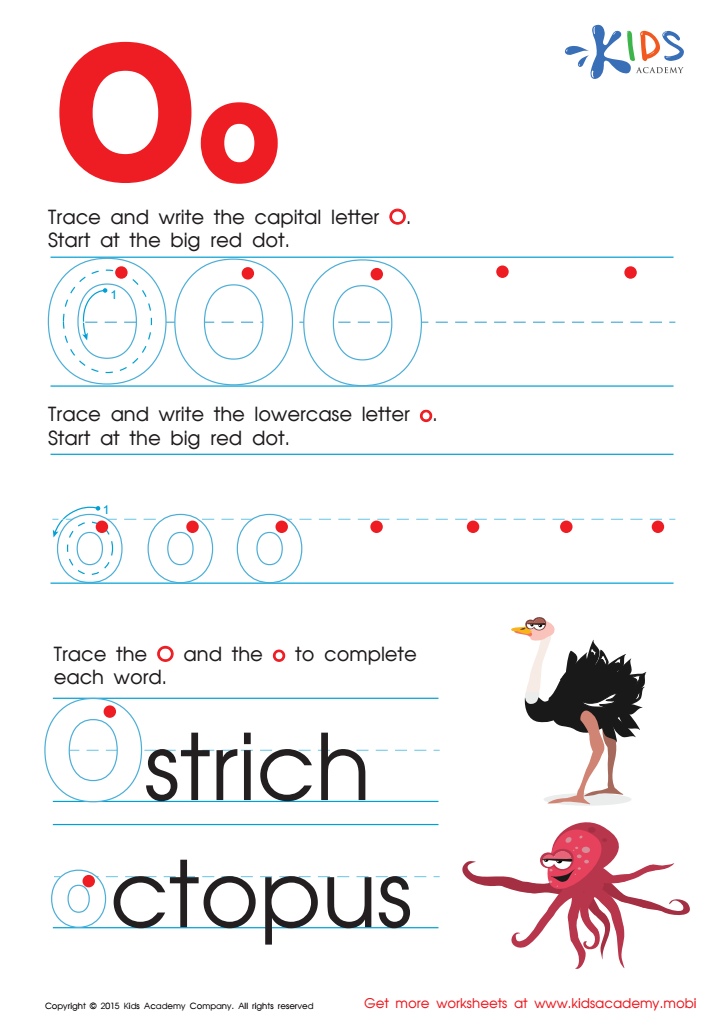
Letter O Tracing Page
Practice writing the letter "O" with our new worksheet. Trace and write the letter several times, starting at the red dot. First do the uppercase letter, then the lowercase. Use the pictures to complete the words "Ostrich" and "octopus". Kids Academy offers more fun alphabet worksheets.
Letter O Tracing Page
Worksheet
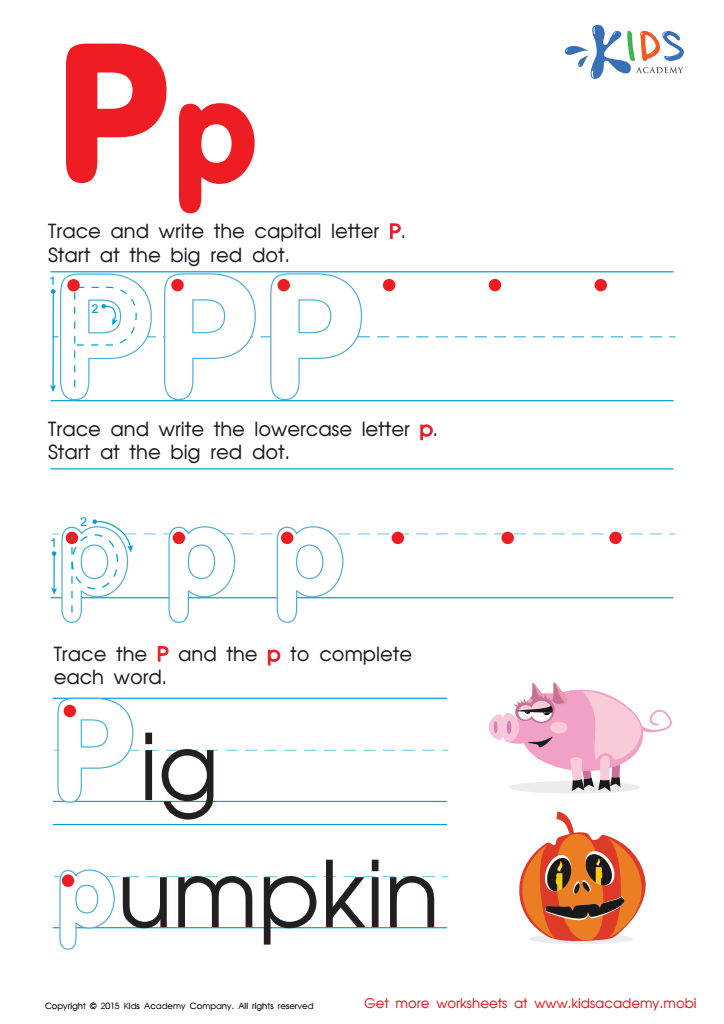
Letter P Tracing Page
Trace the lines from the red dot to learn to write "P"! Then practice this letter with the fun activities: complete the word "Pig" and "Pumpkin". Check out Kids Academy to get more free ABC worksheets.
Letter P Tracing Page
Worksheet

Letter H Tracing Page
Trace the letter "H", then practice writing its lowercase form. Finally, choose your favorite form of transport and ride away! Get our worksheets to make learning fun and easy.
Letter H Tracing Page
Worksheet
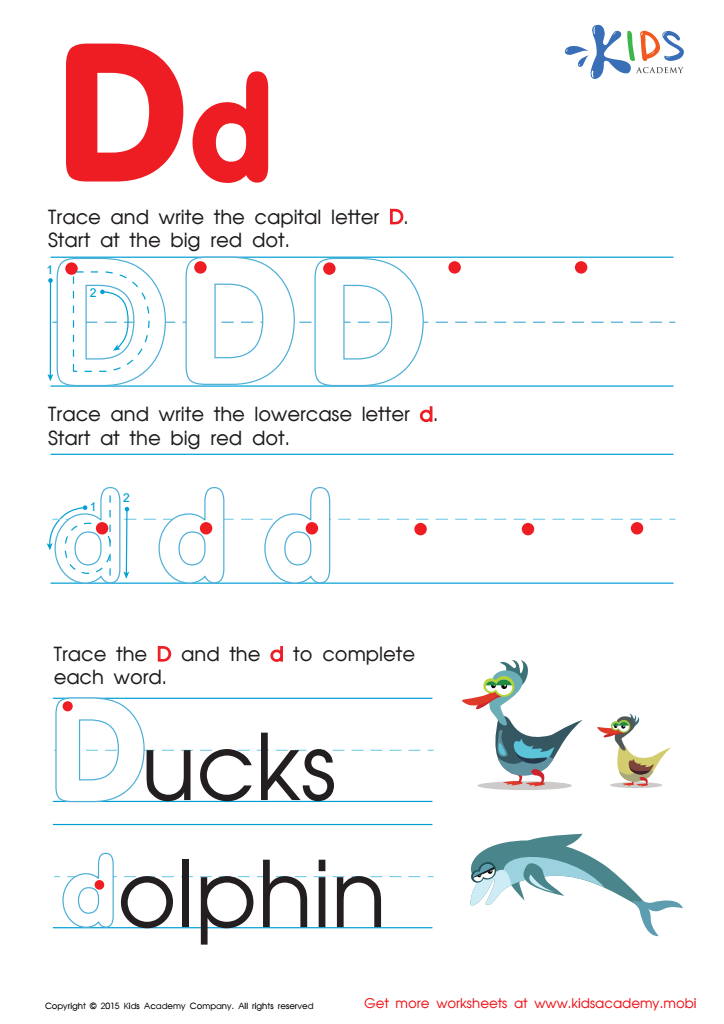
Letter D Tracing Page
Trace and write capital and lowercase letter "D" with our free printable alphabet worksheet! Be careful not to mix up "b" and "d" - just look at the ducks and write their first letter. The dolphin wants to join the fun too - do you like dolphins? Get more fun worksheets and activities at Kids Academy!
Letter D Tracing Page
Worksheet
Join Kids Academy for Free
Who is primarily going to use this learning content?


Hand-eye coordination plays a crucial role in the development of first graders as it encompasses the ability to perform tasks that require simultaneous use of the eyes and hands. At this age, children's brains are rapidly developing, solidifying motor skills and perceptual abilities. Paying attention to hand-eye coordination is essential because it directly impacts a child's ability to perform everyday tasks and academic activities.
For parents and teachers, grades in ABC order for hand-eye coordination can serve as tangible indicators of a child's developmental progress. First graders are in a critical period for learning foundational skills such as writing, cutting shapes, and manipulating small objects. These skills demand precision and coordination, affecting not just academic achievements but also self-esteem and social development.
Practicing hand-eye coordination with engaging activities can enhance fine motor skills, necessary for effective learning. Improvements here contribute to better handwriting, enabling more efficient and stress-free participation in classroom tasks. Moreover, strong hand-eye coordination lays the groundwork for future physical activities, boosting overall confidence.
Overall, prioritizing hand-eye coordination should be an integral part of early education. It fosters children’s cognitive growth, academic readiness, independence, and physical development – critical elements for balanced, holistic growth.