Fine motor skills development Grade 1 Letter Recognition Worksheets
3 filtered results
Difficulty Level
Grade
Age
-
From - To
Subject
Activity
Standards
Enhance your Grade 1 students' fine motor skills and letter recognition with our engaging worksheets! Designed to support early learners, our printable resources help children practice identifying letters while developing essential hand-eye coordination and dexterity. Each worksheet features fun, interactive activities, including tracing, coloring, and cutting letters, ensuring an enjoyable learning experience. As students engage with these exercises, they strengthen their writing abilities and boost their confidence in recognizing the alphabet. Explore our extensive collection of fine motor skills development worksheets, perfect for supplementing classroom instruction or facilitating at-home learning. Empower your first graders today as they embark on their literacy journey!
Favorites
With answer key
Interactive
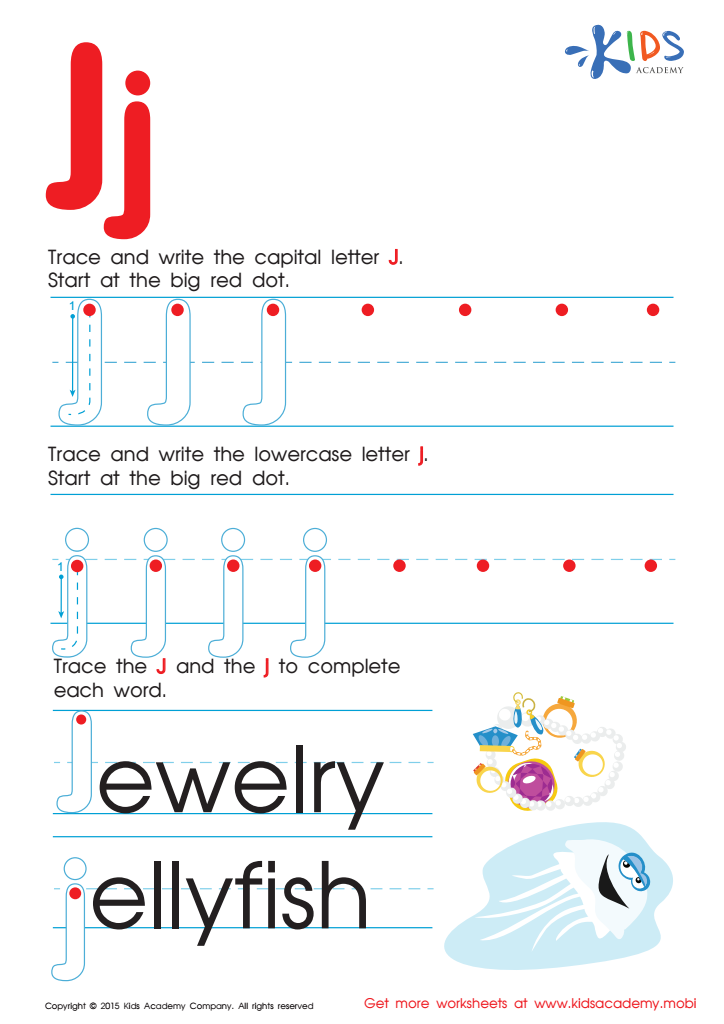
Letter J Tracing Page
Trace and write the letter "J" with our ABC worksheet - start at the big red dot! Have fun completing words like jewelry, jellyfish and more. Check out our kindergarten activities for more alphabet practice.
Letter J Tracing Page
Worksheet
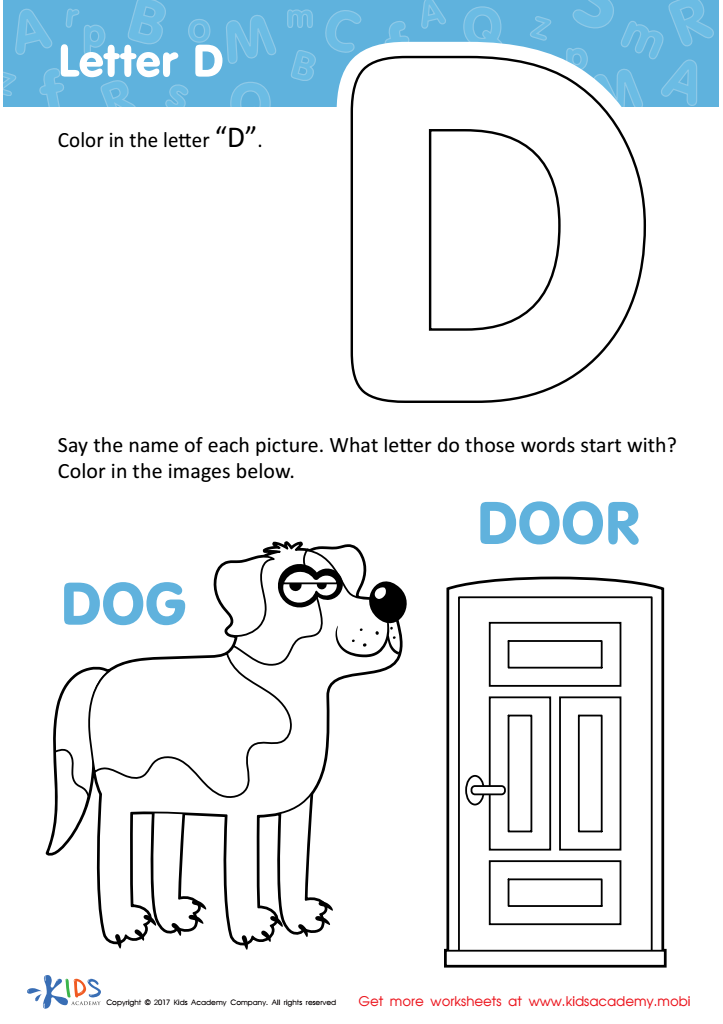
Letter D Coloring Sheet
Coloring with this letter "D" page is a great way to encourage your child's creativity while they learn the letter "D" and its sound. It's a fun activity to stimulate their imagination!
Download (PDF)
 Assign to My Students
Assign to My Students
Letter D Coloring Sheet
Worksheet
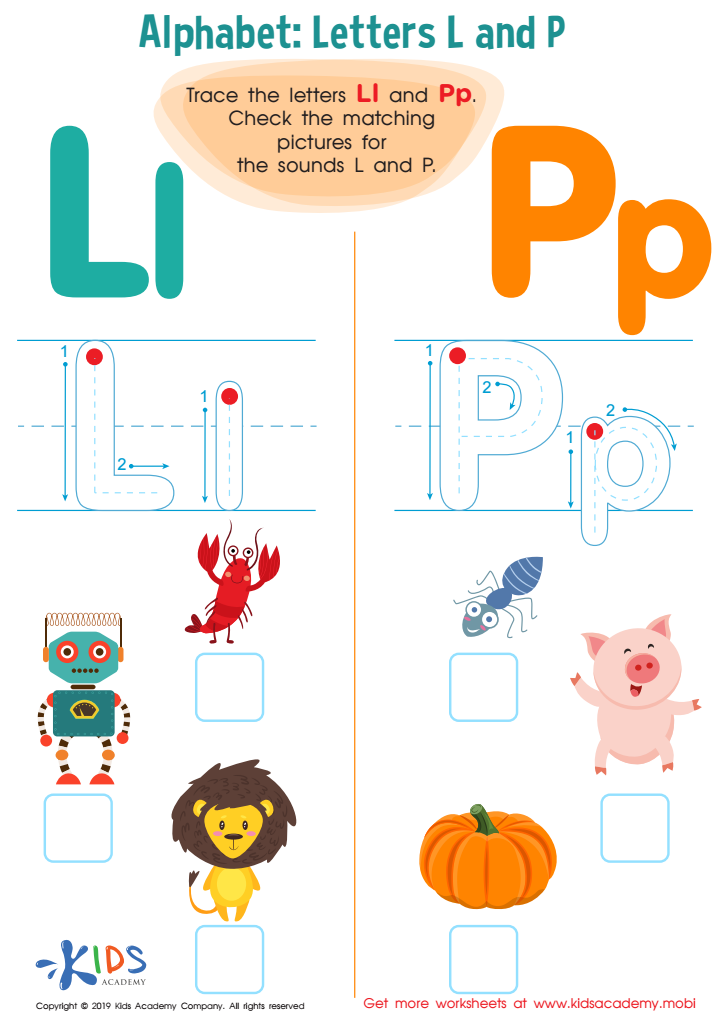
Letter L and P Tracing Worksheet
This traceable worksheet can motivate your students to learn and practice core skills. They'll trace the letters 'L' and 'P' and identify the pictures next to them. With this exercise, they'll unlock their learning abilities and excel in the subject!
Letter L and P Tracing Worksheet
Worksheet
Join Kids Academy for Free
Who is primarily going to use this learning content?



Fine motor skills development is crucial for Grade 1 students as it forms the foundation for various academic and everyday tasks, particularly in letter recognition. These skills involve the coordination of small muscles in the hands and fingers, enabling children to perform activities such as writing, drawing, and manipulating objects. As children progress in their education, strong fine motor skills help them to confidently recognize and write letters, which enhances their literacy development.
Teachers and parents should emphasize fine motor skill development because it directly impacts a child's ability to express themselves in written form and engage with reading materials. Children with well-developed fine motor skills are more likely to successfully practice and recognize letters, leading to improved reading and writing abilities. Additionally, these skills boost confidence and motivation, making learning more enjoyable.
Furthermore, fine motor activities are often highly engaging. Through playful experiences such as crafting, cutting, and playing with building blocks, children can refine these essential skills. Involved parents and proactive teachers can create supportive environments that encourage fine motor development, helping students become more proficient, independent learners and setting them up for future educational success.