Hand-eye Coordination Grade 1 Long Vowels Worksheets
3 filtered results
-
From - To
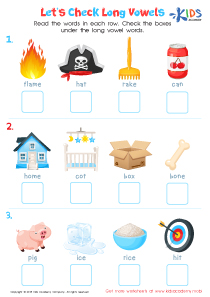
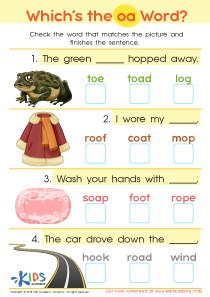
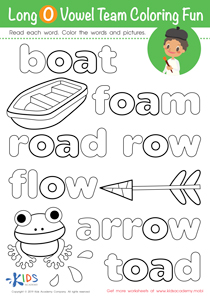
Enhance your first grader's learning experience with our engaging Hand-eye Coordination & Long Vowels Worksheets! Specifically designed for Grade 1 students, these worksheets combine essential phonics skills with fun hand-eye coordination activities. Each printable activity focuses on long vowel sounds, helping children recognize and practice them while improving their fine motor skills. From colorful illustrations to interactive tasks, these resources aim to keep young learners engaged and motivated. Perfect for at-home practice or classroom use, our worksheets support the development of critical literacy skills essential for your child’s academic success. Explore the delightful world of learning with our long vowels worksheets today!
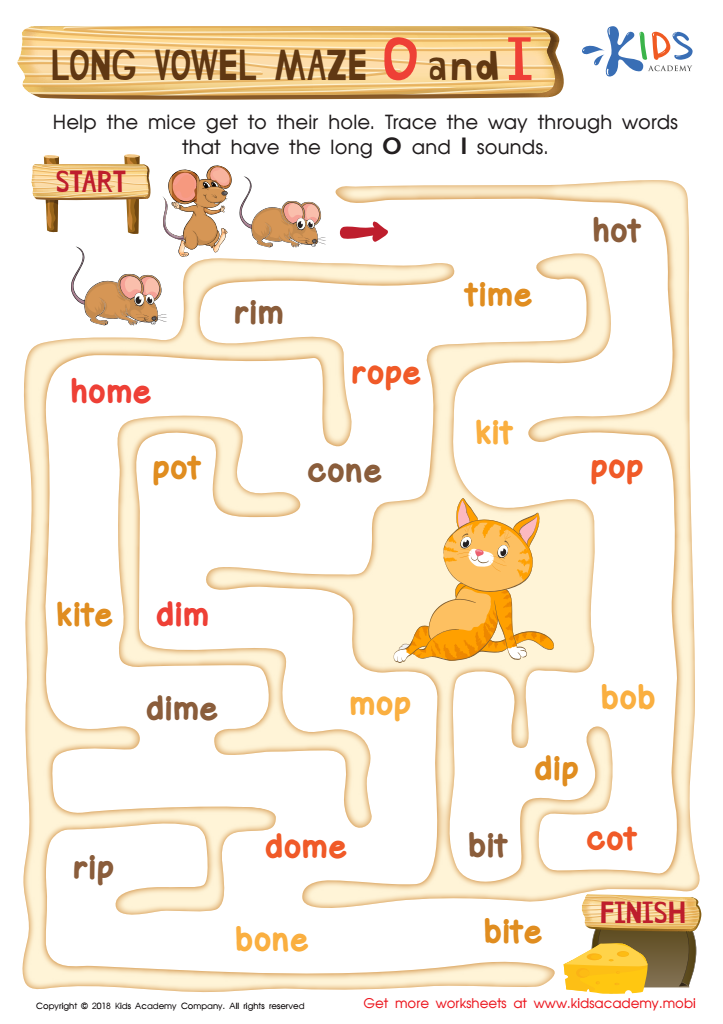
Long Vowel Maze /o/ and /i/ Worksheet

Long and Short U Worksheet
 Assign to My Students

Long and Short E Worksheet
Assign to My Students


Developing hand-eye coordination in Grade 1 is crucial for young learners as it directly affects various aspects of their education and daily life. At this age, children are beginning to engage in more complex tasks that require the integration of sight and movement, such as writing, drawing, cutting with scissors, and participating in physical activities. By enhancing hand-eye coordination, children improve their fine motor skills, which are essential for writing letters and numbers—skills that are foundational for literacy, particularly in reinforcing concepts like long vowels.
Teachers and parents should view hand-eye coordination exercises as pivotal in cultivating not only motor skills but also cognitive development. Activities like threading beads, playing catch, or engaging in simple video games can significantly improve these skills. Improved coordination leads to increased confidence in physical activities and academic tasks.
Furthermore, as children master hand-eye coordination, their ability to concentrate and follow instructions improves, leading to better performance in school. Thus, focusing on developing hand-eye coordination alongside literacy skills, such as understanding long vowels, equips children with the tools necessary for successful learning experiences both in and outside the classroom. Promoting these skills helps foster a well-rounded, capable learner.