Hand-eye Coordination Grade 1 Tracing Letters Worksheets
5 filtered results
Difficulty Level
Grade
Age
-
From - To
Subject
Activity
Standards
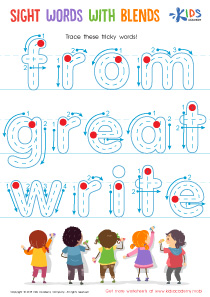
Boost your child's handwriting skills with our "Hand-eye Coordination Grade 1 Tracing Letters Worksheets!" Designed for first graders, these engaging worksheets help young learners improve their motor skills by tracing both uppercase and lowercase letters. By following the outlined paths, kids practice precise hand movements, honing their fine motor skills and developing coordination between what they see and how they move. It makes learning both fun and effective as children gain confidence in their writing abilities. Integrate these worksheets into your child's daily routine to enhance their learning experience and foster essential early literacy skills. Explore now!
Favorites
With answer key
Interactive

Letter A Tracing Page
Trace and write the letter "A"! Start with the big red dot, then do the capital and lowercase versions. Then write it again with two words - apple and alligator. Download more tracing worksheets at Kids Academy.
 Assign to My Students
Letter A Tracing Page
Worksheet
Letter O Tracing Page
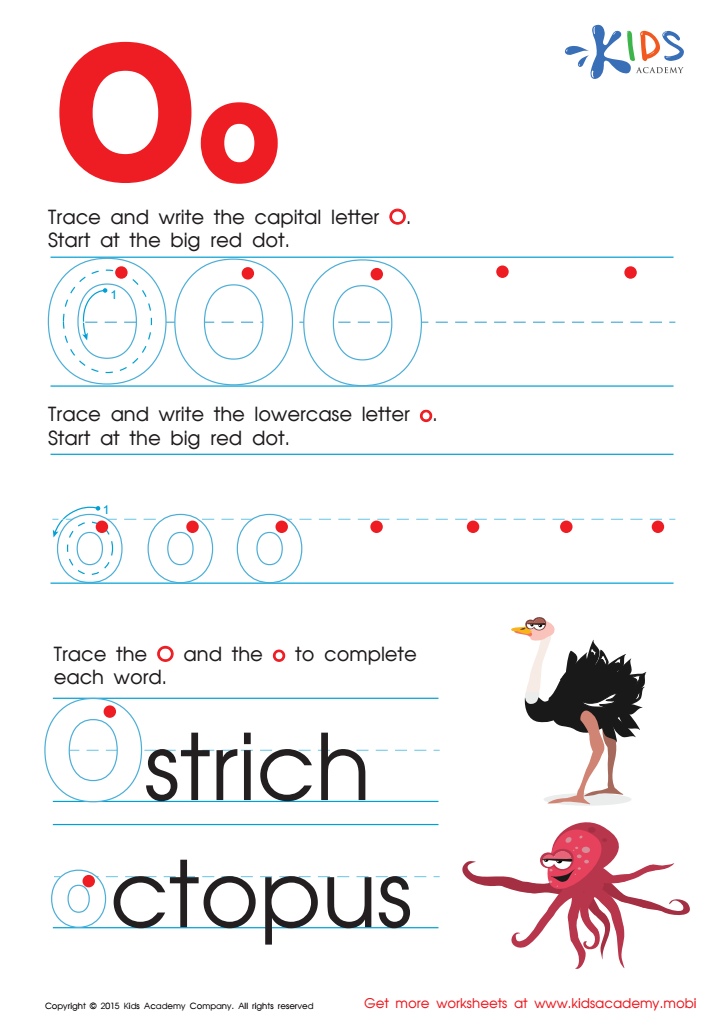
Practice writing the letter "O" with our new worksheet. Trace and write the letter several times, starting at the red dot. First do the uppercase letter, then the lowercase. Use the pictures to complete the words "Ostrich" and "octopus". Kids Academy offers more fun alphabet worksheets.
Letter O Tracing Page
Worksheet
Letter P Tracing Page
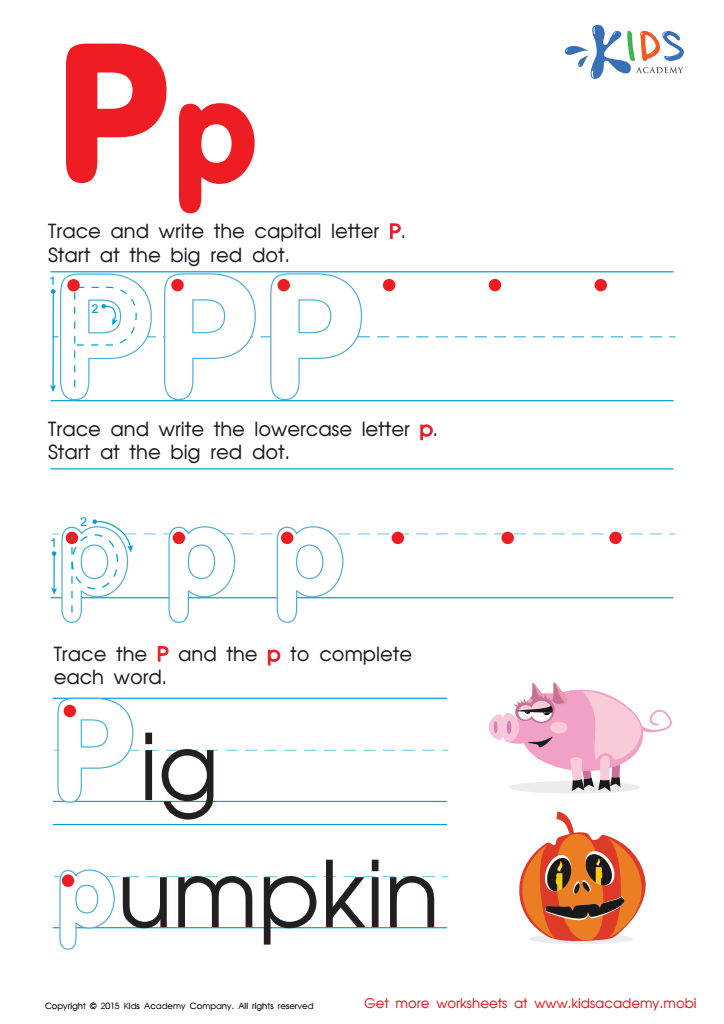
Trace the lines from the red dot to learn to write "P"! Then practice this letter with the fun activities: complete the word "Pig" and "Pumpkin". Check out Kids Academy to get more free ABC worksheets.
Letter P Tracing Page
Worksheet
Letter H Tracing Page
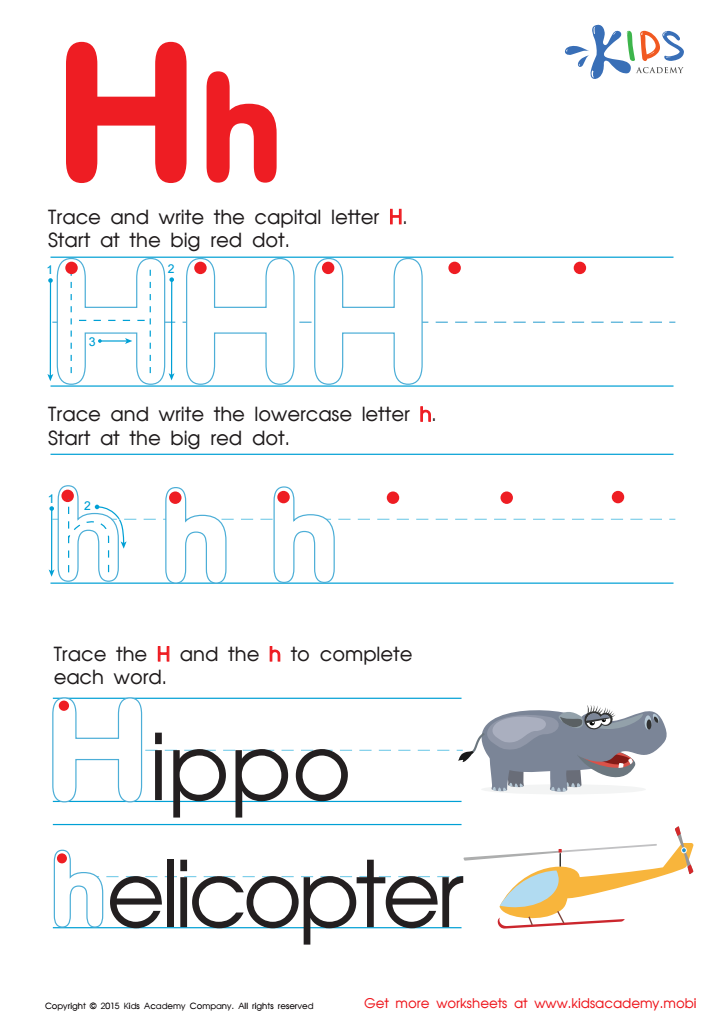
Trace the letter "H", then practice writing its lowercase form. Finally, choose your favorite form of transport and ride away! Get our worksheets to make learning fun and easy.
Letter H Tracing Page
Worksheet

Letter D Tracing Page
Trace and write capital and lowercase letter "D" with our free printable alphabet worksheet! Be careful not to mix up "b" and "d" - just look at the ducks and write their first letter. The dolphin wants to join the fun too - do you like dolphins? Get more fun worksheets and activities at Kids Academy!
Letter D Tracing Page
Worksheet
Join Kids Academy for Free
Who is primarily going to use this learning content?




Hand-eye coordination in Grade 1 tracing letters is crucial as it significantly contributes to a child’s early development both academically and functionally. In tracing exercises, children are visually guided to follow lines and patterns, developing the critical coordination between visual perception and motor control. This coordination is foundational for many other skills including reading, writing, and even playing sports.
For educators and parents, promoting hand-eye coordination through letter tracing can substantially improve a child’s handwriting abilities, ensuring that they form letters correctly and legibly. It's not merely about academic achievement; strong hand-eye coordination enhances a child’s ability to perform everyday tasks like tying shoelaces, cutting with scissors, and drawing shapes.
Moreover, tracing letters engages the brain in a constructive way, aiding cognitive development in areas such as focus, spatial awareness, and motor planning. Such activities also bolster a child's confidence and independence, allowing them to engage in more complex tasks sooner.
Therefore, integrating hand-eye coordination activities such as tracing letters into a child’s routine isn’t just about meeting educational standards; it’s about ensuring their comprehensive development. Parents and teachers should weigh its importance as these foundational skills urge children towards a trajectory of continued learning and practical life skills.