Handwriting improvement Grade 1 Tracing Letters Worksheets
3 filtered results
Difficulty Level
Grade
Age
-
From - To
Subject
Activity
Standards
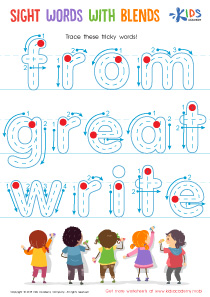
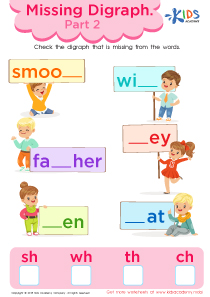
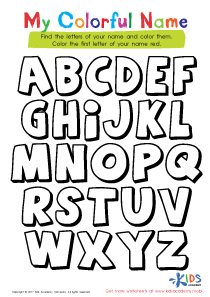
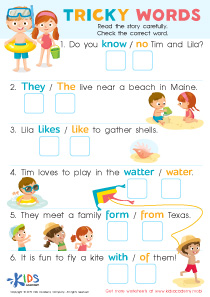
Enhance your first grader’s handwriting skills with our engaging handwriting improvement tracing letters worksheets. Designed specifically for Grade 1, these worksheets provide a fun and interactive way for kids to practice forming letters correctly. With clear guidelines and ample tracing opportunities, students will gain confidence in their writing abilities while developing fine motor skills. Each worksheet focuses on different letters, featuring cute illustrations to keep children motivated. Ideal for classroom or home use, our tracing worksheets create a solid foundation for future writing success. Foster your child’s literacy growth while making learning enjoyable with our handwriting improvement resources today!
Favorites
With answer key
Interactive
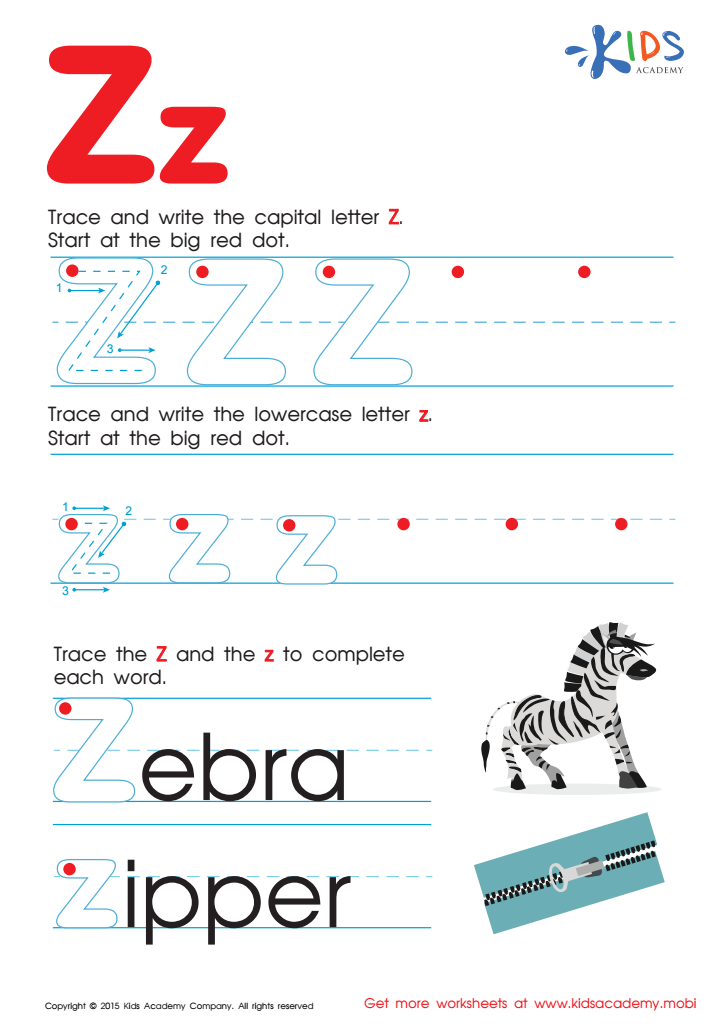
Letter Z Tracing Page
Trace and write capital "Z" and lowercase "z". Complete words "zebra" and "zipper". Be attentive and have fun! (80 words)
 Assign to My Students
Letter Z Tracing Page
Worksheet
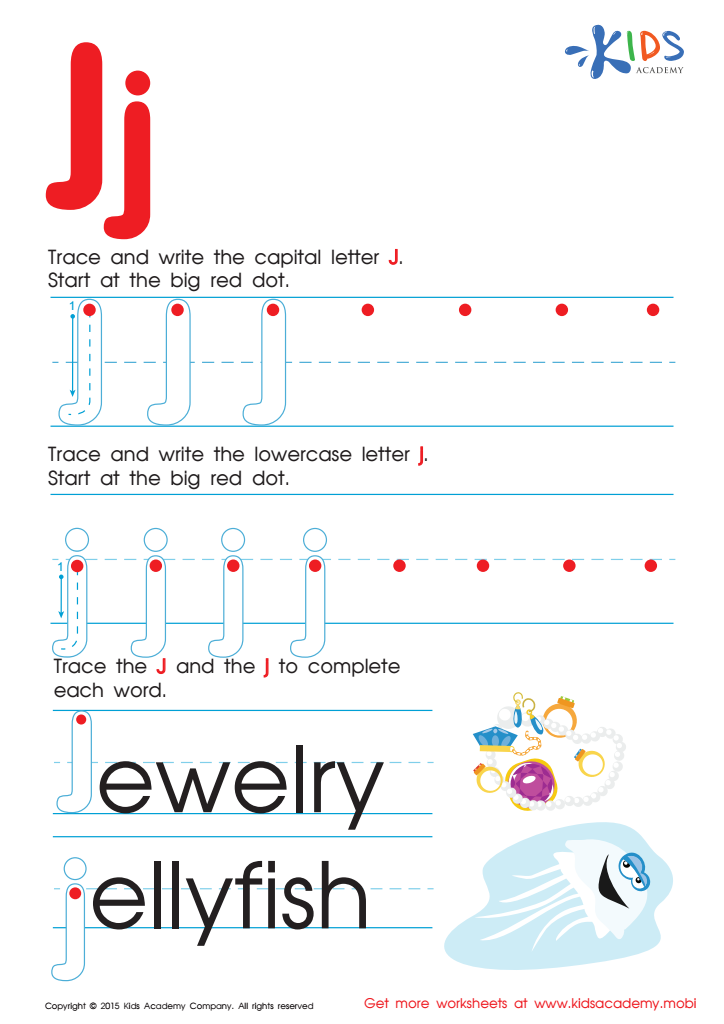
Letter J Tracing Page
Trace and write the letter "J" with our ABC worksheet - start at the big red dot! Have fun completing words like jewelry, jellyfish and more. Check out our kindergarten activities for more alphabet practice.
Letter J Tracing Page
Worksheet
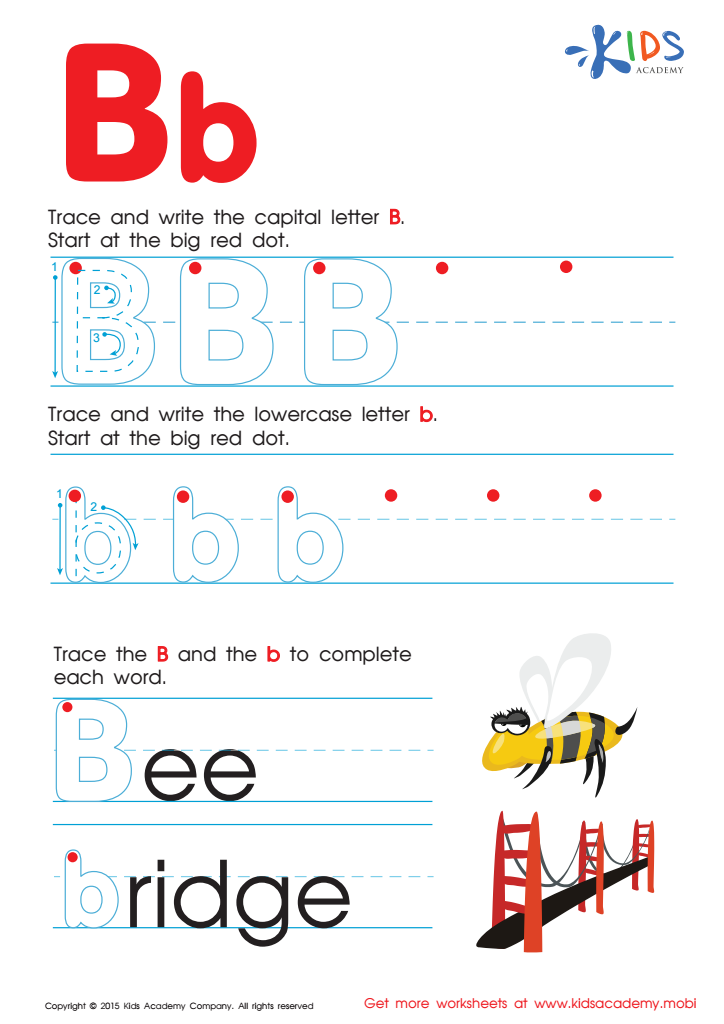
Letter B Tracing Page
Ready to learn the Alphabet? Put your pencil on the red dot and trace & write both capital & lowercase "B". Then have a look at the pictures. Catch the bee, cross the bridge & write the letters to complete the words. More ABC worksheets for kindergarten available!
Letter B Tracing Page
Worksheet
Join Kids Academy for Free
Who is primarily going to use this learning content?




Handwriting improvement, particularly in Grade 1 through tracing letters, is crucial for several reasons that parents and teachers should prioritize. Firstly, handwriting is a foundational skill that influences a child’s ability to communicate effectively. When children trace letters, they develop motor skills and hand-eye coordination, which are essential for writing fluently as they progress in their education.
Secondly, clear and legible handwriting contributes to a child's confidence and academic performance. Children who struggle with writing may feel discouraged or anxious, leading to a reluctance to participate in written assignments. By supporting handwriting improvement, we nurture their self-esteem and encourage active participation in classroom activities.
Additionally, tracing letters helps reinforce letter recognition and phonemic awareness, critical components of reading and literacy development. As children become familiar with the shape and formation of letters, they enhance their ability to read and spell, laying the groundwork for future language skills.
Finally, good handwriting habits established in Grade 1 can lead to better writing practices in later years. This early investment in writing skills can have lasting benefits that reach far beyond elementary education. Therefore, both parents and teachers play a vital role in cultivating these essential skills during this formative stage.