Vocabulary enhancement Grade 1 Vowels Worksheets
5 filtered results
-
From - To
Enhance your child's vocabulary with our Grade 1 Vowels Worksheets designed specifically for young learners! These engaging resources focus on reinforcing vowel sounds and their importance in vocabulary building. Activities include vowel identification, word pairing, and fun games that make learning enjoyable. Our worksheets provide interactive exercises that encourage students to recognize and use vowels effectively in various contexts. Perfect for classroom settings or at-home learning, these materials help first graders improve their reading fluency and overall language skills. Support your child's educational journey and watch their confidence soar as they master vowel usage and expand their word knowledge!
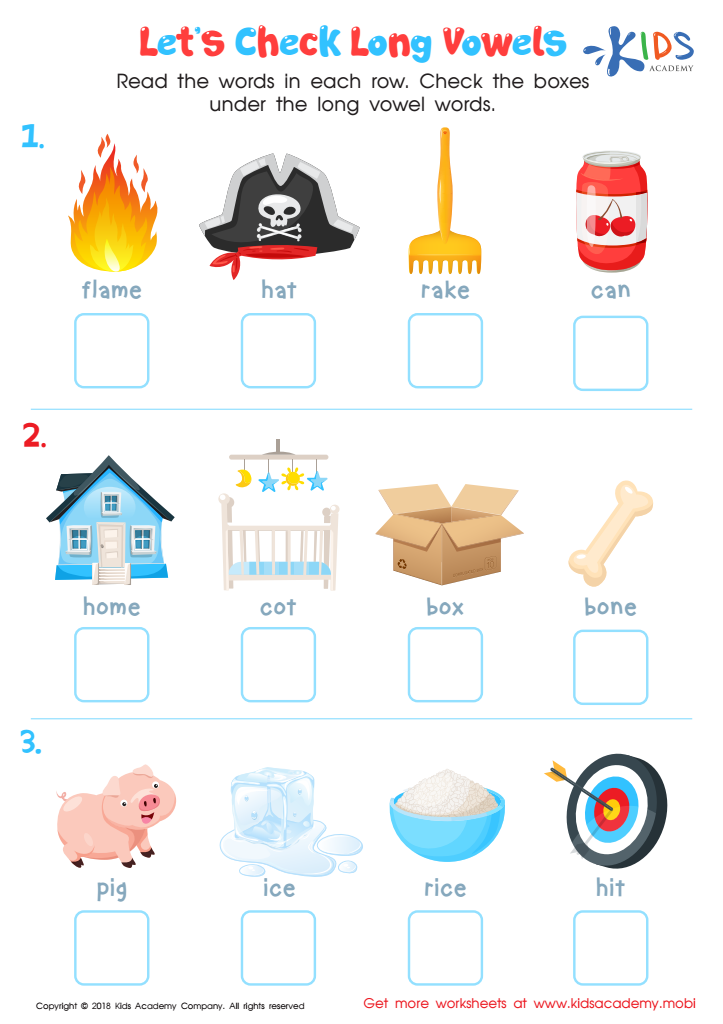
Let's Check Long Vowels: Assessment Worksheet
 Assign to My Students
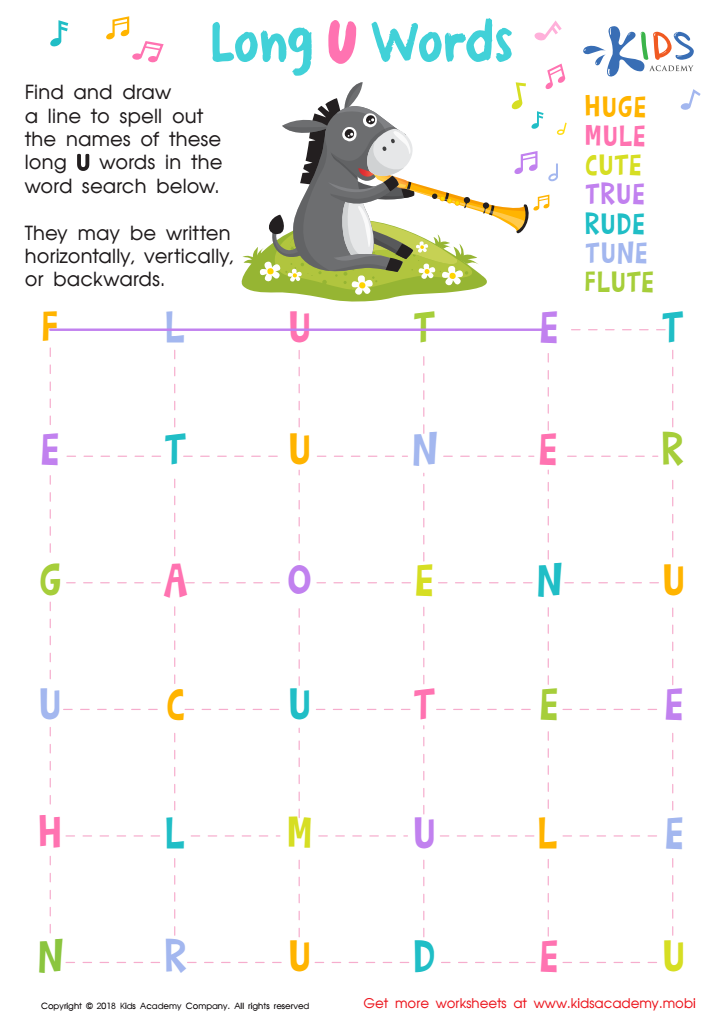
Long /u/ Words Worksheet
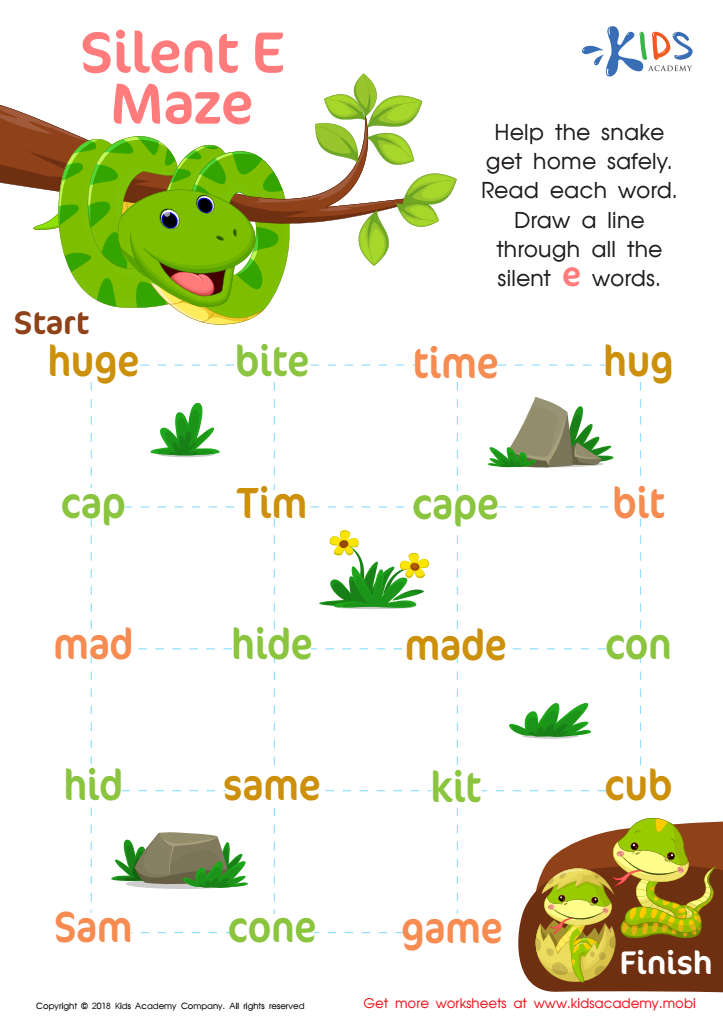
Silent E Maze Worksheet
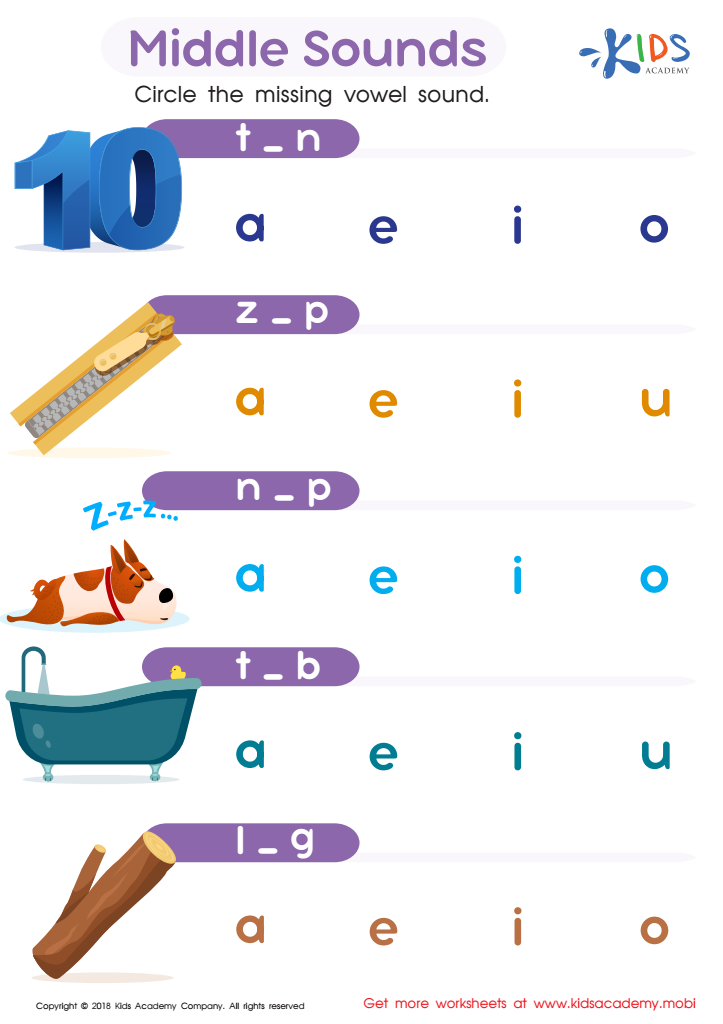
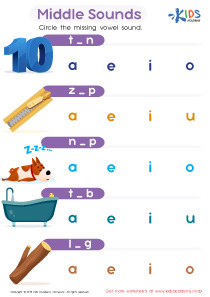
Middle Sounds Worksheet
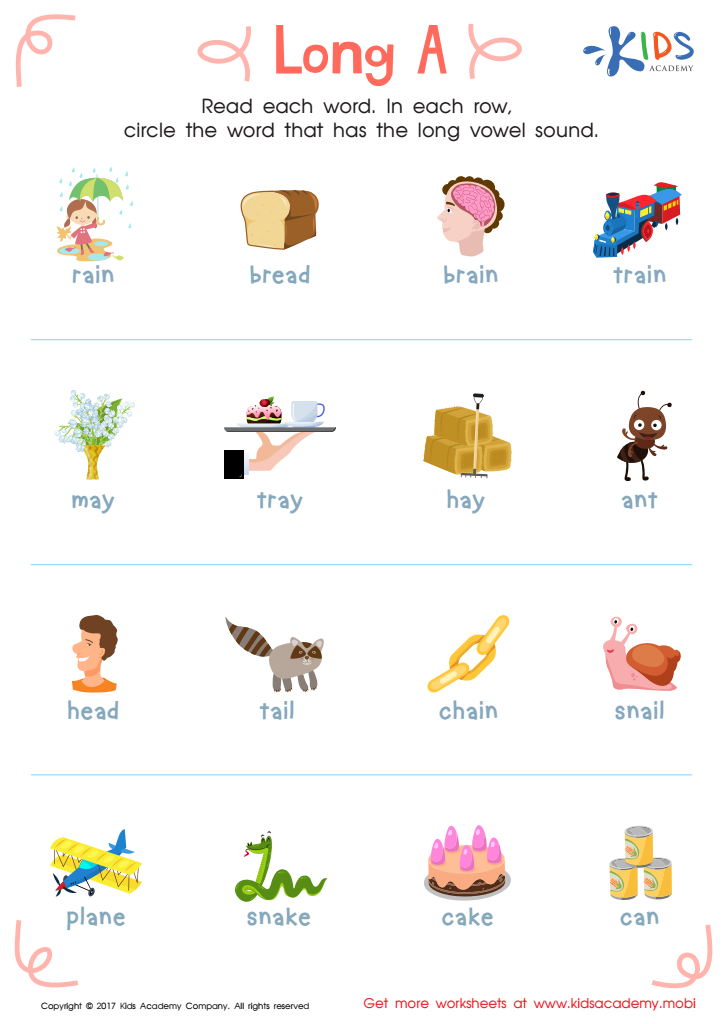


Vocabulary enhancement, particularly in Grade 1, plays a crucial role in a child's literacy development. During this formative year, children are building the foundational skills necessary for reading and writing, and vowels are essential components of nearly every word. When parents and teachers focus on enhancing a child's understanding of vowels, it aids in improving pronunciation, spelling, and word recognition.
Having a strong grasp of vocabulary enriched by vowels allows children to decode words more effectively, fostering a love for reading. As students encounter a wider range of words, their comprehension expands, laying the groundwork for future academic success. Moreover, vocabulary enhancement encourages communication skills, enabling children to express their thoughts and feelings more clearly.
Engaging with vowel sounds and varied word lists promotes cognitive development, as children learn to categorize sounds and think critically about language. Parents and teachers can support this growth by implementing fun and interactive activities—like phonics games, rhyming, and storytelling—that draw attention to vowel use. Ultimately, prioritizing vocabulary enhancement not only enhances students’ current learning experiences but also instills confidence and curiosity about language, setting them on a path toward lifelong learning.