Chess knowledge Grade 1 Chess Worksheets
3 filtered results
-
From - To
Enhance your child's chess knowledge with our engaging Grade 1 Chess Worksheets! Specifically designed for young learners, these worksheets introduce fundamental chess concepts, including piece movement, basic strategies, and game rules, making chess fun and accessible. Our activities encourage critical thinking and problem-solving skills while fostering a love for this strategic game. Each worksheet is interactive and age-appropriate, perfect for classroom or home use. With vibrant visuals and simple instructions, children will enjoy mastering the skills necessary to play chess confidently. Explore our collection and help your child embark on a wonderful journey into the world of chess!
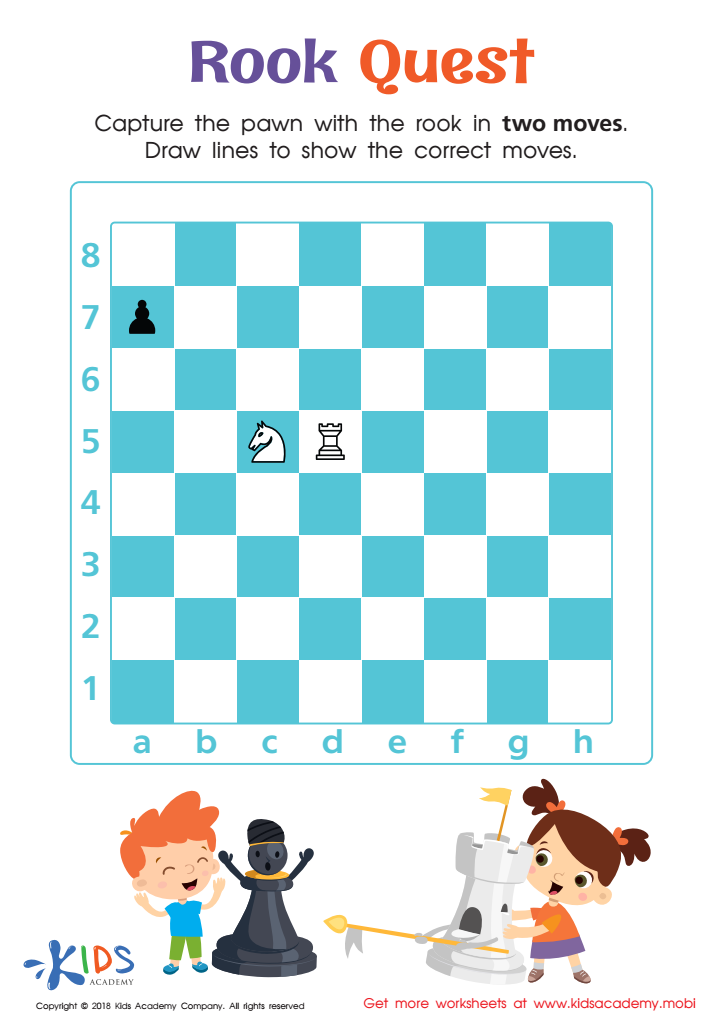
Rook Quest Worksheet
 Assign to My Students
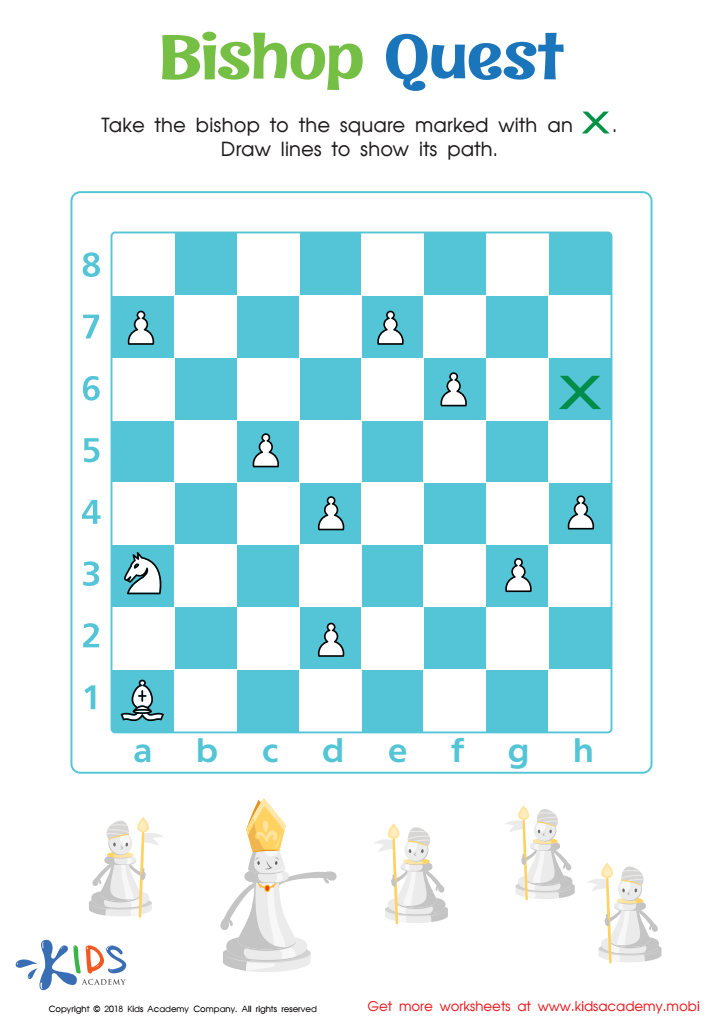
Bishop Quest Worksheet
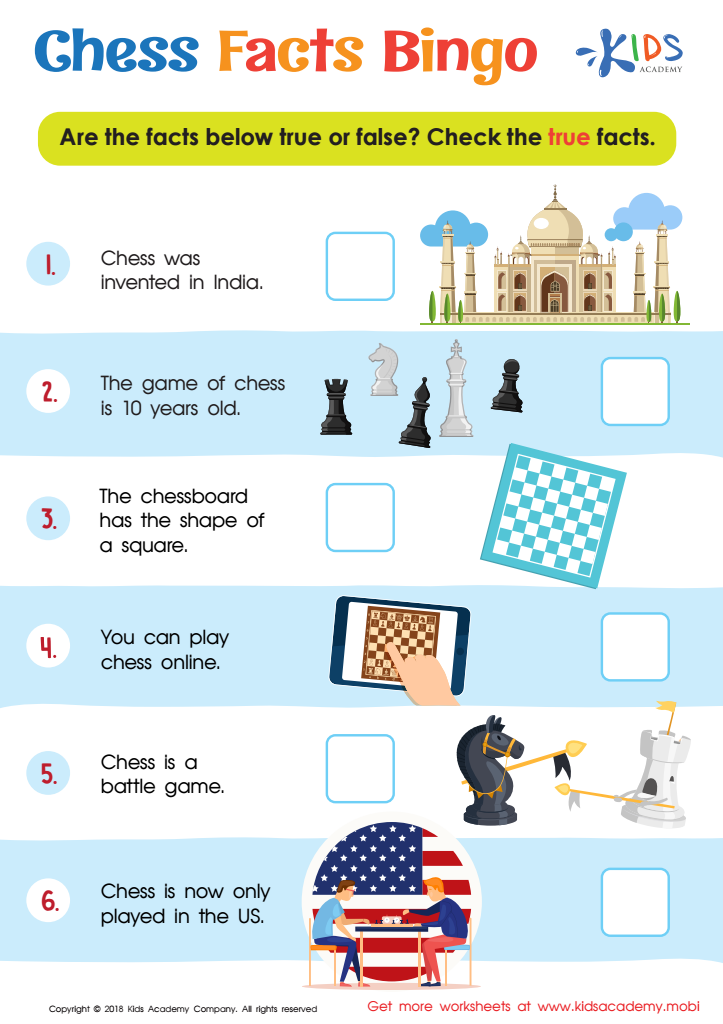
Chess Facts Bingo Worksheet






Parents and teachers should care about chess knowledge, even at a Grade 1 level, for several important reasons. First, chess enhances critical thinking and problem-solving skills. The game requires children to strategize, evaluate different scenarios, and foresee the consequences of their moves—skills that are invaluable in academic settings and daily life.
Moreover, learning chess fosters concentration and discipline. As children focus on their game, they develop patience and the ability to concentrate for longer periods, traits that translate to improved performance in other subjects. It also encourages healthy competition, teaching kids how to win gracefully and learn from losses.
Additionally, chess nurtures creativity. Players must think outside the box, drawing upon imagination to devise unique strategies and solutions. The game's complex narratives enhance cognitive skills like memory and pattern recognition.
Finally, introducing chess fosters social interaction. Children engage with peers in friendly battles, promoting teamwork and communication.
Incorporating chess in Grade 1 lessons can enrich educational experiences, providing crucial developmental benefits that extend well beyond the chessboard. In essence, chess serves as a valuable tool for holistic child development, making it worthy of attention from both parents and educators.