Coloring skills Grade 1 English for Beginners Worksheets
3 filtered results
Difficulty Level
Grade
Age
-
From - To
Subject
Activity
Standards
Discover our "Coloring Skills Grade 1 English for Beginners Worksheets" designed to make learning both fun and educational for young minds. These worksheets merge creativity with foundational English language skills, helping first graders and ESL learners improve vocabulary, comprehension, and fine motor development. Students enjoy coloring activities while practicing words, understanding basic sentences, and grasping fundamental concepts in a playful, engaging manner. Perfect for classroom settings and homeschooling, these printable resources provide diverse exercises built to spark interest and develop essential language skills. Boost your child's learning adventure with our captivating and interactive coloring worksheets today!
Favorites
With answer key
Interactive
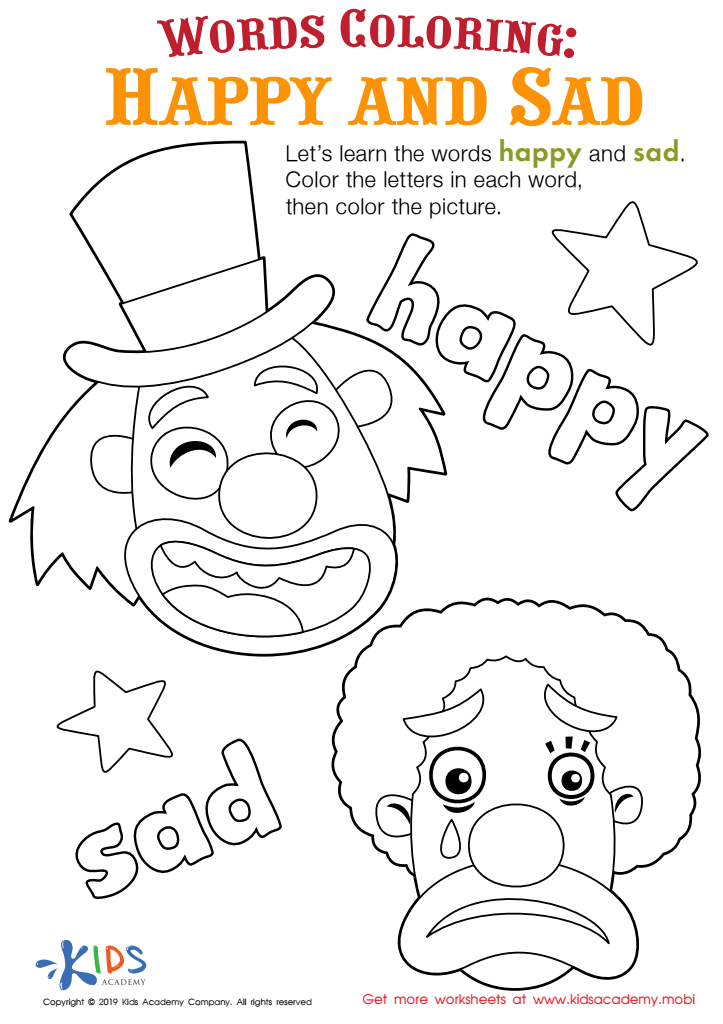
Happy and Sad Words Coloring Worksheet
Help students understand emotions by using this fun worksheet. It features smiling and sad clowns and the words 'happy' and 'sad'. Read the words with your students, then have them color the clowns and the emotion words. This PDF is an effective way to teach kids how to express how they feel.
Download (PDF)
 Assign to My Students
Assign to My Students
Happy and Sad Words Coloring Worksheet
Worksheet
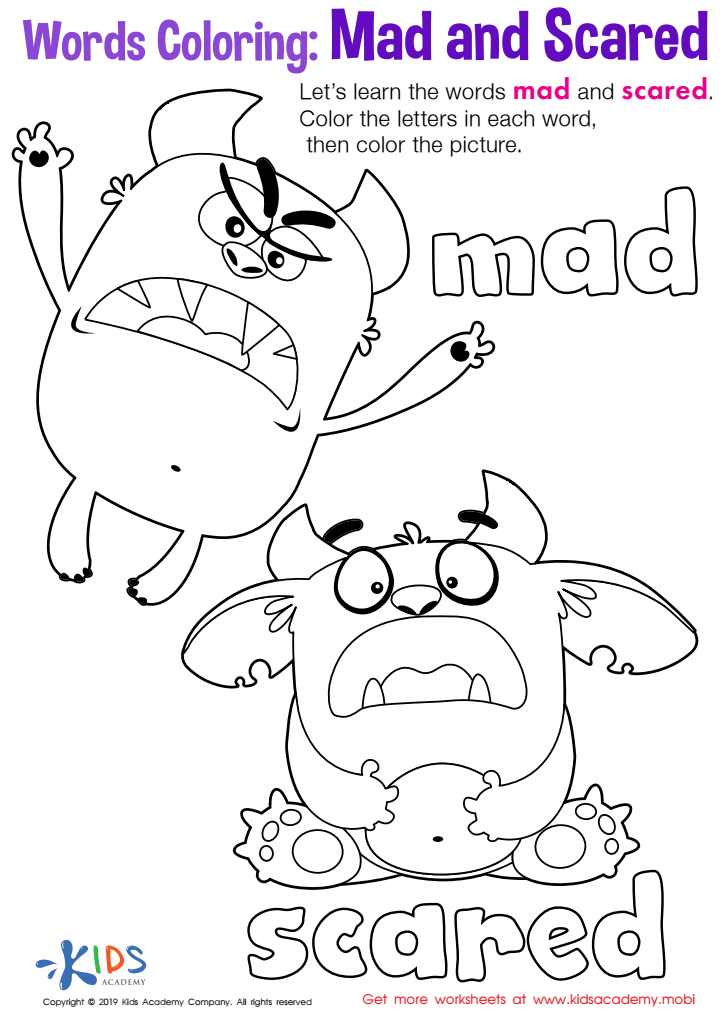
Mad and Scared Words Coloring Worksheet
This worksheet teaches "mad" and "scared" with fun monster pictures to color. Helping students learn by sight, it encourages sharing what makes them feel those strong emotions. Perfect for social studies, it expands student's vocabulary in an entertaining way.
Download (PDF)
Assign to My Students
Assign to My Students
Mad and Scared Words Coloring Worksheet
Worksheet
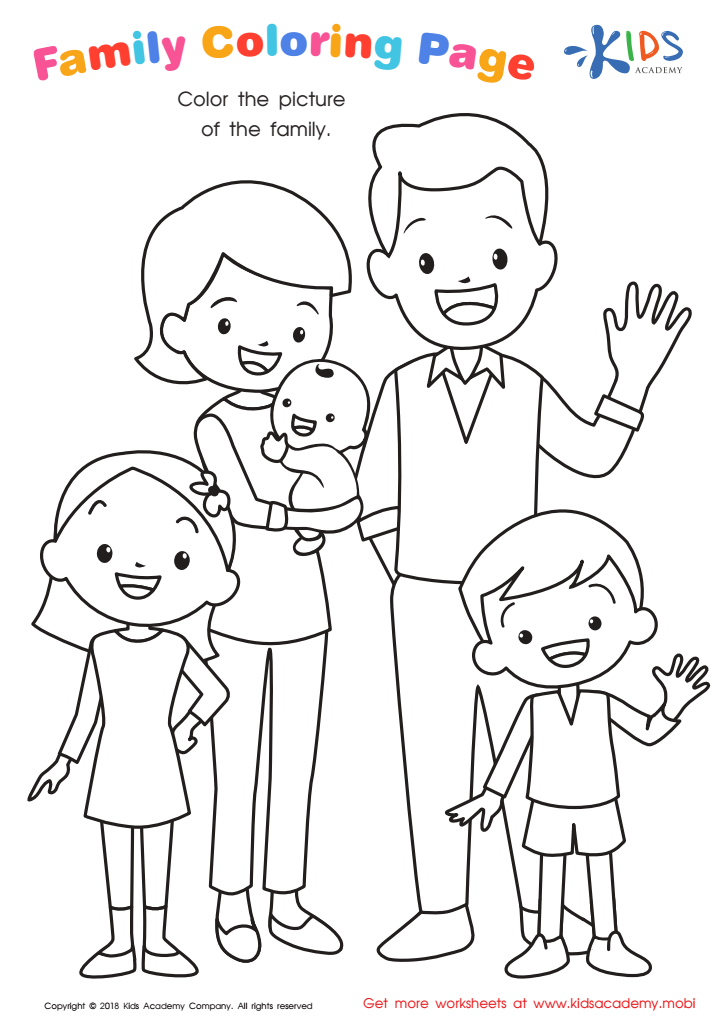
Family Coloring Page
Have fun coloring and naming each family member with this family worksheet! It's a great enrichment activity for those teaching social studies and community activities. Young students will practice fine motor skills and discuss family members on the printable. It's an excellent opportunity to talk about families!
Download (PDF)
Assign to My Students
Assign to My Students
Family Coloring Page
Worksheet
Join Kids Academy for Free
Who is primarily going to use this learning content?


Coloring skills are vital for young learners, particularly those in Grade 1, as they support various aspects of their development, particularly when learning English. First and foremost, coloring is instrumental in fine motor skill development. Holding and maneuvering crayons helps children strengthen hand muscles and improve hand-eye coordination, which are foundational skills for writing English letters and numbers.
Cognitive development is another critical area affected by coloring. When children decide on colors and apply them within boundaries, they enhance their attention to detail and concentration levels. This improved focus can help them be more attentive during English lessons, enabling better grasping of language rules and vocabulary.
Coloring also serves as a medium for creative expression and emotional development. By choosing colors, children personalize their artwork, which can help build confidence and self-esteem — critical traits for effective classroom participation. Additionally, solving problems like deciding which color fits best within a specific part of an image fosters decision-making skills.
According to Howard Gardner's Theory of Multiple Intelligences, children learn best when they engage multiple senses. Incorporating coloring into English learning helps appeal to kinesthetic and visual learners. This multisensory approach allows children to form stronger memory associations with new English vocabulary, phonics, and sentence structures, thereby facilitating a more holistic and enjoyable learning experience for young beginners.