Letter tracing skills Grade 1 English for Beginners Worksheets
3 filtered results
-
From - To
Enhance your child's writing proficiency with our "Letter Tracing Skills Grade 1 English for Beginners Worksheets." Designed specifically for young learners, these engaging worksheets help children master the basics of letter formation through fun and interactive tracing exercises. Our printable resources cater to early grade students, making learning enjoyable and effective. Each worksheet focuses on different letters and introduces essential vocabulary, ensuring that kids not only learn to trace but also build their foundational language skills. Perfect for classroom use or at-home practice, these worksheets will empower your child to gain confidence in their writing abilities while having fun!
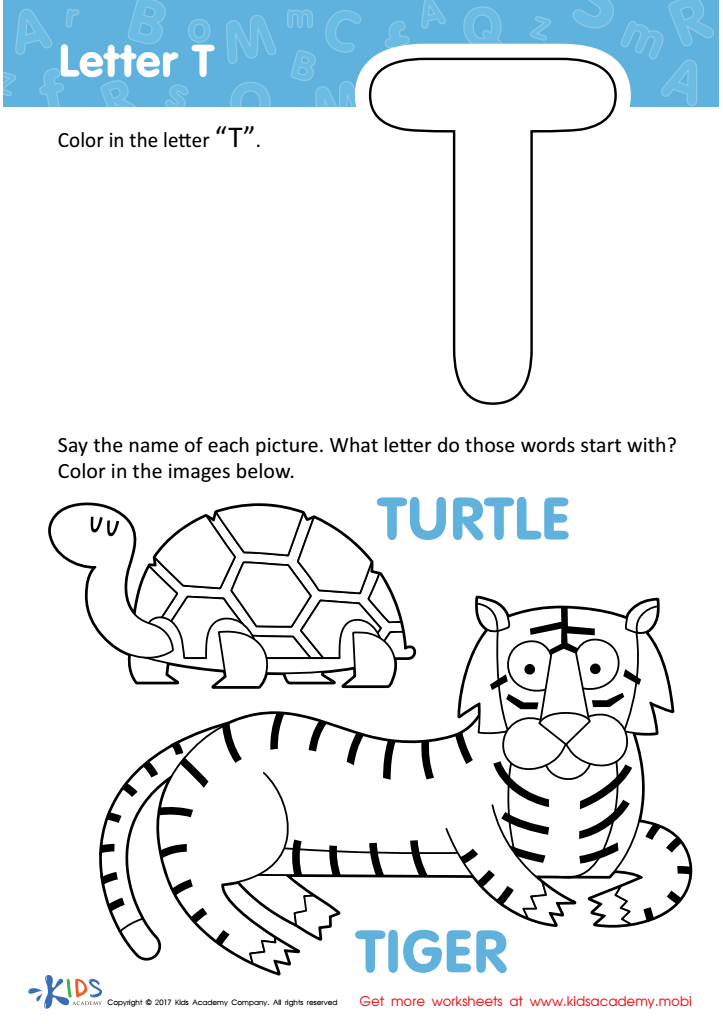
Letter T Coloring Sheet
 Assign to My Students
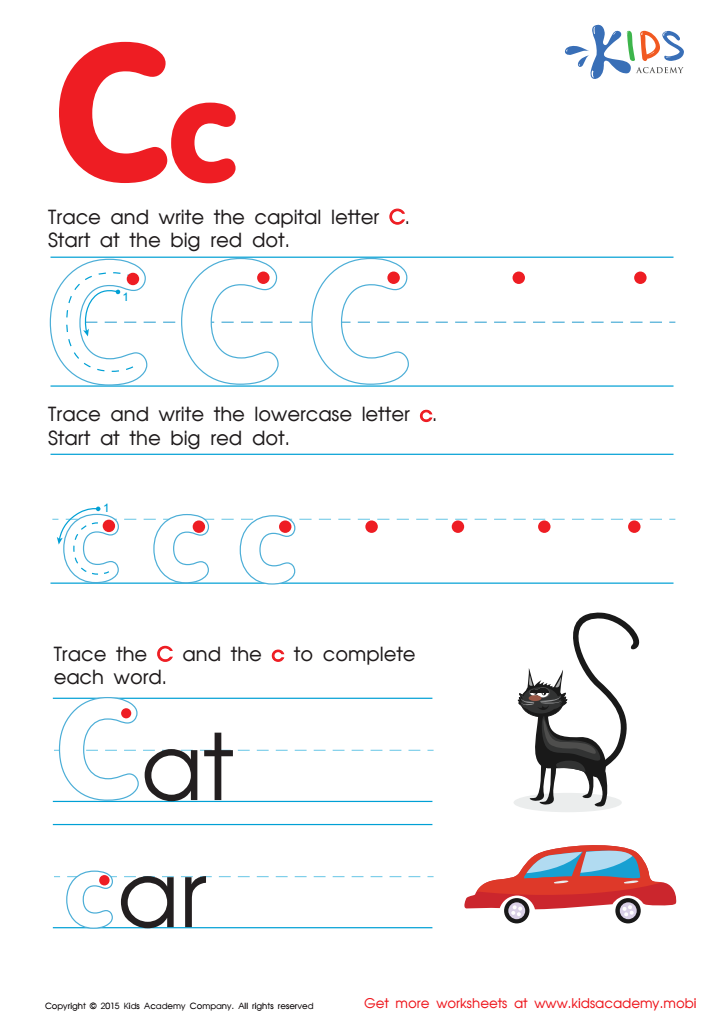
Letter C Tracing Page
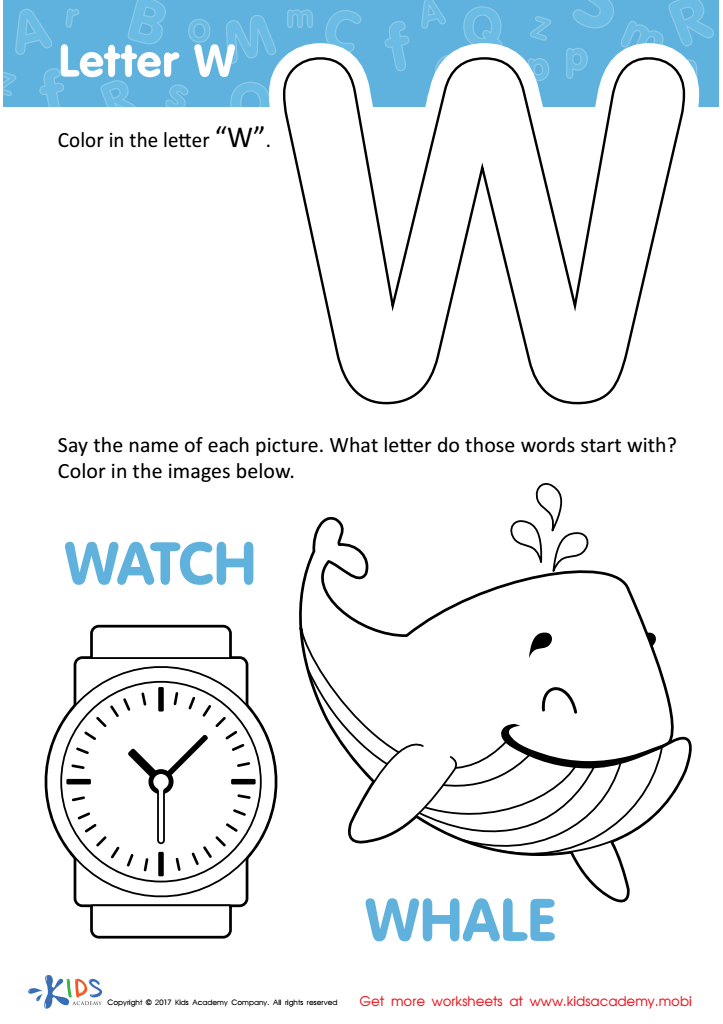
Letter W Coloring Sheet
Assign to My Students


Letter tracing skills are vital for Grade 1 English beginners as they lay the foundational blocks for literacy and overall academic success. As children begin to learn to read and write, tracing letters helps them understand letter shapes, improve fine motor skills, and develop hand-eye coordination. This practice not only aids in letter recognition but also aids in mastering the correct stroke order, promoting proper writing techniques.
Moreover, acquiring tracing skills boosts a child’s confidence. When they successfully trace and eventually write letters independently, it fosters a sense of accomplishment. This initial mastery encourages children to engage more with reading and writing activities, forming a positive, lifelong relationship with literacy.
Parents and teachers play a crucial role in this process. By providing ample opportunities and resources for tracing, they can create a nurturing environment that supports learning. Incorporating tracing into daily routines, such as using educational workbooks or fun interactive apps, can stimulate a child’s enthusiasm for learning. Additionally, consistent practice lays the groundwork for future language skills, paving the way for successful reading comprehension and effective communication. In summary, letter tracing is essential for developing early literacy skills and should be a priority for both parents and teachers.