Comparative analysis Grade 1 Worksheets
3 filtered results
Difficulty Level
Grade
Age
-
From - To
Subject
Activity
Standards
Explore our comprehensive collection of Grade 1 Comparative Analysis Worksheets designed to enhance critical thinking and analytical skills in young learners. Our worksheets engage students with fun, age-appropriate activities that foster an early grasp of comparative concepts across various subjects. Each worksheet is thoughtfully crafted to support the curriculum and promote skills such as pattern recognition, comparison, and data interpretation. With Kids Academy's expertly developed materials, first graders will build a strong foundation for future academic success while enjoying an interactive and enjoyable learning experience. Start your student’s journey to mastering comparative analysis today!
Favorites
With answer key
Interactive
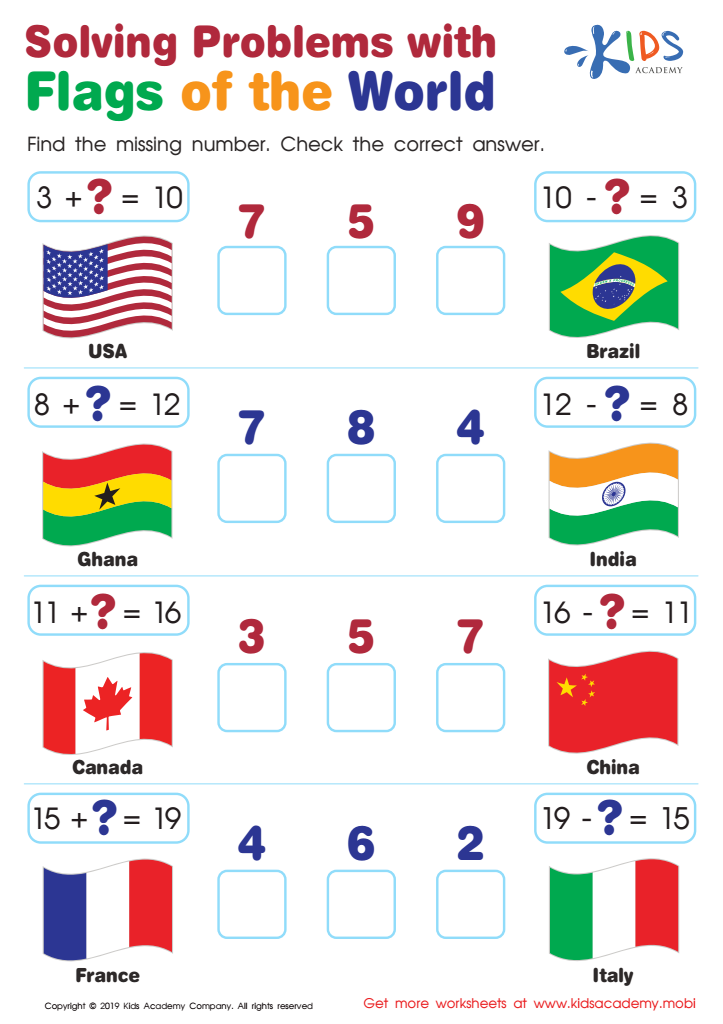
Solving Problems with Flags of the World Worksheet
Name some countries you know with your kids, then introduce their flags with this worksheet. Help them find the missing number in each addition problem, and then check the answer. It's a fun way to learn about different countries near and far.
 Assign to My Students
Solving Problems with Flags of the World Worksheet
Worksheet
Join Kids Academy for Free
Who is primarily going to use this learning content?



.jpg)



Understanding the comparative analysis in Grade 1 is essential for both parents and teachers as it critically informs educational strategies and student development. First graders are at a crucial stage of foundational learning, where they acquire basic skills in reading, writing, and arithmetic. Comparative analysis allows educators and parents to identify how students perform relative to their peers and established benchmarks. By knowing these comparisons, they can tailor instruction methods to address specific gaps or reinforce strong areas, promoting a balanced and comprehensive education.
Furthermore, comparative analysis helps in early detection of learning disabilities or giftedness, allowing for timely intervention and support or enrichment. This can lead to personalized education plans that better meet individual needs and foster a love of learning. For parents, understanding where their child stands in comparison to others and age-appropriate expectations can empower them to offer the right support at home, aiding in homework, reading, or even in communication with teachers about potential issues.
Additionally, early comparative analyses often inform educational policy and instructional improvements at the school and district levels. By aggregating the data, schools can allocate resources effectively, adopt best practices, and foster an environment where each child has an opportunity to succeed. Thus, it ensures a more equitable and high-quality education system from the ground up.