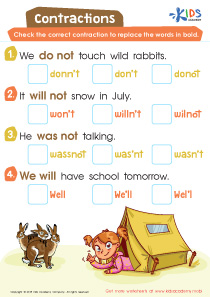
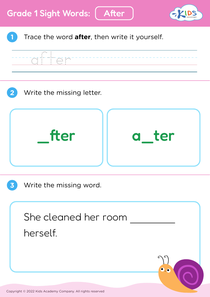
Comparison Skills Grade 1 Worksheets
3 filtered results
-
From - To
Enhance your first grader's learning with our engaging Comparison Skills Grade 1 Worksheets! Designed to help young learners develop critical thinking and analytical abilities, these worksheets focus on teaching children how to identify similarities and differences among objects. With colorful illustrations and simple exercises, your child will practice comparing various items, making it both fun and educational. These worksheets not only build foundational skills in comparison but also promote careful observation and reasoning. Ideal for classroom activities or home learning, our printable resources are perfect for first-grade students eager to master comparison skills in a playful way!
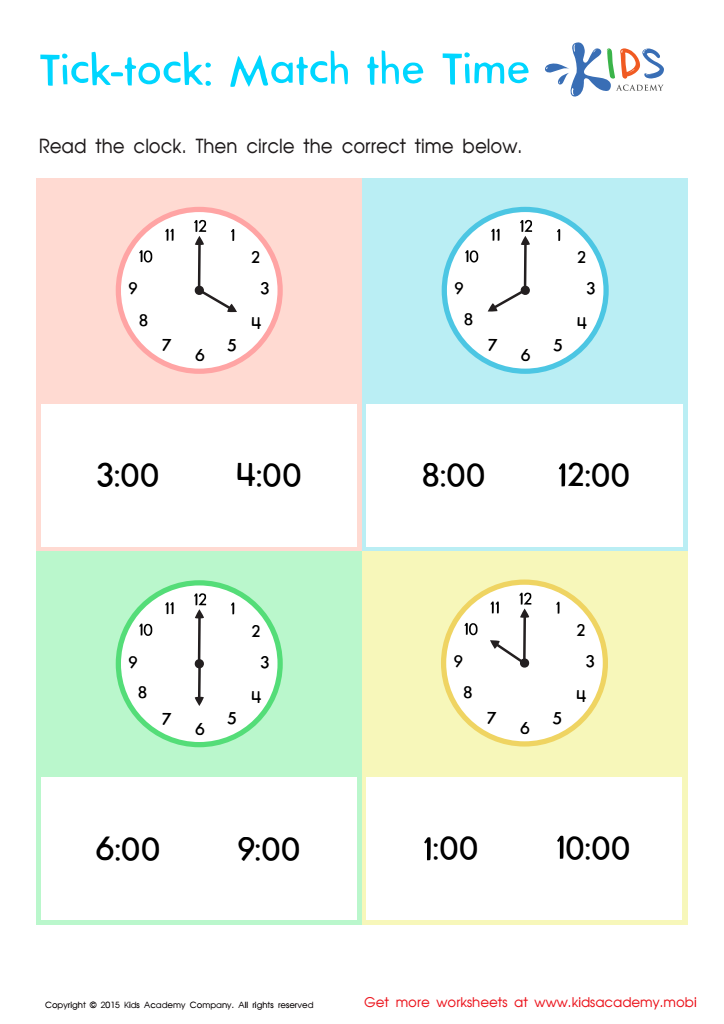
Telling The Time Worksheet: Part 4
 Assign to My Students
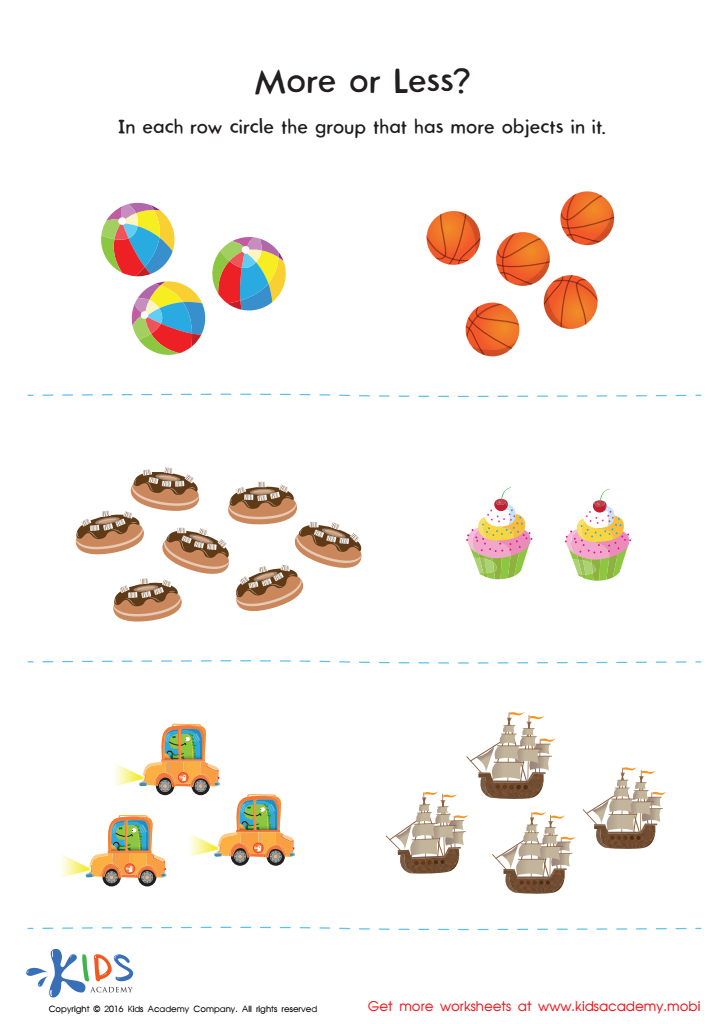
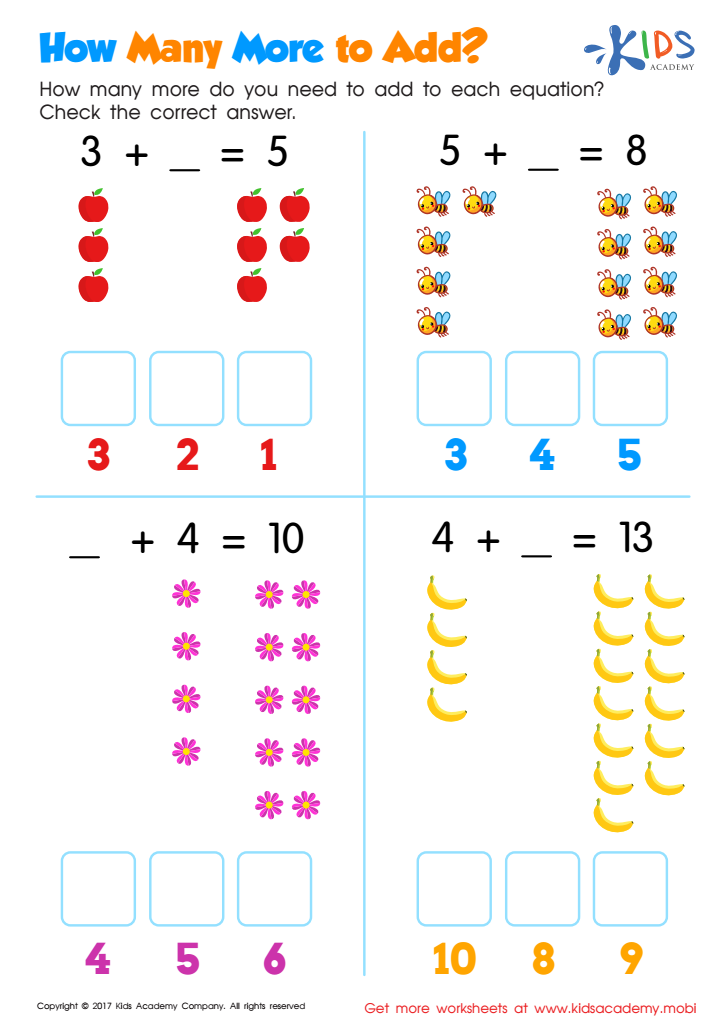
How Many More to Add Worksheet







Comparison skills are essential for Grade 1 students as they lay the foundation for critical thinking and problem-solving applications that will serve them throughout their education and everyday life. In this early stage, children begin to understand similarities and differences among objects, ideas, and concepts, which is crucial for cognitive development. When parents and teachers foster comparison skills, they stimulate students' ability to categorize and organize information, making it easier for them to comprehend complex subjects later on, such as math and science.
Furthermore, engaging children in comparison activities enhances their vocabulary and language skills, as they learn to articulate distinctions and similarities. This also promotes social awareness. For instance, when children compare their feelings or experiences with those of peers, it cultivates empathy and emotional intelligence.
Finally, honing comparison skills at this age encourages curiosity and active learning. As children recognize differences and similarities, they are motivated to explore and inquire, developing a lifelong love for learning. By prioritizing comparison skills, parents and teachers ensure that students not only excel academically but also grow into thoughtful, reflective individuals capable of making informed decisions.