Logical thinking improvement Grade 1 Worksheets
4 filtered results
Difficulty Level
Grade
Age
-
From - To
Subject
Activity
Standards
Enhance your child’s reasoning and problem-solving skills with our "Logical Thinking Improvement Grade 1 Worksheets." Designed specifically for first graders, these engaging activities challenge young minds with puzzles, patterns, and sequencing tasks. Our worksheets promote critical thinking and bolster cognitive abilities, all while keeping learning fun and interactive. Perfect for use at home or in the classroom, they provide a solid foundation in essential logical skills that benefit all areas of study. Start your child on the path to becoming a confident, proficient thinker with our expertly crafted resources. Let’s make logical thinking a part of their everyday learning journey!
Favorites
With answer key
Interactive
Tree Graph Worksheet
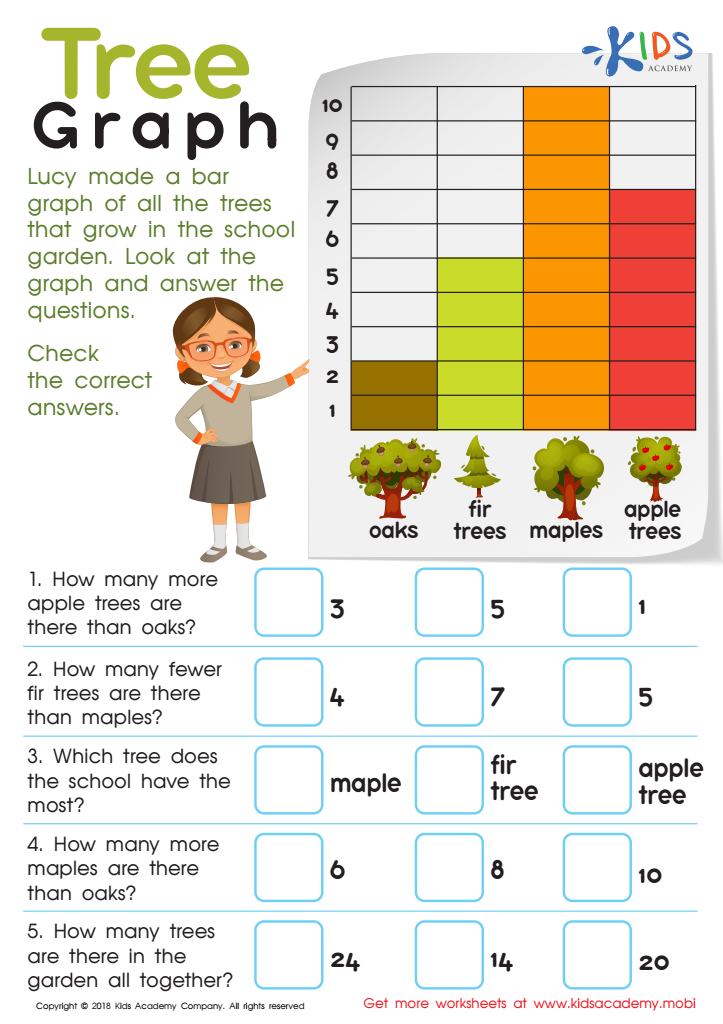
Help your child/students learn to read graphs and report data. With this colorful worksheet, the different types of trees in a school's garden are listed in a bar graph. Guide them through viewing it and answering the questions. To extend the lesson, have them create a tree graph to list the trees at their own school or home.
 Assign to My Students
Tree Graph Worksheet
Worksheet
How Knights Move Worksheet
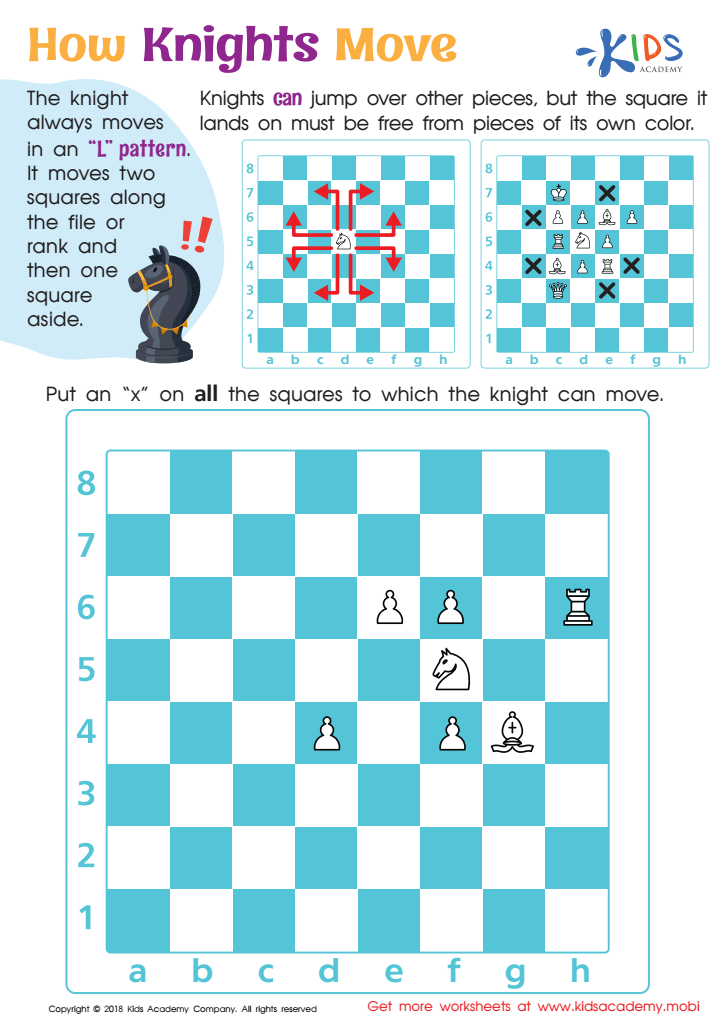
Get your kids to tell you how a knight moves in chess. If they need help, explain that a knight moves in an «L» pattern - two squares on the file/rank, one square aside. It may also jump over other pieces, as long as the landing square is unoccupied. Have them mark the squares where the knight can move in the exercise.
How Knights Move Worksheet
Worksheet
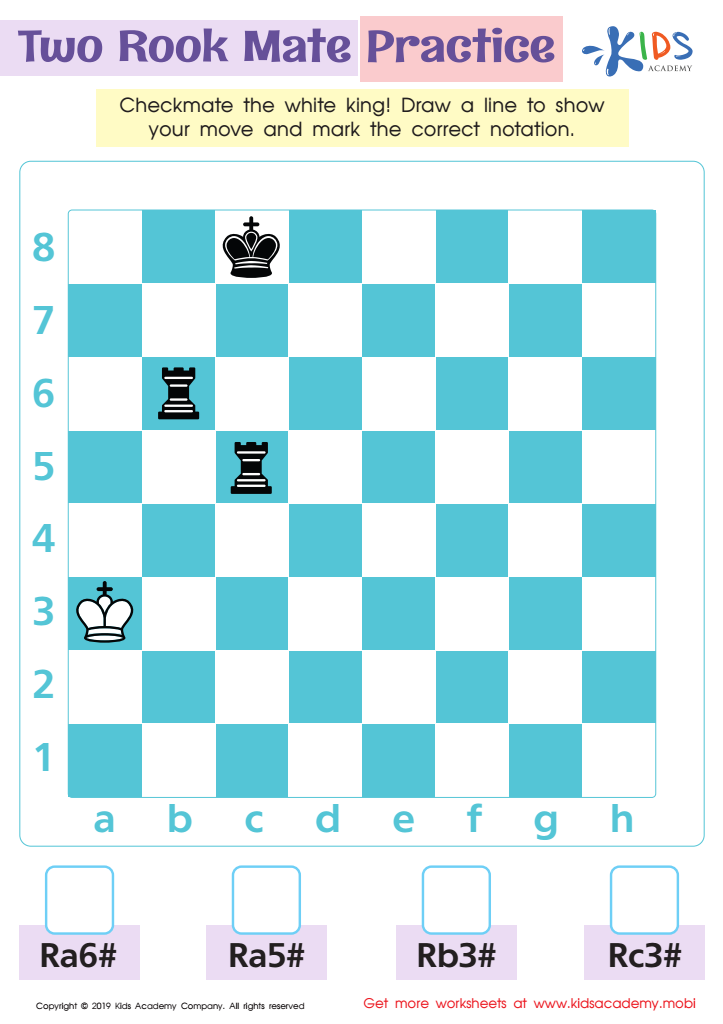
Two Rook Mate Practice Worksheet
Chess is all about checkmating your opponent. This free Two Rook Mate practice worksheet is a fun way for your mini strategist to do just that. They can draw a line showing their move then pick the correct notation for the mate! A great way for them to practice fine motor skills, too.
Two Rook Mate Practice Worksheet
Worksheet
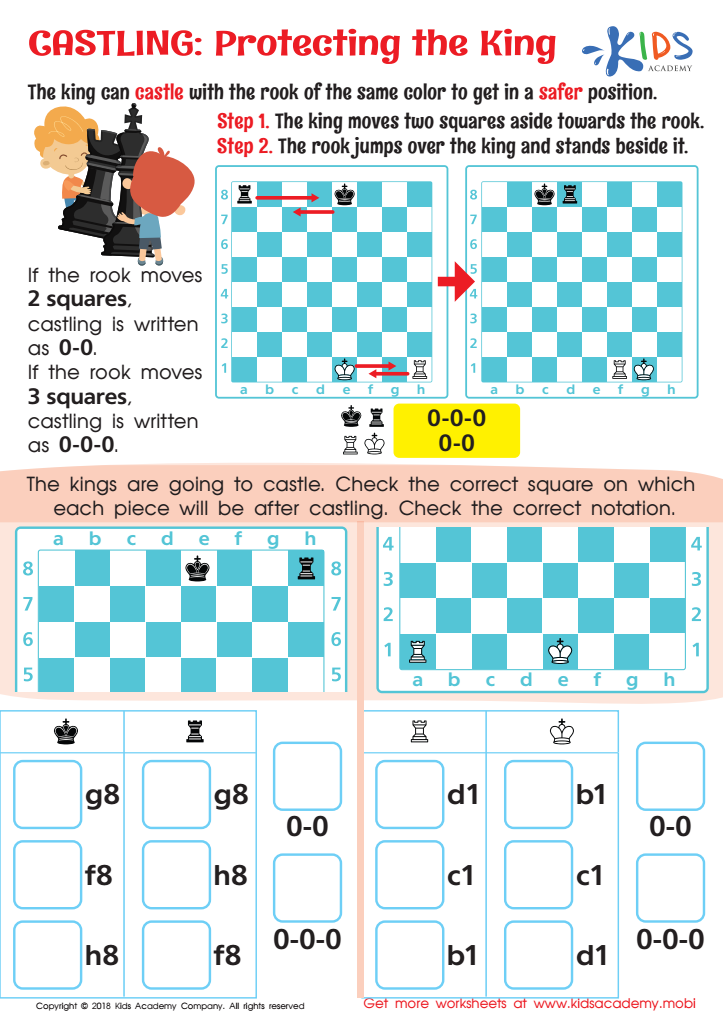
Castling: Protecting the King Worksheet
Castle your king with the rook to get into a safer position! Write 0-0 for a two-square move, or 0-0-0 for a three-square move. Look at the worksheet with your child; on the first chessboard, the king has moved two squares and the rook is beside it. On the second, the rook has jumped over the king. Let your child use their castling knowledge to answer the questions in the easy pdf.
Castling: Protecting the King Worksheet
Worksheet
Join Kids Academy for Free
Who is primarily going to use this learning content?








Logical thinking is a foundational skill that plays a crucial role in a child's development, particularly for first graders who are at an impressionable age. This ability to reason, analyze, and solve problems sets the stage for future academic success and lifelong learning. For parents and teachers, nurturing logical thinking from Grade 1 can offer multifaceted benefits.
Firstly, logical thinking enhances a child's ability to understand and follow instructions, which is fundamental for educational tasks. It encourages students to observe patterns, make connections, and draw conclusions from given data or their surroundings, thus helping them grasp basic math, language, and science concepts more effectively.
Secondly, fostering logical thinking aids in social and emotional development. Children who can reason logically are better equipped to make decisions, understand consequences, and solve conflicts amicably. They are likely to exhibit higher levels of patience and perseverance when faced with challenges, as they learn to approach problems methodically.
Moreover, logical thinking promotes creativity by allowing children to see alternate possibilities and solutions. It equips them with critical thinking skills, enabling them to ask questions, explore various perspectives, and innovate.
Given these advantages, parents and teachers should prioritize activities that enhance logical reasoning, such as puzzles, games, and hands-on projects. Cultivating these skills early in life lays a strong educational foundation and prepares children for more complex problem-solving tasks in future grades and real-world scenarios.