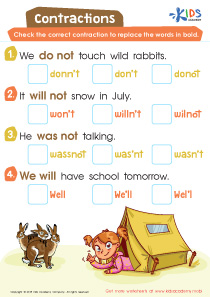
Rhyme recognition Grade 1 Worksheets
4 filtered results
-
From - To
Enhance your Grade 1 students' literacy skills with our engaging Rhyme Recognition worksheets! Designed for young learners, these printable resources aim to make mastering rhymes fun and interactive. Students will practice identifying rhyming words through vibrant activities and exercises tailored to their developmental levels. Each worksheet fosters creativity while reinforcing phonemic awareness, crucial for early reading success. Teachers can easily incorporate these engaging activities into any lesson plan, ensuring that learning feels playful and enjoyable. Explore our collection to help your first graders develop strong foundational skills while having a blast! Perfect for classroom use or at-home practice!
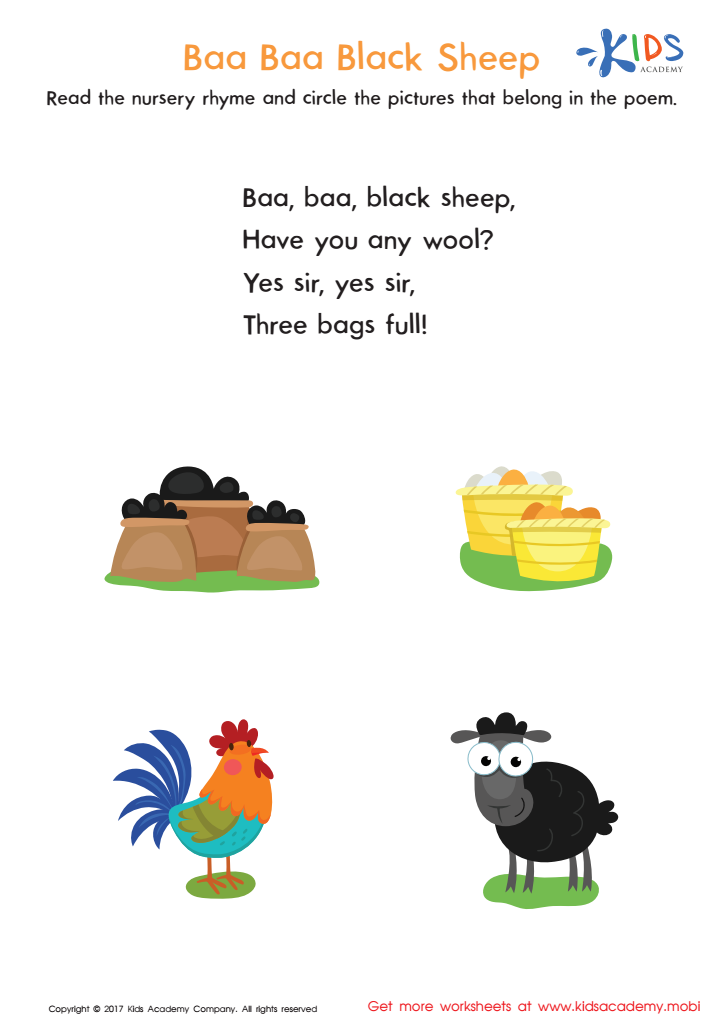
Baa Baa Black Sheep Printable
 Assign to My Students
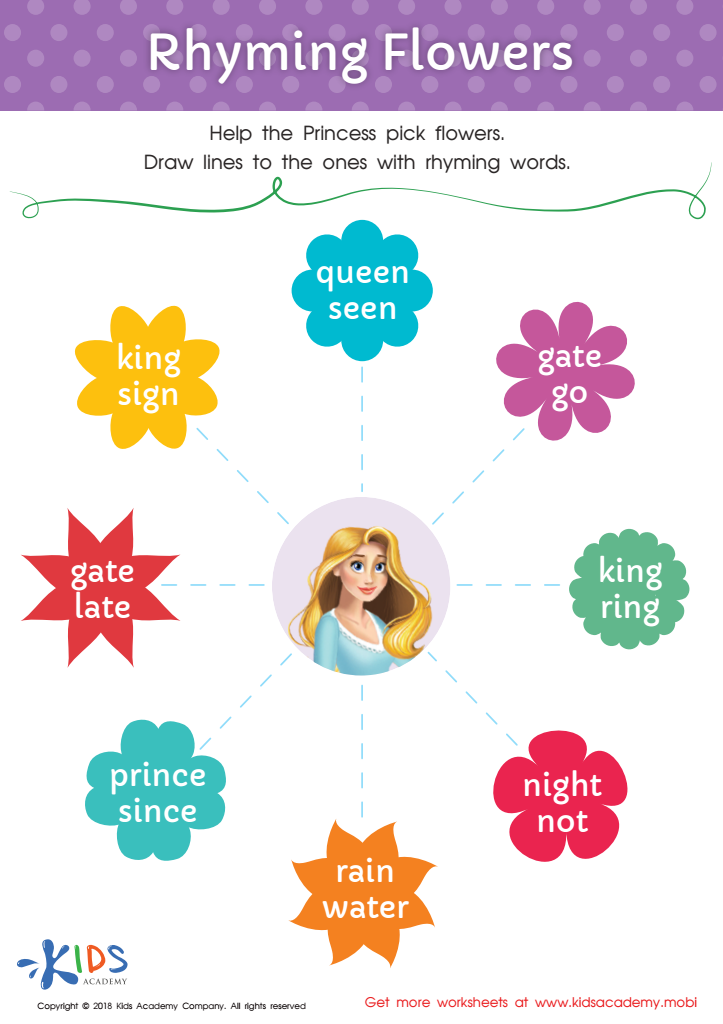
Rhyming Flowers Worksheet
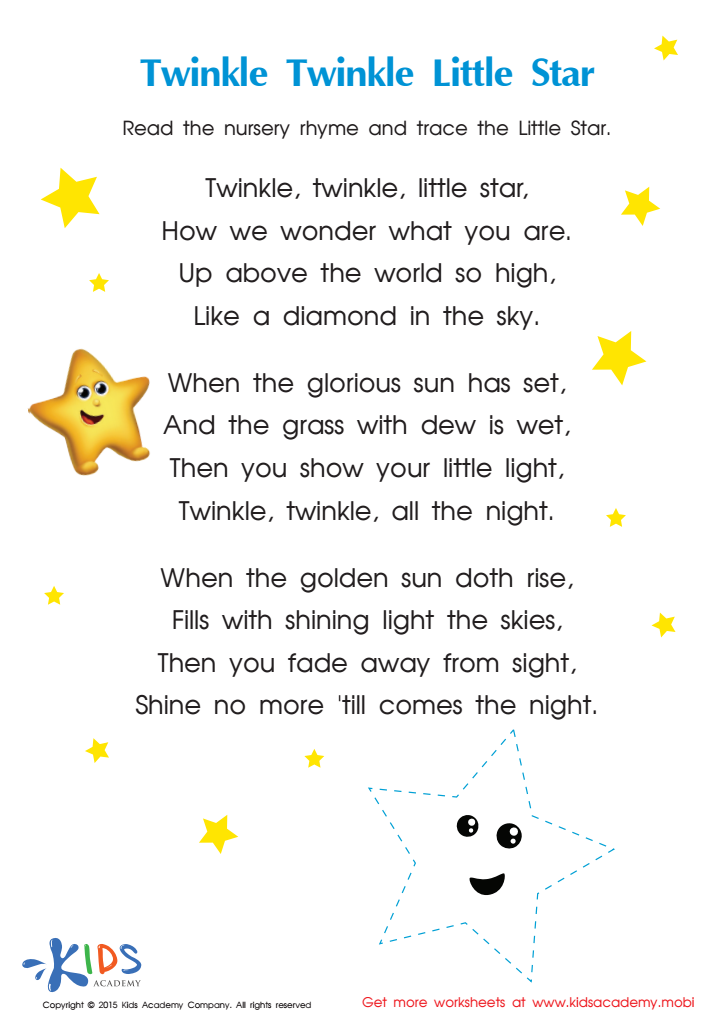
Nursery Rhymes: Twinkle Little Star Worksheet
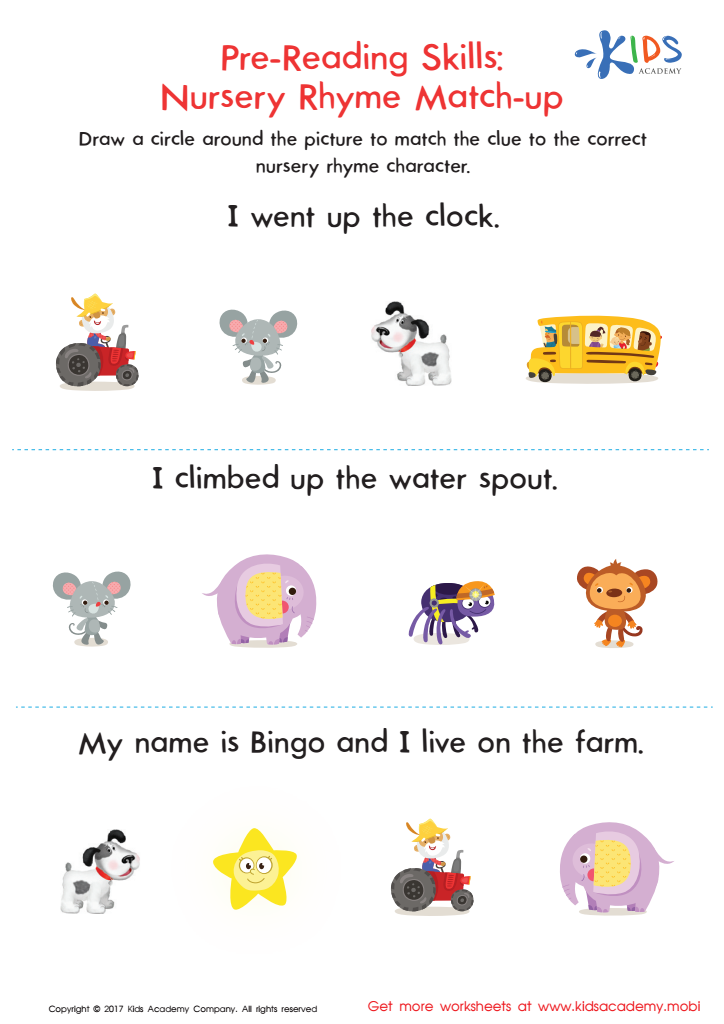
Nursery Rhyme Match–Up Worksheet







Rhyme recognition in Grade 1 is a foundational skill that plays a crucial role in a child's literacy development. First and foremost, recognizing and understanding rhymes helps children grasp the concept of phonological awareness, which is the ability to hear and manipulate the sounds in words. This awareness is vital for developing reading and writing skills. When children can identify rhyming words, they learn about sounds, syllables, and the structures of language.
Moreover, rhyme assists in vocabulary expansion, as children are more likely to experiment with words that sound similar, fostering language-rich oral communication. It also enhances memory and recall, as catchy rhymes can make new vocabulary easier to remember.
Additionally, engaging with rhymes stimulates creativity and imagination, which are crucial in cognitive development. Rhymes often come in playful songs or poems, making learning fun and interactive, thereby encouraging a lifelong love for reading.
For parents and teachers, fostering rhyme recognition means providing children with the tools they need for academic success. Investing time in rhyming activities at home or in the classroom can lead to significant improvements in literacy, laying a strong foundation for future learning. Therefore, rhyme recognition is not just playful—it’s an essential step in a child’s educational journey.