Understanding symmetry Grade 1 Worksheets
7 filtered results
Difficulty Level
Grade
Age
-
From - To
Subject
Activity
Standards
Explore our engaging Grade 1 Worksheets on Understanding Symmetry designed to captivate young learners! These worksheets introduce the concept of symmetry through fun, interactive activities that help children identify symmetrical shapes and patterns in their surroundings. With vibrant illustrations and step-by-step instructions, students will enjoy completing exercises that reinforce their learning. Our resources support early math skills, enhancing recognition of symmetry in art and nature. Perfect for classroom or home use, these worksheets provide a valuable foundation for young minds, inspiring creativity and critical thinking. Dive into the world of symmetry today and make learning enjoyable for your first grader!
Favorites
With answer key
Interactive
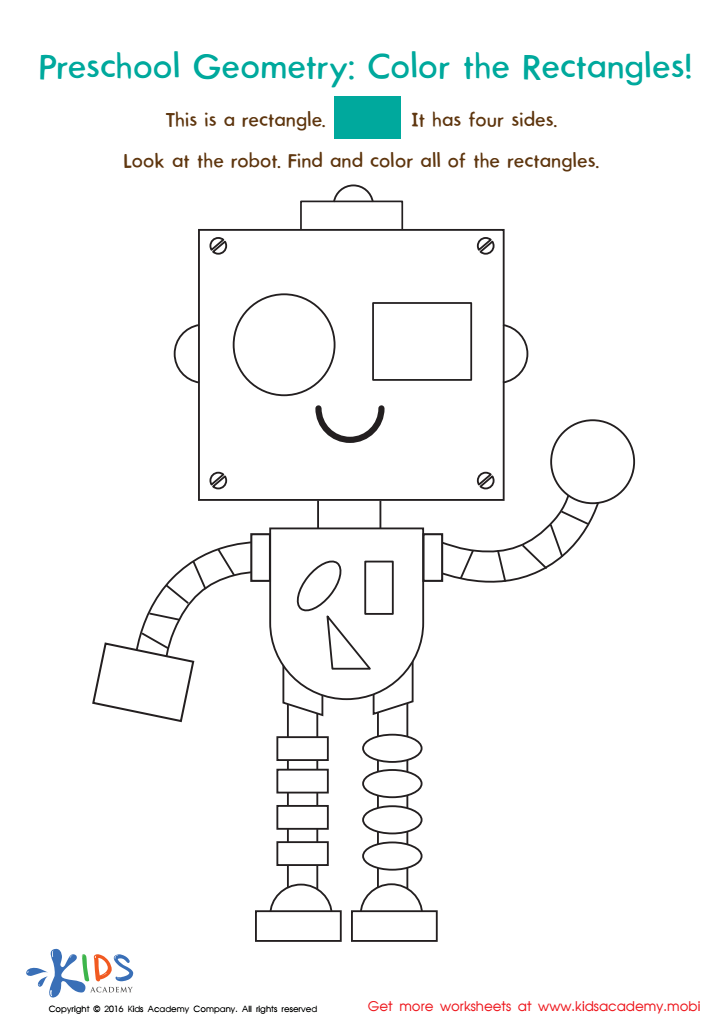
Geometry Worksheet
Geometry can be fun for kids! They explore shapes that create their favorite pics and objects. This preschool worksheet explains that rectangles have four sides, then kids color rectangles on a funny robot!
 Assign to My Students
Geometry Worksheet
Worksheet
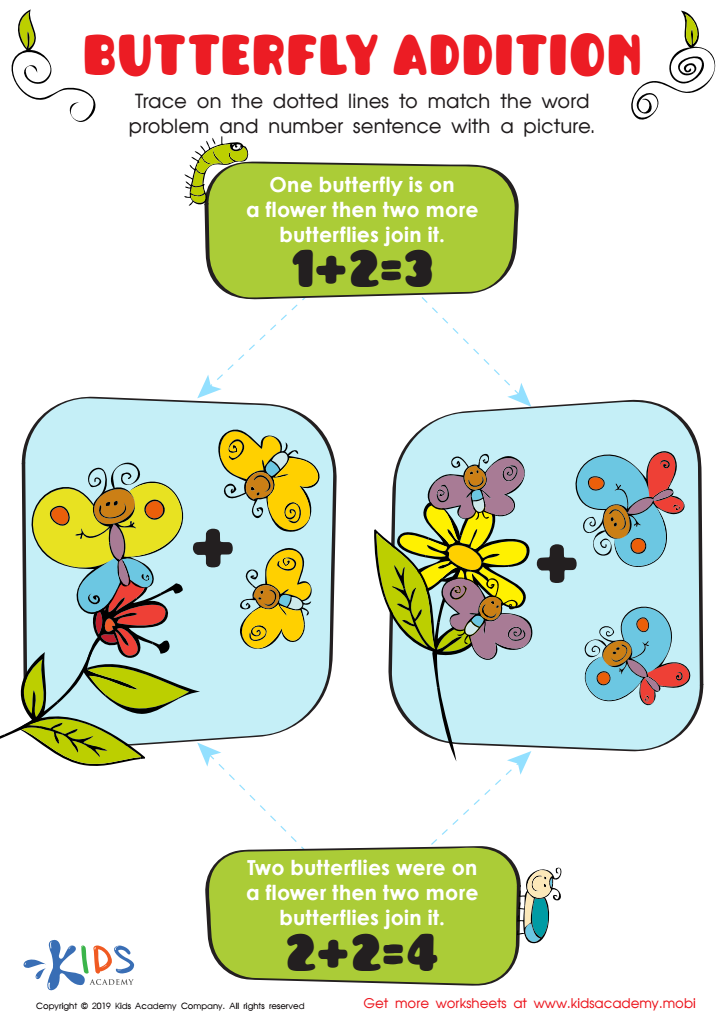
Butterfly Addition Worksheet
This tracing sheet is great for kids to work on math skills and have fun too. Read the word problems to them, then help them trace the dotted lines to match the problem and number sentence to a picture. Not only is it educational, it's beautiful too - your kids will love learning about butterflies!
Butterfly Addition Worksheet
Worksheet
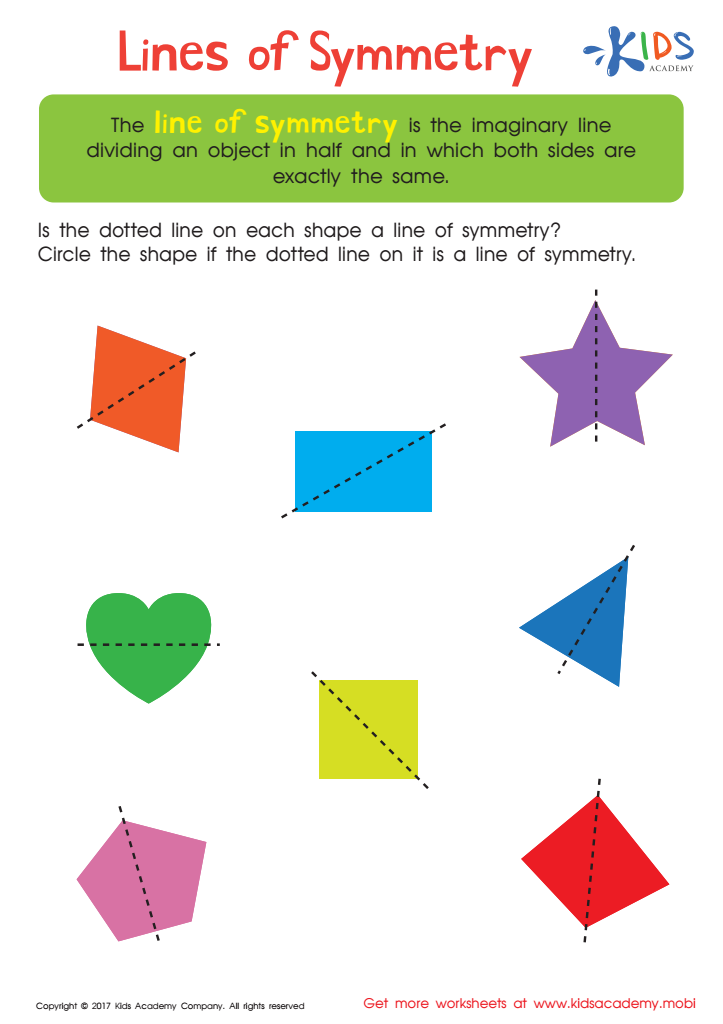
Lines of Symmetry Printable
Symmetry is a key math concept that kids must learn to develop their geometry skills. This fun worksheet helps build this skill, by encouraging kids to recognize symmetrical shapes and find equal parts.
Lines of Symmetry Printable
Worksheet
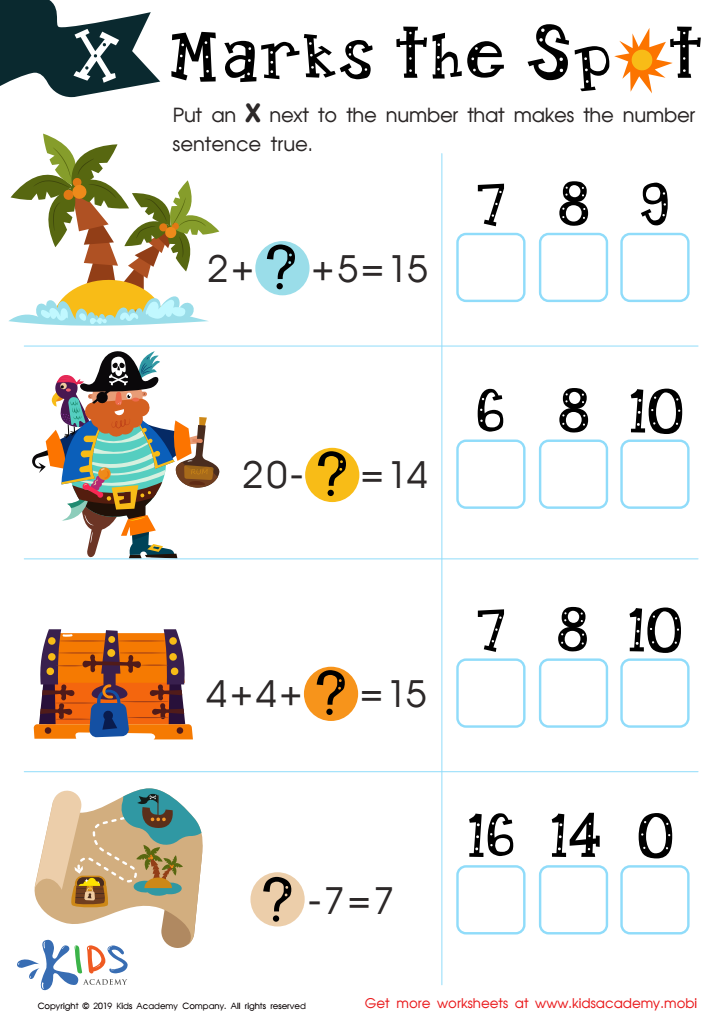
X Marks the Spot Worksheet
Let your kids explore the world of pirates! Ask them what they know about them, what they do and the phrases they like. Download the printout and point at the images, asking them to tell you what they see. Help them tick the box for the number that makes the sentence true. Let them have fun learning about pirates! (80 words)
X Marks the Spot Worksheet
Worksheet
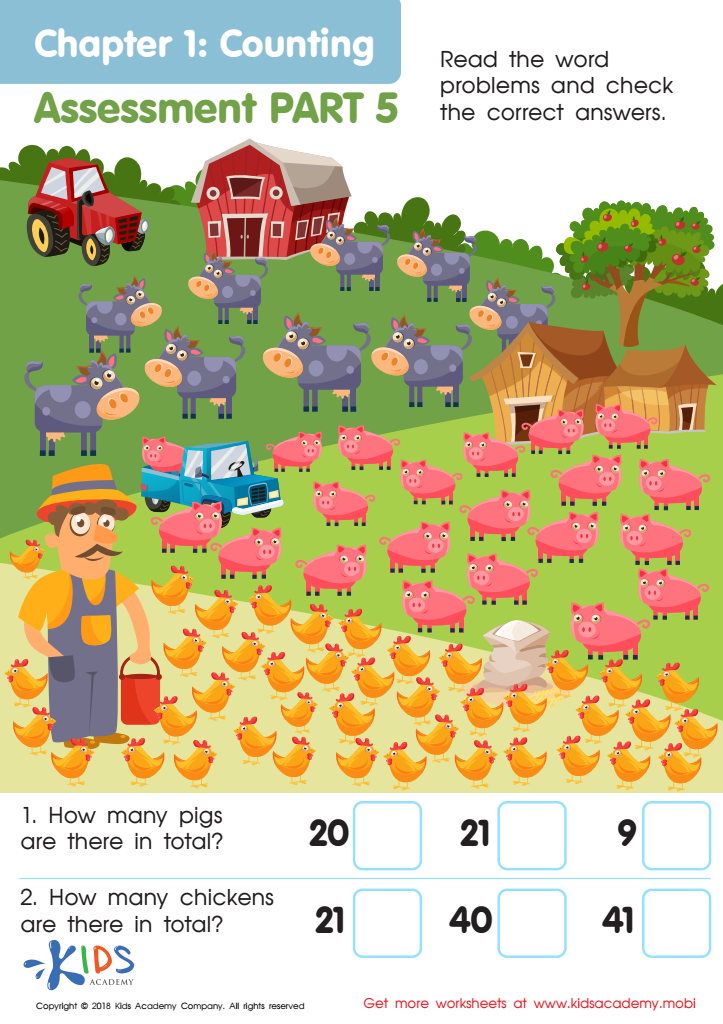
Counting: Assessment 5 Worksheet
Let your kids have fun counting farm animals on this worksheet! Help the farmer count the animals and have your child check the answers to assess their counting skills. Read the word problem at the bottom of the page and count the animals together. It's an entertaining way to practice counting and have a great time!
Counting: Assessment 5 Worksheet
Worksheet
Join Kids Academy for Free
Who is primarily going to use this learning content?





Understanding symmetry is crucial for first graders as it lays the foundation for essential mathematical and spatial awareness skills. When children grasp the concept of symmetry, they learn to recognize patterns and relationships in the world around them. This understanding enhances their problem-solving abilities as they start to identify symmetrical shapes in nature, art, and everyday objects, making learning more relevant and engaging.
Symmetry also plays an important role in fostering creativity. By exploring reflections and transformations, children can create balanced artwork, engage in design activities, and appreciate aesthetic qualities. This not only sharpens their visual perception but also encourages self-expression.
In a broader educational context, symmetry integrates various subjects, such as math, art, and science. This interdisciplinary approach makes learning more holistic and enjoyable. Moreover, promoting symmetry helps develop critical thinking as students analyze and compare different shapes and patterns.
For parents and teachers, emphasizing symmetry can strengthen early math skills and facilitate discussions about geometry, measurement, and art. Ultimately, understanding symmetry empowers first graders to appreciate the structured beauty of the world, setting a strong cognitive and emotional foundation for their future learning experiences.