Basic counting skills Grade 1 Numbers Worksheets
5 filtered results
Difficulty Level
Grade
Age
-
From - To
Subject
Activity
Standards
Discover our engaging Basic Counting Skills Grade 1 Numbers Worksheets, designed to boost young learners' confidence in numeracy. These worksheets focus on essential counting concepts, helping students recognize, count, and compare numbers to 20. Each activity is tailored to provide interactive practice that supports both visual and kinesthetic learning styles. With vibrant illustrations and age-appropriate challenges, these worksheets make math fun and accessible, fostering a positive learning environment. Perfect for classroom use or at-home practice, our counting skills worksheets encourage mastery through repetition and creativity. Equip your first grader with the foundational skills they need for future math success!
Favorites
With answer key
Interactive
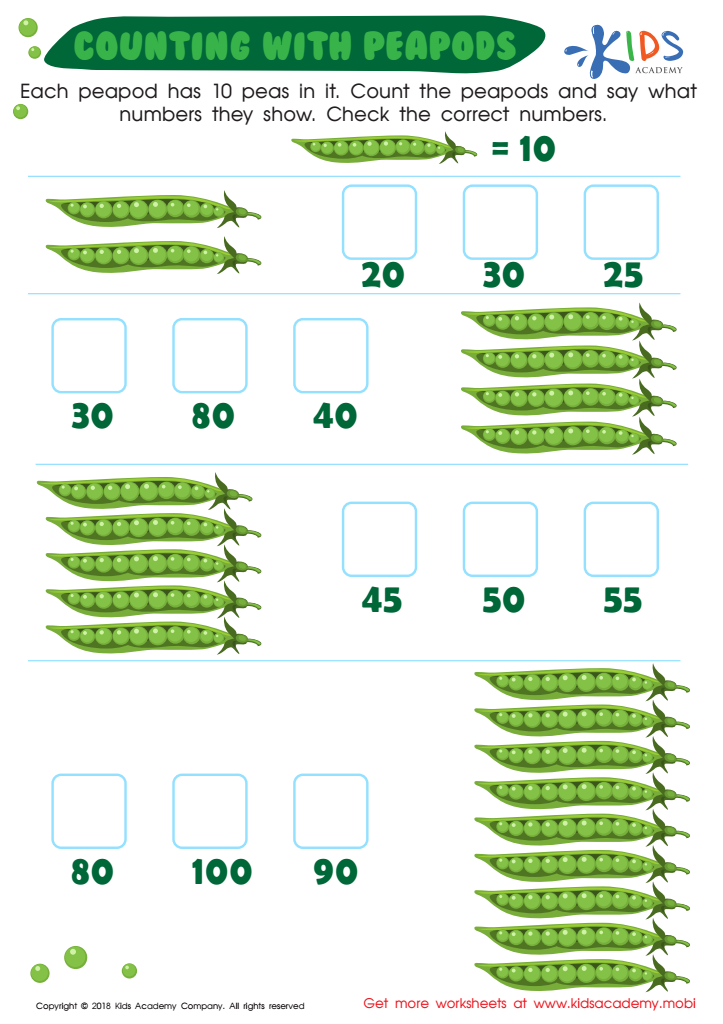
Number Worksheet: Counting With Peapods
Help your child learn multiplication and develop their place value skills in a fun way with this number worksheet: Counting with Peapods! Each pod has 10 peas, and kids can simply count each one and add a zero to the ones place to get the answer. It's a great, colorful way to learn!
 Assign to My Students
Number Worksheet: Counting With Peapods
Worksheet
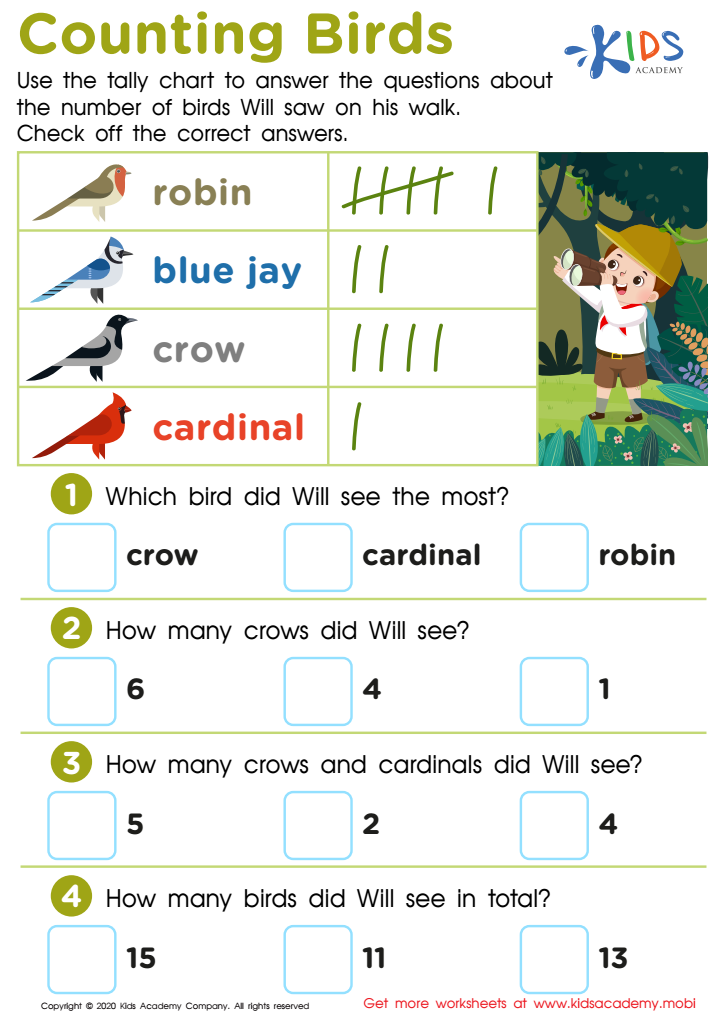
Counting Birds Worksheet
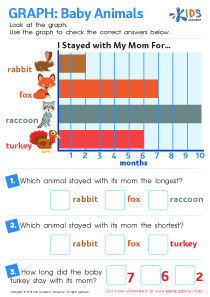
Introduce your child to the exciting activity of bird watching! This PDF worksheet features a tally chart of the different types of birds Will saw on his walk. Have your kid use the tally chart to organize information and use it to answer the questions that follow, thus boosting early science and math skills.
Counting Birds Worksheet
Worksheet
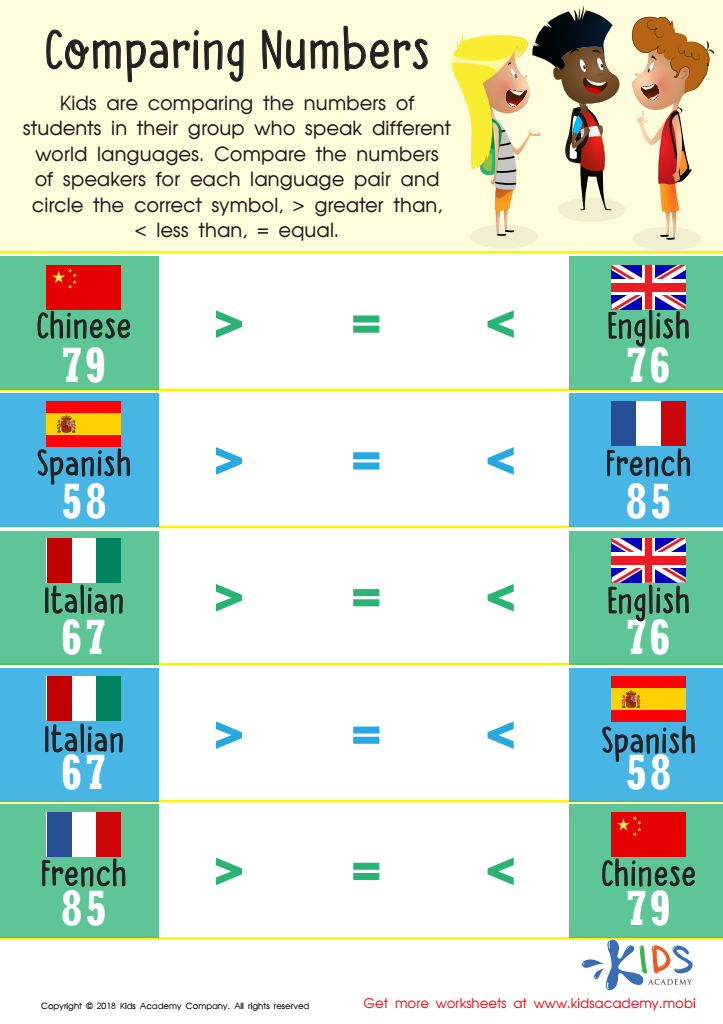
Comparing Numbers Worksheet for 1st Grade
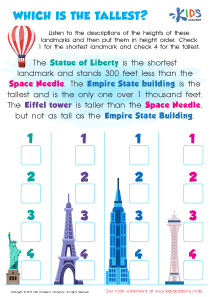
Children can build number sense by exploring the relationship between numbers. This worksheet uses bright international flags to compare numerical groups. Kids will love the cheerful colors and flags from different countries. It encourages them to compare numbers and reinforces their number sense with tens and ones place values.
Comparing Numbers Worksheet for 1st Grade
Worksheet
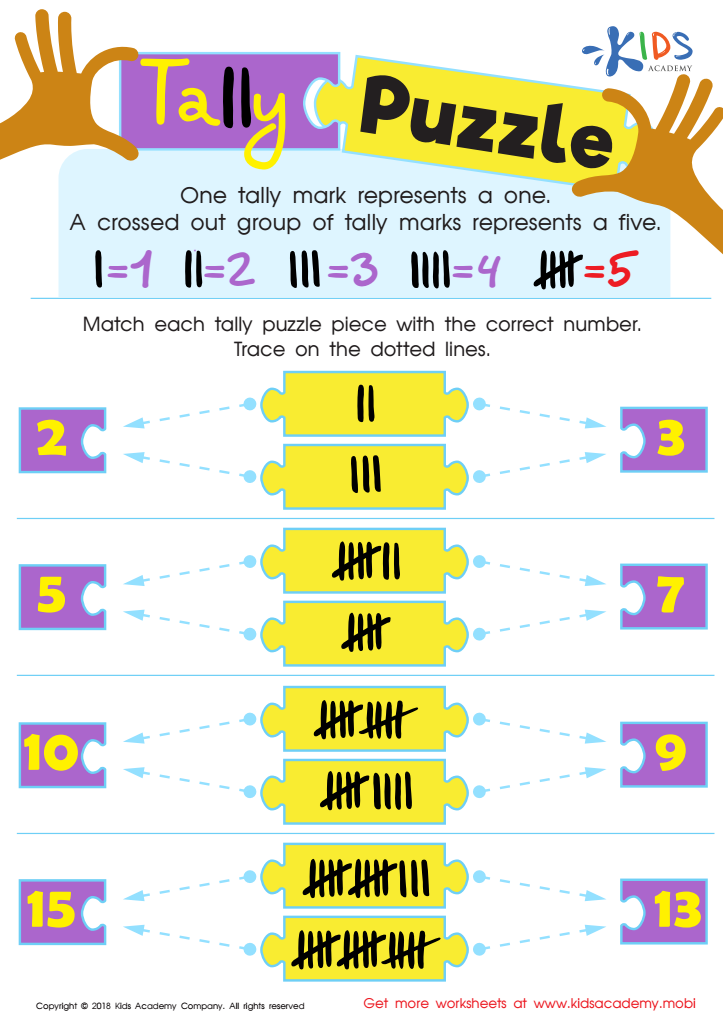
Tally Puzzle Worksheet
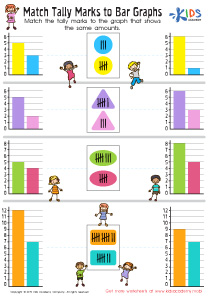
Kids love puzzles, and this bright worksheet will let them practice tallies and matching numbers. It teaches them to count and assign values, critical for doing math problems quickly and accurately later. It also leads to strategies like counting by 5s.
Tally Puzzle Worksheet
Worksheet
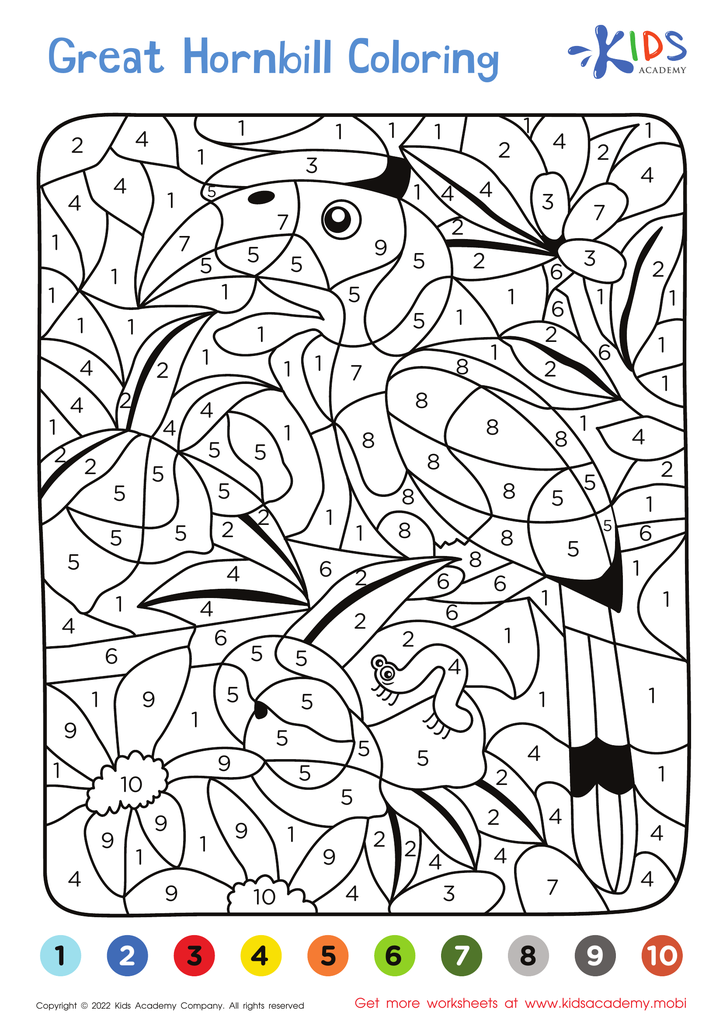
Great Hornbill – Coloring by Numbers
Download our free PDF page, featuring a hornbill for you to color in! Numbers are provided so you can follow along, making the picture come to life. Fun for all ages!
Download our free PDF page and have fun coloring a hornbill according to the numbers! You'll bring the picture to life with every stroke of your creativity. Perfect for all ages!
Great Hornbill – Coloring by Numbers
Worksheet
Join Kids Academy for Free
Who is primarily going to use this learning content?




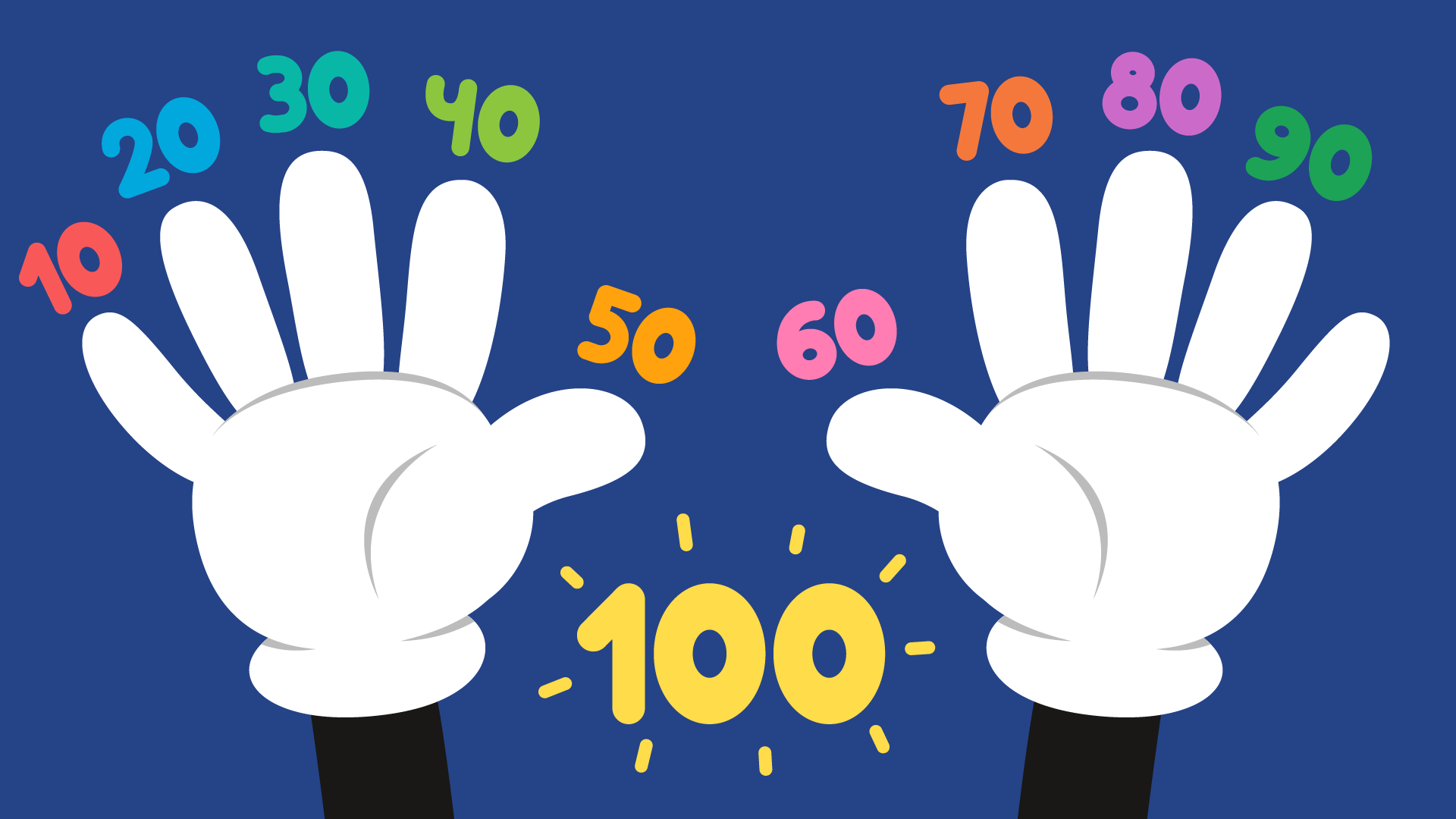



Basic counting skills are foundational for young learners and play a crucial role in children's overall development. For parents and teachers, fostering these skills in Grade 1 is vital as they serve as the building blocks for more complex mathematical concepts. Understanding numbers and their relationships helps children make sense of the world around them, enhancing their problem-solving abilities and critical thinking skills.
When children master counting, they gain confidence in their numerical abilities, which is essential for future learning. This foundational skill supports other academic areas, such as reading and science, as children learn to categorize, compare, and quantify. Additionally, basic counting aids in developing fine motor skills through activities like writing numbers or counting objects.
Engaging children in counting through games and real-life situations can reinforce their understanding and make learning fun. Parents and teachers who prioritize counting skills can foster a positive attitude toward math, encouraging lifelong math fluency. Ultimately, nurturing basic counting skills equips students with essential tools for academic success, enabling them to tackle challenging concepts as they progress through their education, establishing a strong foundation for future learning.