Understanding symmetry Grade 1 Math Worksheets
5 filtered results
-
From - To
Explore our engaging "Understanding Symmetry" Grade 1 Math Worksheets, designed to make discovering symmetry fun for young learners! These printable resources help first graders identify symmetrical shapes and patterns through interactive activities. With colorful visuals and simple instructions, students will grasp the concept of symmetry as they complete various tasks, from drawing lines of symmetry to coloring symmetrical figures. These worksheets not only reinforce math skills but also enhance creativity and critical thinking. Perfect for classroom learning or home practice, our symmetry worksheets are essential tools in nurturing a solid foundation in math. Start the journey to symmetry mastery today!
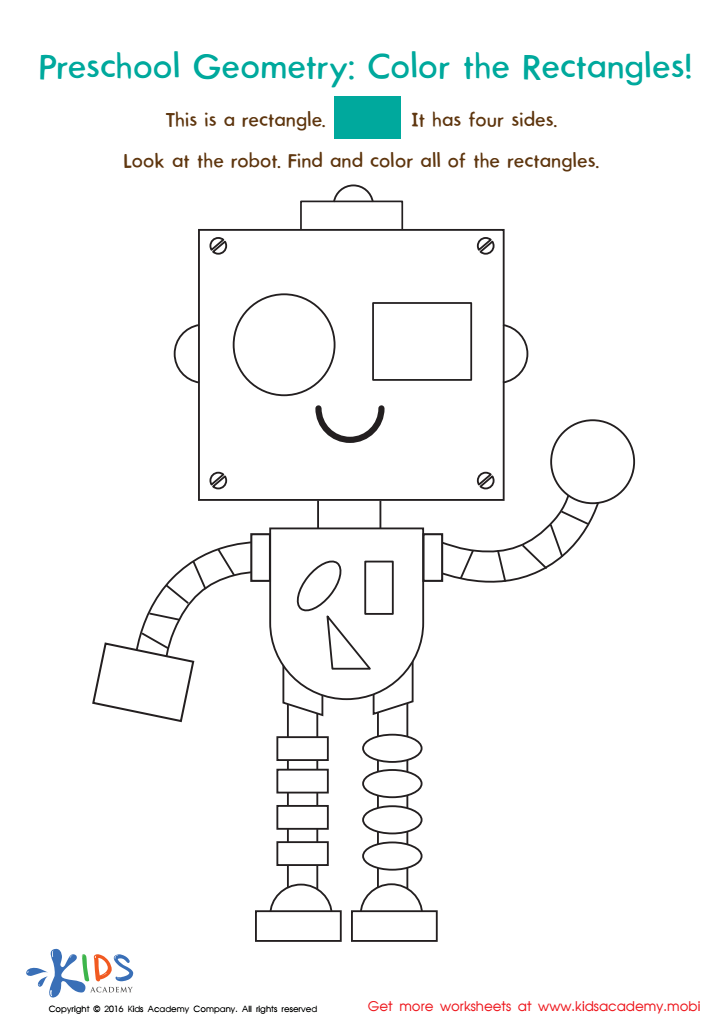
Geometry Worksheet
 Assign to My Students
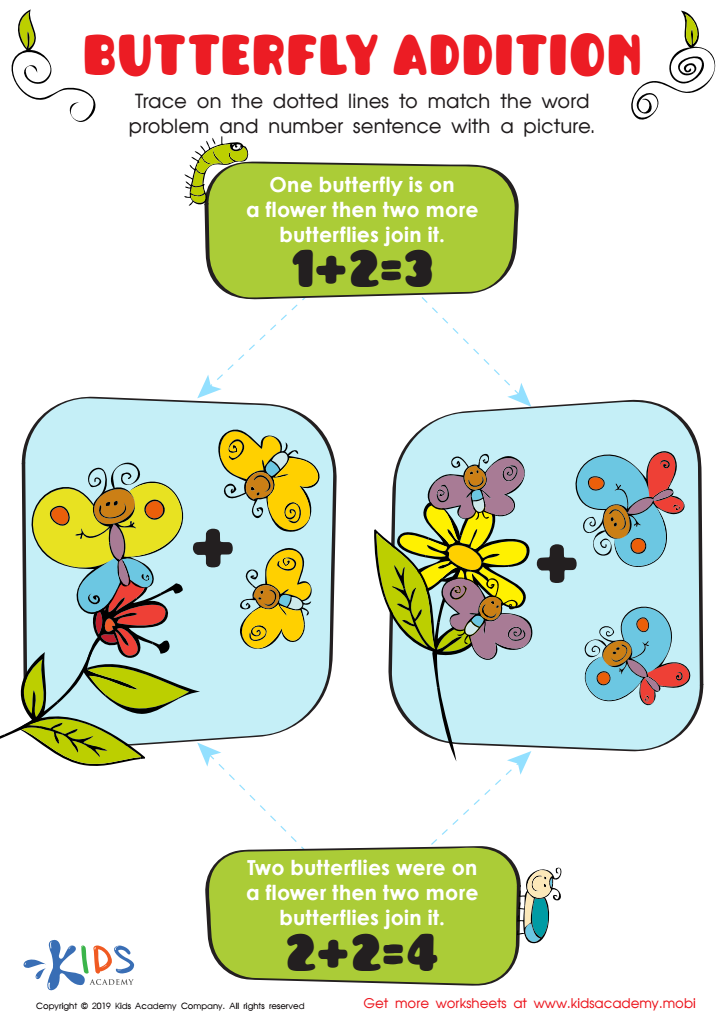
Butterfly Addition Worksheet
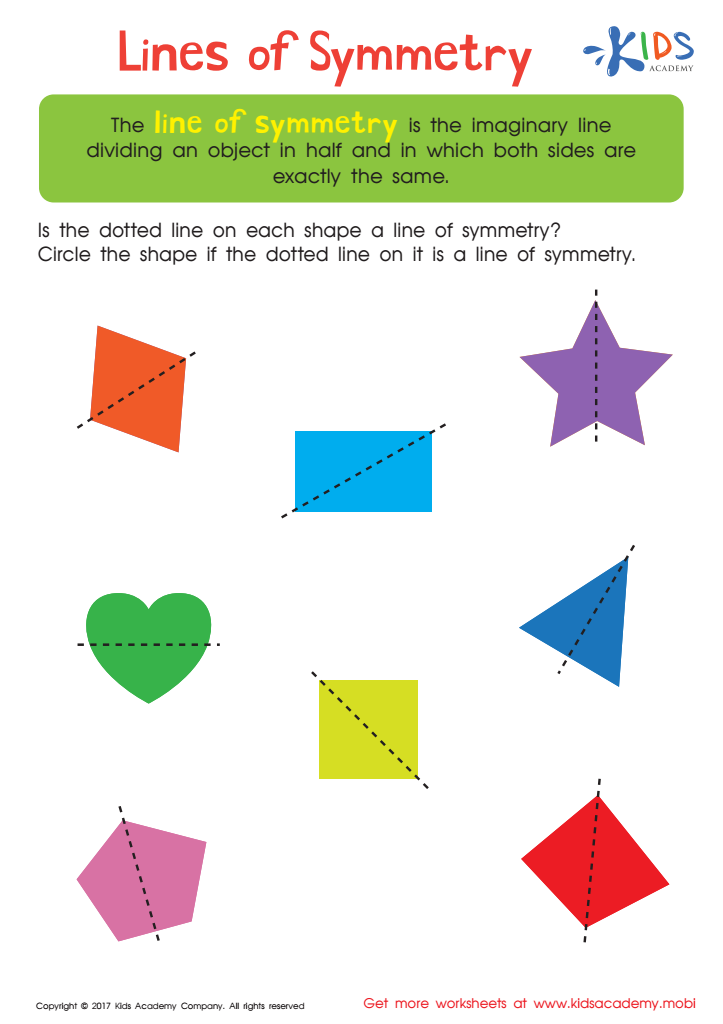
Lines of Symmetry Printable
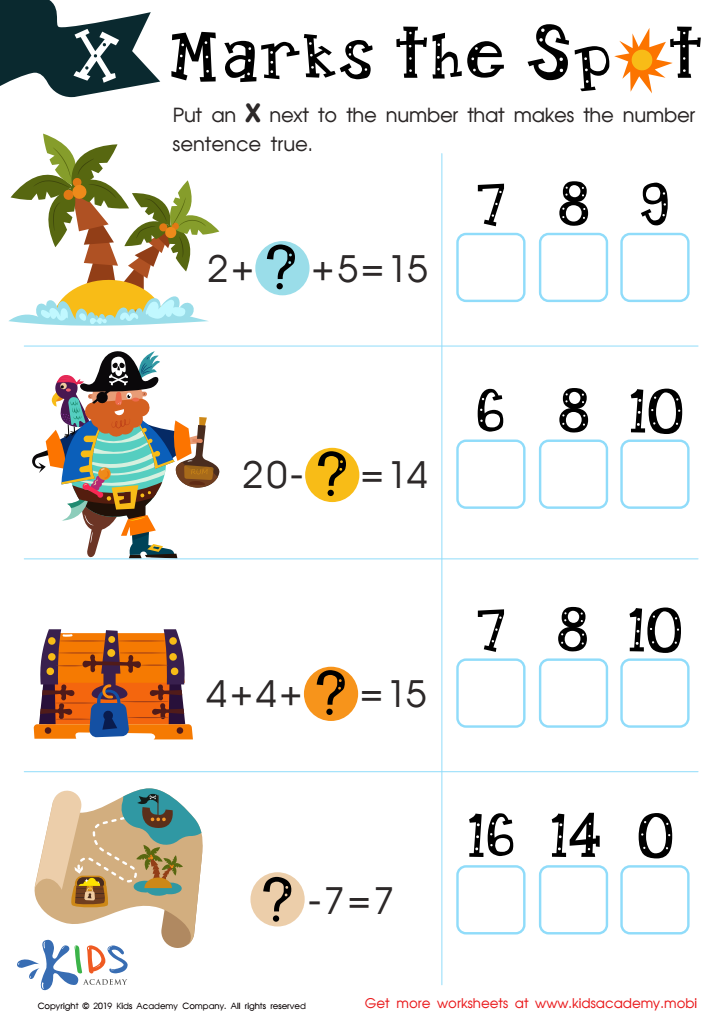
X Marks the Spot Worksheet
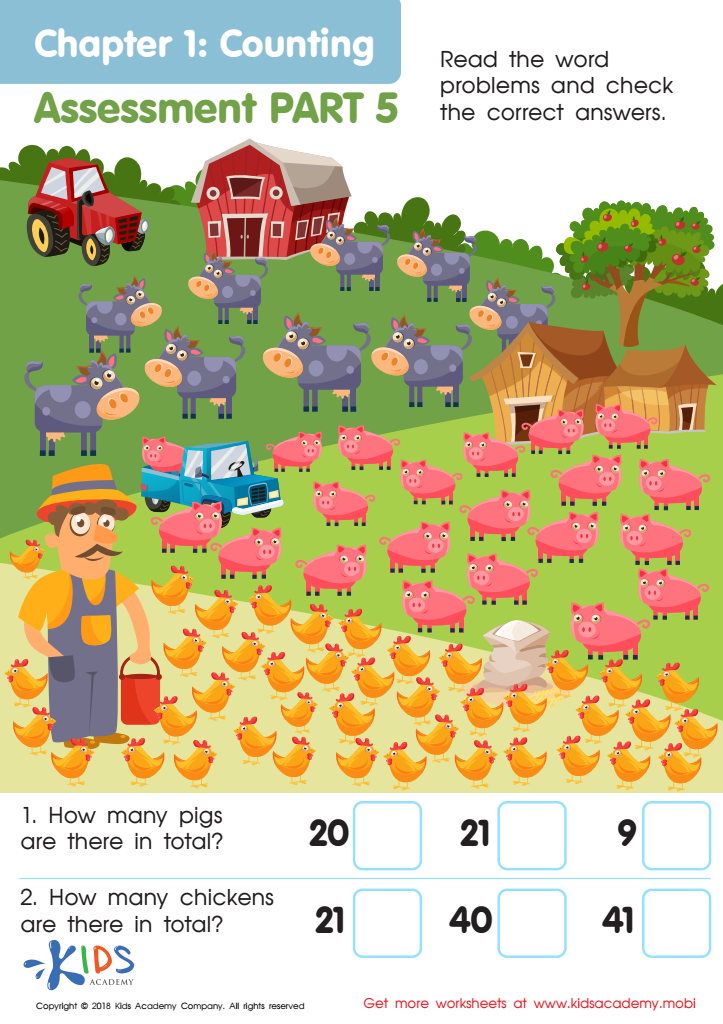
Counting: Assessment 5 Worksheet


.jpg)




Understanding symmetry is an important concept in Grade 1 math that extends beyond just shapes and geometry. Parents and teachers should care about this foundational skill for several reasons. Firstly, symmetry introduces children to spatial awareness and critical thinking. Recognizing symmetrical patterns helps them make connections between mathematics and the world around them, fostering observational skills.
Secondly, learning about symmetry promotes creativity. When children explore symmetrical designs in art and nature, they engage both sides of their brain, enhancing their ability to innovate and think outside the box. This dual engagement supports cognitive development.
Additionally, symmetry helps with categorization and organizational skills. As children identify symmetrical objects, they practice sorting and classifying, which are essential skills in math and science. Understanding symmetry is also vital for later mathematical concepts, such as geometry, which becomes increasingly complex in later grades.
Moreover, symmetry plays a role in daily life, from understanding balance in objects to recognizing patterns in architecture and nature. Thus, emphasizing symmetry in Grade 1 math not only enriches children's learning experiences but also equips them with essential skills for future academic success and everyday problem-solving. Overall, fostering an understanding of symmetry lays a strong mathematical foundation for young learners.