Animal identification Grade 1 Reading Worksheets
4 filtered results
-
From - To
Welcome to our Animal Identification Grade 1 Reading Worksheets! Designed to engage young learners, these worksheets help first graders enhance their reading skills while exploring the fascinating world of animals. Through interactive reading exercises, children will identify various animals, understand their characteristics, and learn to associate images with written words. Our resources incorporate fun activities that make learning enjoyable, fostering a love for reading early on. Perfect for classroom use or at-home practice, these worksheets cater to diverse learning styles, ensuring every child grasps essential literacy concepts. Dive into the adventures of animal discovery and watch your child’s reading skills flourish!
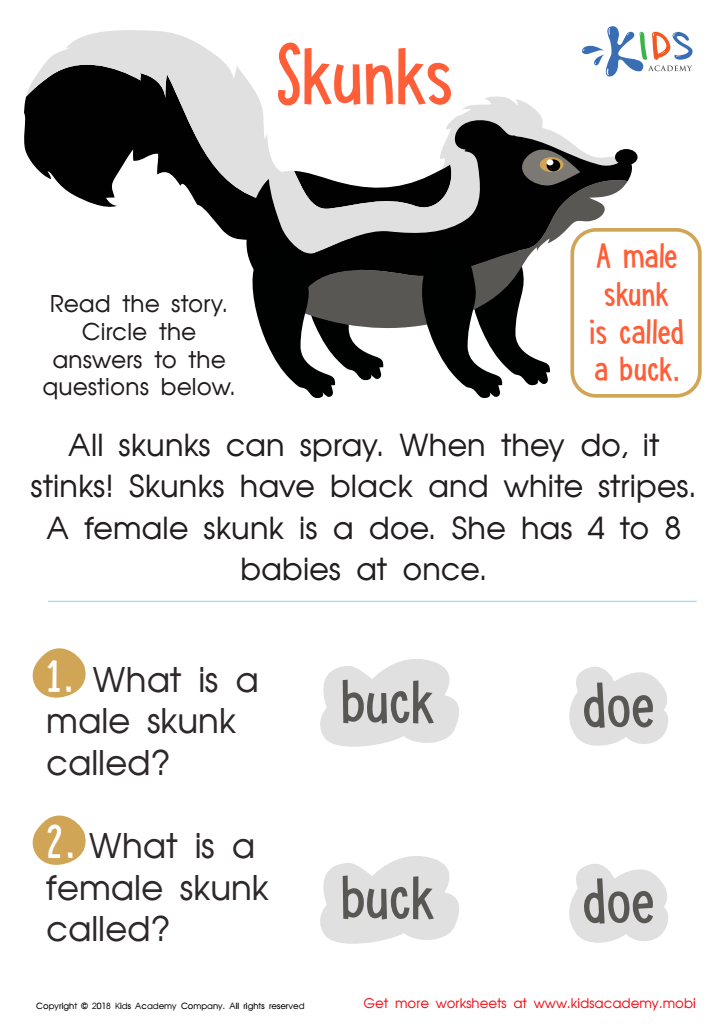
Skunks Worksheet
 Assign to My Students
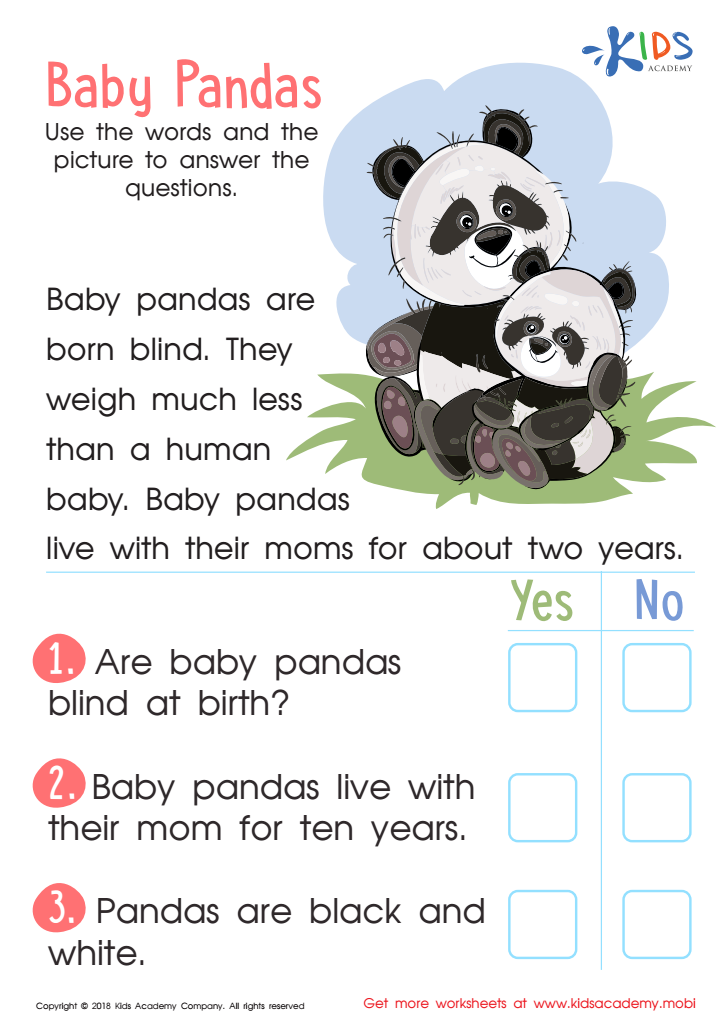
Baby Pandas Worksheet
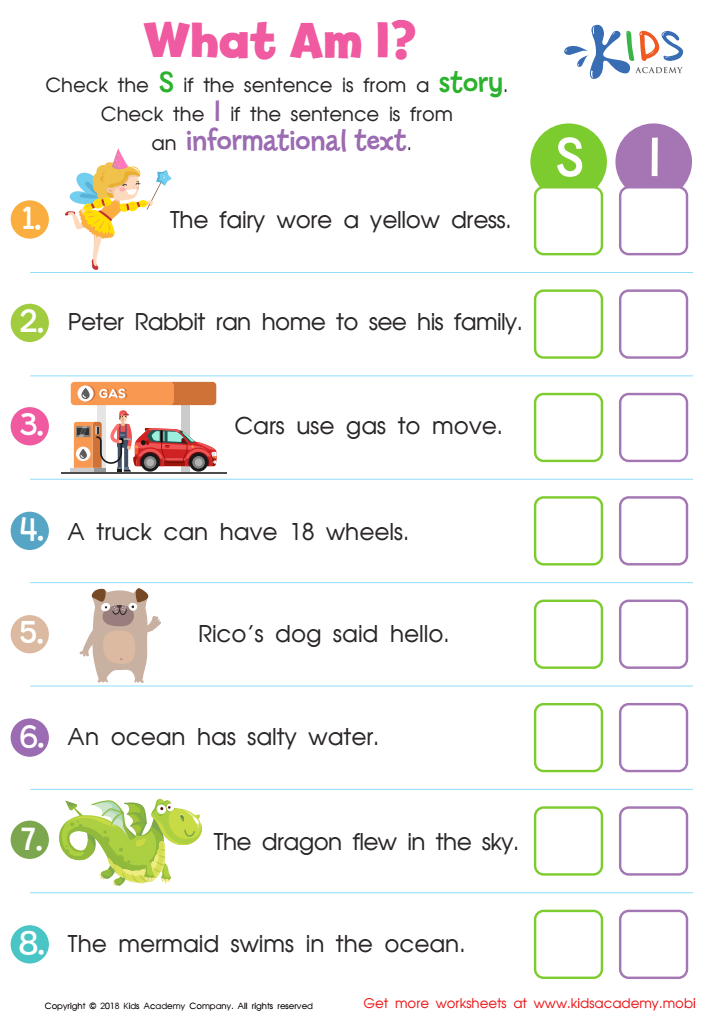
What Am I? Worksheet
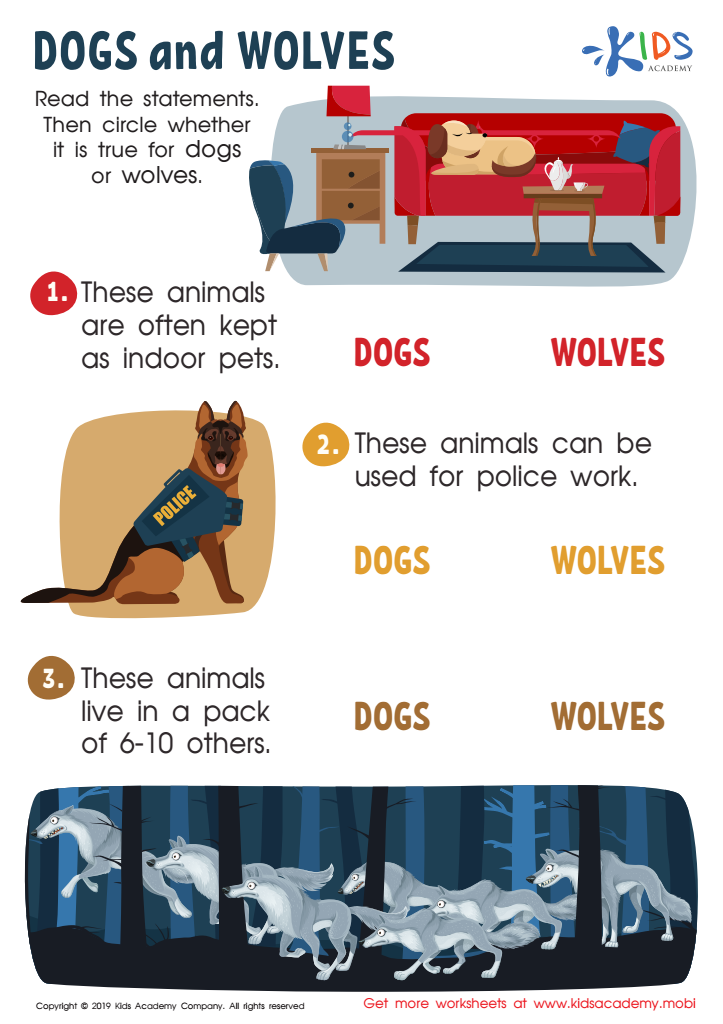
Dogs and Wolves Worksheet







Animal identification is an essential topic for Grade 1 students, as it not only introduces them to the diverse world of animals but also promotes critical thinking and observational skills. When parents and teachers emphasize the importance of recognizing different animals, it opens a window for children to explore their environment, learn about habitats, and understand ecosystems. This foundational knowledge nurtures curiosity and encourages children to ask questions about the world around them.
Through animal identification, young learners develop their vocabulary and literacy skills by reading about different species, their characteristics, and behaviors. Engaging with texts about animals also enhances their comprehension skills, as they learn to interpret information from pictures and words. Moreover, learning about animals fosters empathy and respect for living creatures, nurturing values that are crucial for personal development.
By integrating animal identification into early education, parents and teachers support holistic learning experiences. They help children make connections between language, science, and social awareness, paving the way for informed and compassionate individuals who appreciate the natural world. Ultimately, understanding animals lays the groundwork for more advanced topics in biology and environmental science as students progress in their education.