Logical Reasoning Grade 1 Reading Fiction Worksheets
3 filtered results
Difficulty Level
Grade
Age
-
From - To
Subject
Activity
Standards
Unlock your child's potential with our "Logical Reasoning Grade 1 Reading Fiction Worksheets." Designed specifically for first graders, these worksheets enhance critical thinking skills while promoting a love for reading. Engaging and interactive, they challenge students to analyze stories, make inferences, and draw conclusions. Each worksheet features captivating fiction texts that stimulate imagination and comprehension. Perfect for classroom use or at-home practice, our materials provide guided prompts that encourage young learners to think critically about what they read. Help your child develop essential reasoning skills with fun and educational activities that lay a strong foundation for future learning!
Favorites
With answer key
Interactive
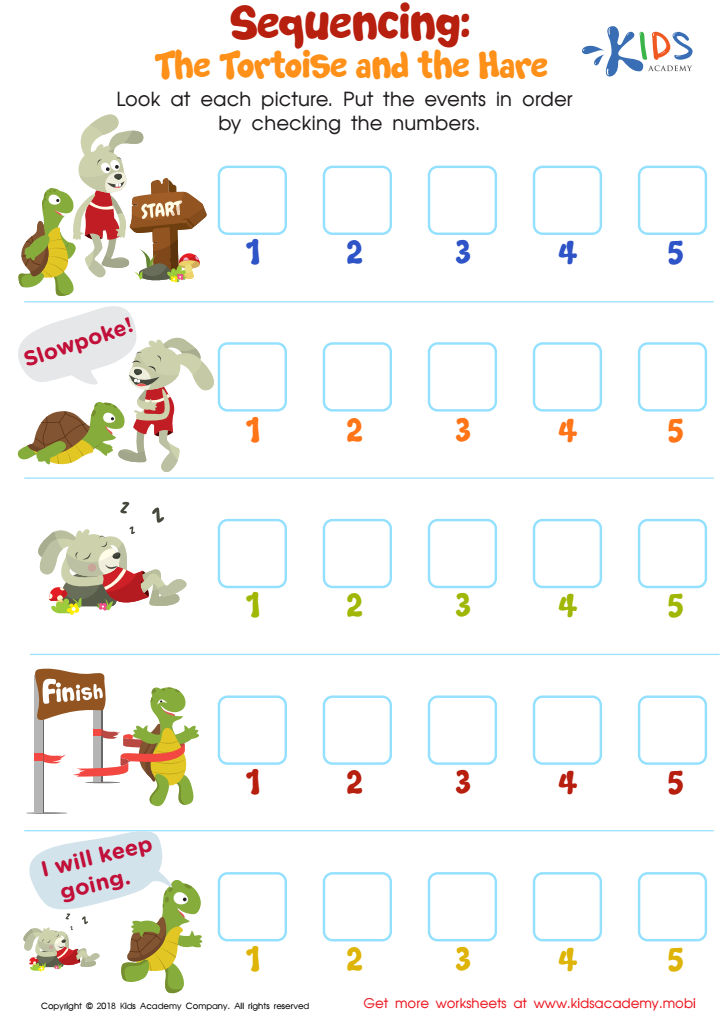
Sequencing: The Tortoise and the Hare Worksheet
Help your child become an independent reader and critical thinker with a sequencing worksheet from Kids Academy! Have them read the classic tale of the tortoise and the hare and use the accompanying worksheet to check their understanding of the story's sequence of events. Have kids identify the correct order of events by selecting the box next to the correct number for each image!
 Assign to My Students
Sequencing: The Tortoise and the Hare Worksheet
Worksheet
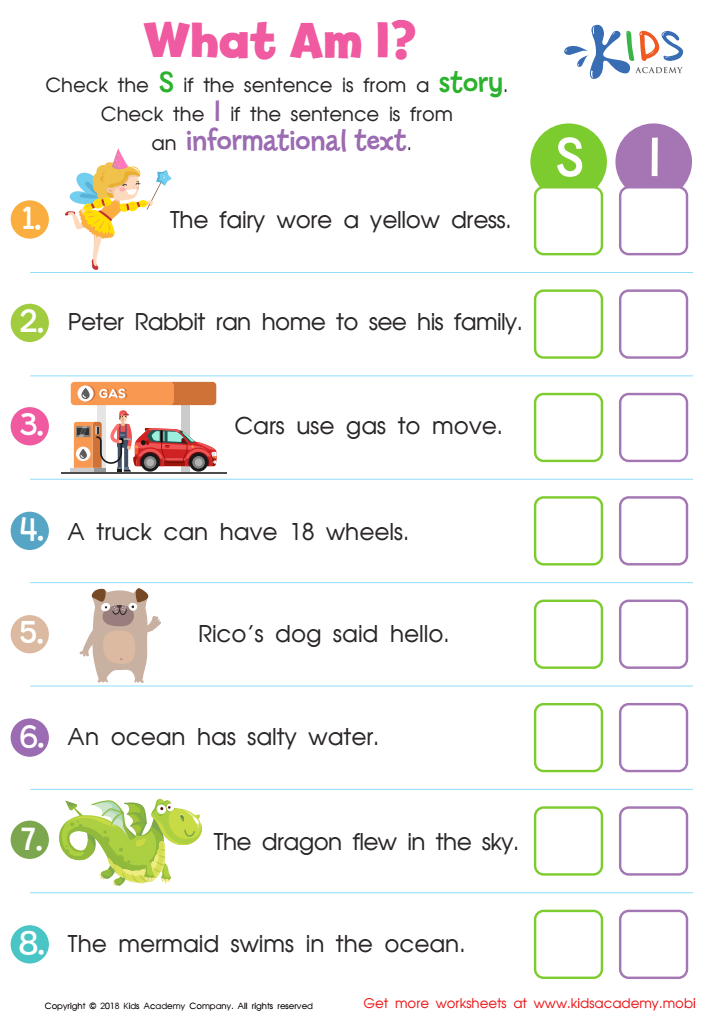
What Am I? Worksheet
This worksheet assesses students' ability to differentiate between stories and texts they read for facts. Students learn to distinguish between reading for pleasure and reading for information. It includes statements from both a story and an informational text, and students must decide what type of text it is.
What Am I? Worksheet
Worksheet
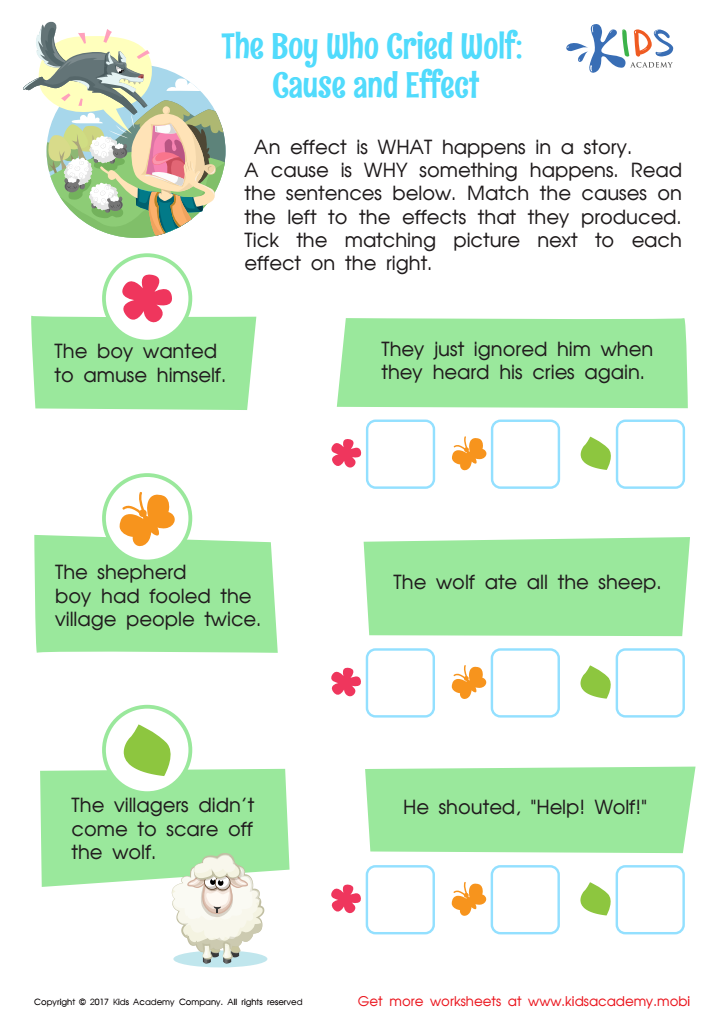
The Boy Who Cried Wolf: Cause and Effect Worksheet
With classic stories and fables, learning reading comprehension is easy - and fun!
The Boy Who Cried Wolf: Cause and Effect Worksheet
Worksheet
Join Kids Academy for Free
Who is primarily going to use this learning content?





Parents and teachers should prioritize logical reasoning in Grade 1 reading, particularly in fiction, as it plays a crucial role in building critical thinking skills essential for a child’s overall cognitive development. At this age, children are developing their ability to understand and interpret stories, which lays the groundwork for their analytical skills. When children engage with fiction, they encounter various characters, plots, and conflicts, allowing them to practice reasoning and inference.
Additionally, logical reasoning allows children to connect events in a story, predict outcomes, and make judgments about characters' actions, fostering empathy and ethical understanding. This helps cultivate a love for reading as kids become more engaged and invested in stories—if they can understand the underlying logic, they will gain more satisfaction from their reading experiences.
Moreover, these skills are foundational for future academic success across subjects, particularly in comprehension and mathematics. By promoting logical reasoning within fiction reading, parents and teachers can create a robust framework for literacy, social skills, and problem-solving abilities, ensuring that children not only read proficiently but also think critically about the world around them. This holistic approach aids in developing lifelong learners who can tackle complex challenges.