Sequencing Skills Grade 1 Reading Fiction Worksheets
3 filtered results
Difficulty Level
Grade
Age
-
From - To
Subject
Activity
Standards
Enhance young readers' comprehension with our Sequencing Skills Grade 1 Reading Fiction Worksheets! These engaging resources are perfect for first graders, helping them grasp the concept of story sequence effortlessly. By arranging events in the correct order, students will not only comprehend narratives better but also improve their critical thinking and organizational skills. Our printable worksheets feature captivating illustrations and simple plotlines tailored to suit first graders' reading levels. By practicing sequencing, children develop a deeper understanding of story structure, which is fundamental for reading proficiency. Boost your child's confidence and literacy skills today with Kids Academy’s high-quality worksheets!
Favorites
With answer key
Interactive
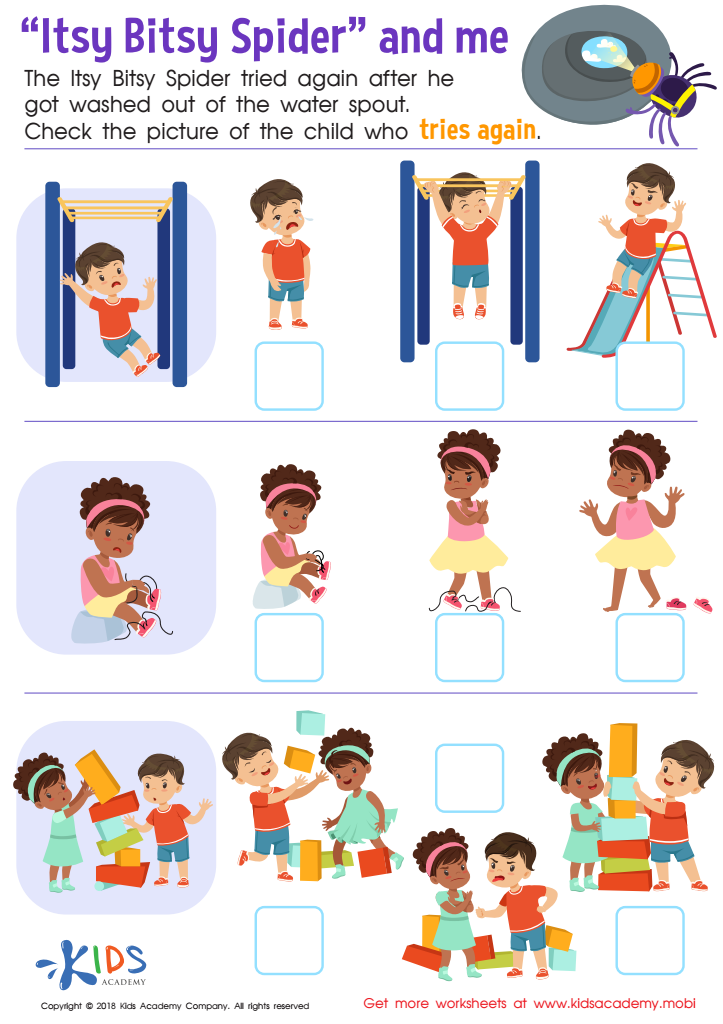
Itsy Bitsy Spider and Me Worksheet
Ensure your child's success - teach them determination and perseverance! Introduce them to the Itsy-Bitsy spider and this fun worksheet. It shows kids working hard and teaches them to 'try again.' Have them identify scenes and check the box for those who succeeded.
 Assign to My Students
Itsy Bitsy Spider and Me Worksheet
Worksheet
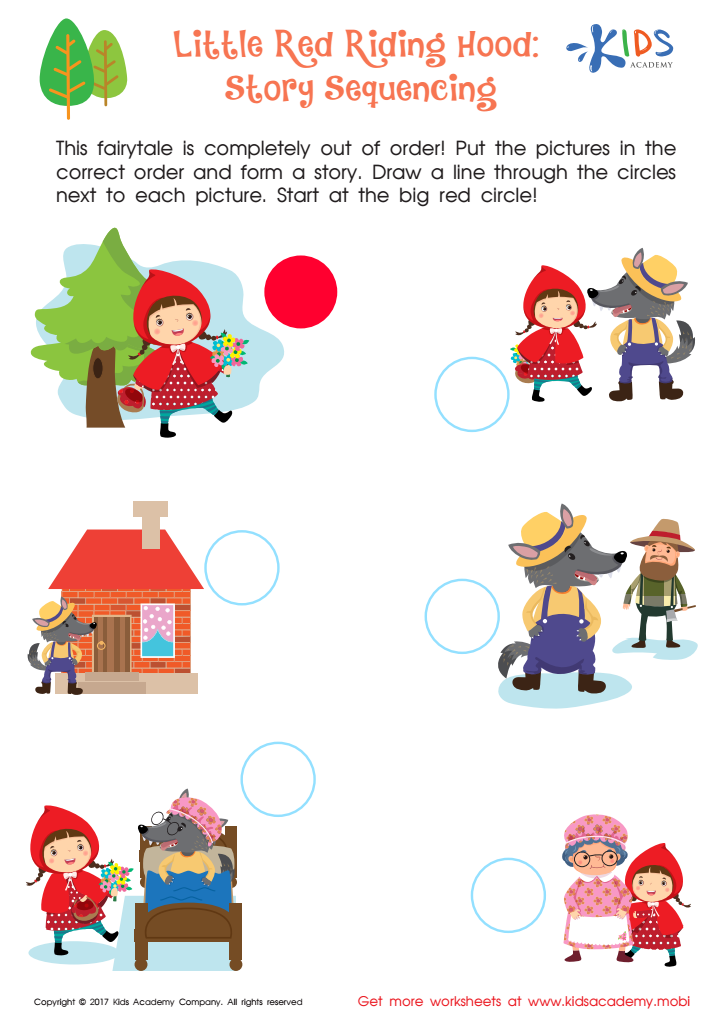
Story Sequencing Printable
Children must identify story events in sequential order to build a better understanding of plot.
Help your child learn how to understand plot with this fun comprehension worksheet: Little Red Riding Hood! Guide them to identify story events and order them correctly to boost their reading skills.
Story Sequencing Printable
Worksheet
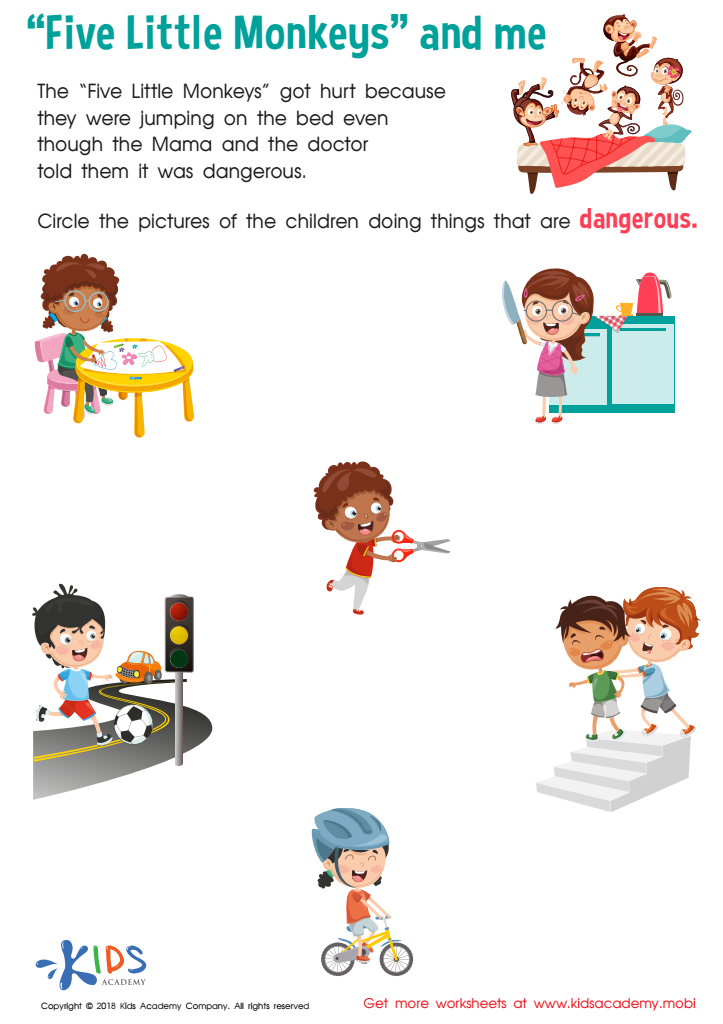
Five Little Monkeys and Me Worksheet
This free PDF worksheet provides preschoolers an understanding of danger and appropriate play. It allows them to recognize dangerous situations and why they can be risky, granting kids perspective from both parents and teachers. It's a fun, safe way to help them internalize what's dangerous and what's not.
Five Little Monkeys and Me Worksheet
Worksheet
Join Kids Academy for Free
Who is primarily going to use this learning content?





Sequencing skills are a fundamental aspect of early reading development, and both parents and teachers should prioritize them in 1st grade fiction reading. Understanding sequencing helps young readers comprehend the structure and logical flow of stories, which boosts overall reading comprehension. When children can identify the beginning, middle, and end of a story, they can make better predictions, understand cause-and-effect relationships, and recall details more effectively.
Moreover, sequencing skills are crucial for developing critical thinking. Young children learn to order events, identify main ideas, and understand plot progressions, which fosters problem-solving and analytical skills. This foundational ability becomes the basis for more complex reading tasks and is integral to other areas of learning, including writing and math.
For teachers, focusing on sequencing in fiction reading aligns with curriculum goals and learning standards, ensuring students meet critical educational benchmarks. Parents can support this at home through discussions about bedtime stories or everyday tasks, facilitating a well-rounded approach to learning.
In summary, prioritizing sequencing skills in 1st-grade reading sets the stage for academic success, nurtures analytical capability, and enhances overall literacy. Helping children master this skill through engaging fiction stories can make the learning process enjoyable and effective.