
Observational skills Grade 1 Our Planet and Environment Worksheets
6 filtered results
Difficulty Level
Grade
Age
-
From - To
Subject
Activity
Standards
Discover our engaging "Observational Skills Grade 1: Our Planet and Environment Worksheets" designed to enhance young learners' observational abilities and foster a love for nature. These thoughtfully crafted worksheets encourage first graders to explore the world around them, focusing on identifying patterns and details in their environment. Through fun and interactive activities, students will develop critical thinking skills as they observe plants, animals, and various ecosystems. Perfect for both classroom and home use, our worksheets promote curiosity and environmental awareness while aligning with educational standards. Equip your child with essential observation skills to help them connect with and appreciate our planet!
Favorites
With answer key
Interactive
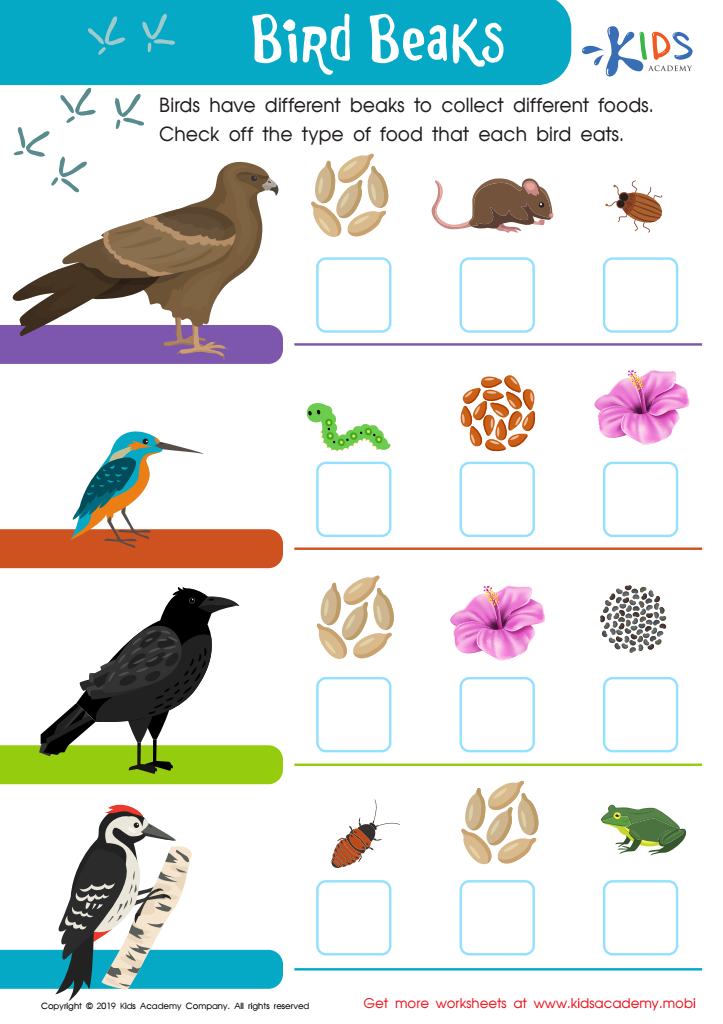
Bird Beaks Worksheet
Birds have beaks to eat different types of food. Let your little nature lover explore why with this free worksheet! They'll learn about different beak shapes and match them to the food that's best for them. Be an adorable bird watcher together!
 Assign to My Students
Bird Beaks Worksheet
Worksheet
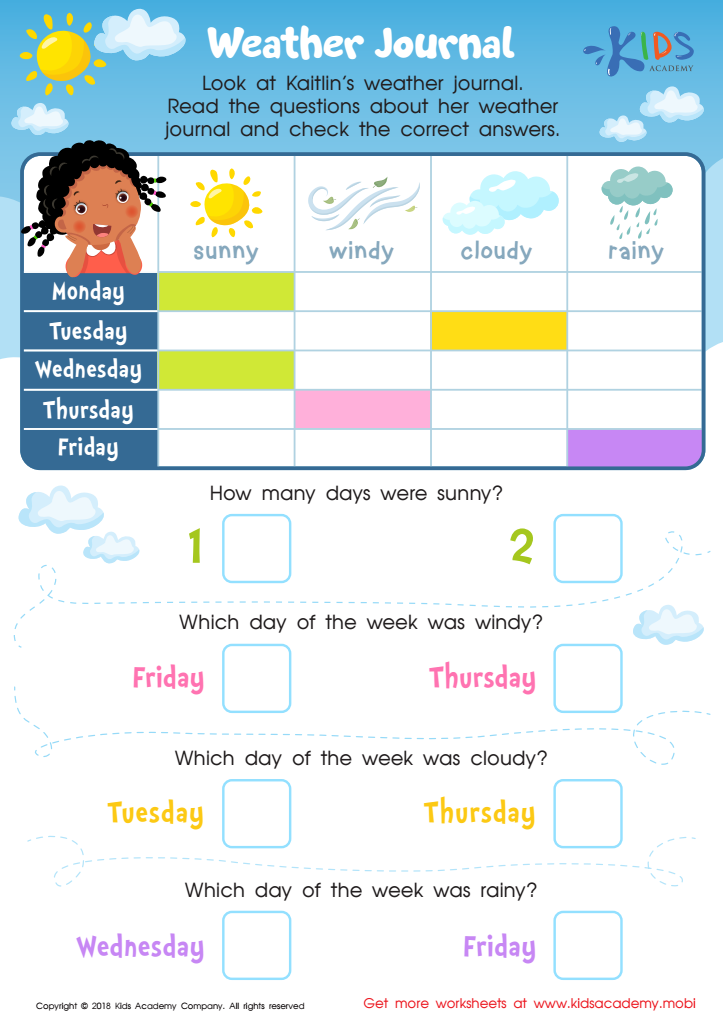
Weather Journal Worksheet
Kaitlin keeps a weather journal. Encourage your child to do the same! Look at Kaitlin's journal with them, and have them note the weather for each day. Read aloud the questions and check the correct answers.
Weather Journal Worksheet
Worksheet
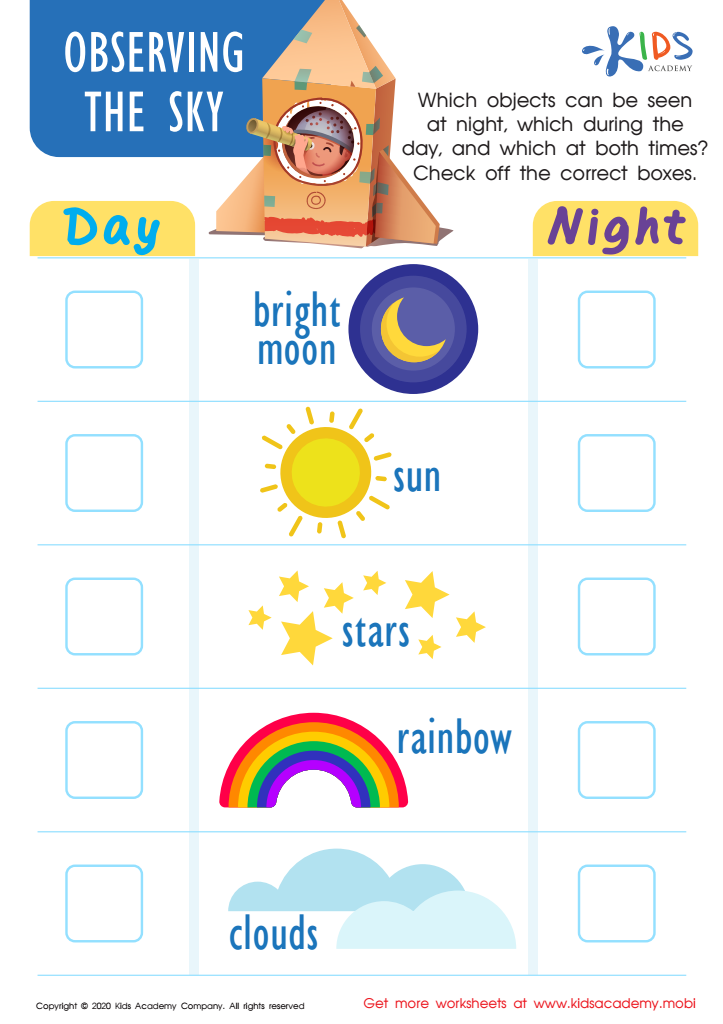
Observing the Sky Worksheet
Look up to the sky and observe day and night objects! See a rainbow or some clouds by day and stars and the moon at night. Help your little learner review this science concept with Kids Academy's fun and colorful worksheet. Have them sort and check off the objects seen by day or night, going down the column in the center.
Observing the Sky Worksheet
Worksheet
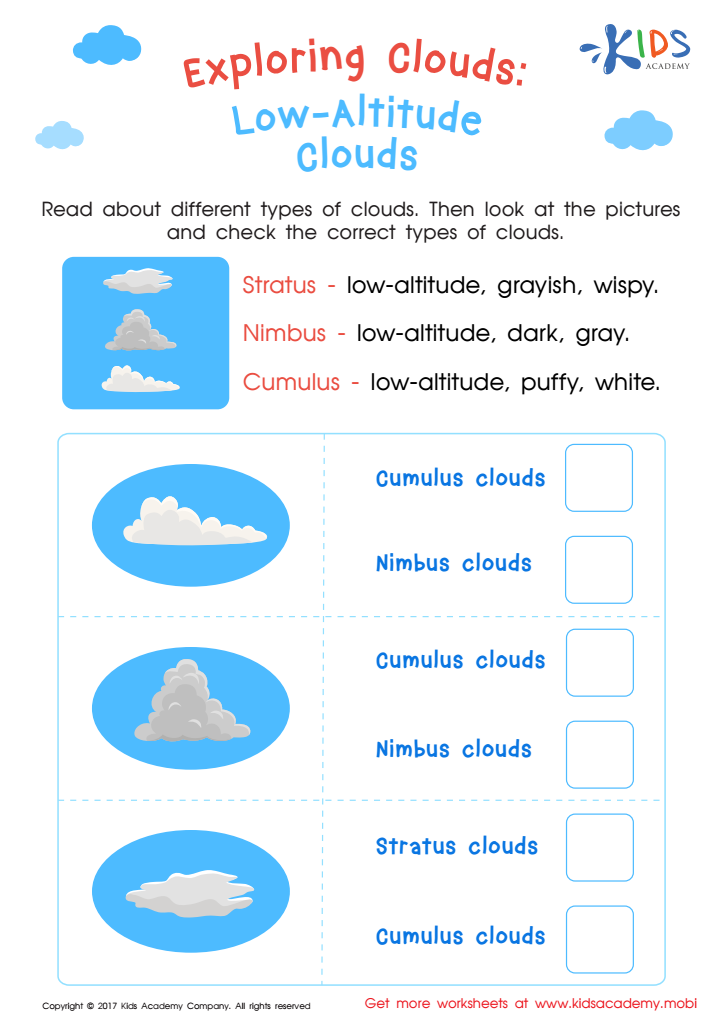
Exploring Clouds: Low Altitude Clouds Printable
Use this fun worksheet to teach them about the different types of low altitude clouds like cirrocumulus, stratocumulus, and cumulonimbus. 80 words.
When a storm clouds up the sky, have your child identify the different types of clouds! This worksheet can help them learn about the nimbus, cirrocumulus, stratocumulus, and cumulonimbus clouds. It's a great way to teach them about the various low altitude clouds and have fun at the same time!
Exploring Clouds: Low Altitude Clouds Printable
Worksheet
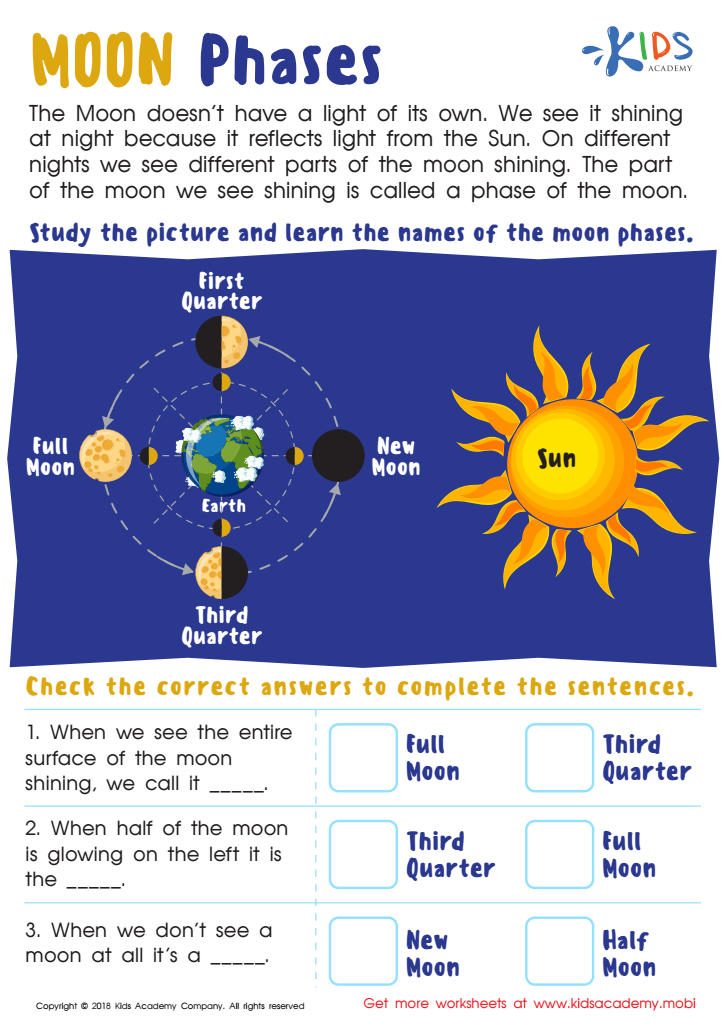
Moon Phases Worksheet
Gaze up at the night sky and the moon's appearance may change from night to night. Encourage your child to learn more about the sun, the moon, and space with this science worksheet. Have them read the text then study the picture. Finally, read the sentences and check the answers to identify the moon's phases.
Moon Phases Worksheet
Worksheet
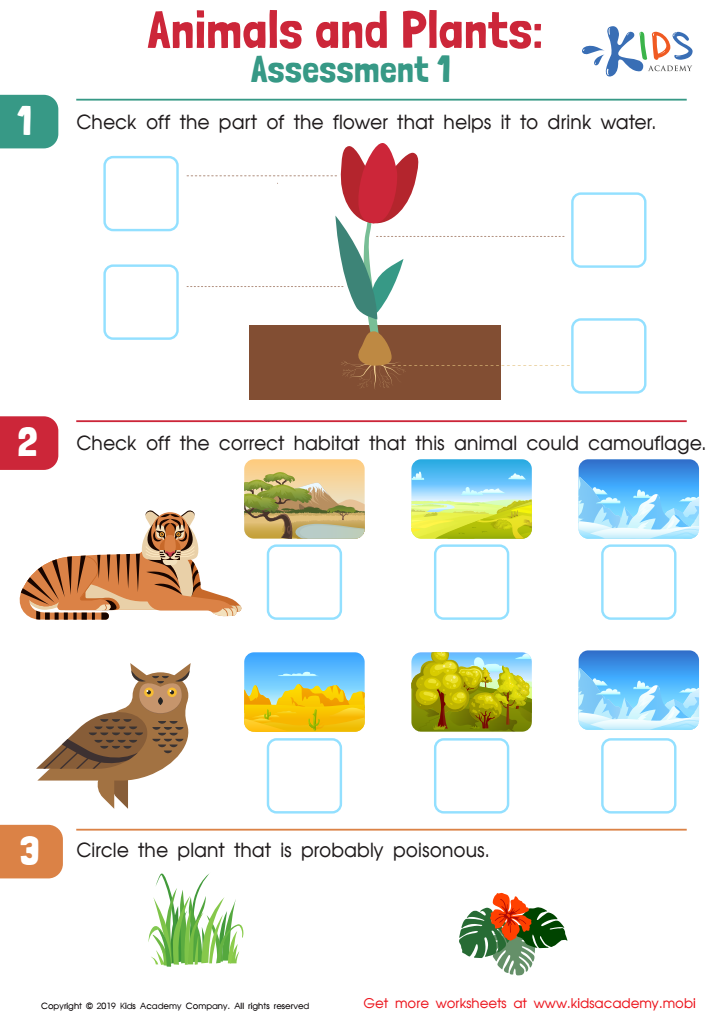
Animals and Plants: Assessment 1 Worksheet
Do you want to easily assess your child's understanding of basic science concepts? This colorful PDF offers a free opportunity for them to test their knowledge about parts of a flower, poisonous plants, animal habitats and more! Bright pictures make it fun and easy for you to see what they know.
Animals and Plants: Assessment 1 Worksheet
Worksheet
Join Kids Academy for Free
Who is primarily going to use this learning content?


Observational skills are crucial for Grade 1 students, especially when exploring themes like "Our Planet and Environment." Parents and teachers should prioritize these skills as they lay the foundation for a child's understanding of the world around them. By fostering observational skills, children learn to notice details in nature, such as changes in weather, plant growth, and animal behavior. This awareness stimulates curiosity and encourages exploration, key components in developing critical thinking.
Moreover, observational skills enhance children’s ability to ask questions and seek answers. For instance, noticing how litter affects their local environment can lead to discussions about recycling, conservation, and environmental stewardship. Engaging with their surroundings helps students appreciate the beauty of the natural world and ignites a sense of responsibility toward it.
Incorporating observational activities into the curriculum nurtures empathy and promotes social skills. Children learn to work collaboratively, sharing insights and observations within peer groups. Furthermore, embracing this approach also aligns with core educational standards, making it essential for holistic development. Ultimately, caring about observational skills in young learners enriches their educational experience while fostering a generation that values and cares for our planet.







