
Understanding light sources Grade 1 Physical Science Worksheets
4 filtered results
Difficulty Level
Grade
Age
-
From - To
Subject
Activity
Standards
Introduce your first graders to the fascinating world of light with our "Understanding Light Sources" Grade 1 Physical Science Worksheets. Developed by educational experts, these engaging, printable worksheets help young learners explore various light sources, distinguishing between natural and artificial light. Through fun activities and colorful illustrations, students will grasp critical concepts about where light comes from and its essential role in our lives. Perfect for reinforcing classroom learning or for additional practice at home, these worksheets make science enjoyable and accessible. Capture your child's interest and brighten their understanding of light with Kids Academy's top-quality resources.
Favorites
With answer key
Interactive
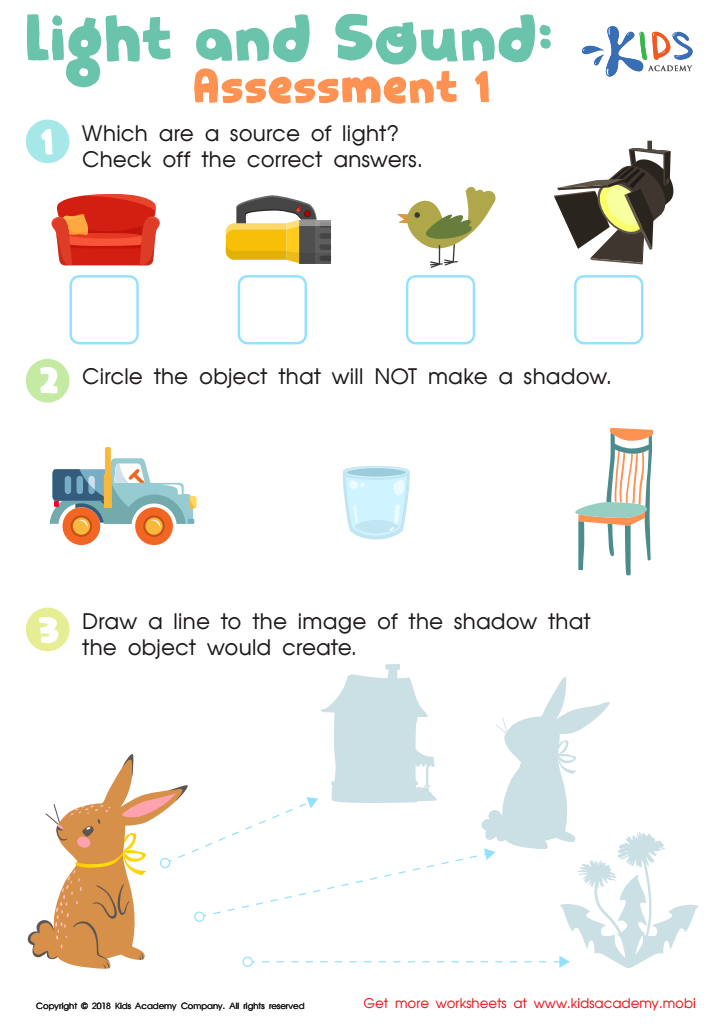
Light and Sound: Assessment 1 Worksheet
Can your kids name a light source? Challenge them to name the sun and moon, then point out objects they use when the sun sets. Look through the worksheet with them and ask them to identify the light sources. Help them check off the correct answers.
 Assign to My Students
Light and Sound: Assessment 1 Worksheet
Worksheet
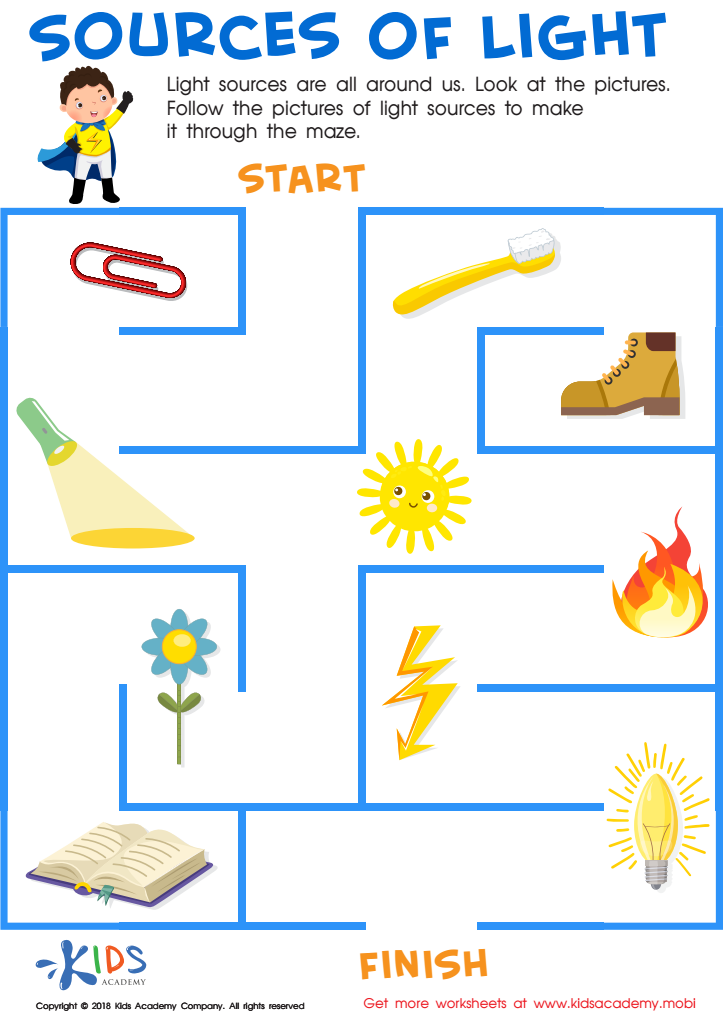
Sources of Light Worksheet
Help your child explore sources of light with this printout exercise. Ask them if they know the sun is the reason for day and night. Then point out other common light sources, then work together to guide them through the maze from start to finish.
Sources of Light Worksheet
Worksheet
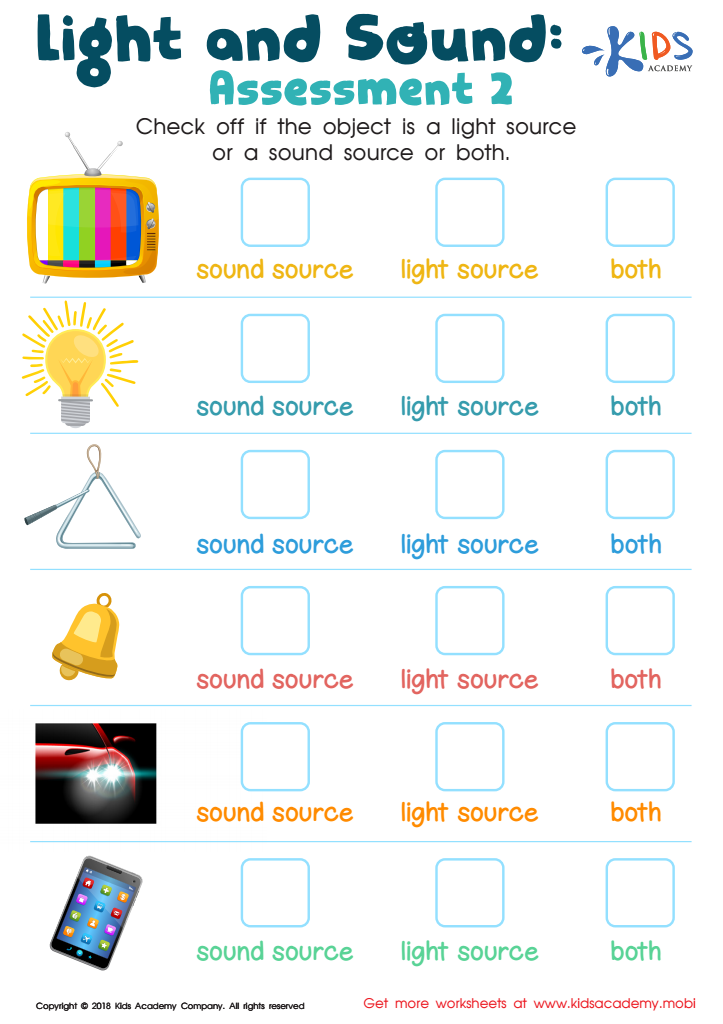
Light and Sound: Assessment 2 Worksheet
This worksheet introduces your kids to light and sound, with common sources of each. Identify the objects and help them check if it's a light source, a sound source, or both. Colourful and simple, it's a great way to teach your little ones! (80 words)
Light and Sound: Assessment 2 Worksheet
Worksheet
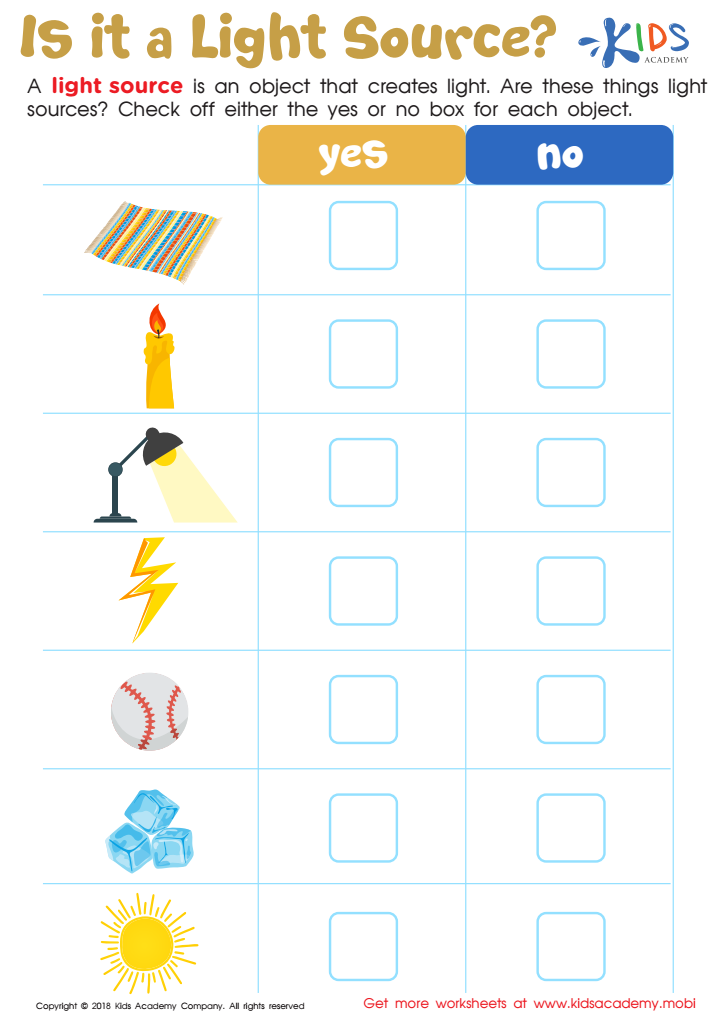
Is It a Light Source? Worksheet
This worksheet is a fun way to teach kids about light sources. Children must identify natural sources like the sun and lightning, and man-made sources such as candles and lamps. Ask them to look at each object and check the box to indicate if it's a light source or not.
Is It a Light Source? Worksheet
Worksheet
Learning Skills
Join Kids Academy for Free
Who is primarily going to use this learning content?





Understanding light sources is essential for Grade 1 Physical Science because it forms the foundation of how young learners perceive and interact with the world. Firstly, it encourages curiosity and observational skills. Students learn to identify natural and artificial sources of light, such as the sun, lamps, and flashlights. This recognition fosters an early appreciation for scientific inquiry and enhances their ability to distinguish different environmental elements.
Secondly, learning about light supports cognitive development and critical thinking. By exploring concepts like shadows and reflections, children begin to understand cause-and-effect relationships. This analytical thinking is vital for their overall intellectual growth and problem-solving abilities.
Moreover, understanding light can be tied to safety education. Children who recognize the importance of light in visibility and navigation are more likely to make safer choices, such as wearing bright clothing while cycling or recognizing the importance of streetlights while walking.
Lastly, this topic fits seamlessly with interdisciplinary learning. It links to art through activities like shadow puppetry, to literature through stories about the sun and daytime, and to mathematics by measuring shadows. This holistic approach reinforces knowledge through hands-on experiences and boosts engagement.
Therefore, prioritizing light education in early grades builds a solid base for future scientific learning and everyday practical understanding.







