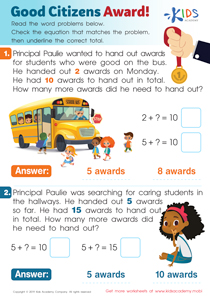
Handwriting practice Grade 1 Governance and Civics Worksheets
3 filtered results
Difficulty Level
Grade
Age
-
From - To
Subject
Activity
Standards
Enhance your first-grader’s understanding of governance and civics while boosting their handwriting skills with our thoughtfully crafted worksheets! These engaging, themed exercises introduce young learners to essential social studies concepts through fun handwriting practice. Our worksheets seamlessly merge educational content and motor skill development, making learning enjoyable and effective. Perfect for classrooms or at-home activities, each worksheet is designed to build a strong foundation in civics, reinforcing the importance of community, rules, and responsibilities. Equip your first-graders with the tools to comprehend and appreciate the basics of civic life while they improve their handwriting, all in one comprehensive resource.
Favorites
With answer key
Interactive
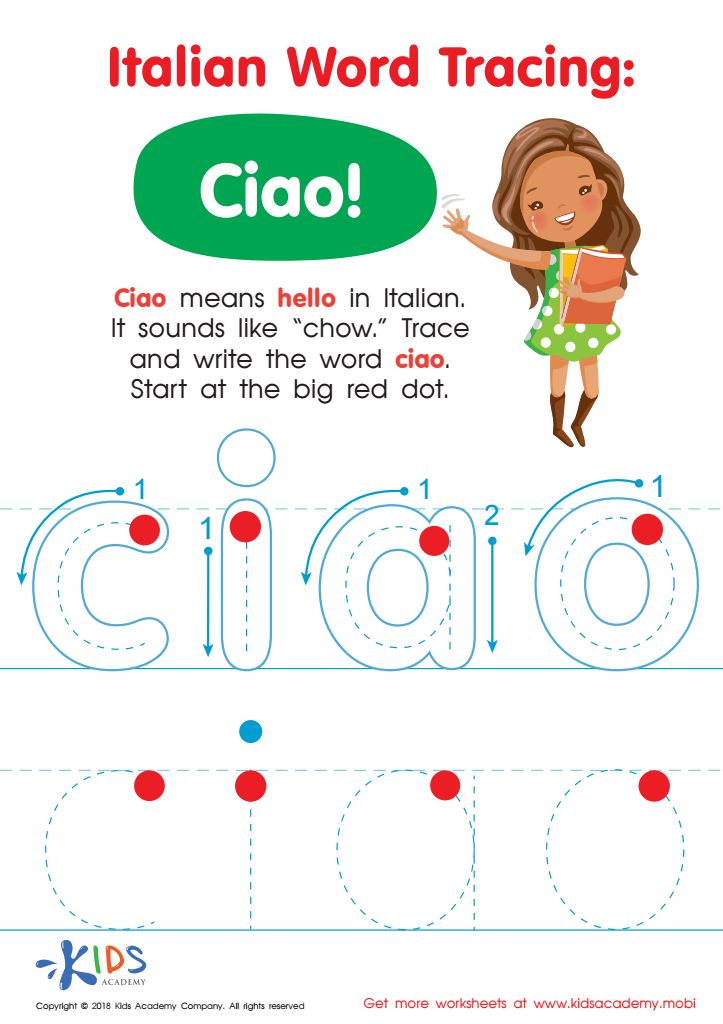
Italian Word Tracing: Ciao Worksheet
Help kids learn to greet people in different languages with this fun worksheet! Featuring the Italian word 'Ciao', it helps kids trace and learn the pronunciation. Plus, it teaches hand-eye coordination and fine-motor skills. Global connectivity can start with this activity!
 Assign to My Students
Italian Word Tracing: Ciao Worksheet
Worksheet
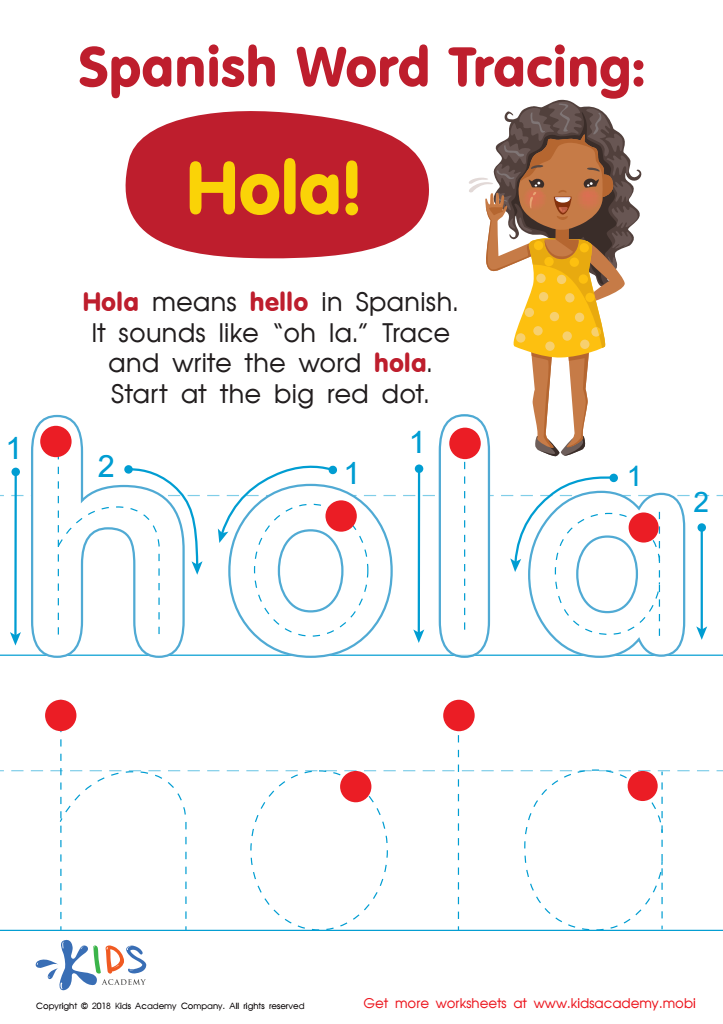
Spanish Word Tracing: Hola Worksheet
This PDF provides a fun way for students to learn "Hola" (Hello) in Spanish! Kids can practice fine motor and handwriting skills while they trace the letters. They'll get the hang of top-to-bottom, left-to-right patterning while they learn how to say and write in Spanish. With practice, they'll soon feel confident speaking and writing Spanish!
Spanish Word Tracing: Hola Worksheet
Worksheet
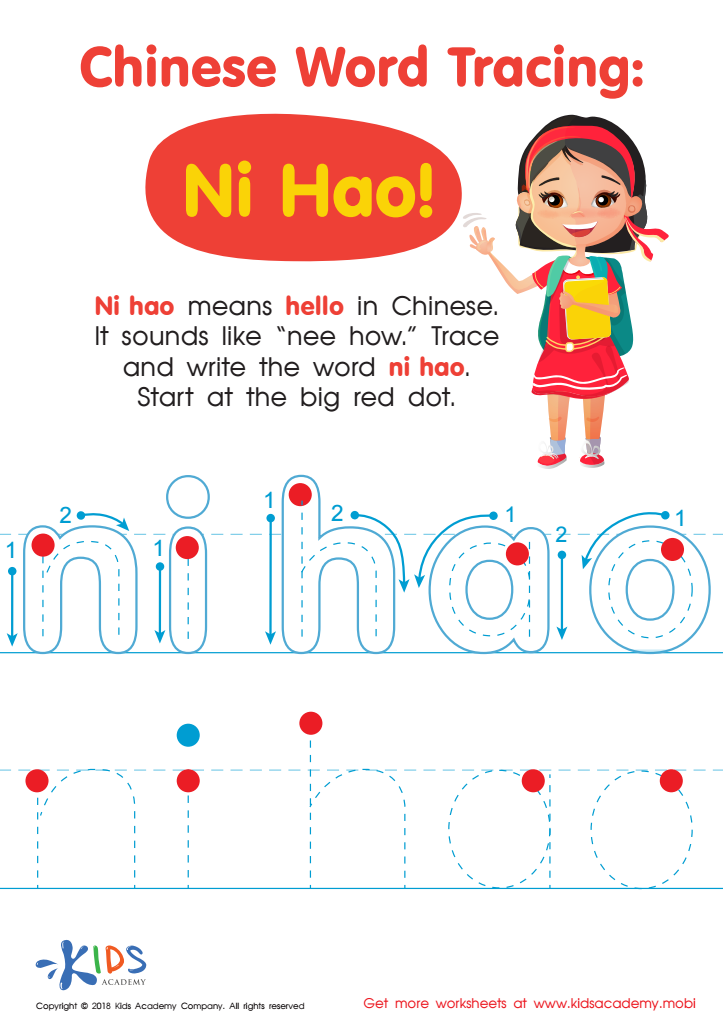
Chinese Word Tracing: Ni Hao Worksheet
Kids can learn to say "Ni hao" with this fun tracing worksheet. The free PDF helps kids write and say the Chinese greeting while also developing fine-motor, handwriting and reading skills. With red guide dots and traceable lines, kids will learn top-to-bottom and left-to-right patterning for fluent reading.
Chinese Word Tracing: Ni Hao Worksheet
Worksheet
Join Kids Academy for Free
Who is primarily going to use this learning content?


Handwriting practice in Grade 1 is essential for a child's development for several reasons, making it vital for teachers and parents to prioritize it. At this stage, children are developing fine motor skills that are foundational for writing legibly and comfortably. Practice helps in honing these skills, boosting hand-eye coordination, and ensuring that students can write longer without fatigue.
For governance and civics education, teaching young children about their community, rights, and responsibilities lays the groundwork for well-informed and engaged future citizens. Understanding fundamentals, such as following rules, respecting others, and participating in community activities, fosters a sense of belonging and responsibility from an early age.
Additionally, writing about civics topics aids knowledge retention and comprehension. When children write down what they've learned about governance and civic duties, it reinforces their understanding and makes abstract concepts more concrete. It also encourages critical thinking and discussion, whereby youngsters can explore and articulate their thoughts on fairness, community roles, and decision-making.
Thus, handwriting practice goes hand-in-hand with civics education, both essential ingredients in nurturing competent, confident, and civic-minded individuals. By caring about these areas, parents and teachers ensure that young learners build a versatile academic skill set and a solid ethical foundation.