Time reading skills Extra Challenge Time Worksheets for Ages 3-4
3 filtered results
Difficulty Level
Grade
Age
-
From - To
Subject
Activity
Standards
Boost your child's time reading skills with our Extra Challenge Time Worksheets for ages 3-4! Designed to enhance early learning, these engaging worksheets help little ones develop essential concepts of time, from understanding clocks to recognizing everyday routines. Each worksheet features colorful visuals and creative activities that make learning fun and interactive. Perfect for parents seeking to reinforce time knowledge at home, these materials ensure that children gain confidence in their time-telling abilities. With guided exercises that cater to young learners, our worksheets provide a solid foundation for future mathematical understanding. Turn time into a delightful learning adventure today!
Favorites
With answer key
Interactive
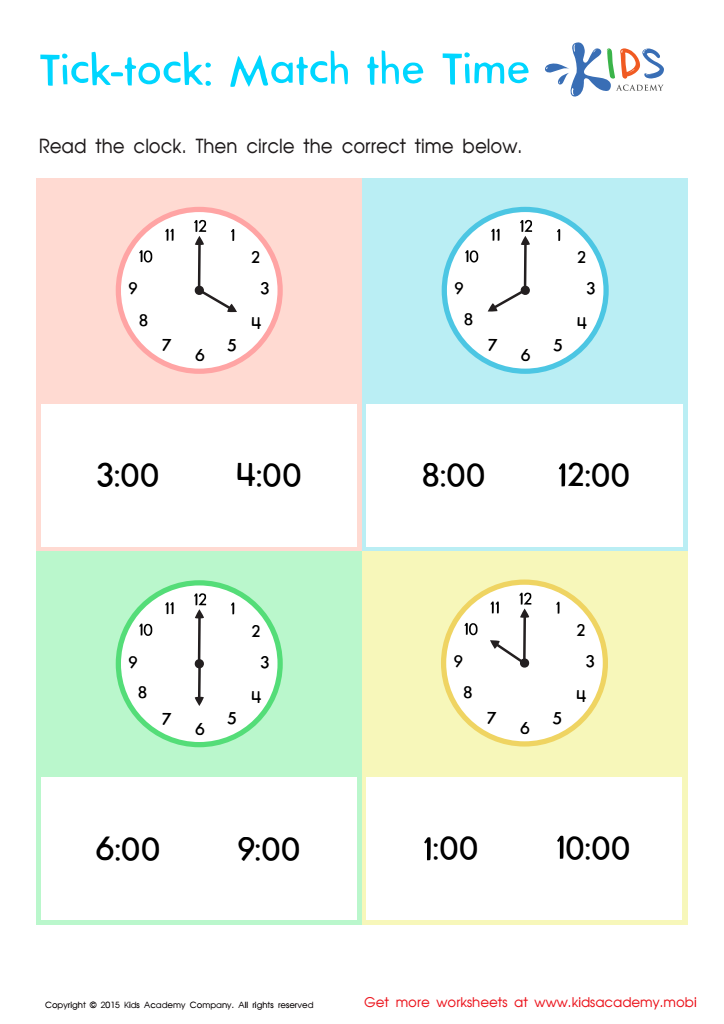
Telling The Time Worksheet: Part 4
Test your skills in telling the time! Circle the right time on 4 analog clock faces.
 Assign to My Students
Telling The Time Worksheet: Part 4
Worksheet
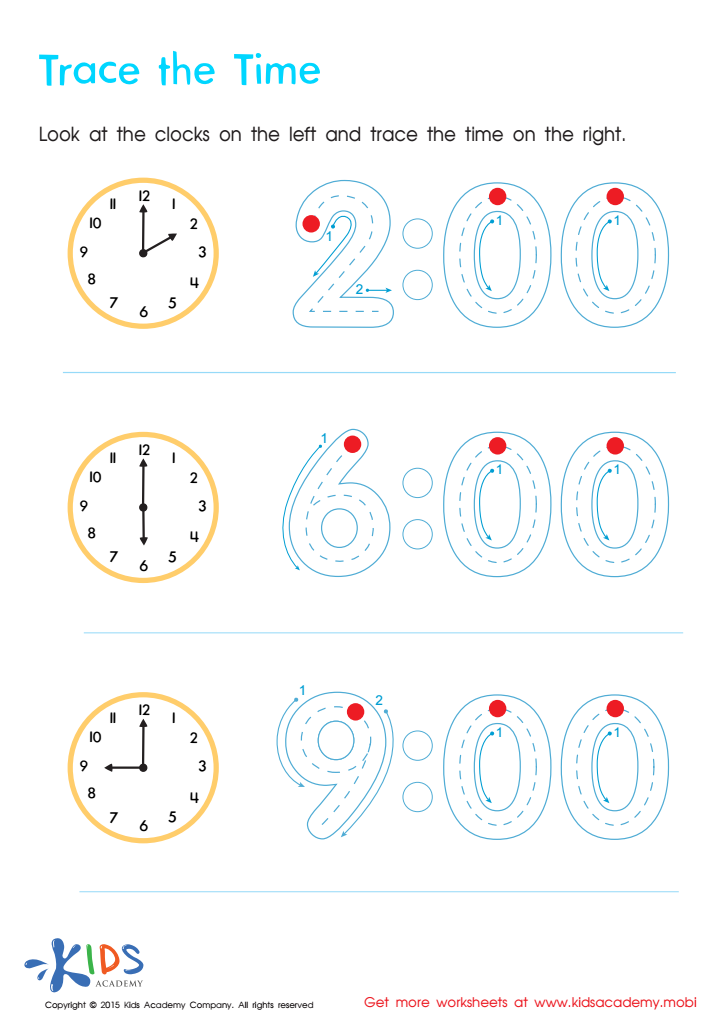
Telling The Time Worksheet: Part 2
Help your kids learn to tell the time with this free math worksheet from Kids Academy. Have them look at the clock faces and trace the time on the right - is it a full hour or half an hour? Get more practice with our wide selection of math worksheets for kindergarten.
Telling The Time Worksheet: Part 2
Worksheet
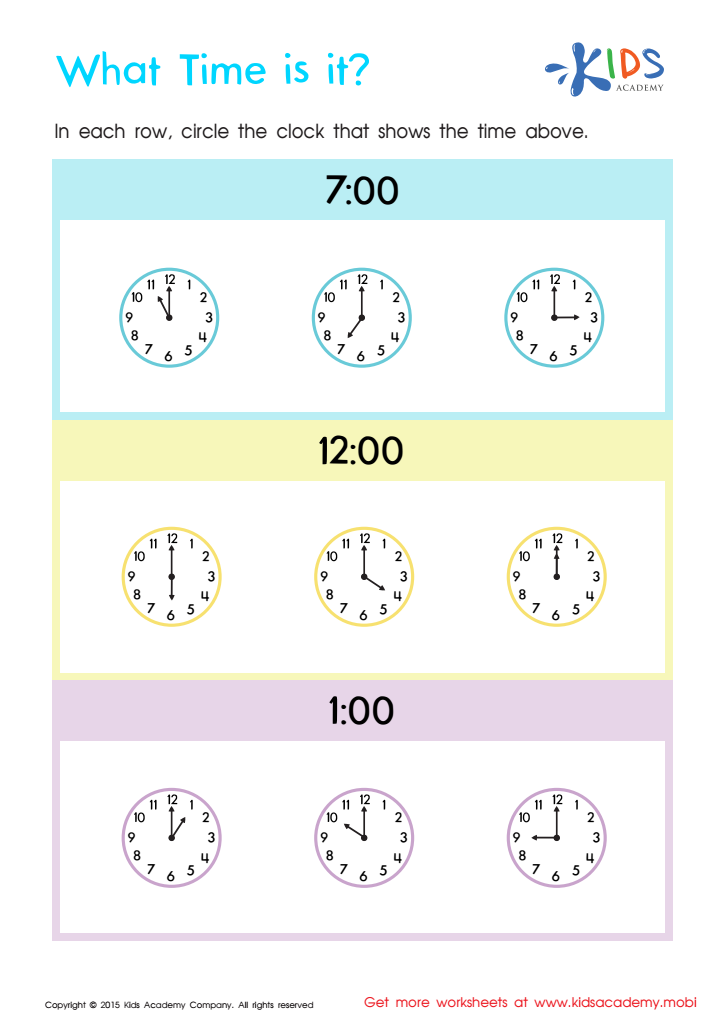
Telling The Time Worksheet: Part 3
Make learning to read clocks fun with our free printable worksheets! Have kids circle the clocks that show the time, remembering that the short hand is for hours and the long one is for minutes. For more worksheets, visit Kids Academy and explore the wonderful world of math with your little learners.
Telling The Time Worksheet: Part 3
Worksheet
Join Kids Academy for Free
Who is primarily going to use this learning content?





.jpg)


Parents and teachers should care deeply about developing reading skills, even at the young age of 3-4 years, as it lays the foundation for future academic success and cognitive development. Early reading experiences enhance children's language skills, promoting vocabulary acquisition and sentence structure understanding. Engaging with books fosters a love for reading, cultivating curiosity and imagination.
By introducing "Extra Challenge Time," parents and teachers can enrich children's learning experiences beyond standard activities. This designated time can focus on various interactive reading techniques, such as storytelling, phonics games, and rhyming activities that make learning enjoyable and immersive. Such challenges stimulate critical thinking and comprehension skills.
Moreover, early exposure to reading is linked to better performance in school and higher literacy skills as children grow. Strong reading skills contribute to broader academic achievement, empowering children to excel in various subjects. Additionally, engaging in collaborative reading with caregivers encourages closer emotional bonds and nurtures a supportive learning environment.
Ultimately, emphasizing reading skills during ages 3-4 prepares children for lifelong learning, equipping them with essential tools for communication, social interaction, and independence. Supporting young learners today positively impacts their potential and success in the future.