Shape Recognition Extra Challenge Matching Worksheets for Ages 3-5
3 filtered results
-
From - To
Discover our engaging "Shape Recognition Extra Challenge Matching Worksheets" designed specifically for children aged 3-5! These worksheets provide an exciting way for little learners to enhance their shape recognition skills through fun and interactive matching activities. Your child will enjoy identifying different shapes, fostering critical thinking and attention to detail, all while building their early math foundation. Each worksheet is beautifully illustrated and age-appropriate, tailored to stimulate curiosity and creativity. Ideal for classroom settings or at-home learning, these extra challenges will keep young minds engaged and motivated. Help your child master shapes today with our impressive matching worksheets!
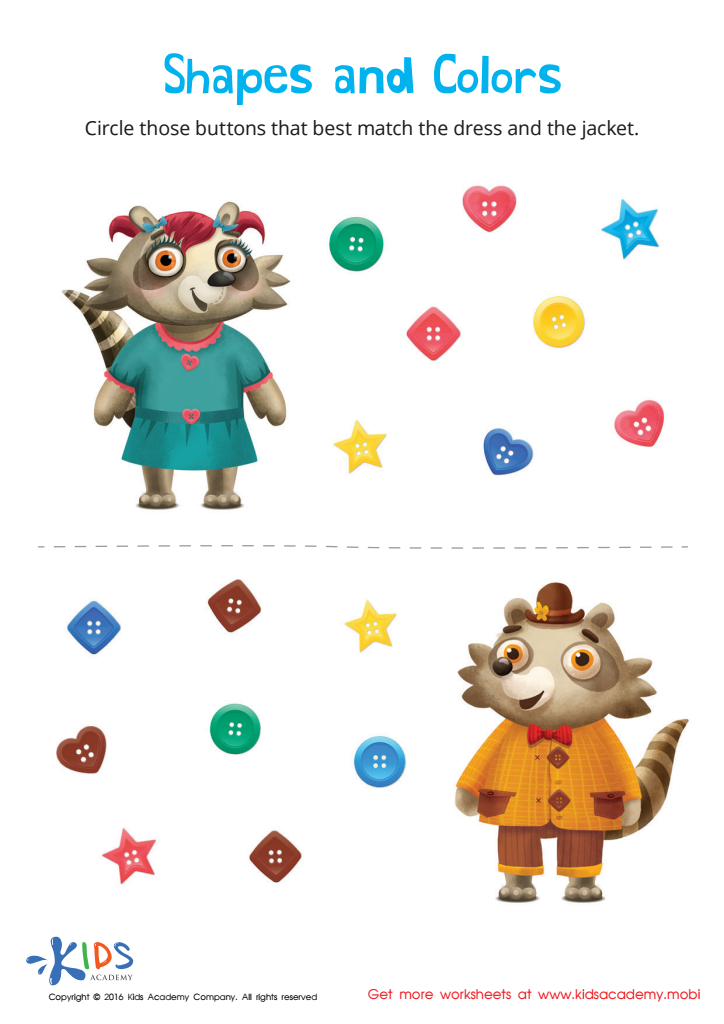
Matching: Shapes and Colors Worksheet
 Assign to My Students
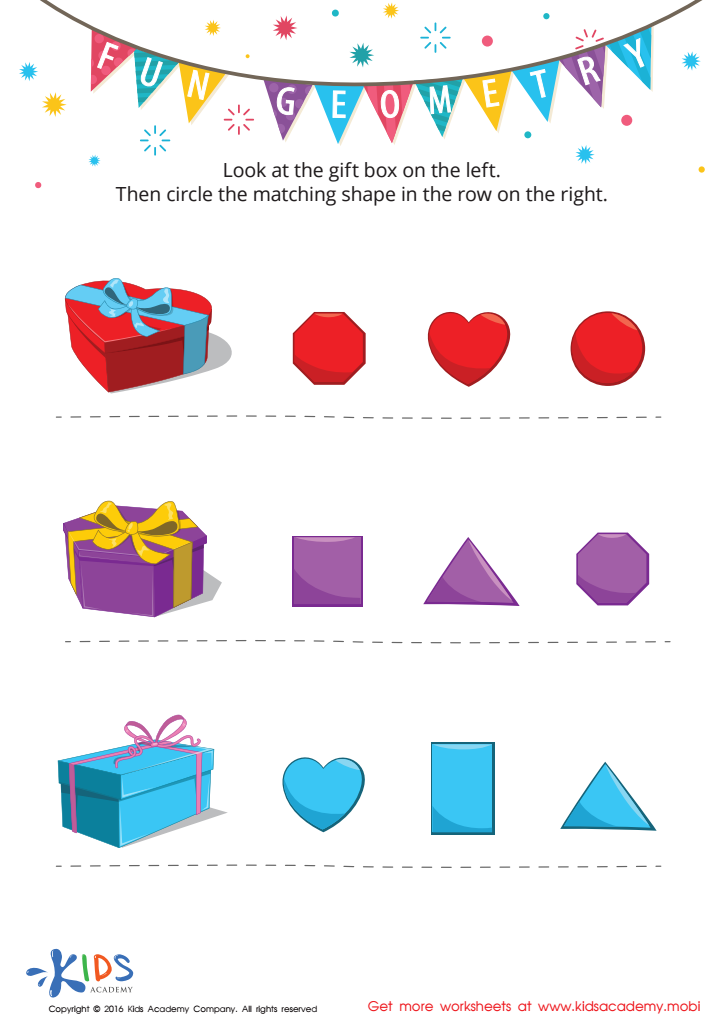
Fun Geometry Worksheet
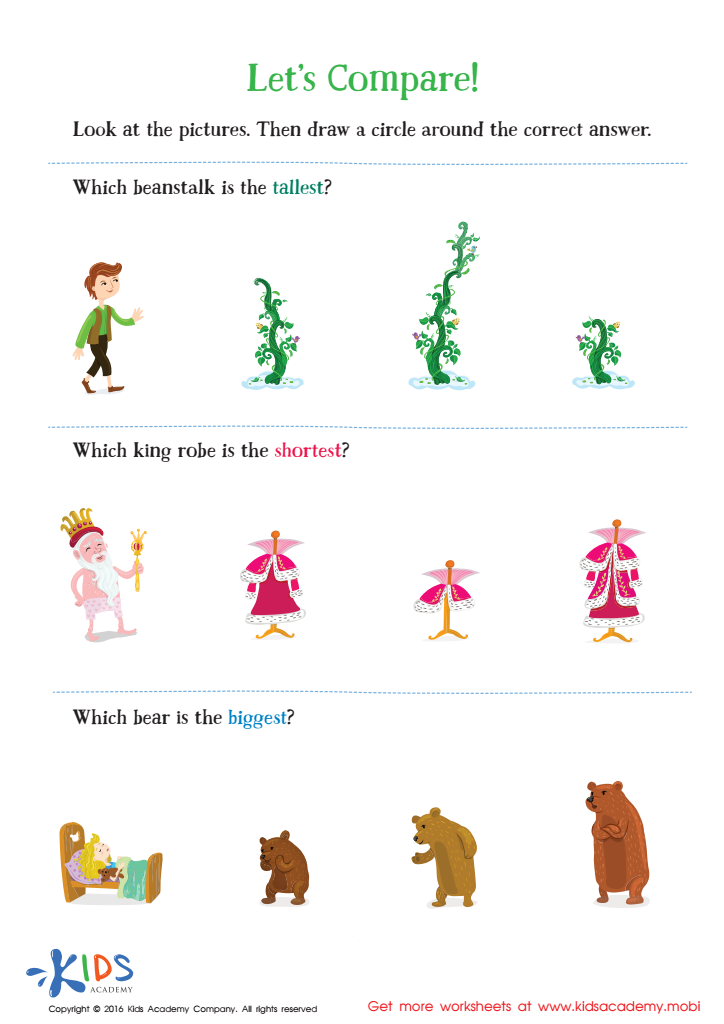
Fairy Tale Worksheet: Let's Compare








Shape Recognition Extra Challenge Matching for ages 3-5 is crucial for early childhood development as it enhances cognitive abilities, spatial awareness, and problem-solving skills. At this stage, children are naturally curious and eager to explore the world around them. Engaging them in shape recognition activities fosters critical thinking as they identify, compare, and contrast different shapes.
Moreover, shape recognition lays the foundation for future mathematical concepts such as geometry, measurement, and patterning. By challenging children to match various shapes, educators and parents help them develop sorting and categorizing skills that are essential for late learning. This activity also encourages hand-eye coordination and fine motor skills as children manipulate shapes.
Furthermore, shape recognition contributes to language development. As children communicate their observations and participate in discussions about shapes, they expand their vocabulary and understanding of descriptive words. Parents and teachers should also consider the social benefits; cooperative activities promote teamwork and communication.
Ultimately, Shape Recognition Extra Challenge Matching not only supports cognitive growth but also builds essential skills for future learning and social interaction, making it a vital component of early childhood education. Promoting these activities ensures children are well-prepared for their educational journey ahead.