
Time reading skills Extra Challenge Time Worksheets for Ages 3-9
5 filtered results
Difficulty Level
Grade
Age
-
From - To
Subject
Activity
Standards
Boost your child’s time-telling abilities with our Time Reading Skills Extra Challenge Time Worksheets for Ages 3-9. These engaging, age-appropriate worksheets are designed to enhance children’s understanding of both digital and analog clocks. Packed with fun exercises, they progressively build skills from simple hour identification to more complex time-telling tasks. Ideal for young learners, the worksheets blend education and entertainment to make mastery of time reading an enjoyable journey. Help your child excel in math and daily routines by incorporating these expertly crafted resources into their study schedule. Start making time-telling both easy and exciting today!
Favorites
With answer key
Interactive
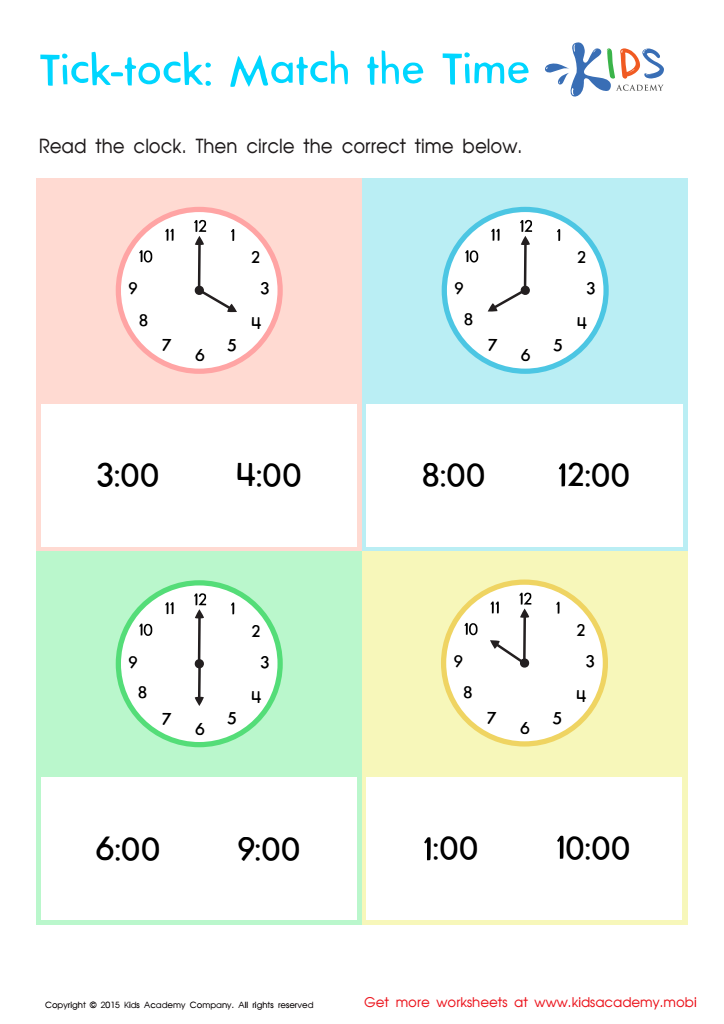
Telling The Time Worksheet: Part 4
Test your skills in telling the time! Circle the right time on 4 analog clock faces.
 Assign to My Students
Telling The Time Worksheet: Part 4
Worksheet
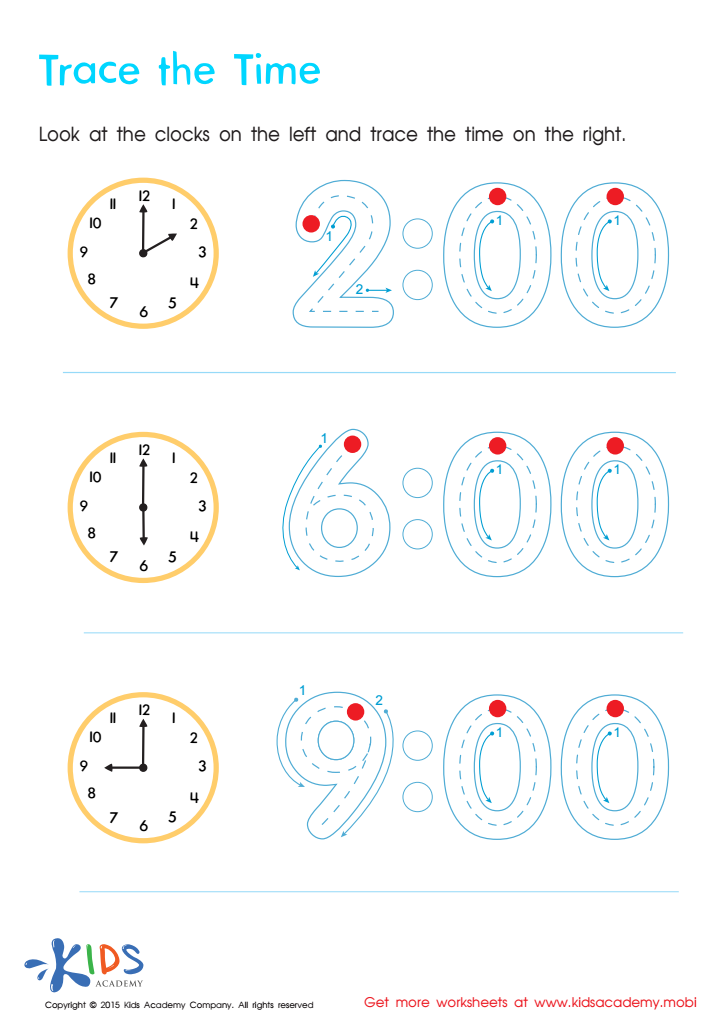
Telling The Time Worksheet: Part 2
Help your kids learn to tell the time with this free math worksheet from Kids Academy. Have them look at the clock faces and trace the time on the right - is it a full hour or half an hour? Get more practice with our wide selection of math worksheets for kindergarten.
Telling The Time Worksheet: Part 2
Worksheet
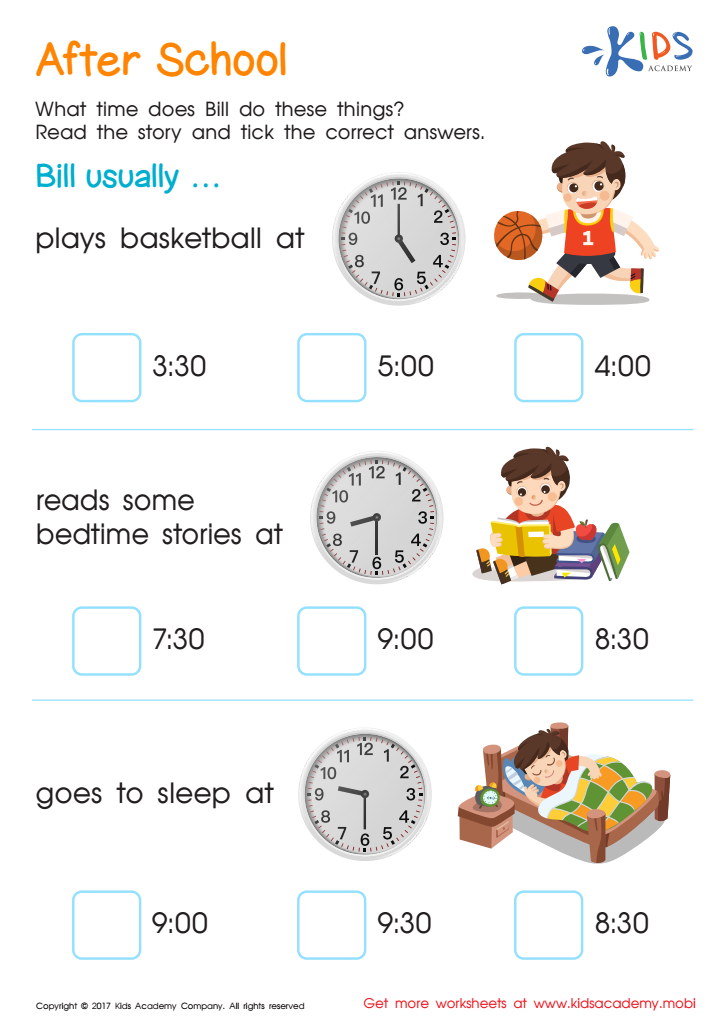
After School Time Printable
Meet Bill, a fun character who does the same things as all of us! This time-telling printable worksheet, 'After School', is an enjoyable way for your child to get familiar with Bill. It's a quick and cute activity to help understand the clocks and learn more about this new friend.
After School Time Printable
Worksheet
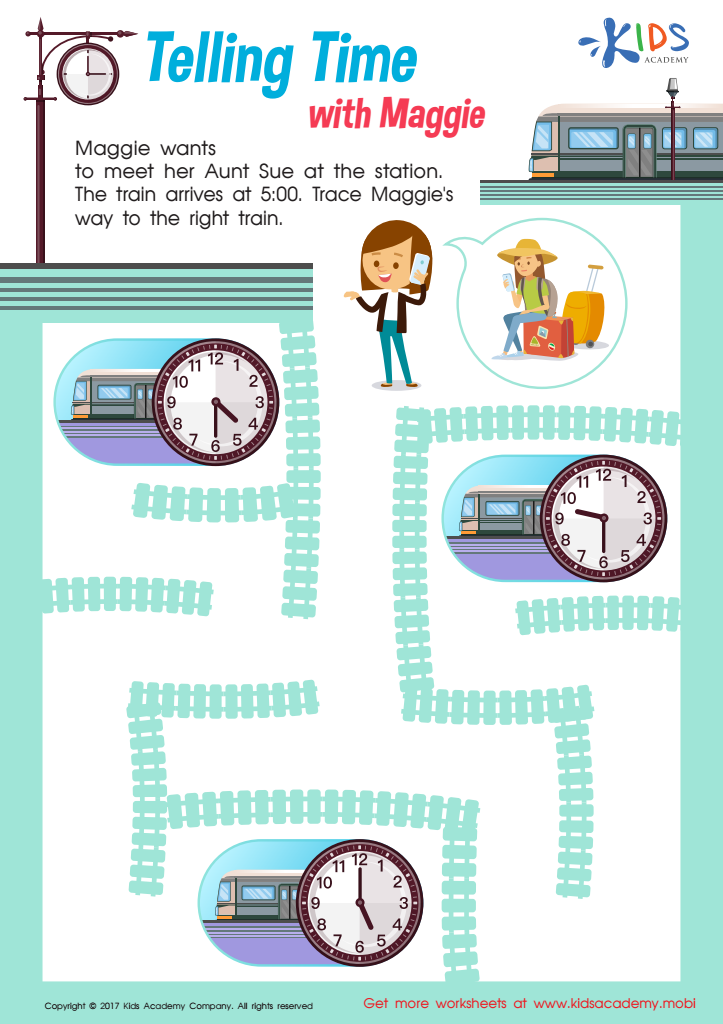
Telling Time With Maggie Time Worksheet
Help Maggie catch her train! Navigate the maze and read clocks to get her to her destination. Join her on a fun time-telling adventure with this puzzling worksheet. Your child will love it!
Telling Time With Maggie Time Worksheet
Worksheet
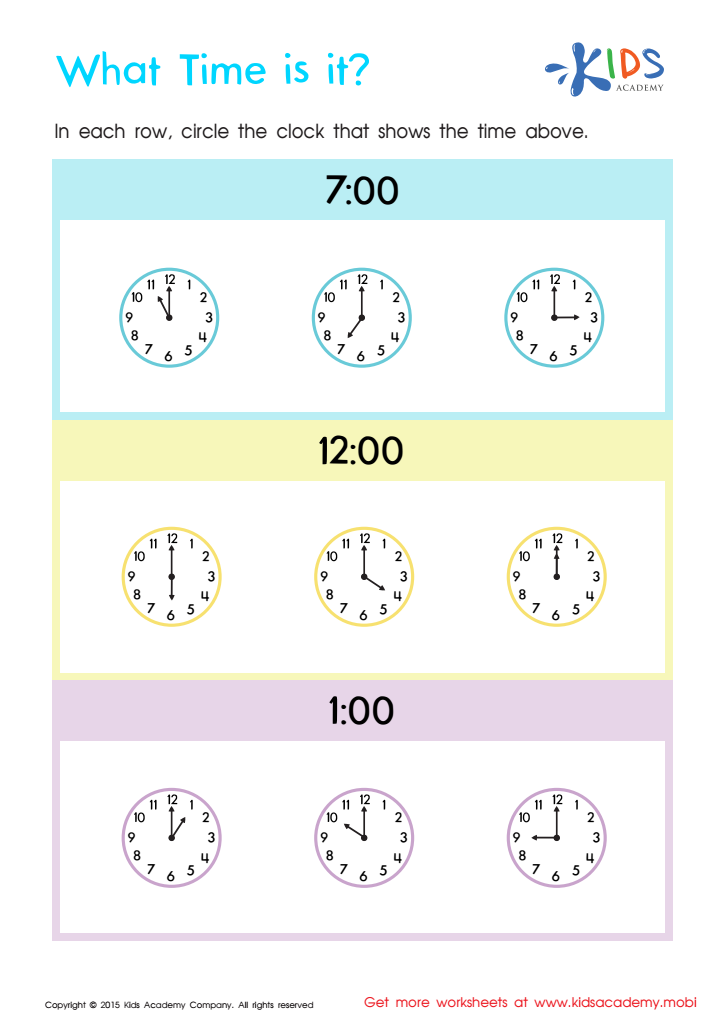
Telling The Time Worksheet: Part 3
Make learning to read clocks fun with our free printable worksheets! Have kids circle the clocks that show the time, remembering that the short hand is for hours and the long one is for minutes. For more worksheets, visit Kids Academy and explore the wonderful world of math with your little learners.
Telling The Time Worksheet: Part 3
Worksheet
Join Kids Academy for Free
Who is primarily going to use this learning content?








Parents and teachers should deeply care about enhancing time-reading skills in children aged 3-9 because these abilities form a fundamental part of daily life and overall cognitive development. Understanding the concept of time equips children with the necessary skills to manage their day-to-day activities effectively and fosters an essential sense of routine and structure. Early mastery of these skills facilitates punctuality, responsibility, and time management, which are crucial traits for both academic success and personal development.
Moreover, engaging in time-reading exercises can significantly boost a child’s confidence and independence. When children can tell time accurately, they are more likely to take initiative in completing tasks, adhering to schedules, and understanding the sequence of daily events. This empowerment not only enhances their problem-solving abilities and critical thinking but also engrains a sense of self-discipline.
The Extra Challenge Time exercises are instrumental in stimulating a child’s cognitive skills, such as memory, attention to detail, and logical reasoning. These challenges often incorporate playful and interactive methods that can make learning more enjoyable, thereby fostering a positive attitude towards learning. Supporting children in developing these skills ensures that they are better prepared for future academic pursuits and the world beyond the classroom.








