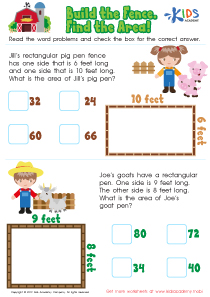
Shape Recognition Extra Challenge Matching Worksheets for Ages 4-5
3 filtered results
-
From - To
Looking to supercharge your child's learning with a fun and engaging activity? Our Shape Recognition Extra Challenge Matching Worksheets for Ages 4-5 are perfect for young learners ready to take their skills to the next level! Designed to enhance visual discrimination and cognitive development, these worksheets present a variety of shapes to identify, match, and classify. Encourage problem-solving and critical thinking in a playful setting to make learning a joy. Crafted by educational experts, these printables offer challenging yet achievable tasks tailored to your child's developmental stage. Spark curiosity and build foundational math skills with our unique and effective resource!
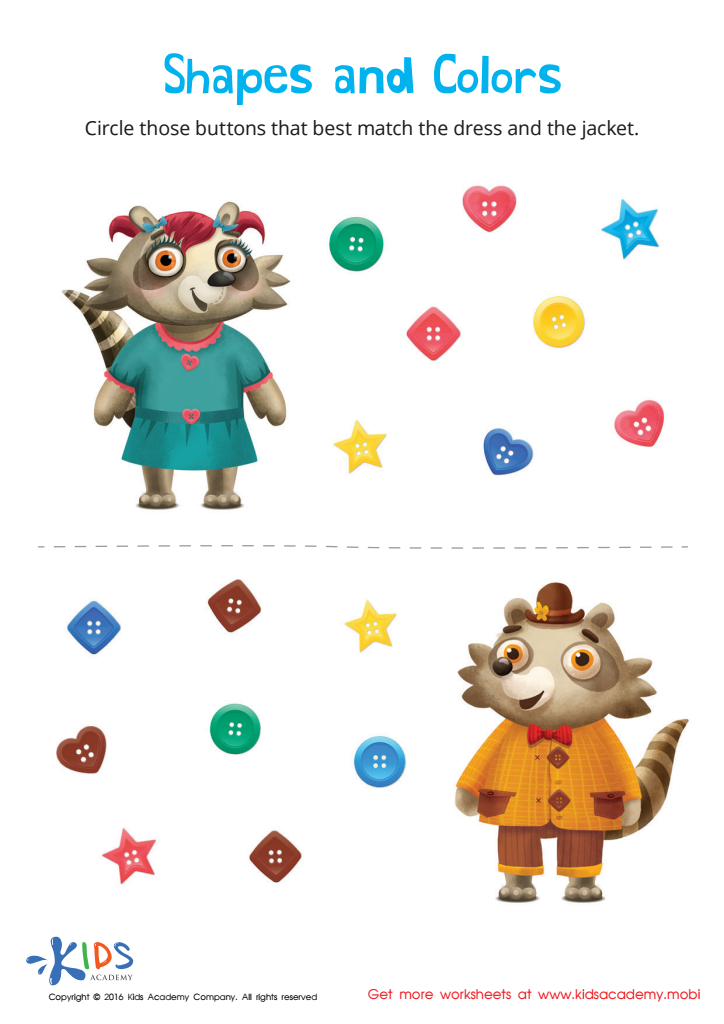
Matching: Shapes and Colors Worksheet
 Assign to My Students
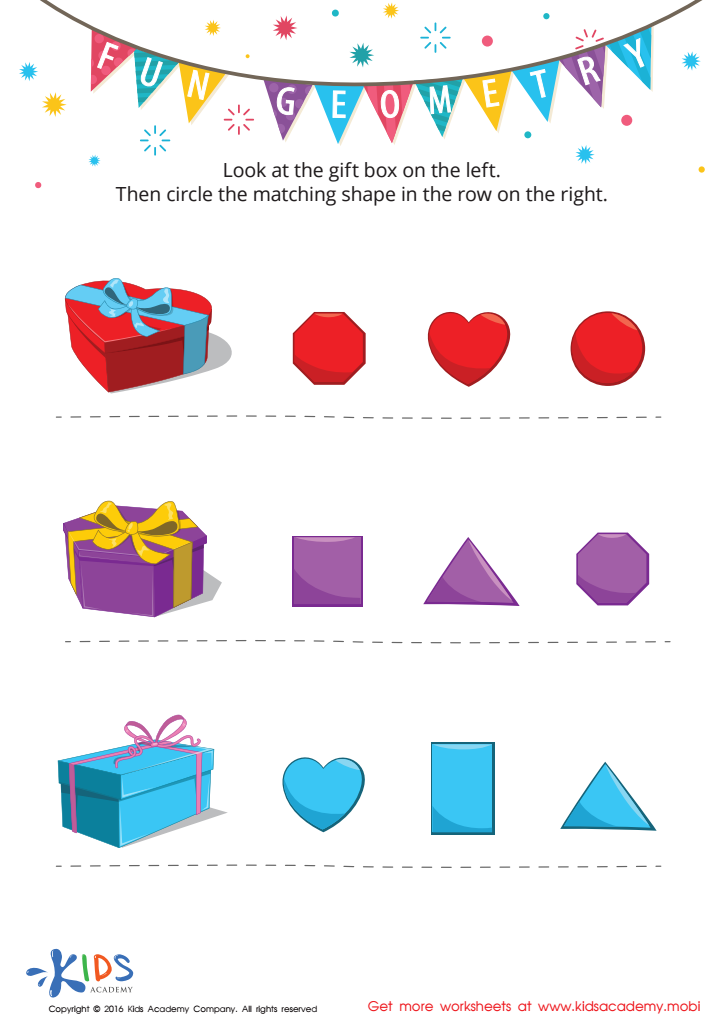
Fun Geometry Worksheet
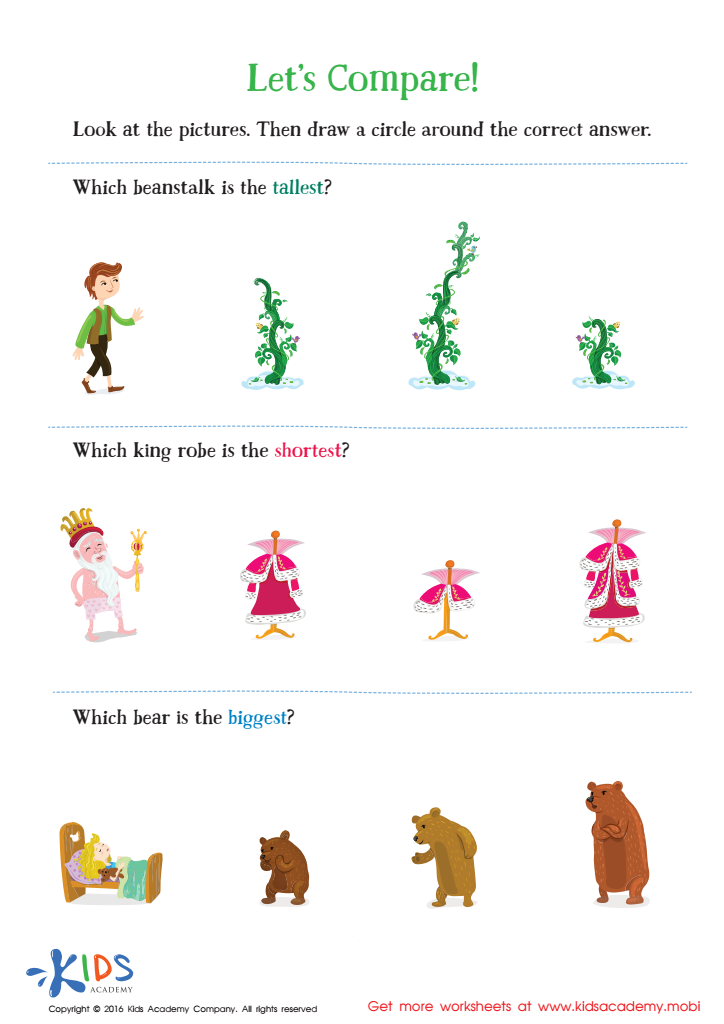
Fairy Tale Worksheet: Let's Compare








Shape Recognition Extra Challenge Matching for 4-5-year-olds is crucial for early cognitive development and has several benefits that parents and teachers should care about. This activity enhances children's spatial awareness and understanding of geometric concepts, which serve as foundational skills for more advanced mathematics and reasoning abilities later on. By identifying, matching, and differentiating between various shapes, children improve their problem-solving skills and attention to detail.
Moreover, shape recognition helps with visual processing skills, which are important for reading. Distinguishing between shapes aids in recognizing letters and numbers, contributing to later literacy and numeracy success. Engaging in matching exercises also builds memory retention and concentration, enhancing overall cognitive function.
In addition to cognitive benefits, these activities develop fine motor skills through the manipulation of puzzle pieces or drawing shapes. This physical aspect of learning is vital for preparing children for writing tasks in school. Socially and emotionally, successfully matching shapes can boost a child’s confidence and encourage a love for learning through fun, interactive challenges.
Overall, shape recognition activities equip children with essential skills while promoting their overall academic and developmental growth. Thus, parents and teachers should prioritize these exercises as part of a well-rounded early childhood education.