Mathematical thinking Extra Challenge Addition & Subtraction Worksheets for Ages 4-6
3 filtered results
-
From - To
Explore our engaging "Mathematical Thinking Extra Challenge Addition & Subtraction Worksheets" designed specifically for children ages 4-6! These worksheets are perfect for young learners looking to enhance their early math skills through fun and interactive challenges. Each worksheet encourages critical thinking and problem-solving as kids practice addition and subtraction in creative ways. Our activities are tailored to help develop mathematical concepts while keeping learning enjoyable. Ideal for both at-home learning and classroom activities, these worksheets will foster a love for math in your little ones. Watch them gain confidence and proficiency as they tackle these exciting challenges!
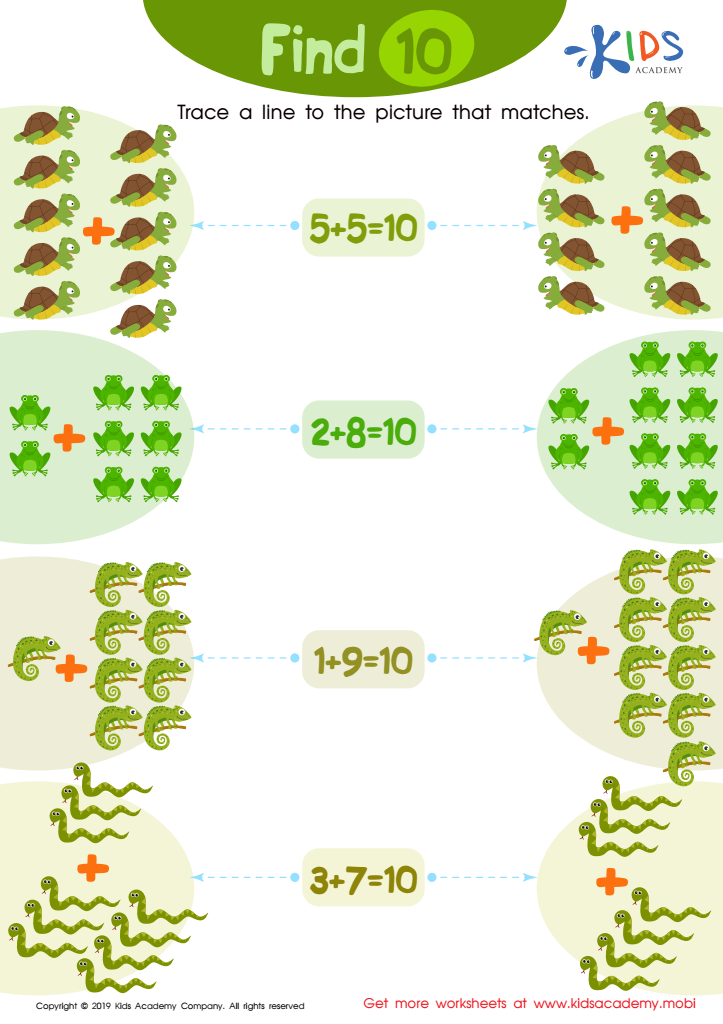
Find 10 Worksheet
 Assign to My Students
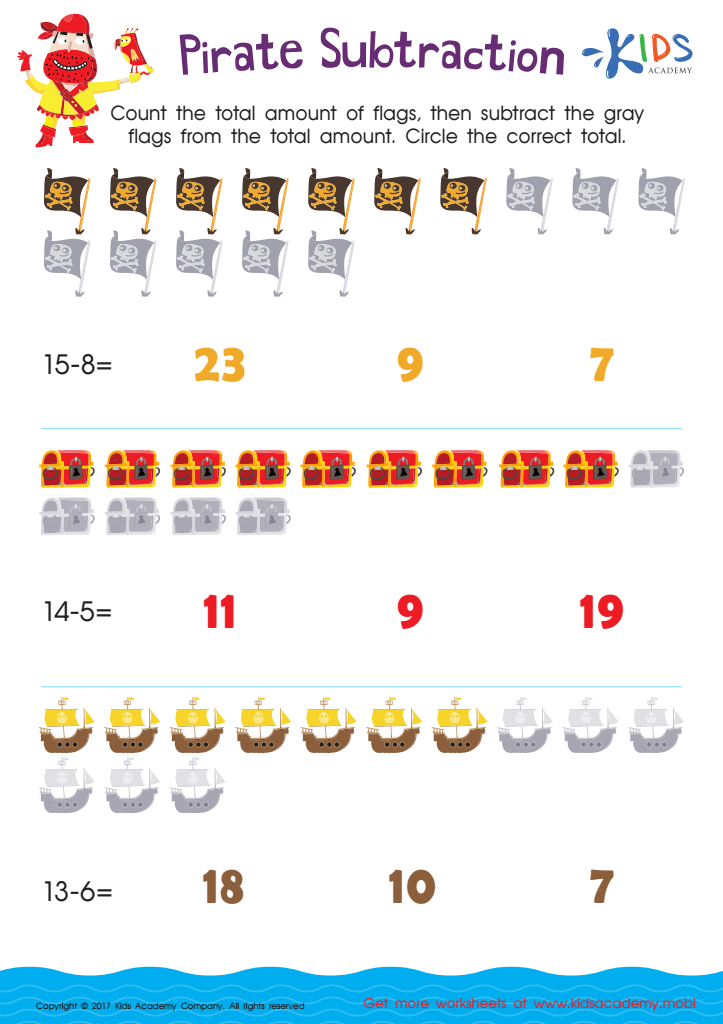
Pirate Subtraction Substraction Worksheet
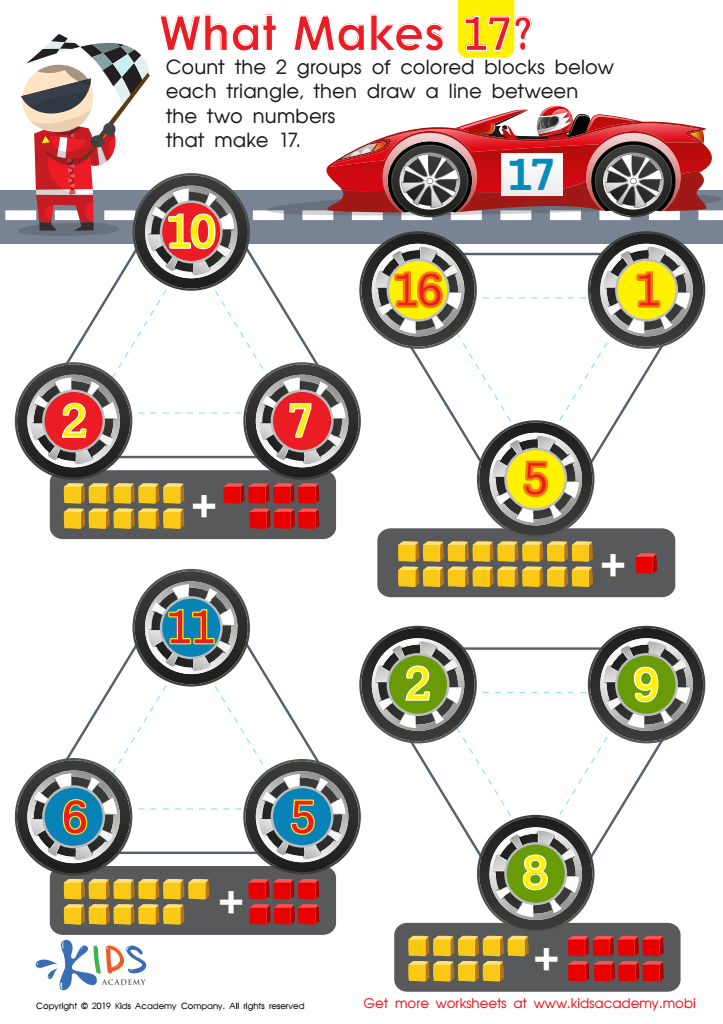
What Makes 17 Worksheet








Mathematical thinking, particularly in the realm of addition and subtraction, is crucial for children aged 4-6 as it lays the foundation for their future academic success. During these formative years, children are naturally curious and eager to explore the world around them. Engaging them in mathematical challenges fosters critical thinking skills, enhances problem-solving abilities, and promotes logical reasoning.
Parents and teachers should care about introducing concepts like Extra Challenge Addition and Subtraction because these activities not only enhance numerical fluency but also build confidence in a child’s abilities. When children successfully tackle more complex math problems, they develop resilience and a growth mindset, which is essential for tackling challenges in all subjects.
Moreover, early mathematical experiences improve language skills through the introduction of new vocabulary and concepts. Collaborative problem-solving activities can strengthen social skills as children learn to communicate their thought processes with peers.
Finally, developing a love for math at an early age encourages lifelong learning. Parental and educator support in this crucial stage sets the stage for future academic years, ensuring children become adept and enthusiastic learners in mathematics and beyond. By prioritizing these challenges, adults can nurture their natural mathematical instincts effectively.








