Logical thinking Extra Challenge Grammar Worksheets for Ages 4-6
3 filtered results
Difficulty Level
Grade
Age
-
From - To
Subject
Activity
Standards
Elevate your child's logical thinking skills with our specially designed Extra Challenge Grammar Worksheets for Ages 4-6. These dynamic and engaging worksheets, crafted by education experts, provide fun and constructive exercises to enhance young learners' ability to reason and problem-solve while mastering essential grammar concepts. Perfect for young minds eager to explore and grow, these worksheets intertwine logic and language, promoting cognitive development through a series of puzzles, pattern recognition activities, and more. Ideal for home or classroom use, our worksheets offer an enriching experience that lays a solid foundation for future academic success.
Favorites
With answer key
Interactive
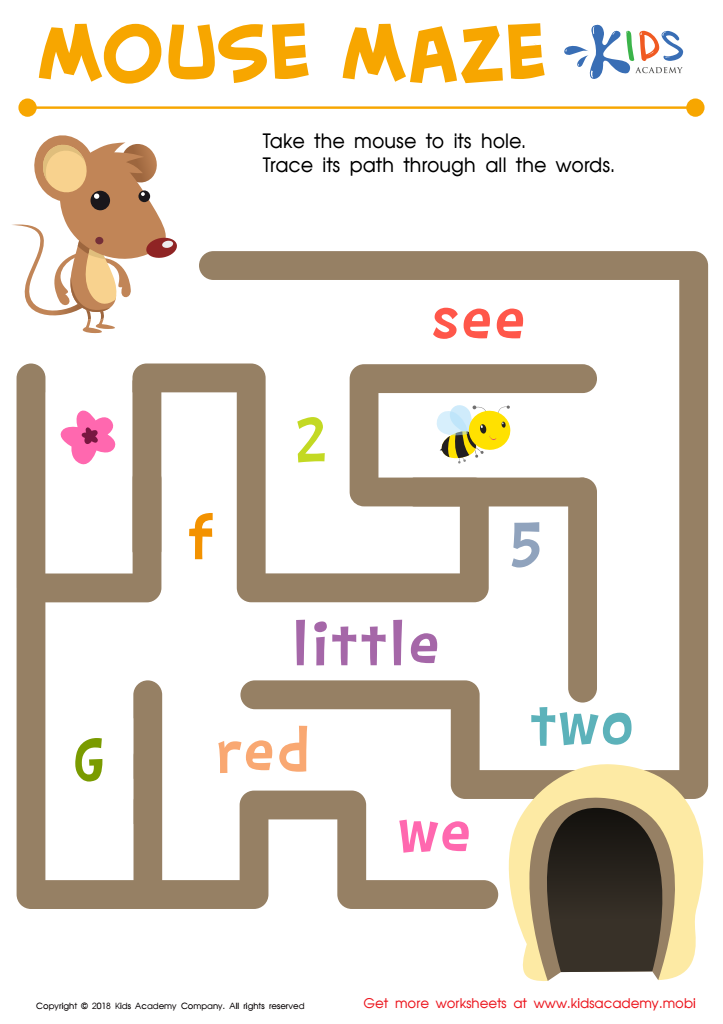
Find Words Mouse Maze Worksheet
Help your child identify words and guide the mouse home! Ask them to point out the colorful animal on the worksheet, then take their hand and show them how to trace the path, going through all the words in the maze to get the mouse back to its hole.
 Assign to My Students
Find Words Mouse Maze Worksheet
Worksheet
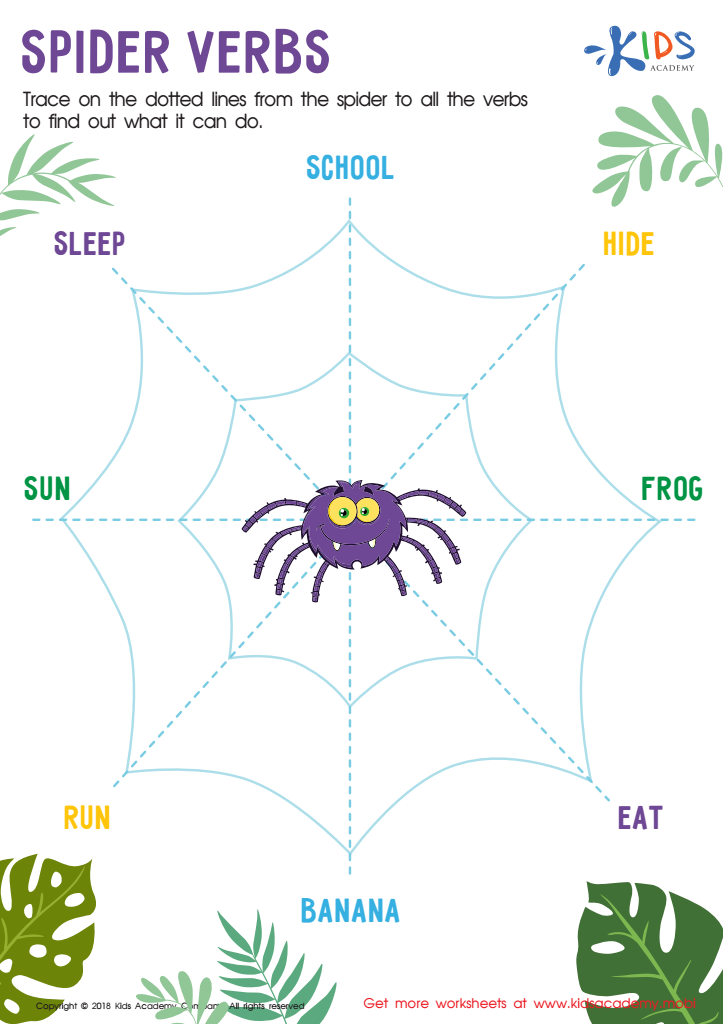
Spider Verbs Worksheet
Verbs are action words. Examples: run, play, talk. Show your child this tracing sheet for them to learn about verbs. Ask them to trace the dotted lines from the spider to the words that are verbs. These words are what the spider can do.
Spider Verbs Worksheet
Worksheet
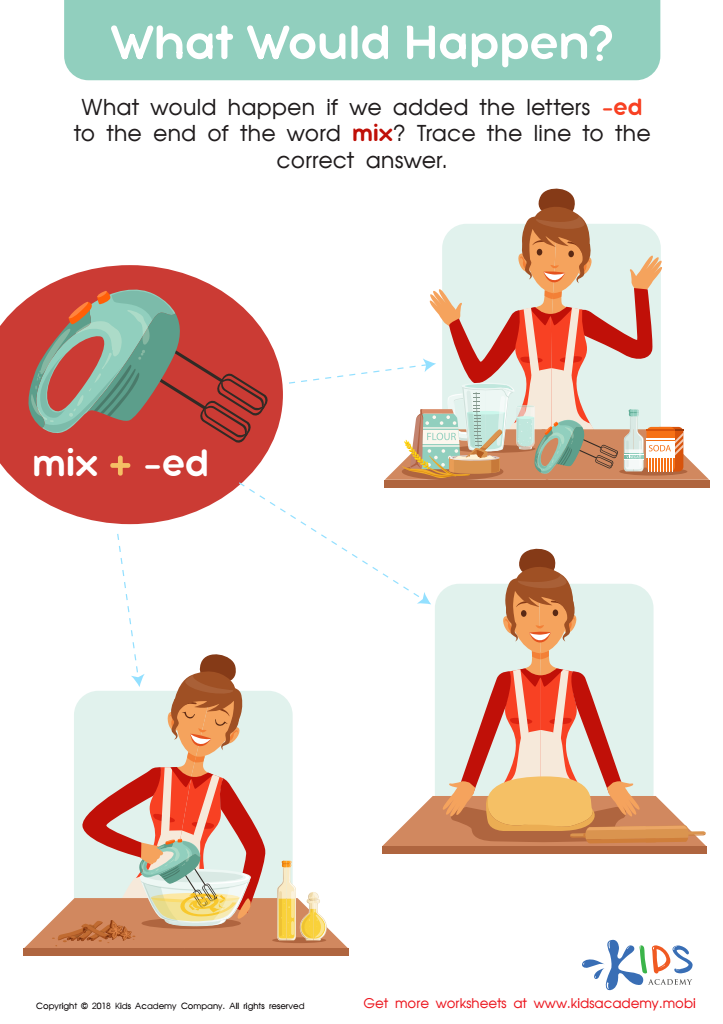
What Would Happen? Worksheet
Are your kids struggling with tenses? Use this worksheet to help them. See what they know by asking them to add '-ed' to the end of 'mix'. Guide them through the tracing sheet as they look for the correct answer.
What Would Happen? Worksheet
Worksheet
Join Kids Academy for Free
Who is primarily going to use this learning content?








Encouraging logical thinking and challenging grammar skills in children aged 4-6 is vital for their cognitive and language development. Logical thinking fosters problem-solving abilities, critical thinking, and decision-making skills. When children engage in activities that promote logical reasoning, they learn to draw conclusions independently, enhancing their intellectual growth and academic readiness. This foundational skill set supports not only early mathematics but also daily decision-making.
Grammar and language structure are equally crucial at this age. Early exposure to grammar rules helps children understand how language works, aiding in clearer communication. Furthermore, strong grammar skills contribute to improved reading comprehension and writing abilities. As children frequently encounter new words and sentence structures, they develop a broader vocabulary and better expressive skills, making it easier for them to articulate their thoughts and ideas.
Moreover, these skills foster self-confidence. Children who can solve problems and communicate effectively are more likely to participate in classroom discussions, form positive social relationships, and persevere through challenges. Integrating logical thinking and rigorous grammar practice into early childhood education sets a solid foundation for lifelong learning and success across various domains. Therefore, parents and teachers should prioritize these areas to nurture well-rounded, capable, and confident individuals.