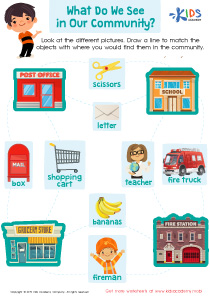
Recognizing shapes Extra Challenge Math Worksheets for Ages 4-7
3 filtered results
-
From - To
Enhance your child's math skills with our "Recognizing Shapes Extra Challenge Math Worksheets" for ages 4-7! Our engaging, printable worksheets are designed to develop essential shape recognition skills through fun activities and challenging exercises. Tailored for preschool and early elementary learners, these worksheets encourage critical thinking and problem-solving. Kids will explore various shapes and their properties, promoting cognitive growth while enjoying colorful illustrations. Perfect for at-home learning or classroom use, these resources not only reinforce math concepts but also make learning enjoyable. Give your child the confidence to excel in math with these extra challenge worksheets today!
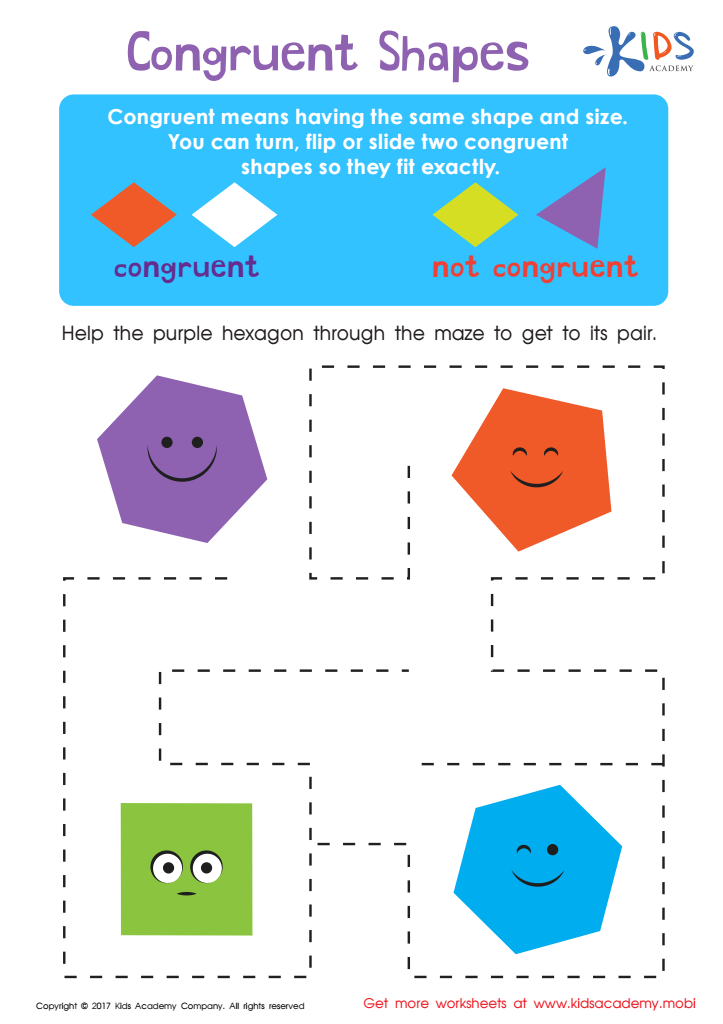
Congruent Shapes Worksheet
 Assign to My Students
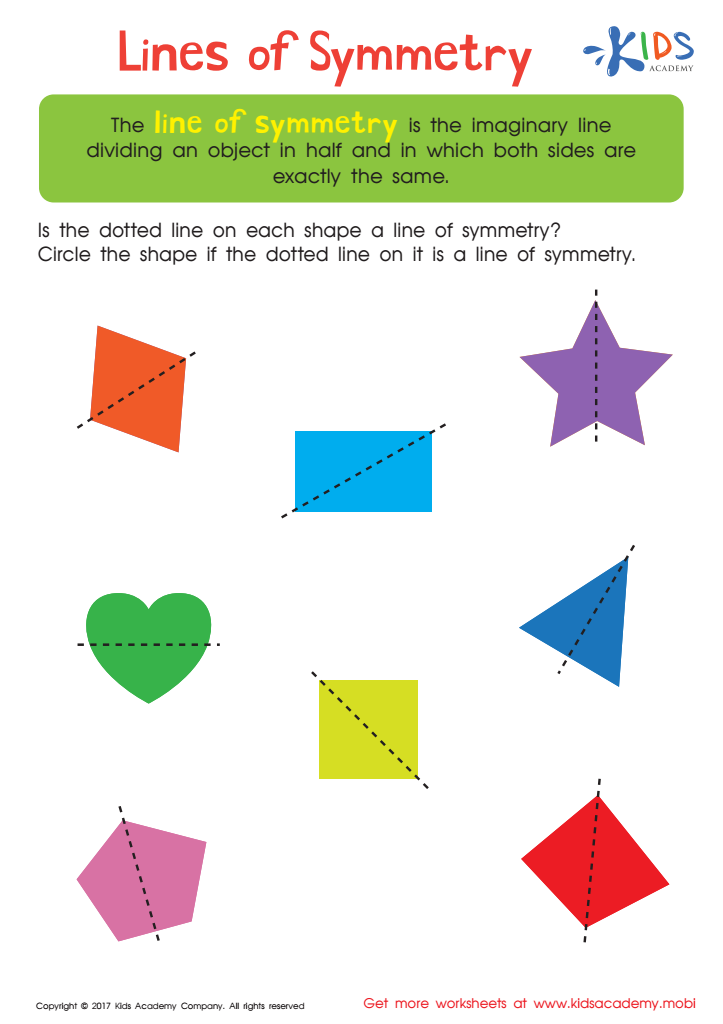
Lines of Symmetry Printable
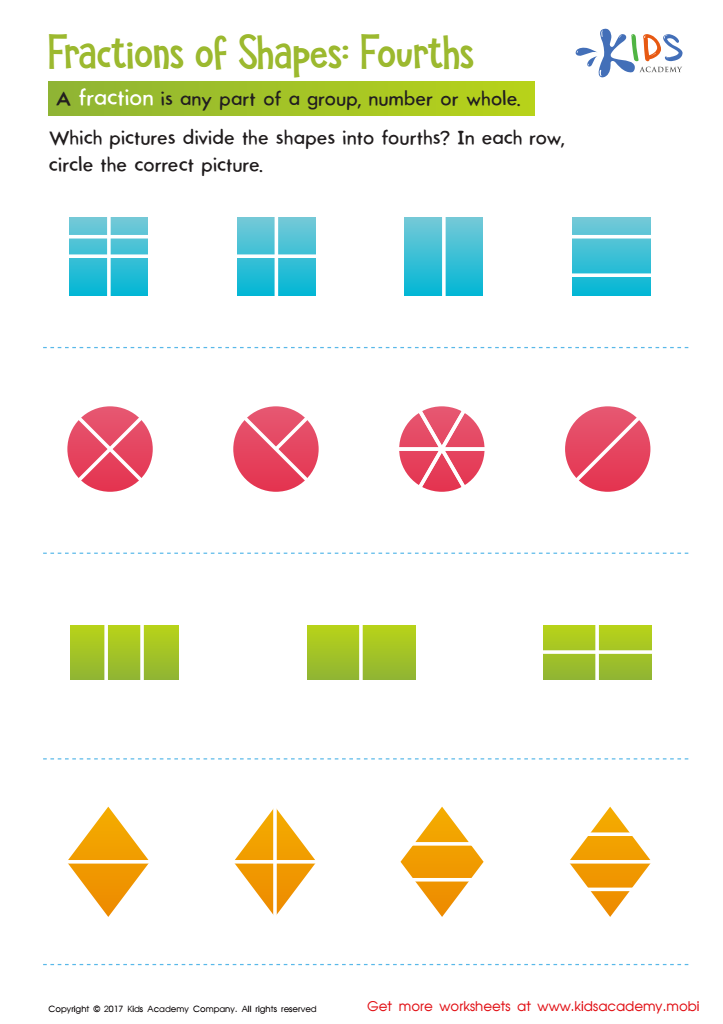
Fractions of Shapes Worksheet







Recognizing shapes is a fundamental skill in early mathematics that lays the groundwork for more complex mathematical concepts later on. For children aged 4-7, learning to identify and understand shapes is crucial for developing critical thinking, spatial awareness, and problem-solving abilities.
Parents and teachers should care about this skill because it enhances children's cognitive development and prepares them for a variety of subjects in school, such as geometry, art, and even technology. By engaging in shape recognition activities, children learn to categorize objects, recognize patterns, and improve their fine motor skills.
Moreover, mastering shapes allows children to make connections between math and the world around them. For instance, recognizing how shapes come together to form structures can inspire creativity in building and design. This skill also supports language development as children learn to articulate their observations of different geometric forms.
Involving young learners in challenging shape recognition scenarios fosters perseverance and resilience, essential traits in academic and personal growth. For all these reasons, emphasizing shapes in early education is not just beneficial; it's essential for nurturing a well-rounded, mathematically capable child.