Comparing sizes Extra Challenge Math Worksheets for Ages 5-8
5 filtered results
-
From - To
Enhance your child's math skills with our "Comparing Sizes Extra Challenge Math Worksheets" designed specifically for ages 5-8. These engaging worksheets provide a fun and interactive way for young learners to understand and compare different sizes, helping them build essential mathematical concepts. Each worksheet is tailored to challenge their thinking and promote problem-solving skills, ensuring they grasp the fundamentals of comparison. With colorful graphics and age-appropriate exercises, your child will enjoy exploring sizes while boosting their confidence in math. Perfect for use in the classroom or at home, these worksheets encourage independent learning through creative exercises and stimulating challenges!
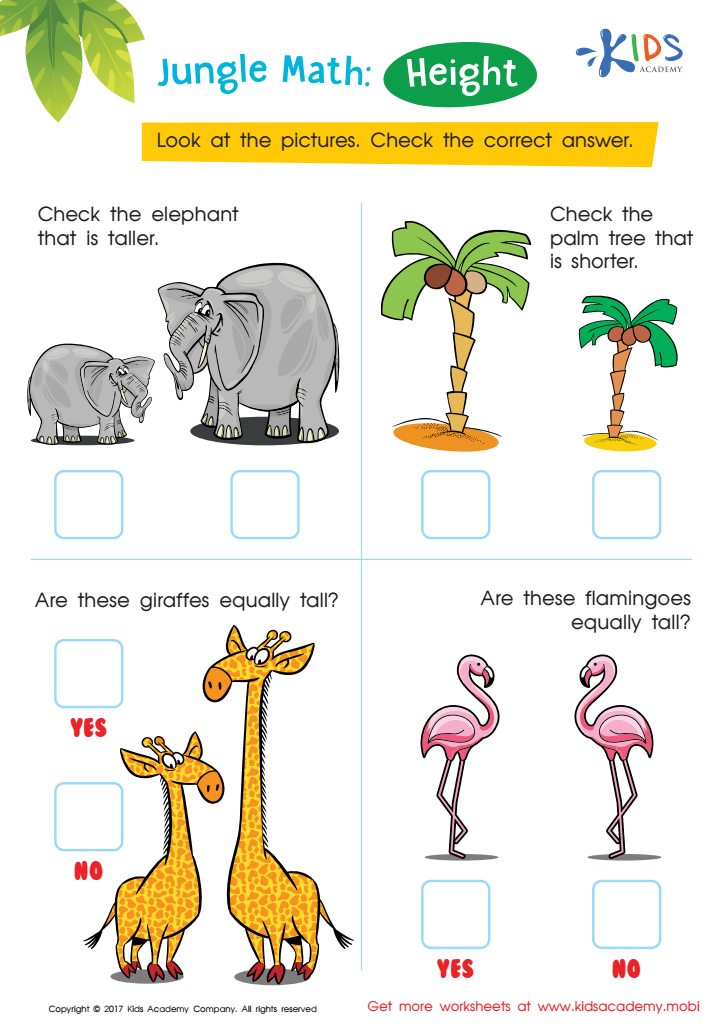
Which Is Taller Worksheet
 Assign to My Students
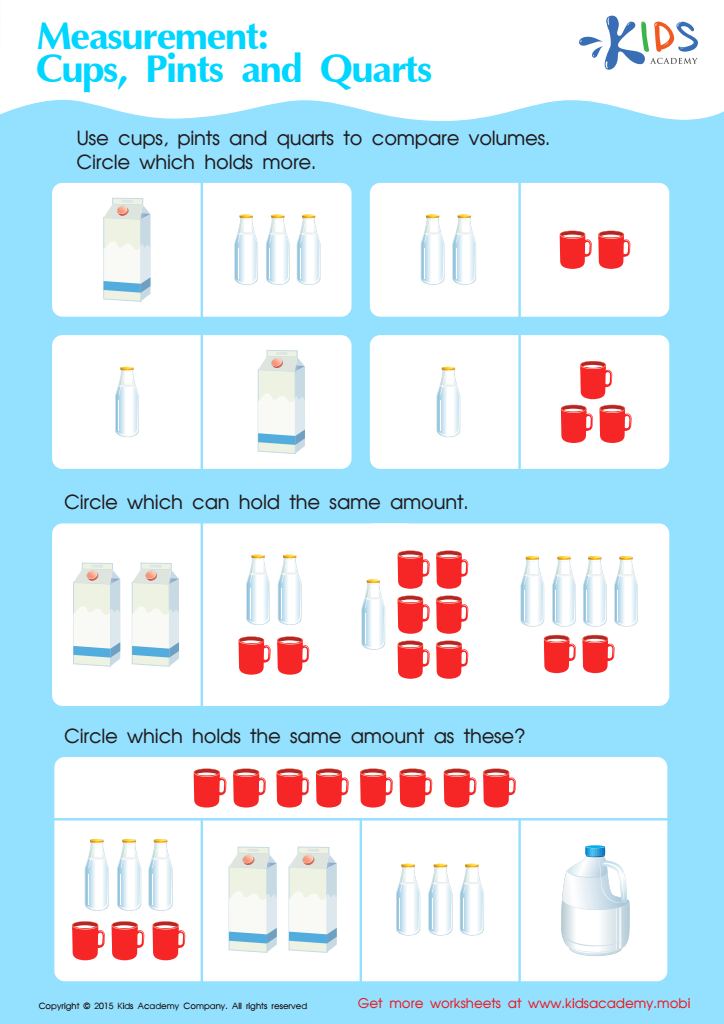
Measurement: Compare Volumes Worksheet
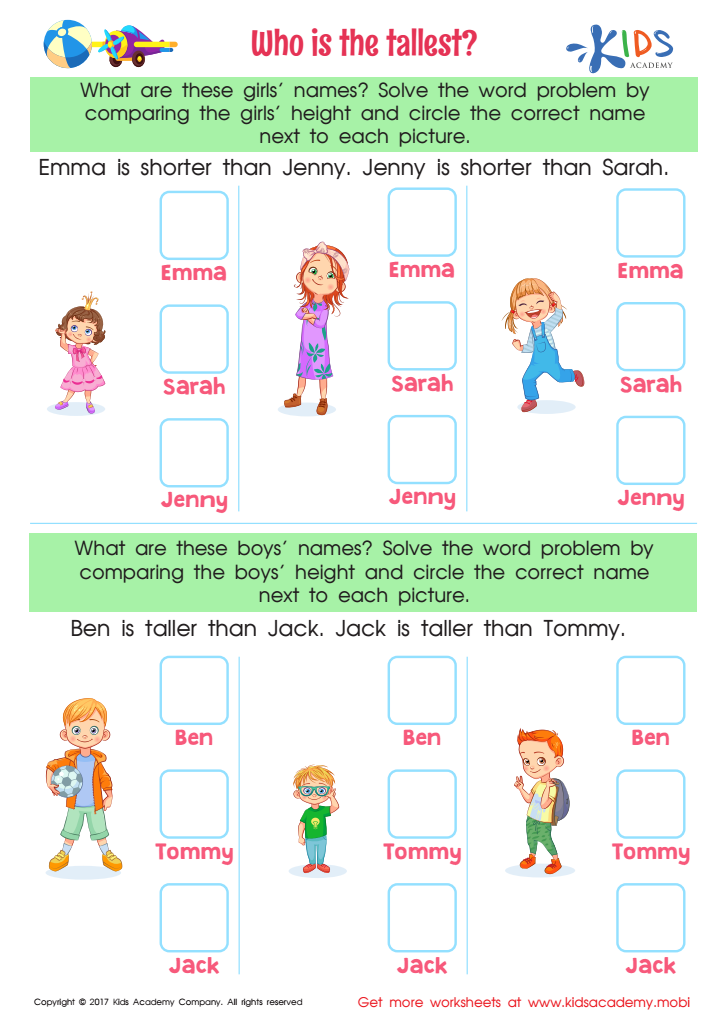
Who Tallest Printable
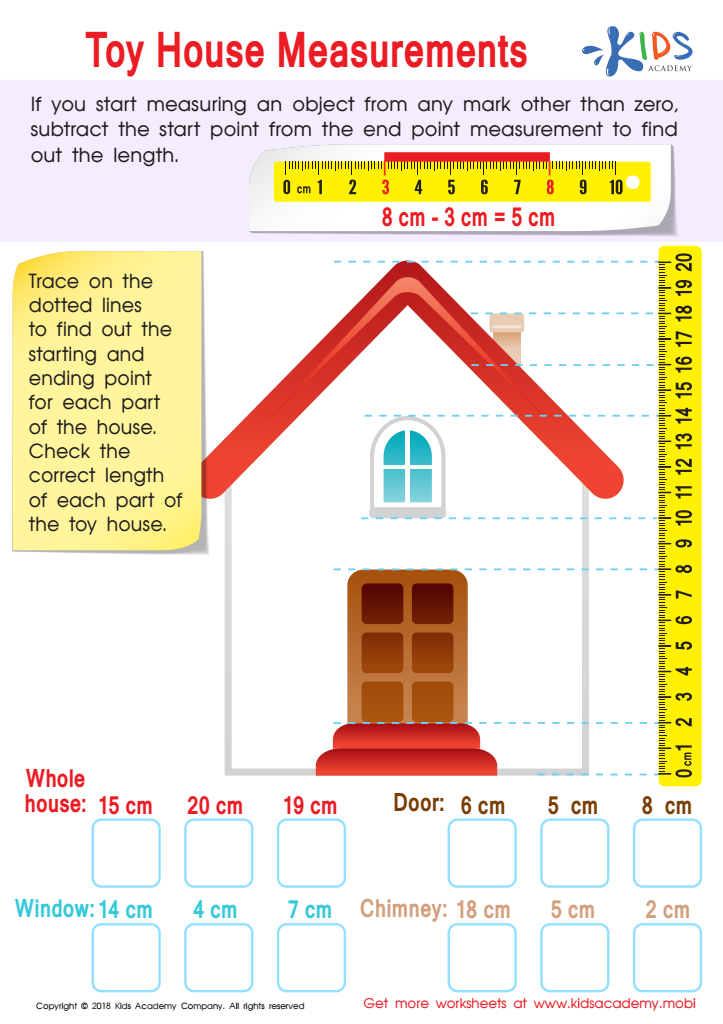
Toy House Measurements Worksheet
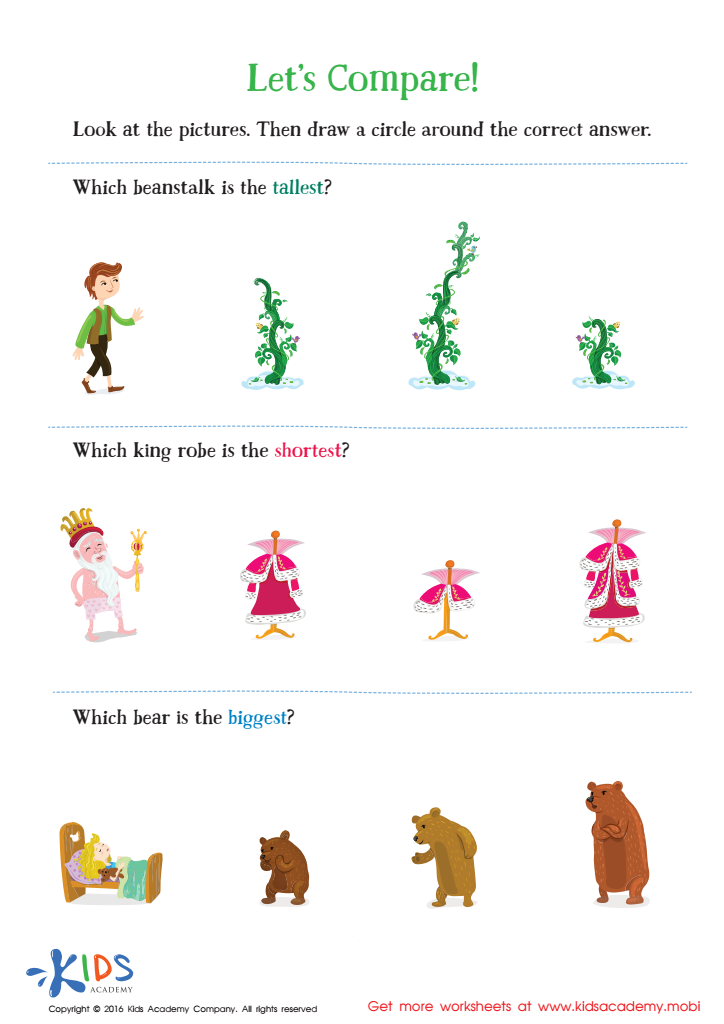
Fairy Tale Worksheet: Let's Compare


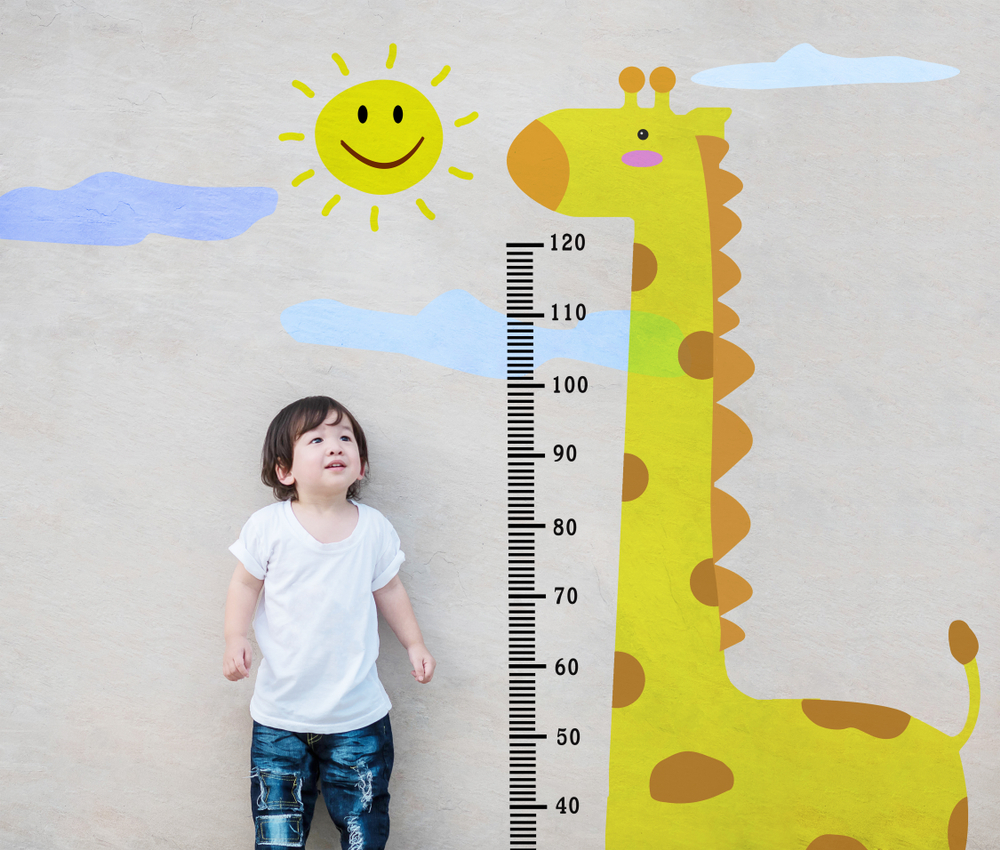
Comparing sizes is a fundamental skill in early childhood education, and the Extra Challenge Math activities for ages 5-8 offer an engaging way to develop this crucial ability. Parents and teachers should recognize that this is more than just a math concept; it's about fostering critical thinking and cognitive skills.
Engaging in size comparisons helps children explore measurements, enhances their observational skills, and enables them to interact meaningfully with the world around them. This activity fosters early numeracy and lays the groundwork for future mathematical concepts, such as addition, subtraction, and even geometry.
Moreover, activities that challenge children to compare sizes can promote language development, as they learn to describe and articulate their observations—using terms like "taller," "shorter," "bigger," and "smaller." This vocabulary expansion can contribute to better communication skills.
Additional challenges encourage perseverance and problem-solving, allowing young learners to embrace mistakes as a natural part of the learning process. Caring about these activities means equipping children with essential skills that enhance their overall development, instilling a love for learning, and preparing them for more complex mathematical concepts in the future. Ultimately, these foundations pave the way for lifelong learning and success.








