Mental math skills Extra Challenge Multiplication Worksheets for Ages 5-9
3 filtered results
-
From - To
Discover our engaging "Mental Math Skills Extra Challenge Multiplication Worksheets" tailored for children ages 5-9! These comprehensive worksheets are designed to boost your child's confidence and proficiency in multiplication through fun and interactive exercises. By practicing mental math, kids enhance their problem-solving abilities and develop quick calculation skills, setting a strong foundation for their future academic success. The colorful designs and age-appropriate challenges keep young learners motivated as they master essential mathematical concepts. Ideal for classroom use or at-home learning, these worksheets provide invaluable support for kids to excel in math while enjoying engaging activities. Unlock their potential today!
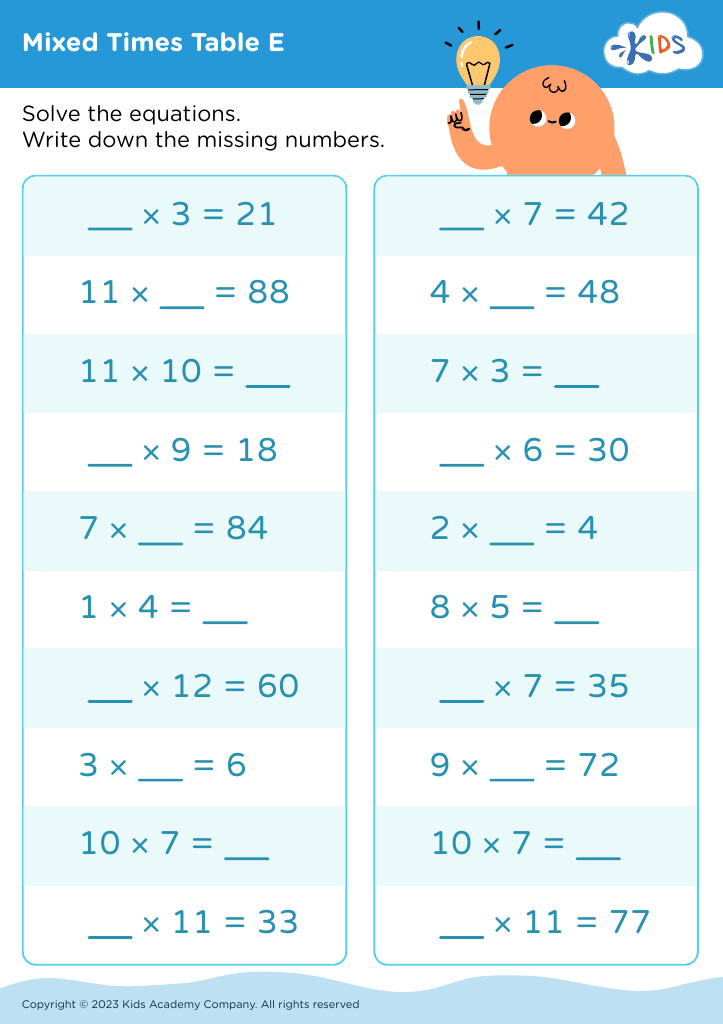
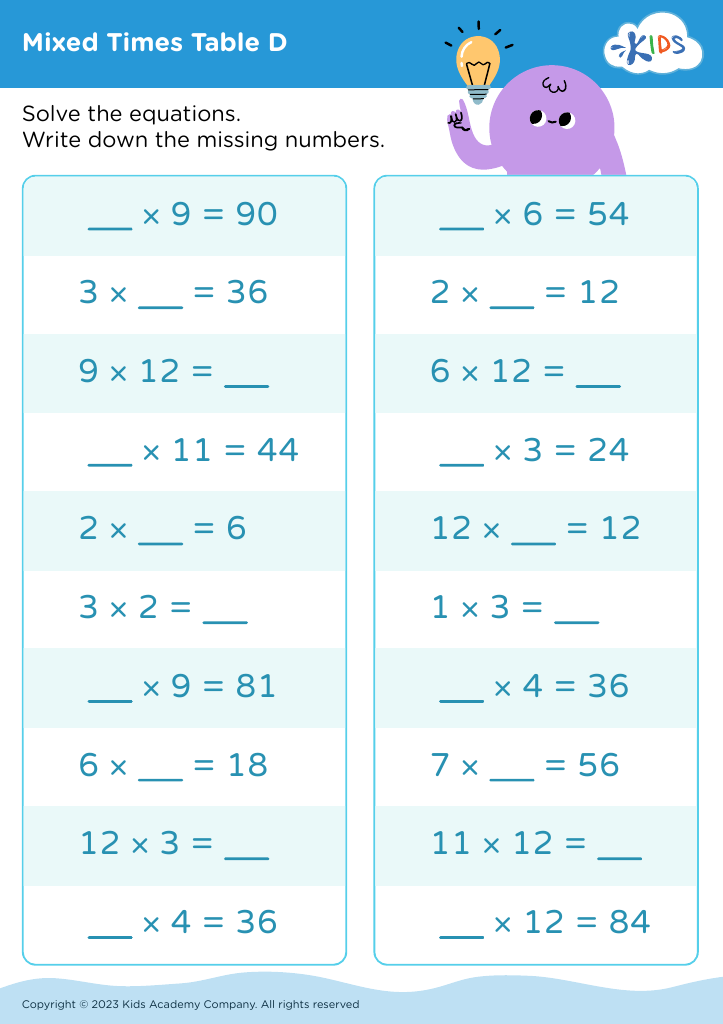
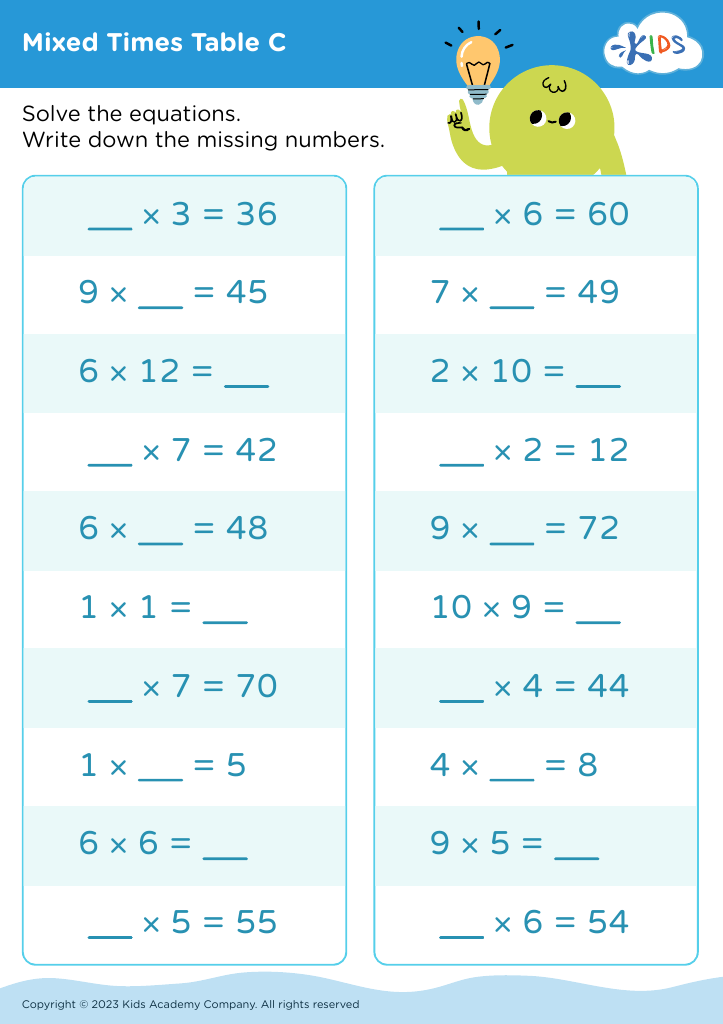








Mental math skills, particularly in relation to extra challenge multiplication for ages 5-9, are crucial for a child's overall mathematical development and cognitive growth. First, they lay the foundation for more complex mathematical concepts. By mastering mental multiplication, children develop number sense and flexibility in their thinking, allowing them to approach problems creatively and efficiently.
Moreover, those skills foster confidence and independence. When children can multiply mentally without relying on calculators or written methods, they gain a sense of accomplishment and ownership over their learning process. This self-efficacy positively influences their attitude toward math in general.
Additionally, early mastery of mentally challenging multiplication can enhance critical thinking and problem-solving skills. It encourages them to recognize patterns and make connections, which are essential abilities in both math and everyday life.
For parents and teachers, supporting these skills means equipping children with tools necessary for academic success and lifelong problem-solving. By emphasizing the value of mental math, they nurture resilience and adaptability, preparing them to tackle real-world challenges confidently. Ultimately, investing time in developing mental math skills sets children on a path towards academic excellence and a positive relationship with mathematics.








