Noun identification Extra Challenge Grammar Worksheets for Ages 5-9
4 filtered results
Difficulty Level
Grade
Age
-
From - To
Subject
Activity
Standards
Boost your child's grammar skills with our Noun Identification Extra Challenge Grammar Worksheets, designed for kids aged 5-9! These engaging worksheets provide a fun and interactive way for young learners to identify different types of nouns, including common, proper, and collective nouns. Ideal for enhancing vocabulary and comprehension, these extra challenge sheets encourage critical thinking while keeping learning enjoyable. Perfect for supplemental home study or classroom activities, our worksheets cater to diverse learning styles. Download today to help your child build a solid foundation in grammar as they embark on their educational journey! Stay ahead with our fun-filled, educational resources!
Favorites
With answer key
Interactive
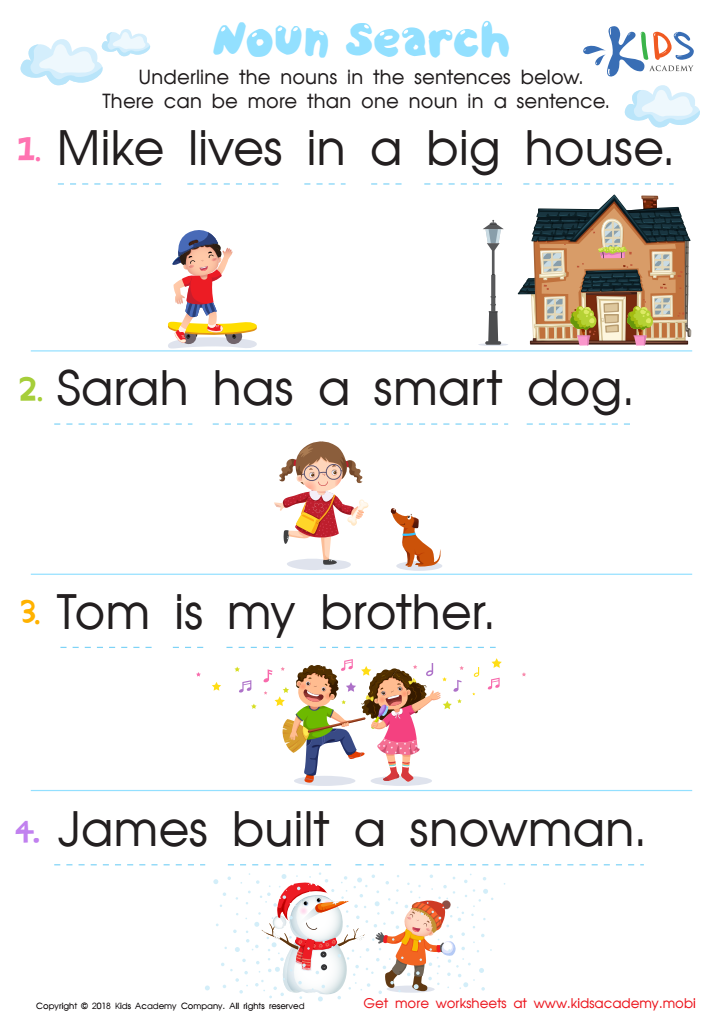
Noun Search Worksheet
To help your children learn the basics of grammar, start with nouns, verbs, adverbs and adjectives. This noun search worksheet will help your child understand the most common part of speech - the noun. Ask them to underline the nouns in each sentence. This is a great way to start learning proper grammar.
 Assign to My Students
Noun Search Worksheet
Worksheet
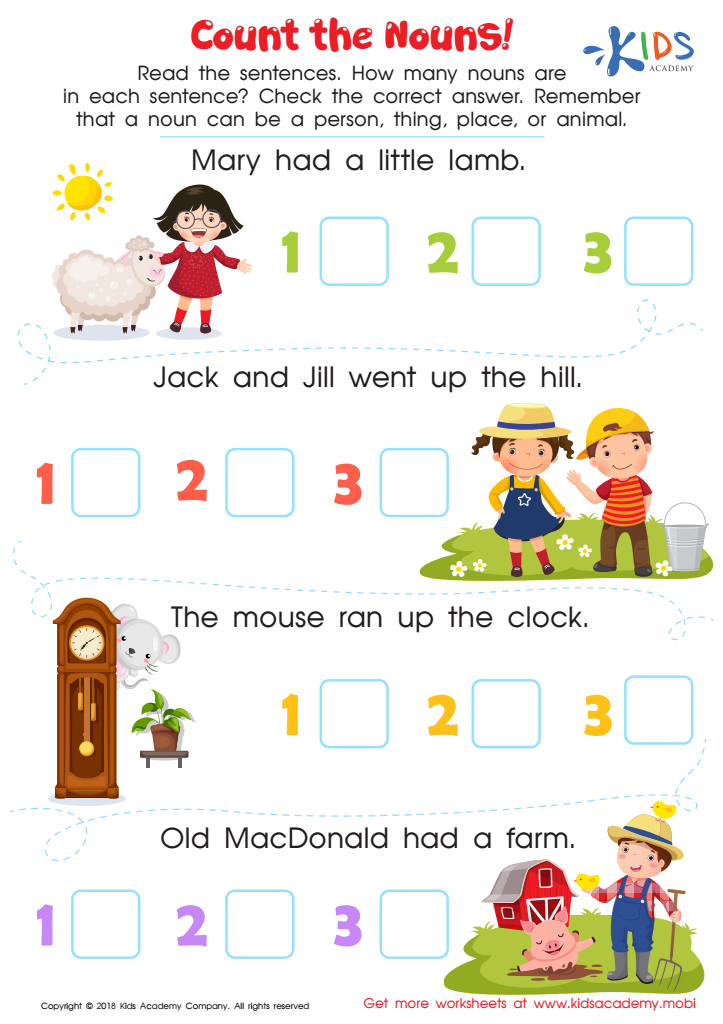
Count the Nouns Worksheet
Read the sentences with your children and ask them to find the nouns. Explain that nouns are names of people, animals, places or things. Point out the boxes with the answers to check.
Count the Nouns Worksheet
Worksheet
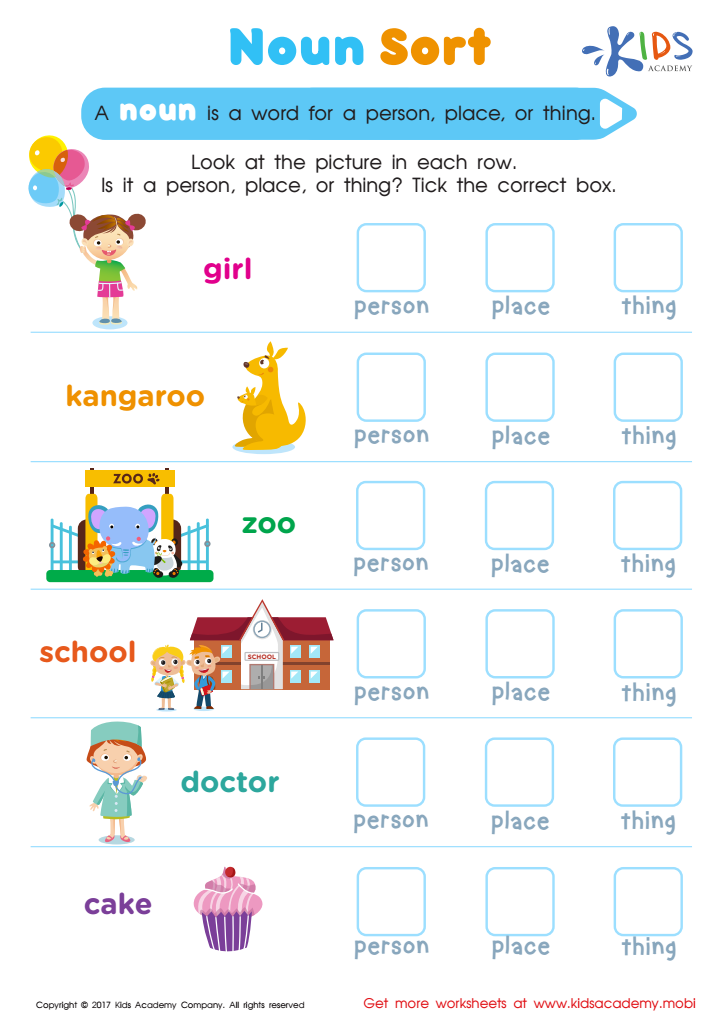
Noun Sort Printable
This printable worksheet helps kids sort nouns into person, place, or thing categories. Perfect for learning the basics of grammar!
This printable worksheet helps kids learn parts of speech by sorting nouns into person, place, or thing categories using familiar images. Perfect for mastering basic grammar!
Noun Sort Printable
Worksheet
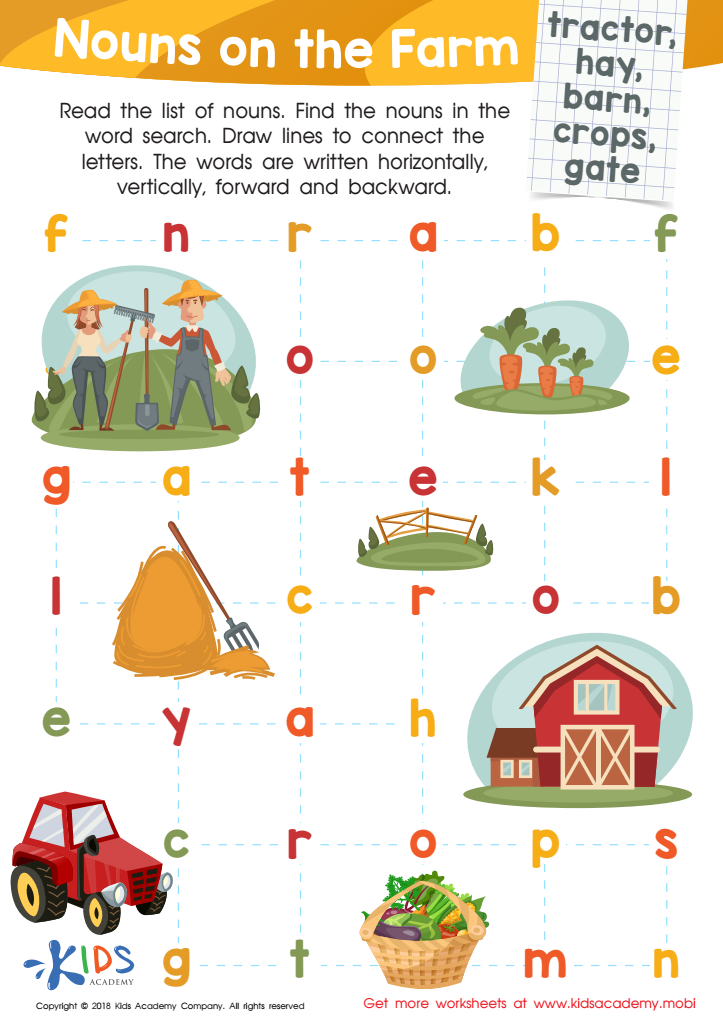
Nouns on the Farm Worksheet
Help your child learn nouns with this worksheet: Read the list to them and have them find the nouns in the word search. Draw lines to connect the letters, and explain the words can be found horizontally, vertically, forward, and backward.
Nouns on the Farm Worksheet
Worksheet
Join Kids Academy for Free
Who is primarily going to use this learning content?



.jpg)
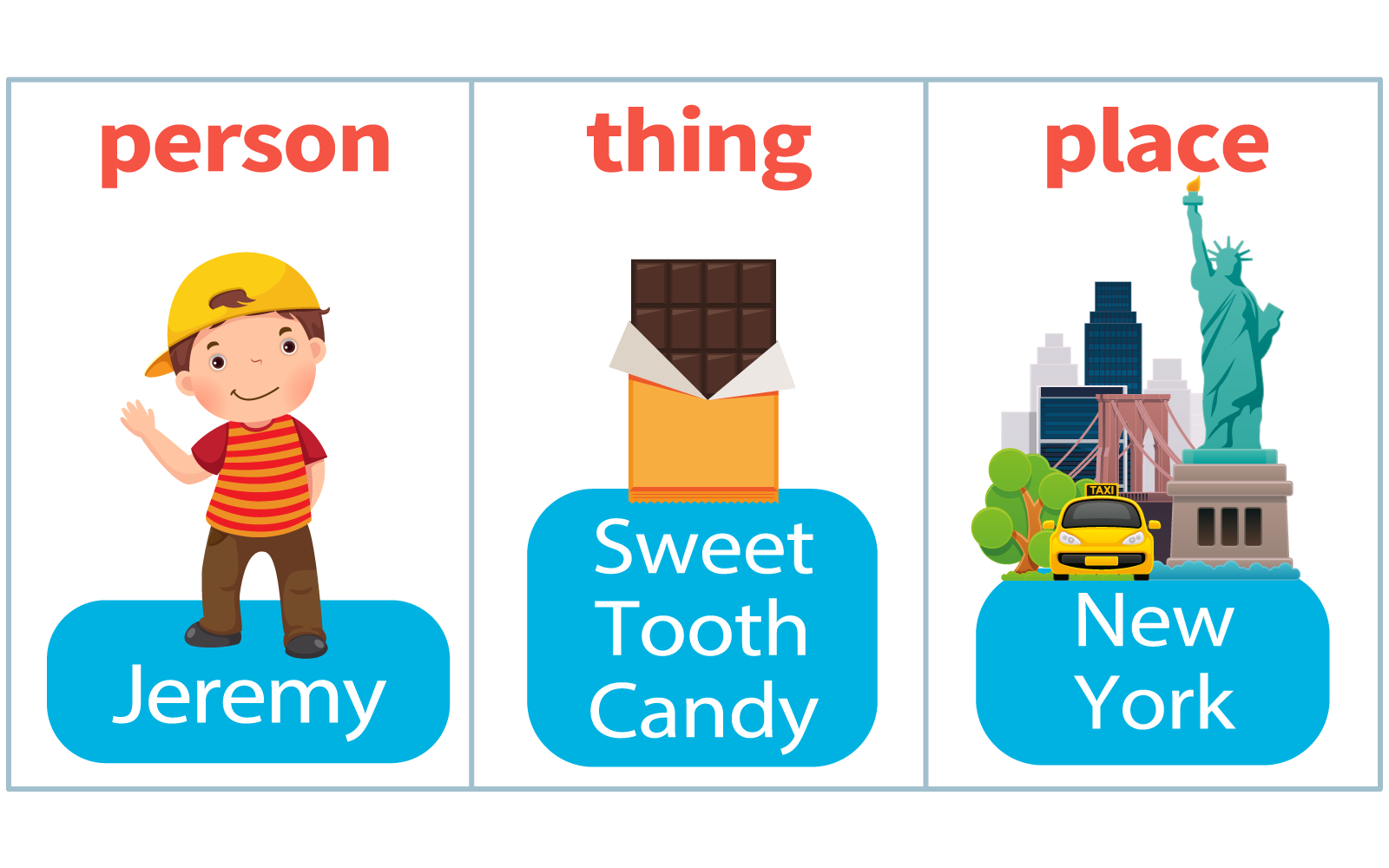


Noun identification is a fundamental skill in early literacy, crucial for children aged 5-9 as they begin to explore the world of language. Parents and teachers should prioritize this skill because nouns are the building blocks of communication, representing people, places, things, and ideas. Mastery of nouns enables children to construct sentences, express thoughts, and understand basic grammar.
Extra challenging grammar activities not only make the learning process engaging but also enhance cognitive development. By identifying nouns, children sharpen their observation and categorization skills, fostering critical thinking. Engaging in these activities develops their language-rich environment, which is vital for vocabulary expansion.
Furthermore, identifying nouns can boost children’s confidence in reading and writing. When children can recognize and use nouns effectively, they are better equipped to read and understand texts, improving overall literacy skills. Additionally, such activities can create opportunities for meaningful discussions between parents, teachers, and children, promoting a collaborative approach to learning.
Encouraging noun identification during these formative years contributes significantly to children's academic success and lays a foundation for advanced grammar comprehension, ultimately supporting their lifelong communication skills. Hence, both parents and teachers play a crucial role in nurturing this fundamental aspect of language development.