Vocabulary development Extra Challenge Grammar Worksheets for Ages 5-9
3 filtered results
Difficulty Level
Grade
Age
-
From - To
Subject
Activity
Standards
Enhance your child's language skills with our Vocabulary Development Extra Challenge Grammar Worksheets for ages 5-9. These engaging worksheets are designed to make learning fun while challenging young minds to expand their vocabulary. With a variety of activities, children will explore word meanings, synonyms, antonyms, and contextual usage. Our carefully crafted exercises encourage critical thinking and boost confidence in language use. Perfect for classroom or at-home learning, these resources cater to diverse learning styles and promote interactive learning. Watch your young learners thrive and enjoy mastering new words and grammar concepts! Start their journey towards effective communication today!
Favorites
With answer key
Interactive
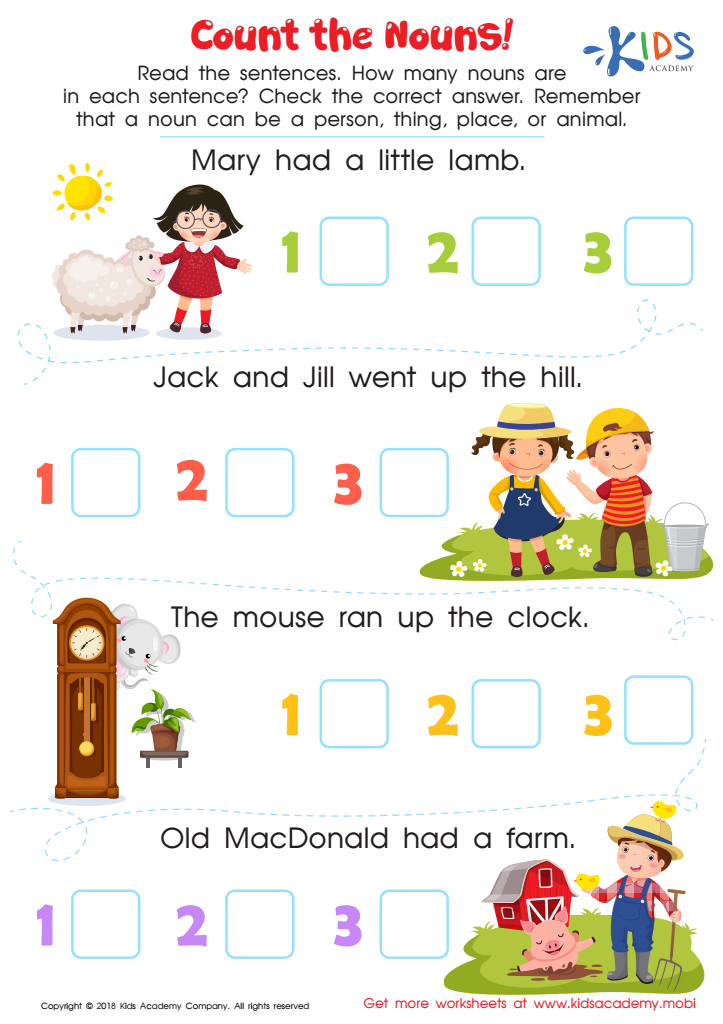
Count the Nouns Worksheet
Read the sentences with your children and ask them to find the nouns. Explain that nouns are names of people, animals, places or things. Point out the boxes with the answers to check.
 Assign to My Students
Count the Nouns Worksheet
Worksheet
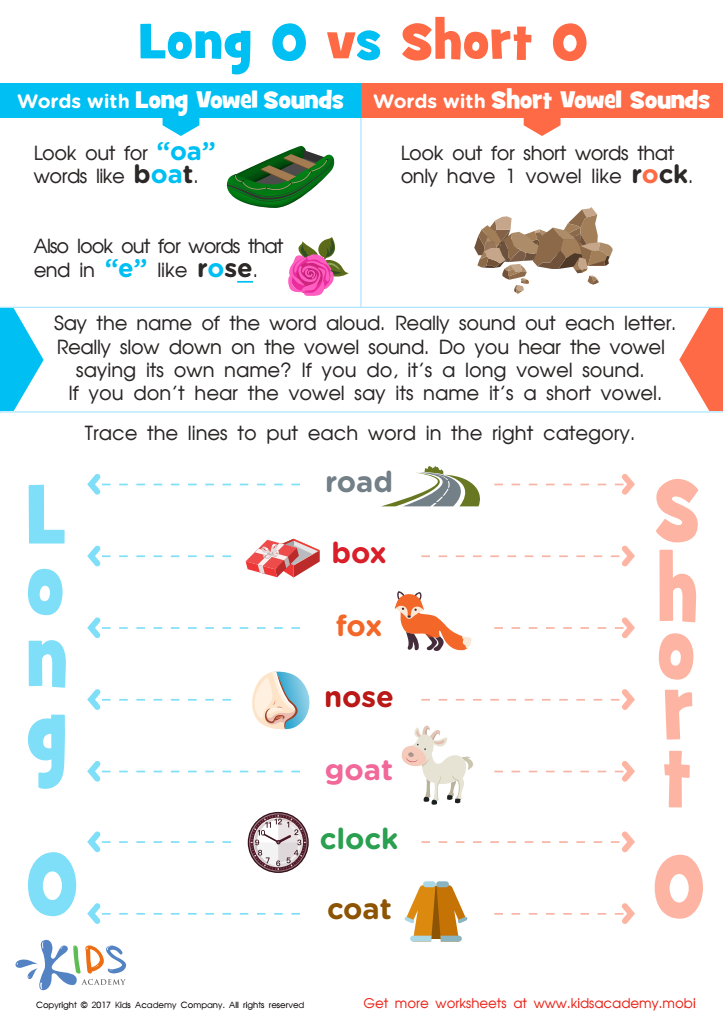
Long and Short Vowel O Spelling Worksheet
This colorful worksheet teaches kids to distinguish tricky "O" words. It's easy to spot the long "O" sound by looking for an extra vowel. Kids practice by viewing examples and sounding out each word. Help your child master long and short vowel "O" sounds!
Long and Short Vowel O Spelling Worksheet
Worksheet
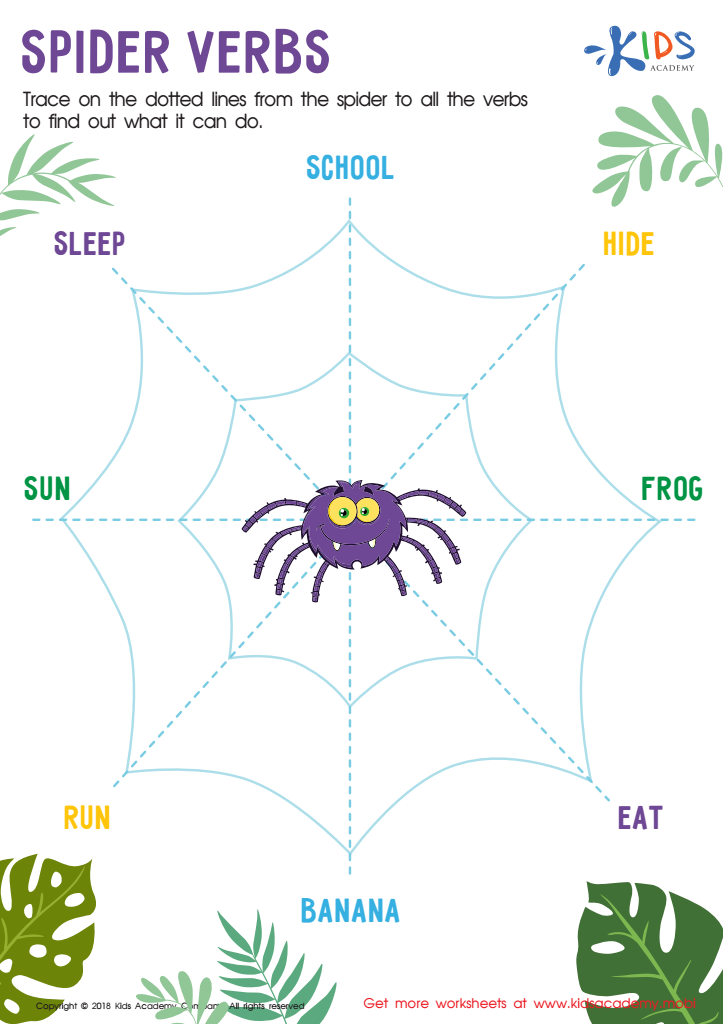
Spider Verbs Worksheet
Verbs are action words. Examples: run, play, talk. Show your child this tracing sheet for them to learn about verbs. Ask them to trace the dotted lines from the spider to the words that are verbs. These words are what the spider can do.
Spider Verbs Worksheet
Worksheet
Join Kids Academy for Free
Who is primarily going to use this learning content?






Vocabulary development is crucial for children aged 5-9, as it lays the foundation for their academic success and effective communication. During these formative years, expanding vocabulary enhances reading comprehension and enables children to articulate their thoughts more clearly. A rich vocabulary supports critical thinking skills and fosters creativity, allowing young learners to express their ideas and emotions more effectively.
For parents and teachers, investing time in vocabulary development is essential. It promotes literacy, empowers children to tackle more complex texts, and encourages engagement in classroom conversations. Additionally, vocabulary knowledge is linked to self-esteem; when children can communicate fluently, they feel more confident in social settings and academic environments.
Furthermore, focusing on grammar alongside vocabulary is critical. Proper grammar usage not only impacts written communication, but also supports clear verbal communication, which is essential as children engage with peers and adults. Combined, vocabulary and grammar empower children to decode and construct meaning, paving the way for successful lifelong learning.
In summary, caring about vocabulary development, complemented by grammar instruction, equips children with vital language skills, fostering their growth as capable, articulate individuals in both academic and social spheres. Investing in their language development today prepares them for a brighter tomorrow.