Money recognition Extra Challenge Money Worksheets for 5-Year-Olds
4 filtered results
-
From - To
Boost your child's money recognition skills with our "Extra Challenge Money Worksheets for 5-Year-Olds." Designed for young learners, these engaging worksheets make learning about coins and dollar bills fun and interactive. Each activity introduces essential money concepts such as identifying, counting, and understanding the value of different denominations. The colorful visuals and varied exercises cater to diverse learning styles and keep kids motivated. Perfect for at-home practice or as supplemental classroom material, our worksheets effectively prepare your 5-year-olds for future financial literacy. Equip your child with the skills they need to confidently recognize and manage money with our specially designed challenges!
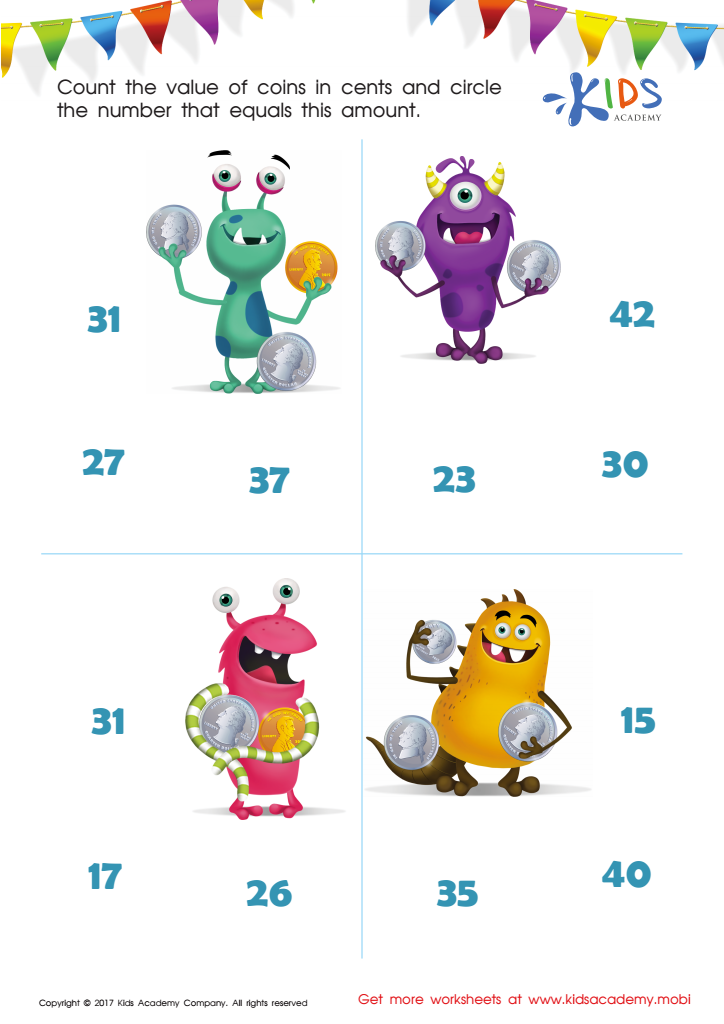
How Many Coins Money Worksheet
 Assign to My Students
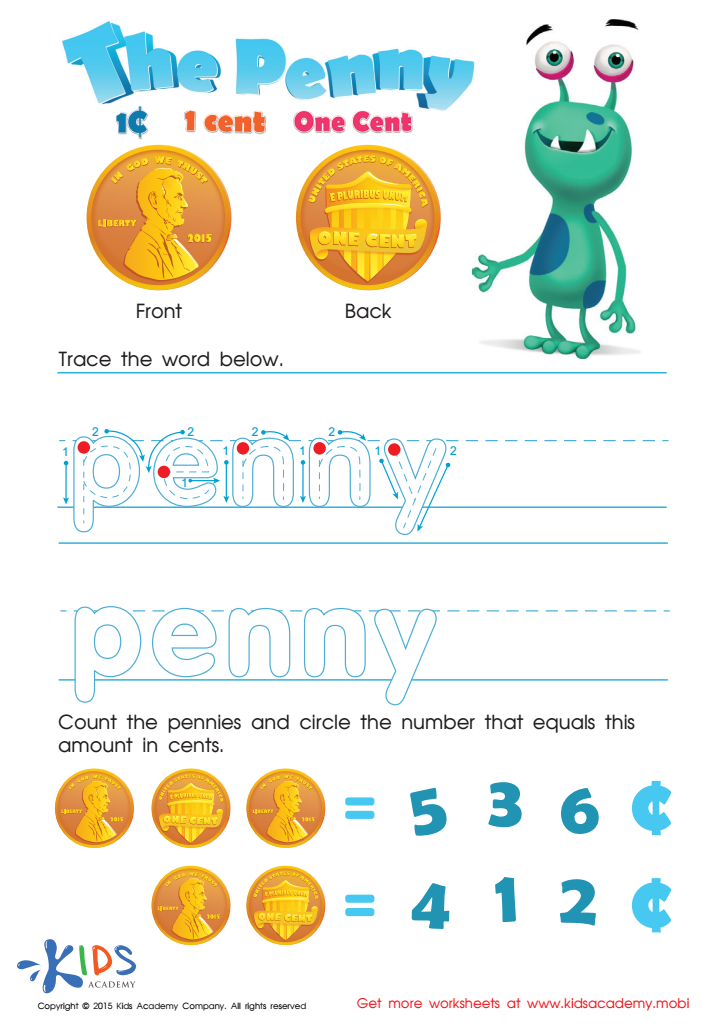
One Cent or the Penny Money Worksheet
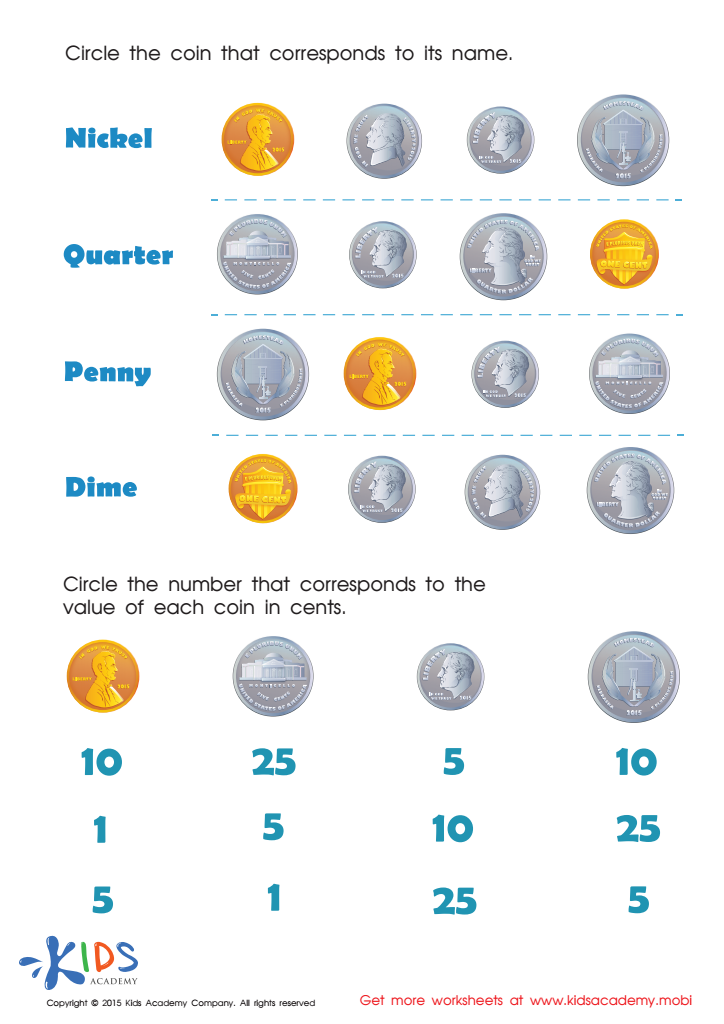
Coin Names and Values Money Worksheet
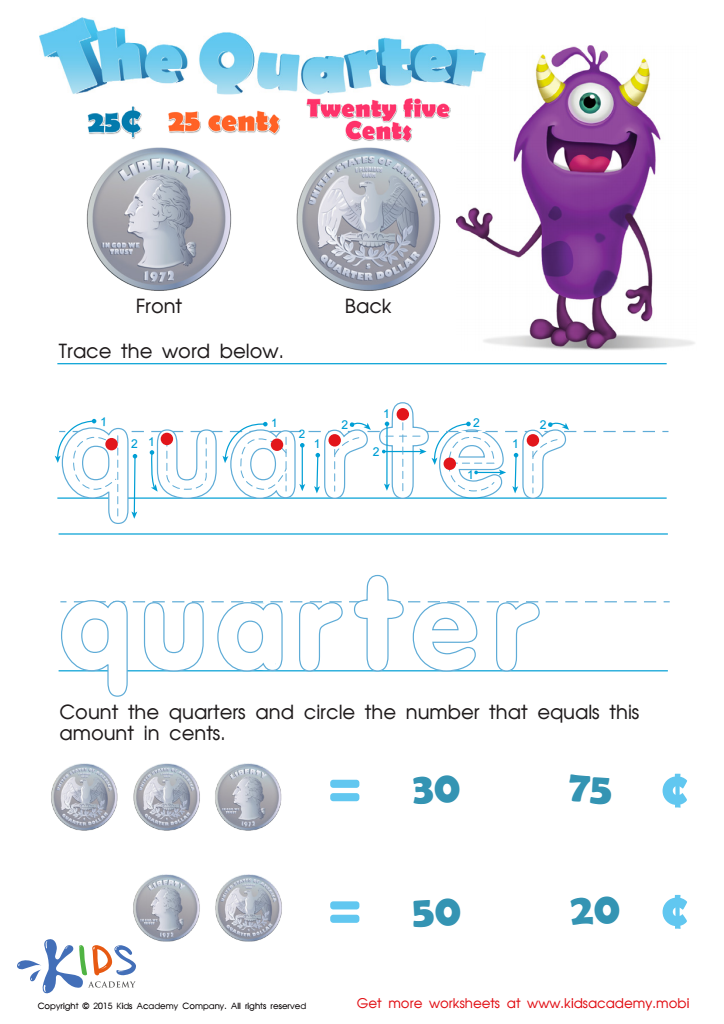
Twenty Five Cents or the Quarter Money Worksheet




.jpg)


Money recognition is a critical skill for young children, especially for 5-year-olds, providing foundational financial literacy essential for future independence. Parents and teachers should prioritize this skill because it enhances cognitive development, promotes counting proficiency, and fosters an understanding of basic economics. By recognizing different denominations—coins and bills—children gain valuable experience in assessing value and making informed choices, which is vital for everyday situations they will encounter as they grow older.
Introducing "Extra Challenge Money" activities can further stimulate children's interest and understanding, encouraging them to engage with finances playfully. These challenges create a fun environment where children can practice sorting, matching, and purchasing using toy money, reinforcing their money skills while boosting their confidence.
Additionally, fostering money recognition lays the groundwork for discussions about saving, spending wisely, and understanding the concept of trading goods and services. This knowledge will serve children well as they mature, preparing them for responsible adulthood.
Ultimately, integrating money recognition education into early childhood learning not only equips children with essential life skills but also encourages curiosity and confidence in managing their financial futures, making it a valuable focus for both parents and educators.