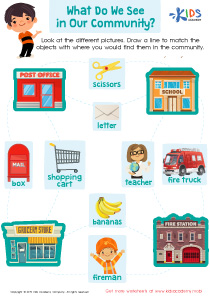
Recognizing shapes Extra Challenge Math Worksheets for Ages 6-8
3 filtered results
-
From - To
Unlock your child's mathematical potential with our "Recognizing Shapes Extra Challenge Math Worksheets" designed specifically for ages 6-8! These engaging worksheets offer an array of stimulating exercises that encourage young learners to identify, classify, and compare shapes in diverse contexts. Tailored to enhance critical thinking and geometric understanding, each worksheet presents a fun challenge, making math enjoyable and interactive. Perfect for use at home or in the classroom, these resources will help solidify essential skills while fostering a love for learning. Equip your child with the tools they need to excel in math and develop strong geometric foundations today!
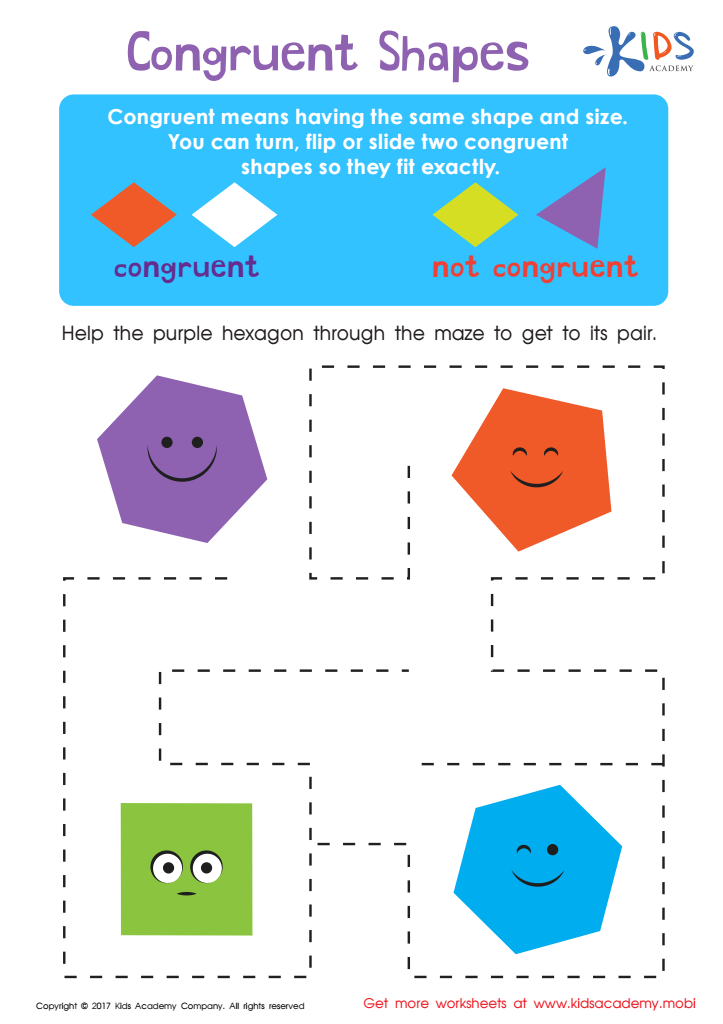
Congruent Shapes Worksheet
 Assign to My Students
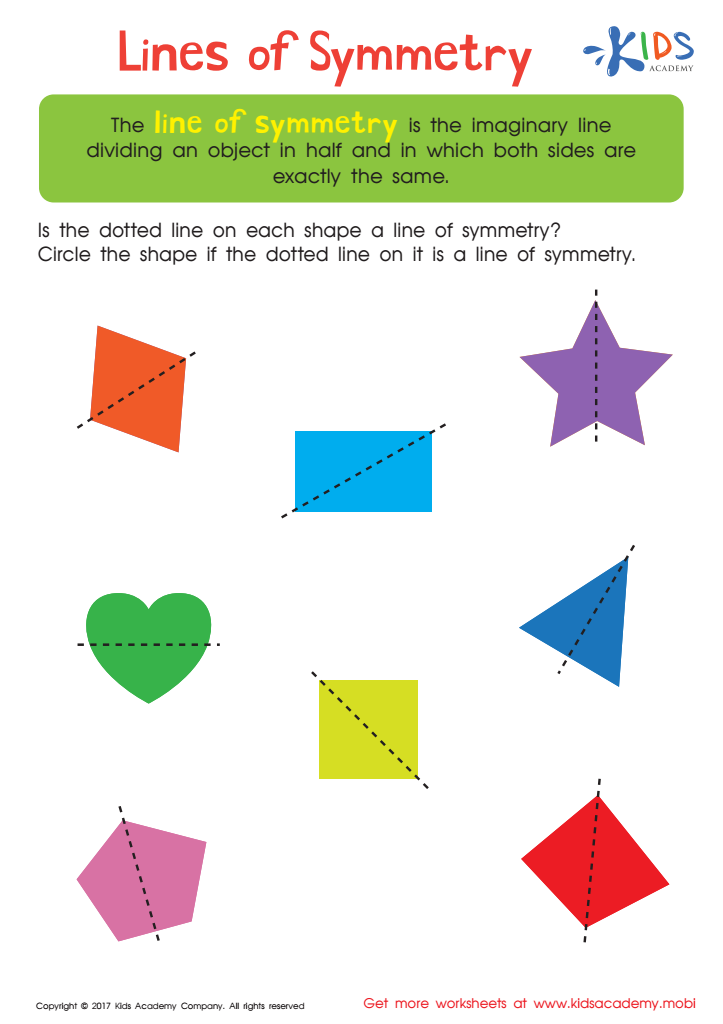
Lines of Symmetry Printable
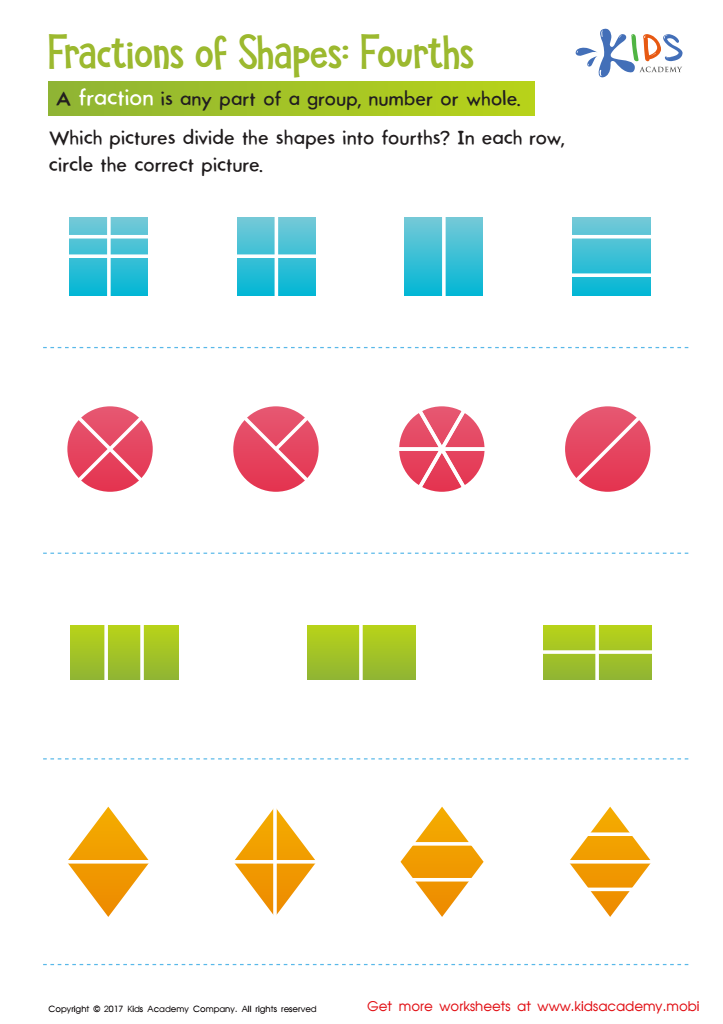
Fractions of Shapes Worksheet








Recognizing shapes is a foundational mathematical skill that greatly influences a child's overall cognitive development. For parents and teachers of children aged 6-8, engaging with "Recognizing Shapes" activities can deeply enhance visual-spatial skills. These skills are crucial for problem-solving and critical thinking, which are vital not just in math but across all subjects.
Moreover, understanding shapes aids in fostering logical reasoning. Children learn to categorize, compare, and analyze, skills that reflect in various academic contexts. Recognizing shapes lays the groundwork for more complex mathematical concepts, such as geometry and measurement, ensuring a robust mathematical foundation.
Participating in shape recognition activities also supports language development. Kids learn to articulate differences and relationships between shapes using vocabulary that will enrich their language skills. Furthermore, it encourages teamwork and communication when children engage in group activities.
In a world that increasingly relies on technology and visual literacy, strong shape recognition skills prepare children for future challenges. Therefore, parents and teachers should prioritize these activities to promote confidence, inspire curiosity, and ultimately nurture a love for learning in young children that extends well beyond the classroom.